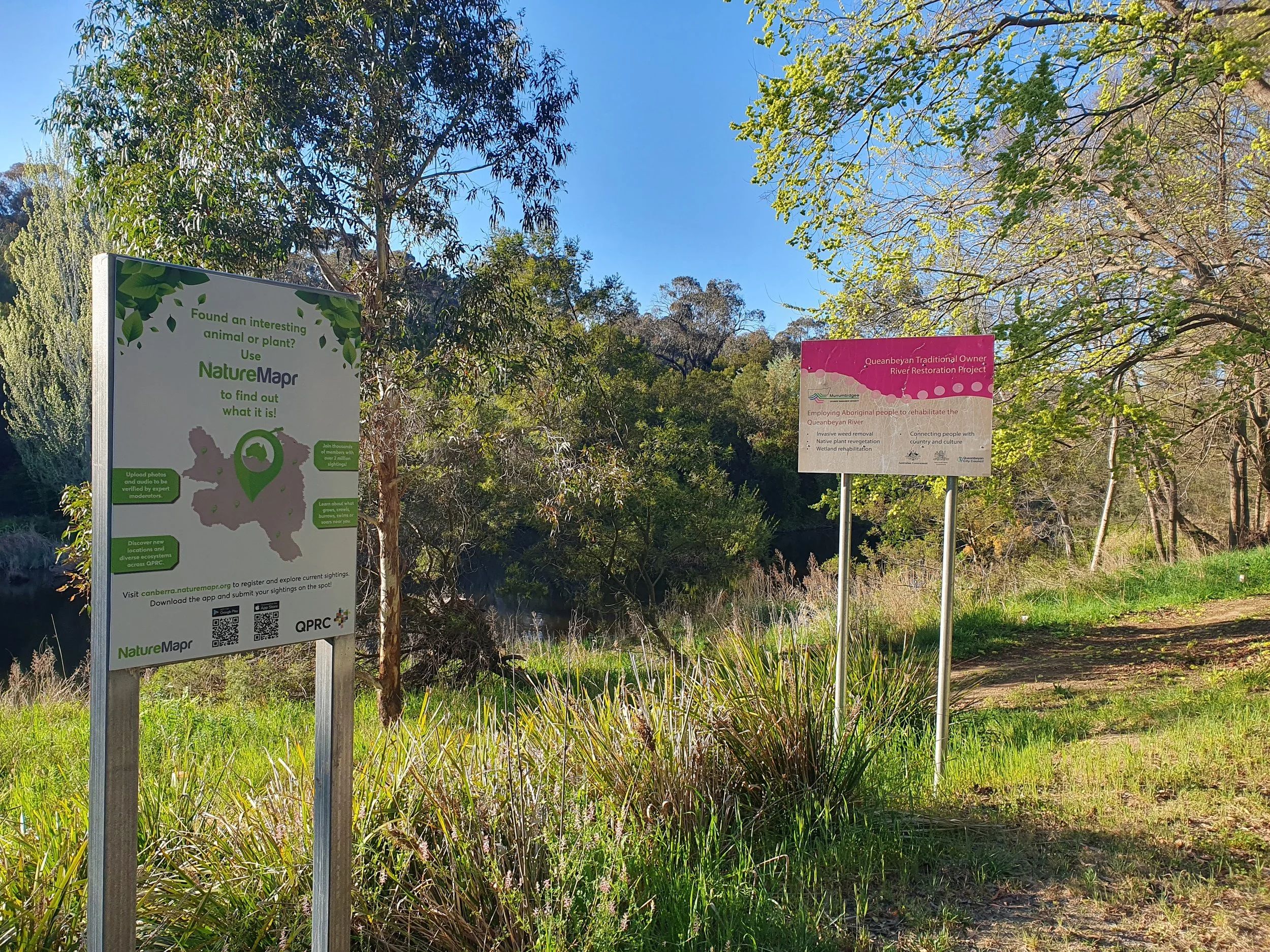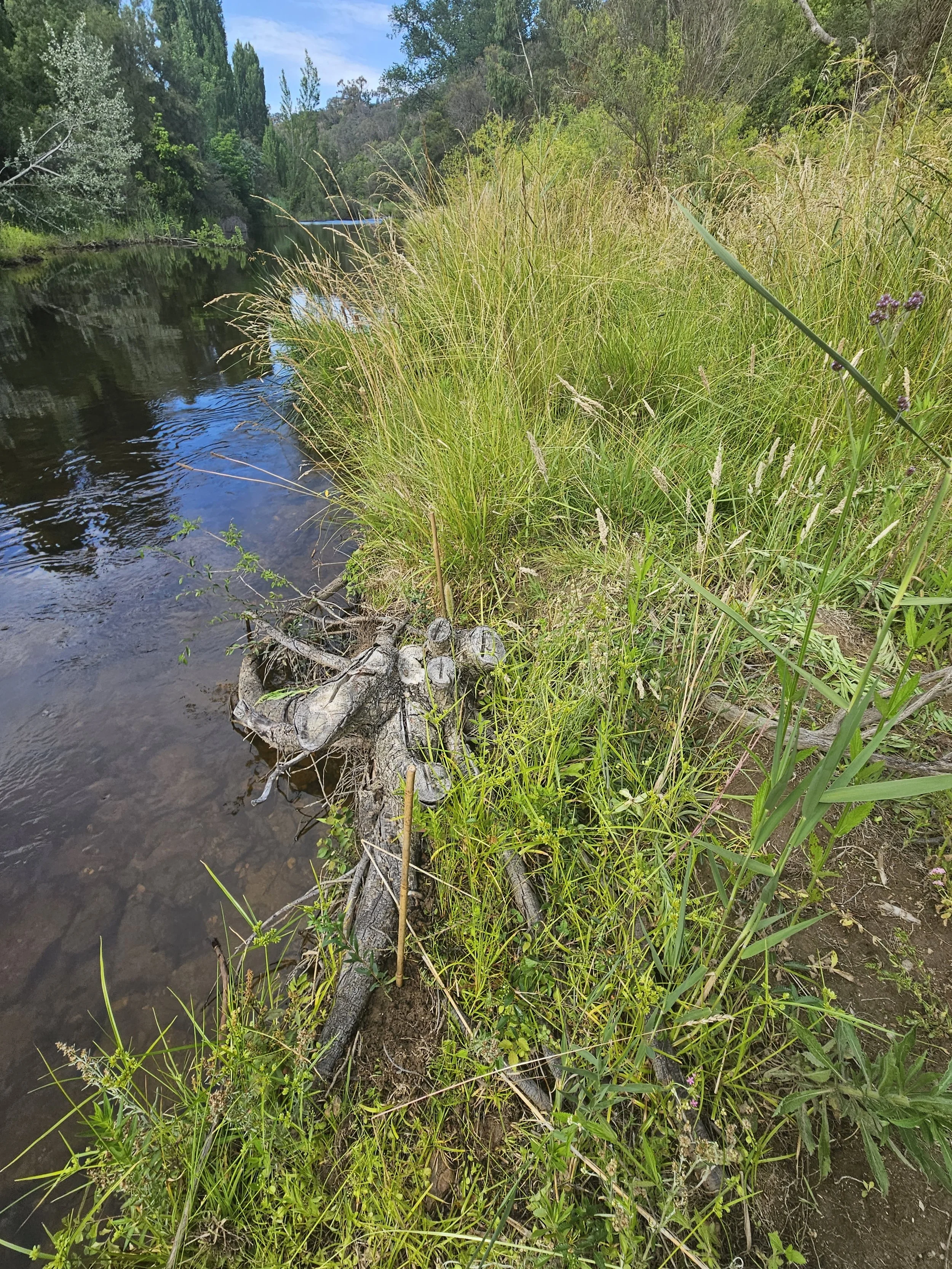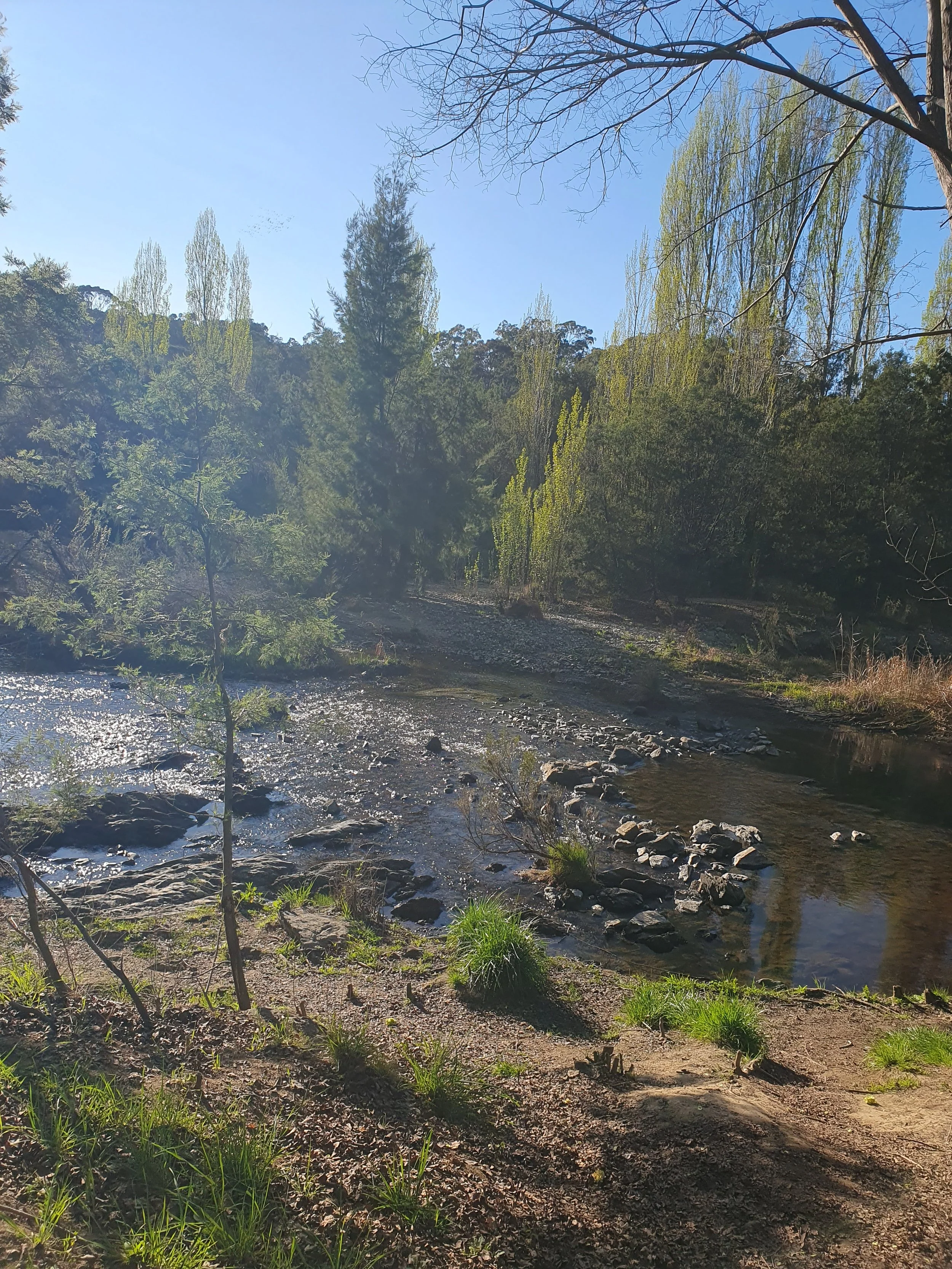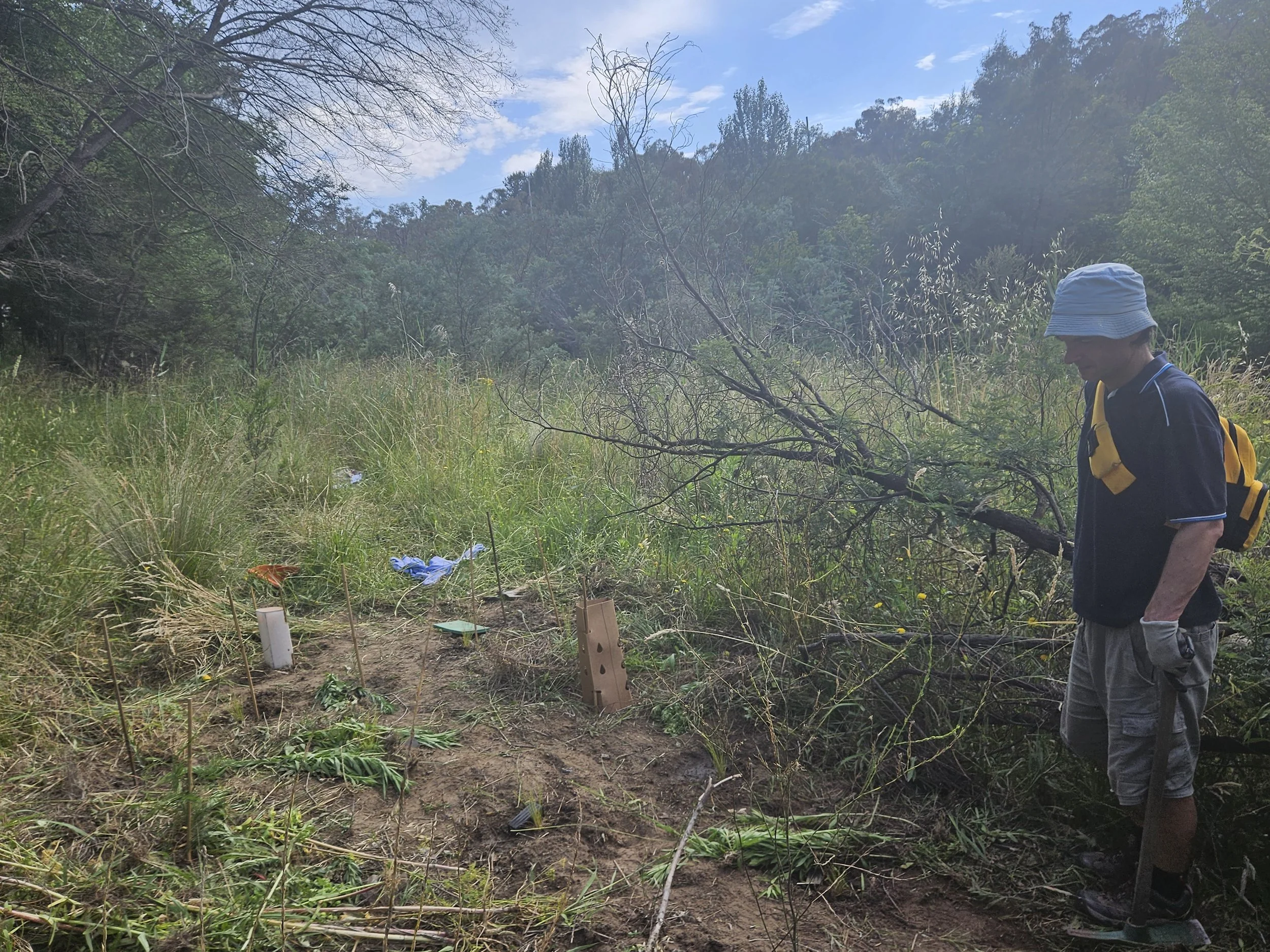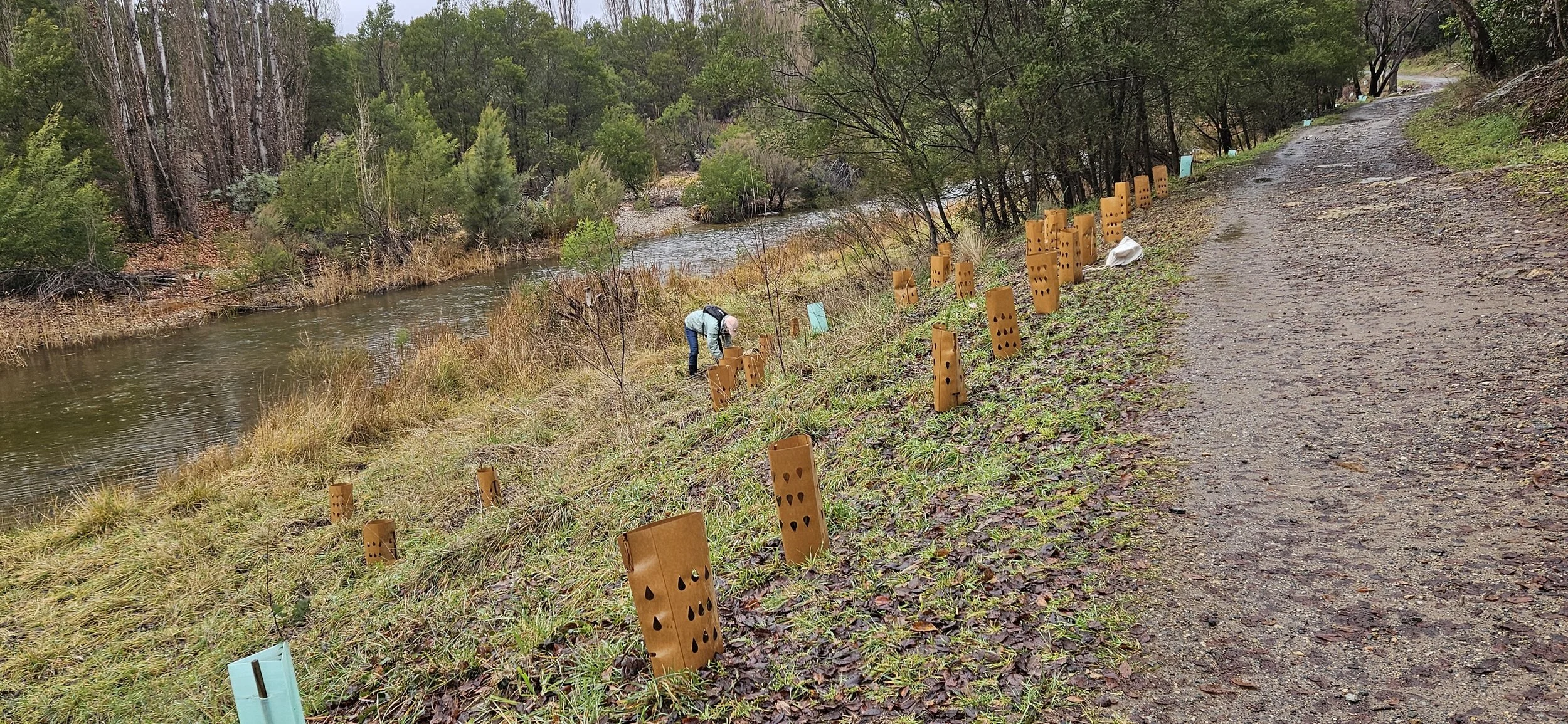
Dane Street
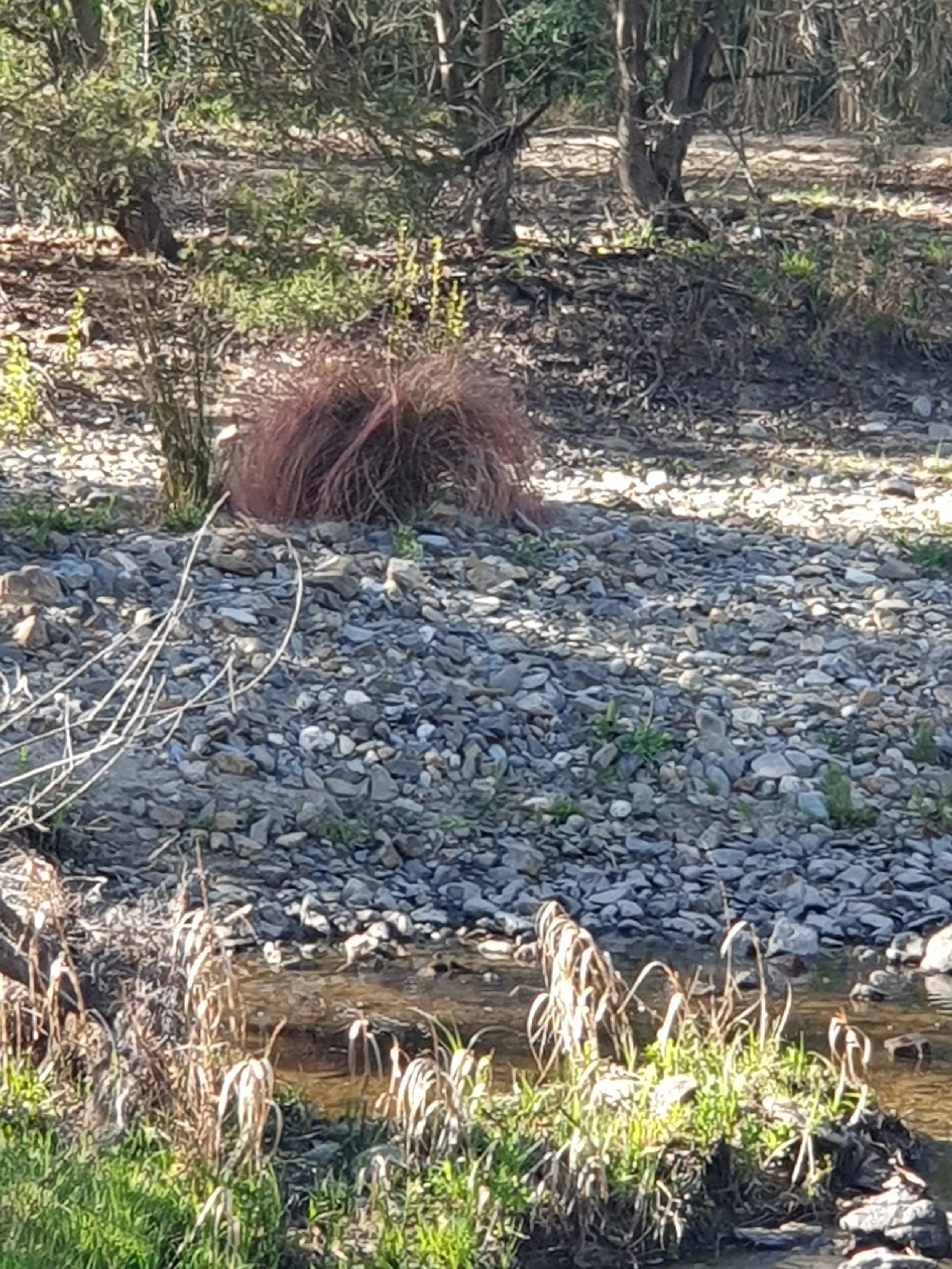
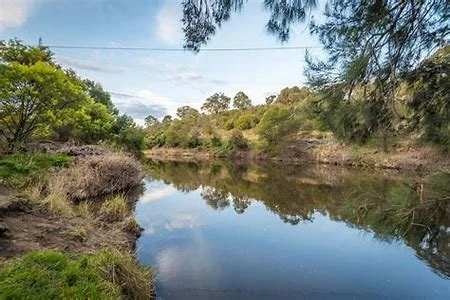
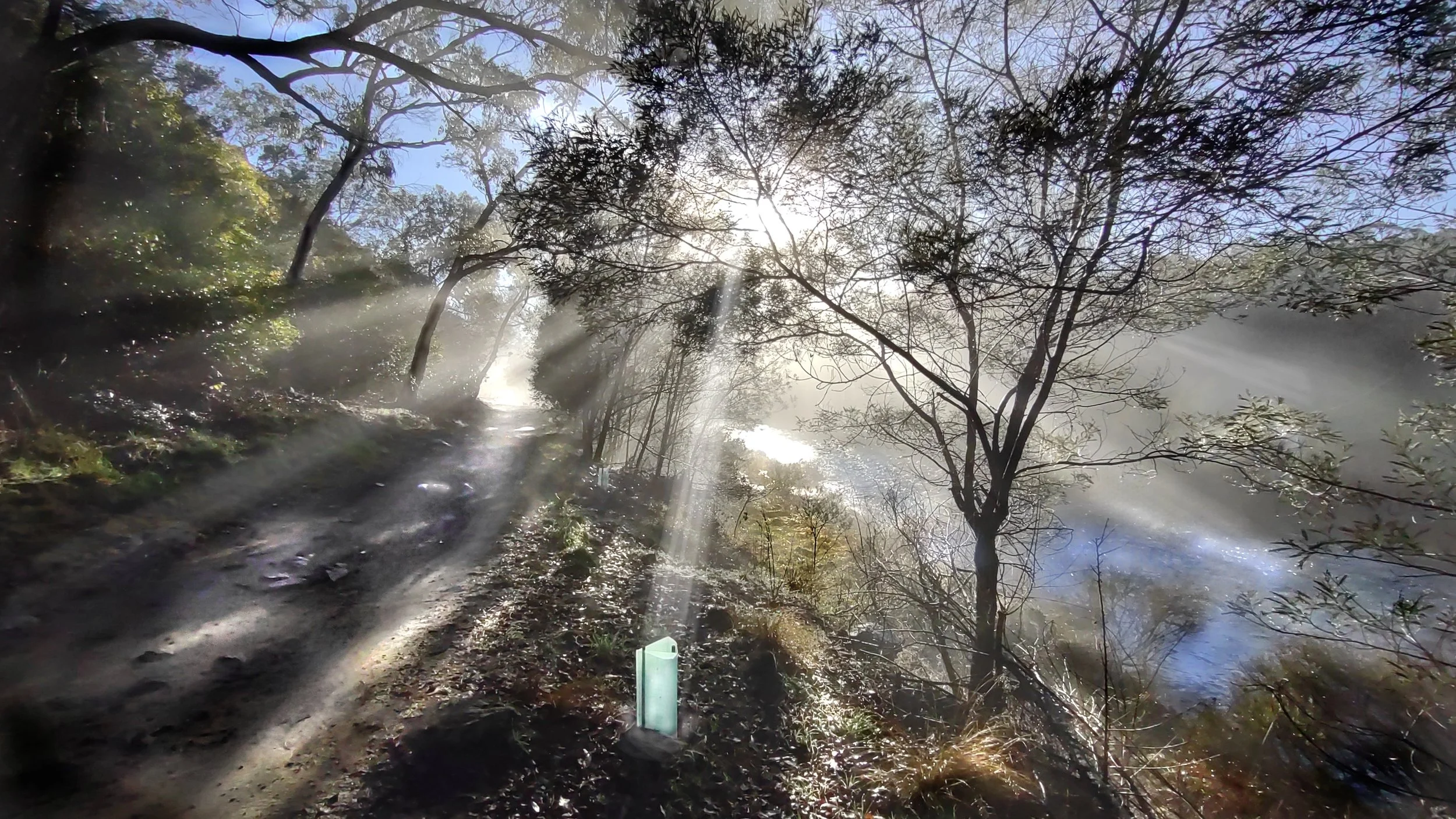
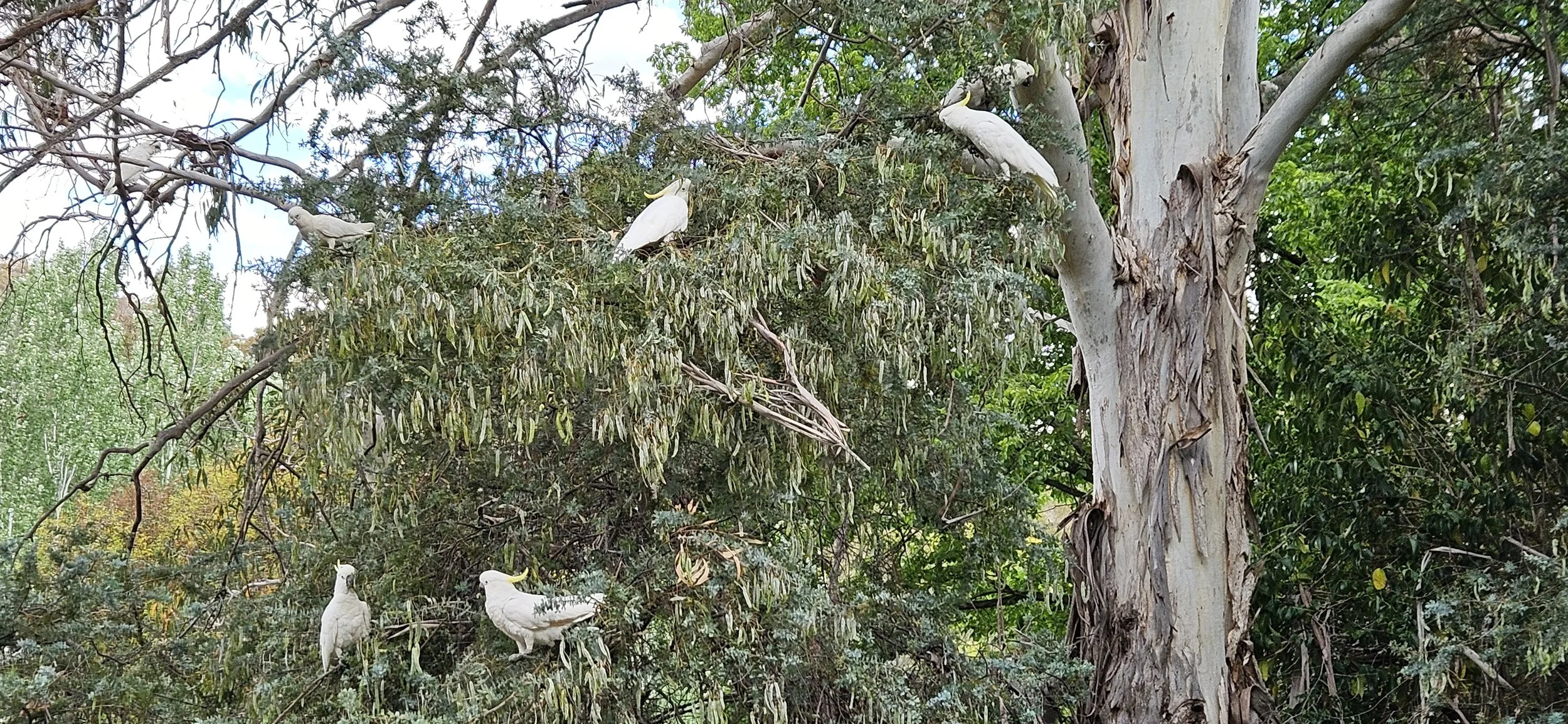
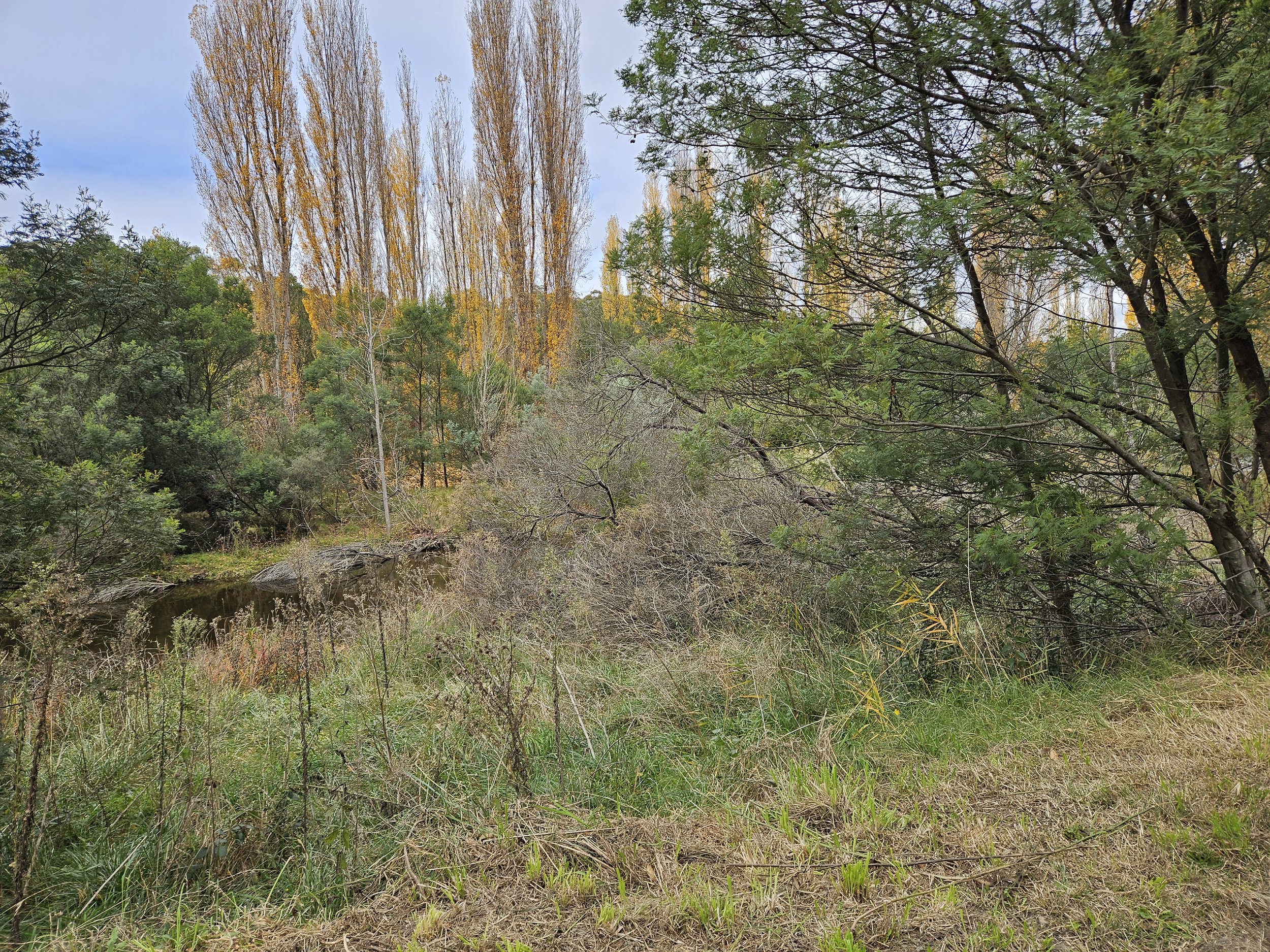
The Queanbeyan River corridor is a special place for biodiversity and recreation. Platypus, wombats, rakali, kangaroos, many native birds and reptiles inhabit this area, often being seen along the walking path. The path is well-used, and the public accesses the river at various points for fishing, paddling, swimming and launching canoes.
It has been a focal point for conservation efforts for many years, including major willow removal programs, woody weed control, remedial planting after multiple flood events, and the positioning of nest boxes.
2025
Signs of recovery
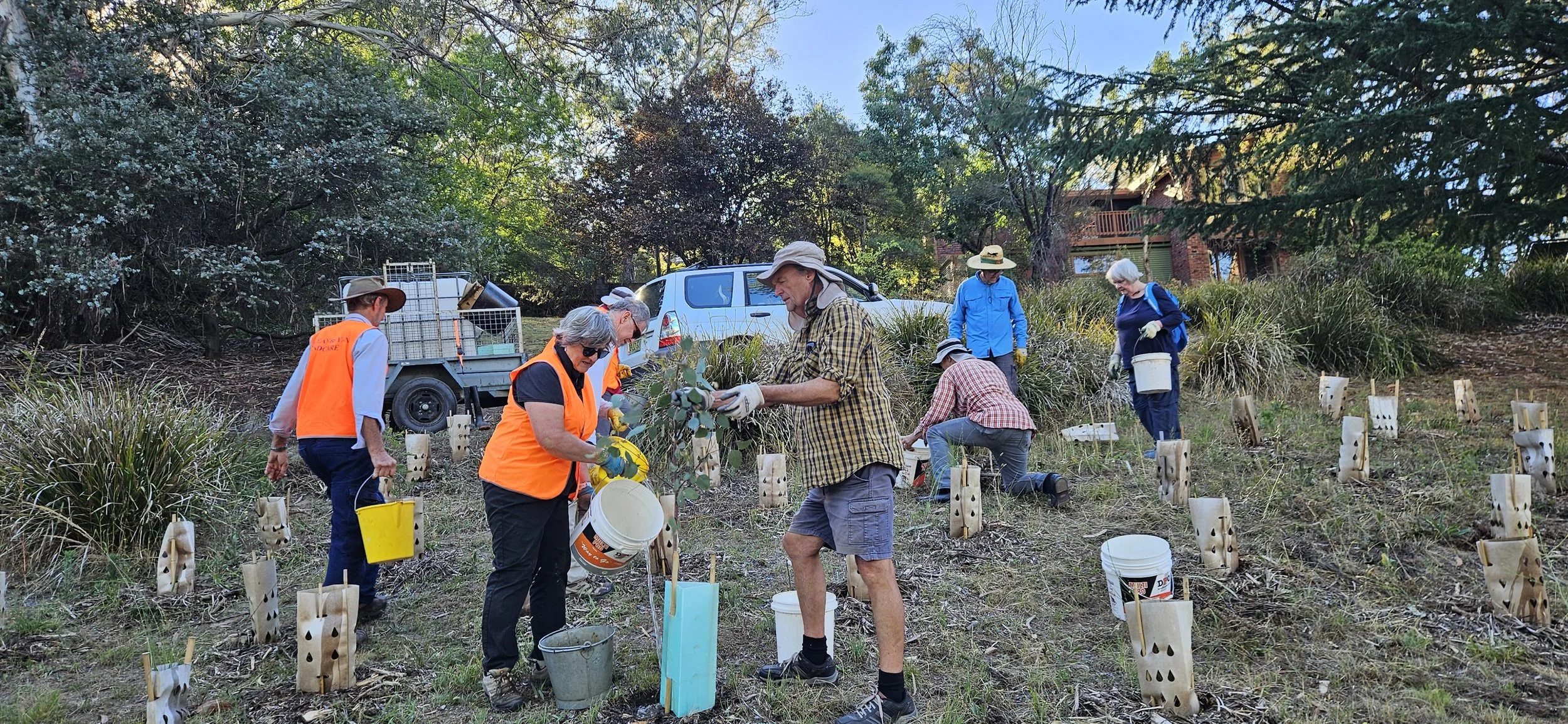
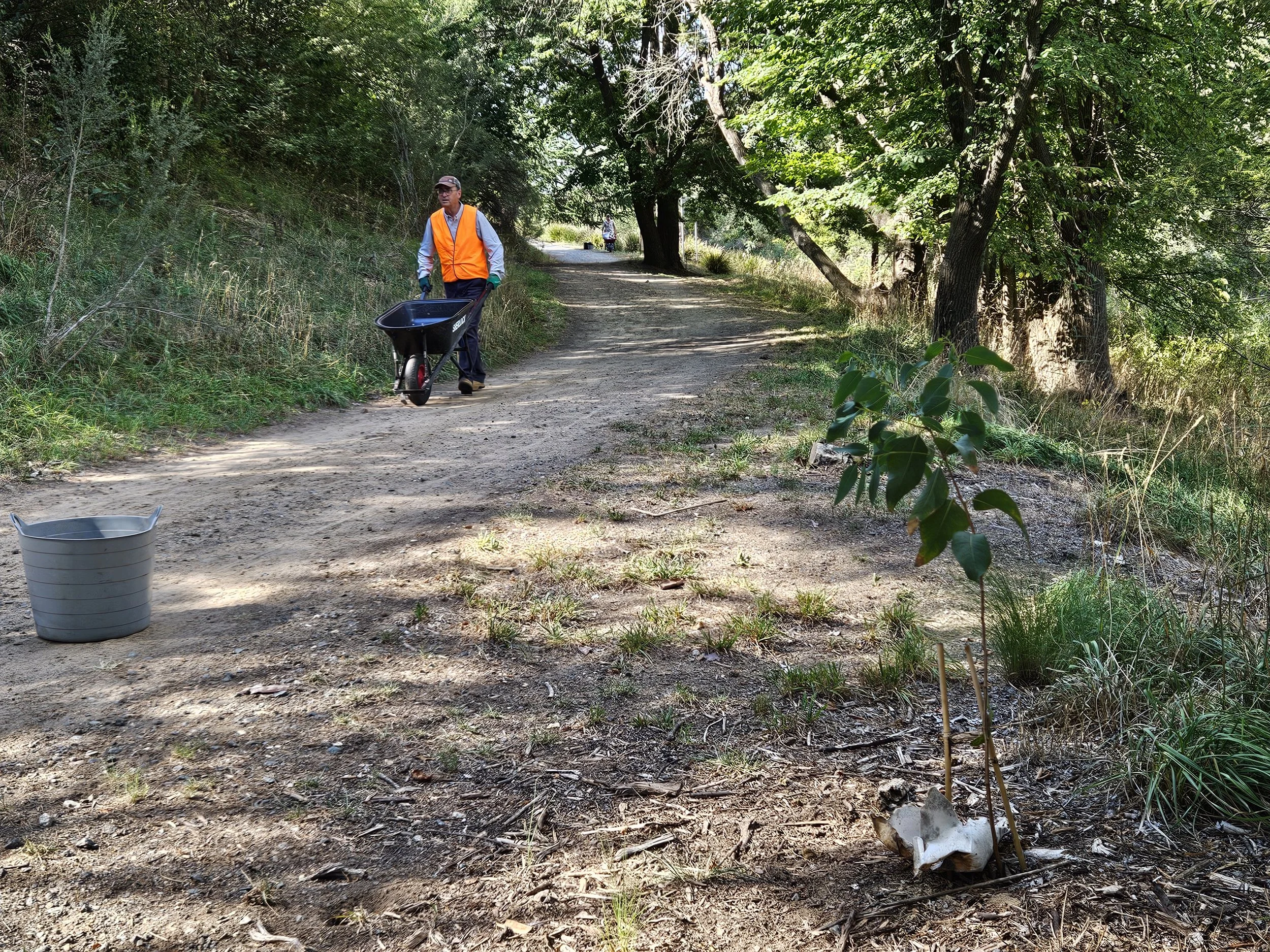
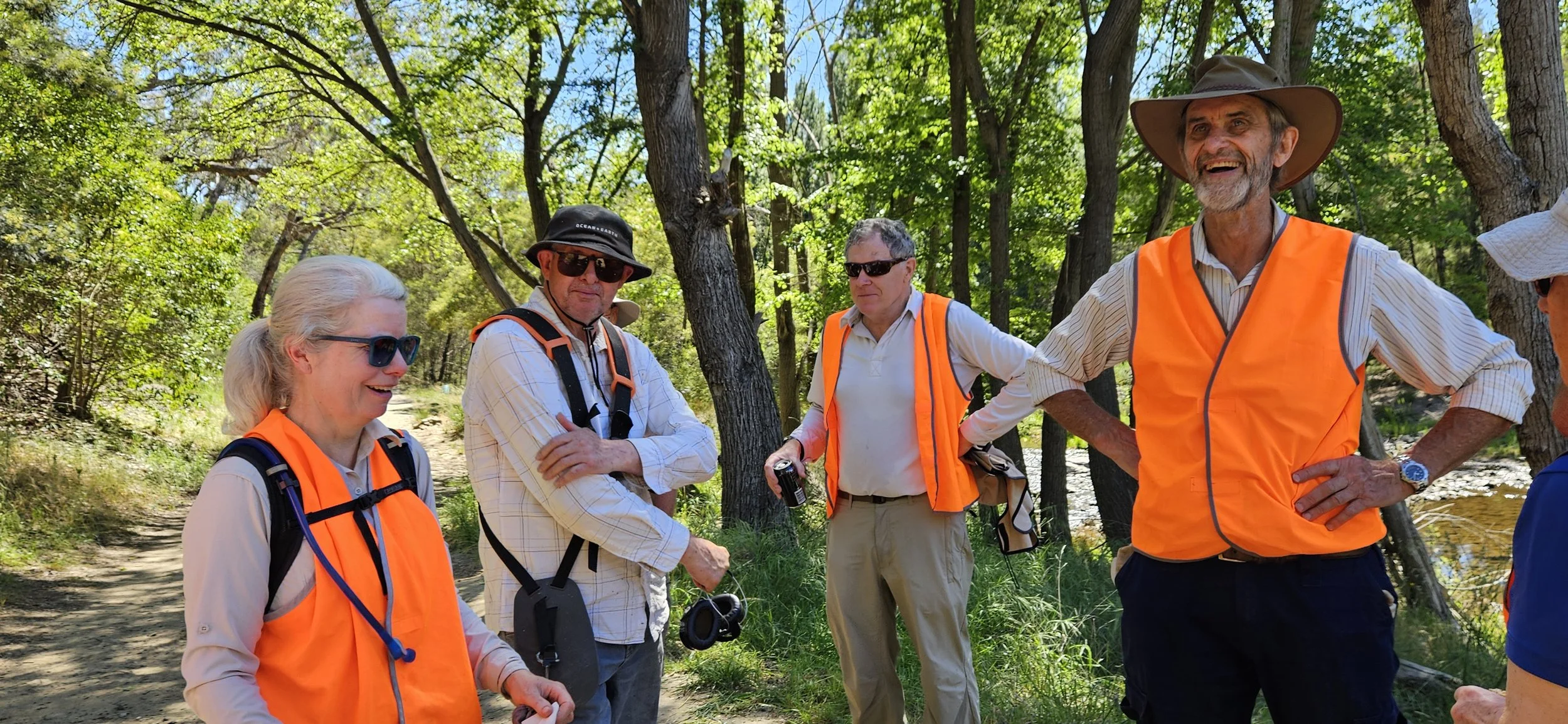
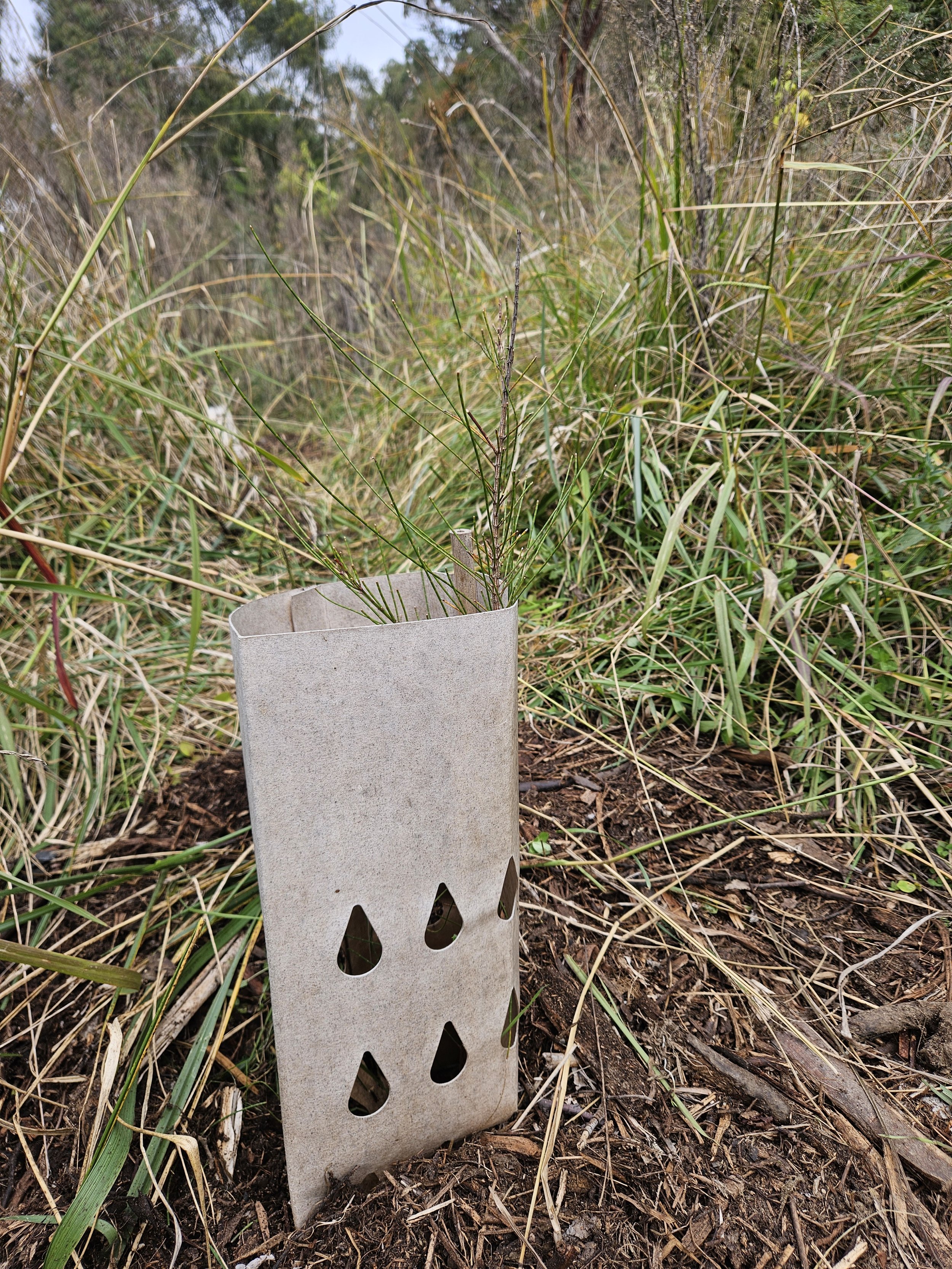
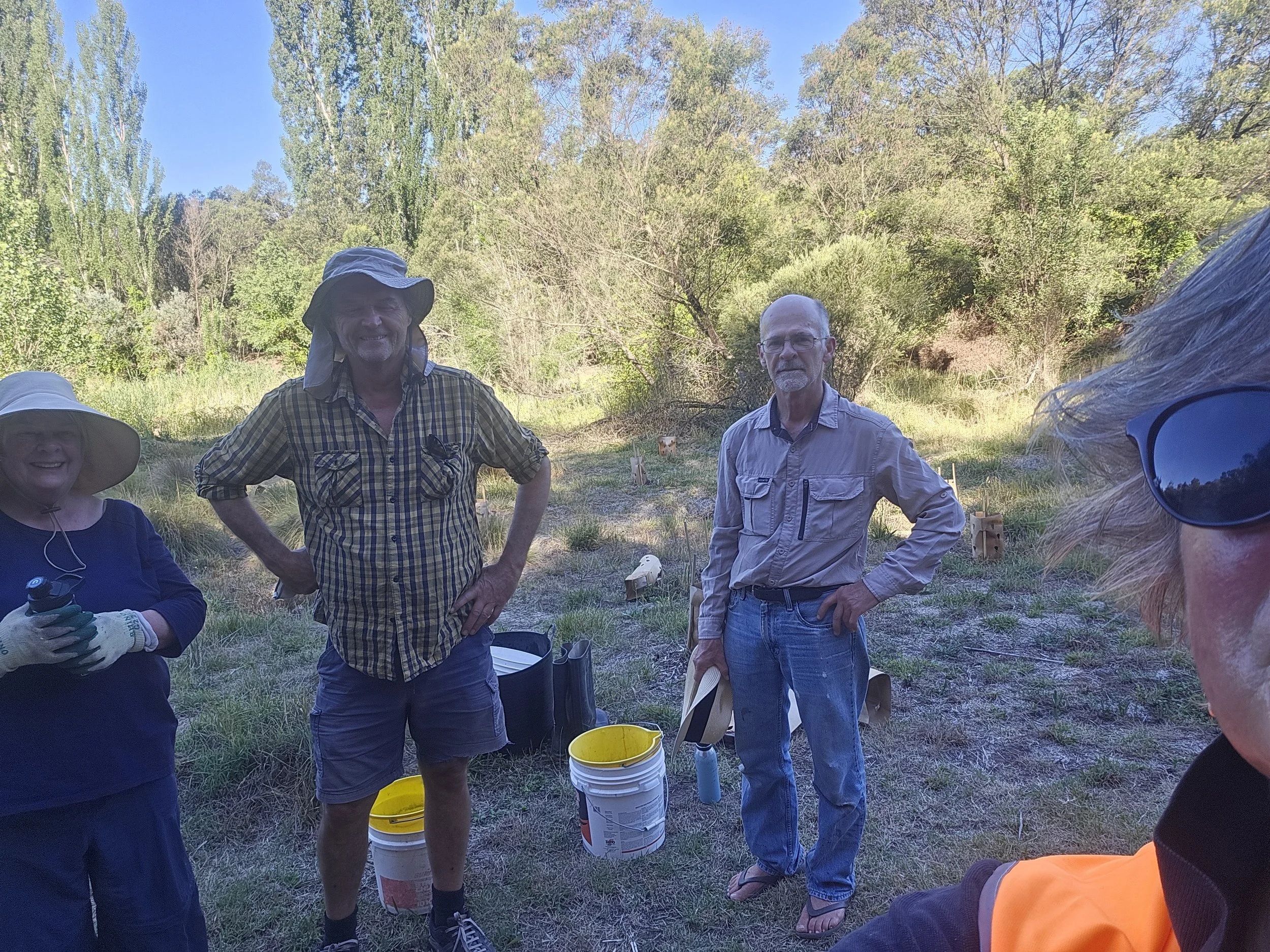
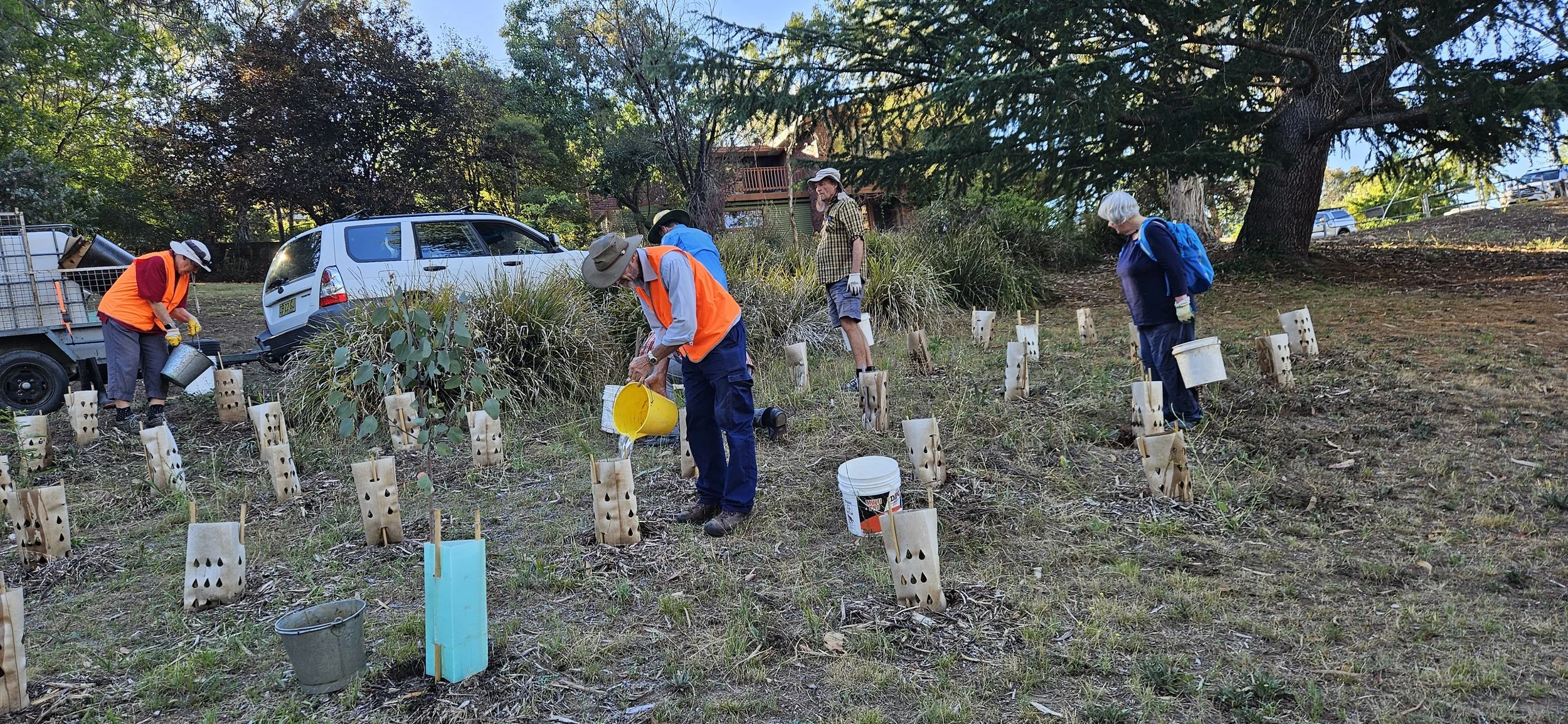
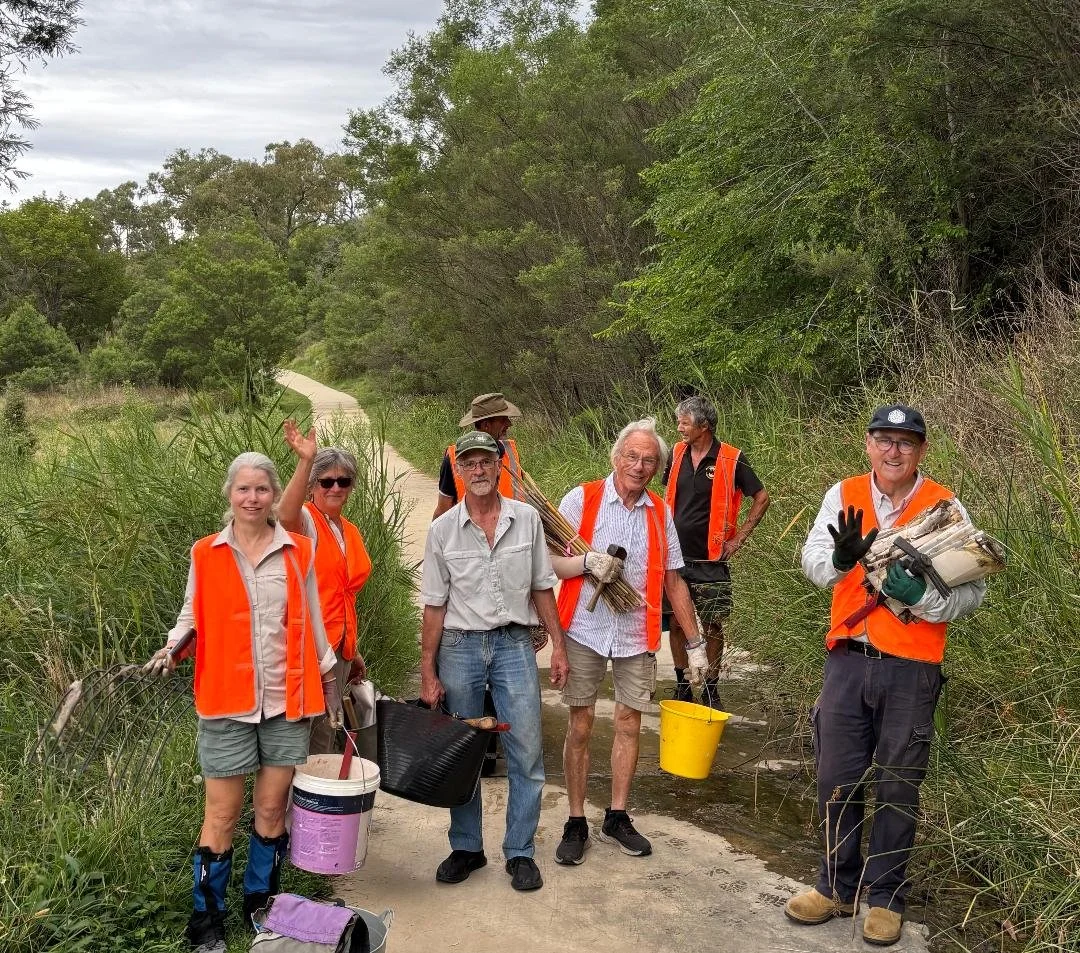
It was evident in February 2025 that many of Council’s 2023 and 2024 plantings along the path were struggling or had not survived. Queanbeyan Landcare volunteers dedicated three days to watering, mulching, and restoring or replacing tree guards for the 80 surviving plants. At this time vehicle access was still not available so all water was laboriously carried from the river in buckets. Over 65 tree guards were removed from dead or missing plantings, highlighting a significant loss, with more than half of the 2023 and 2024 Council plantings failing to thrive.
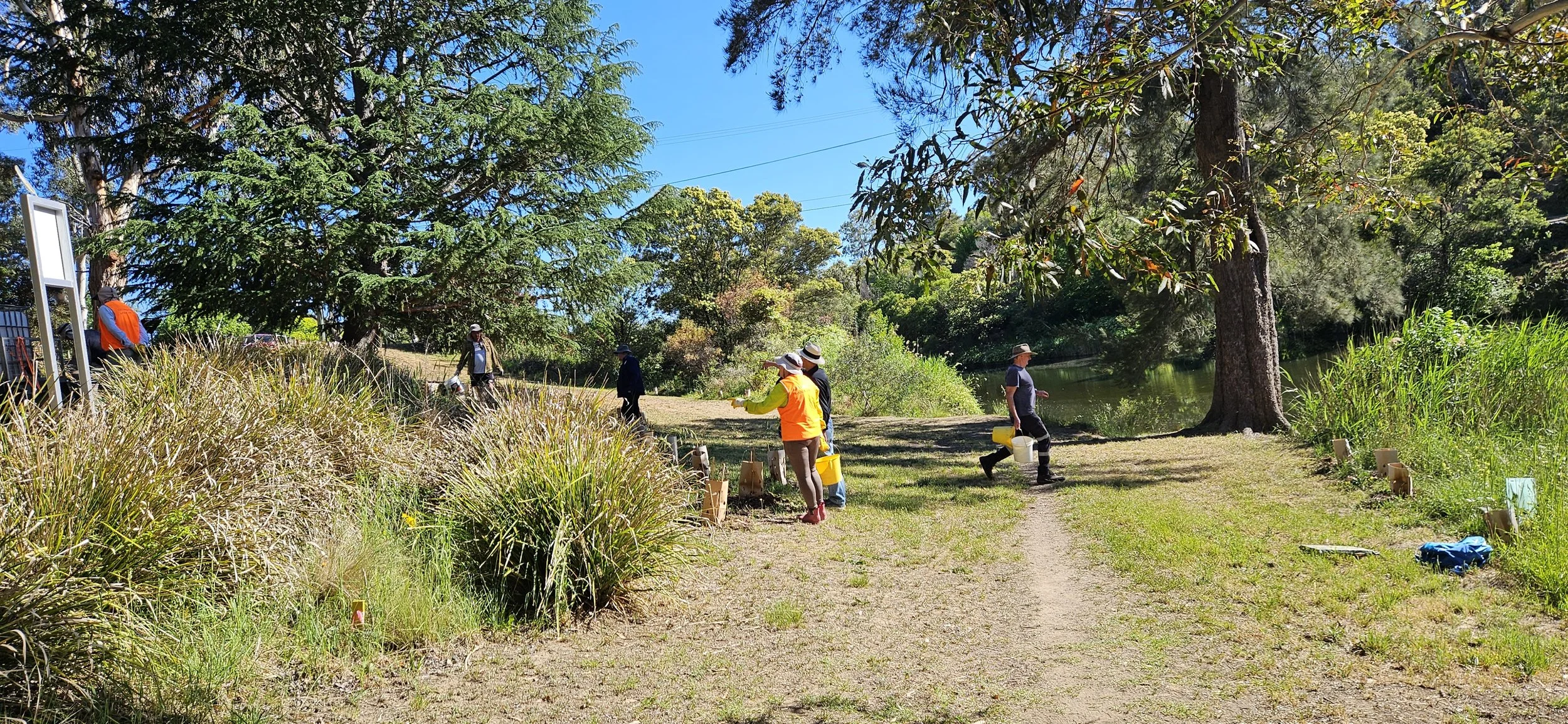
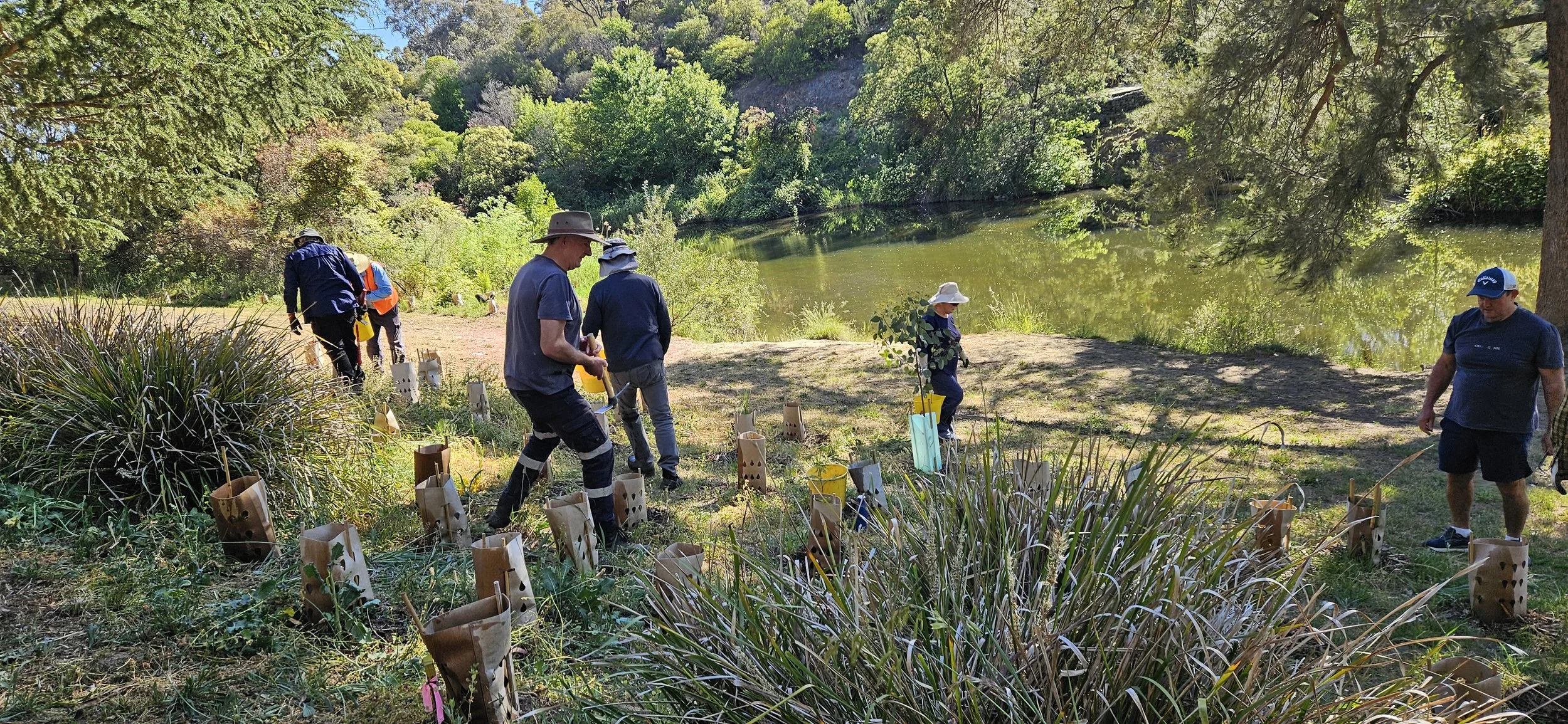
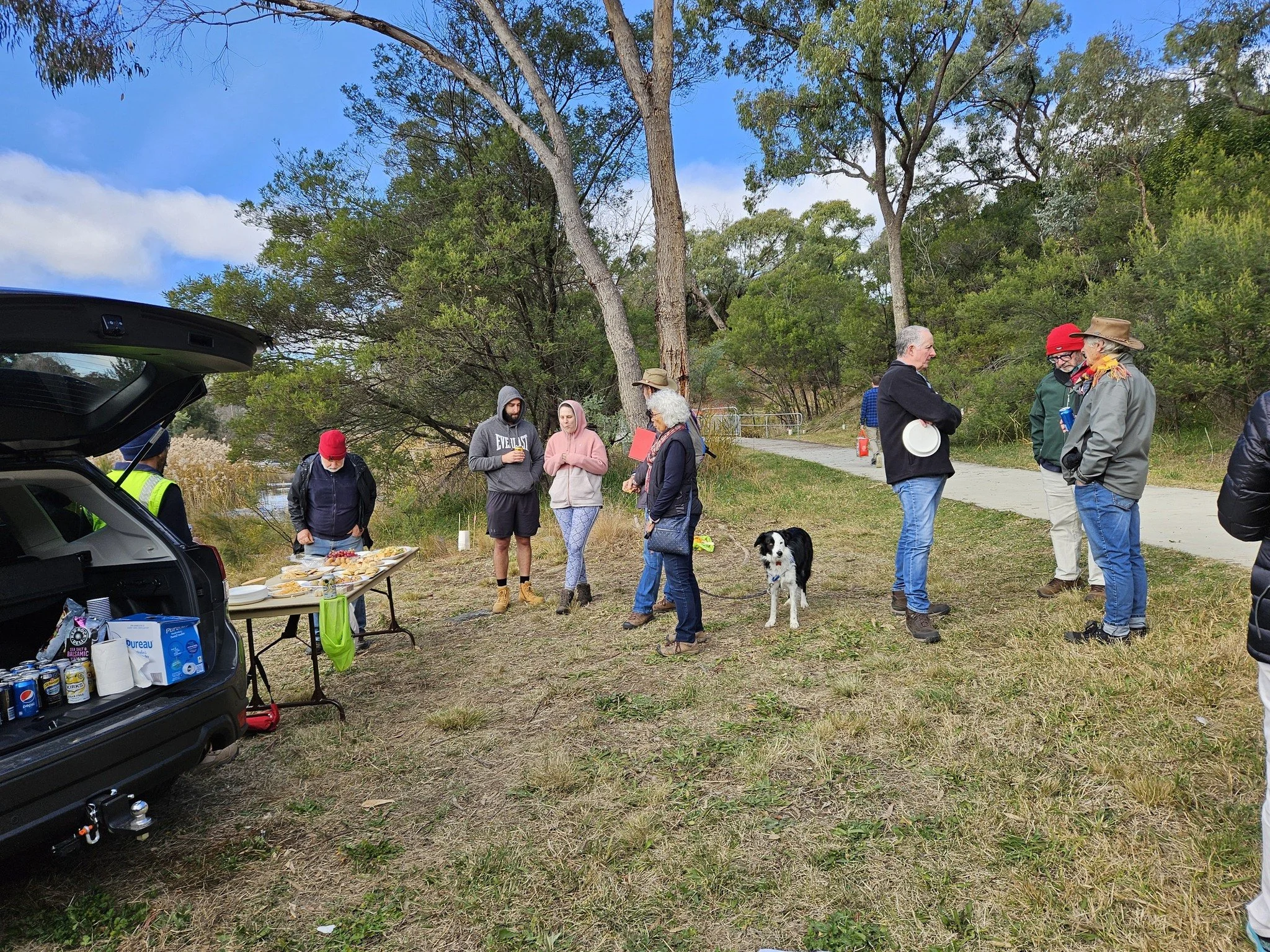
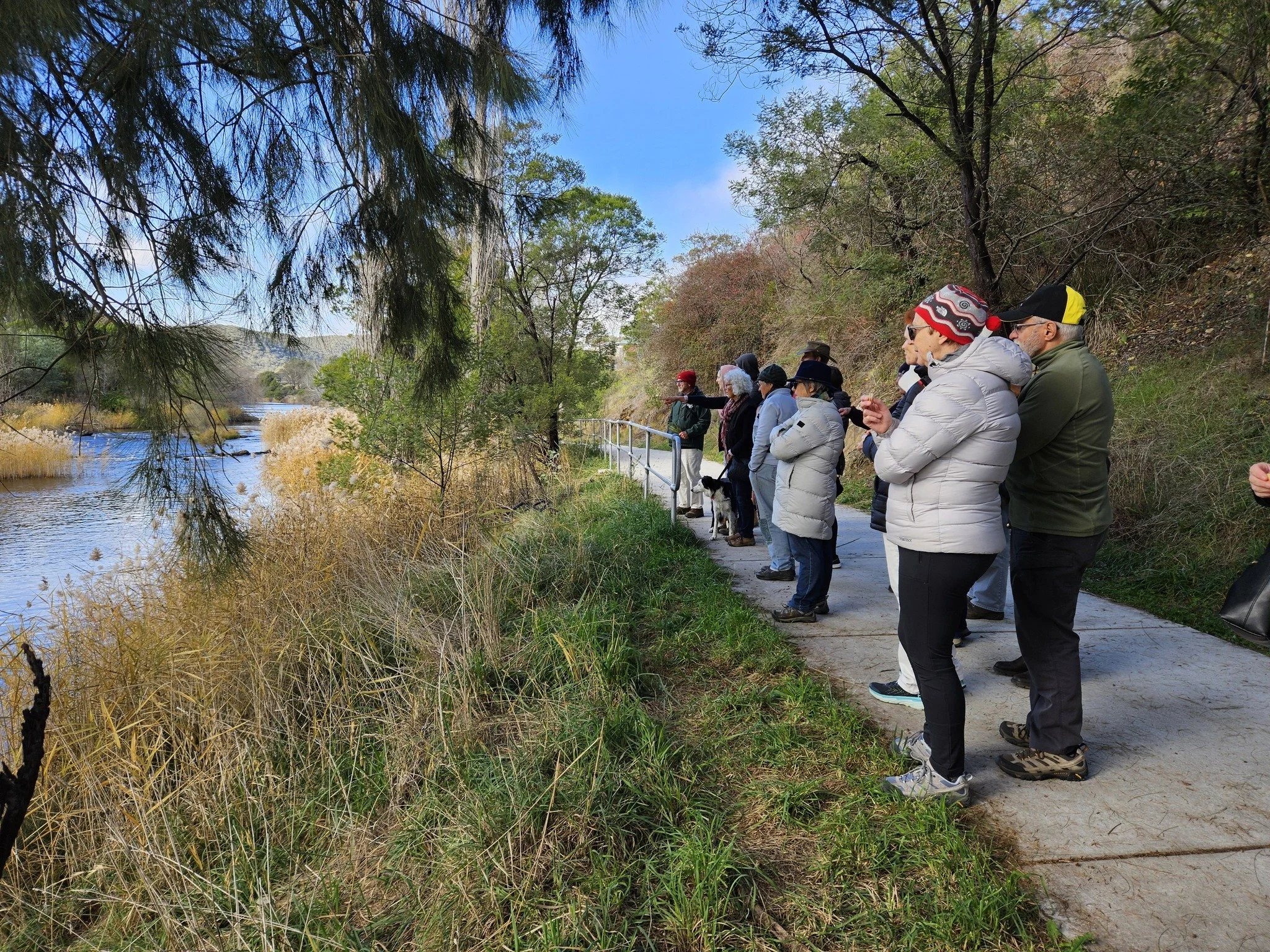
In July, 15 members joined forces with Queanbeyan-Palerang Regional Council (QPRC) and local volunteers for a World Environment Day planting event with over 200 native seedlings including eucalyptus, wattles, hakea, leptospermum, and native grasses. Members revisited the site shortly after this event to check on the new plantings and add a few more native species. The World Environment Day walk in June 2025 offered a chance for the wider community to appreciate this restoration work firsthand.
In the face of low spring rainfall and dry soils, Council arranged vehicular access, making maintenance much easier. In late November and again in December, all 365 plants were watered using buckets filled from a water cube transported along the track on a trailer. This extra effort paid off, with several young eucalypts now standing over two metres tall, and the plantings beginning to flourish even as the dry conditions remain.
For photos and stories from the 2025 World Environment Day walk, check out our Facebook post and visit our World Environment Day page.
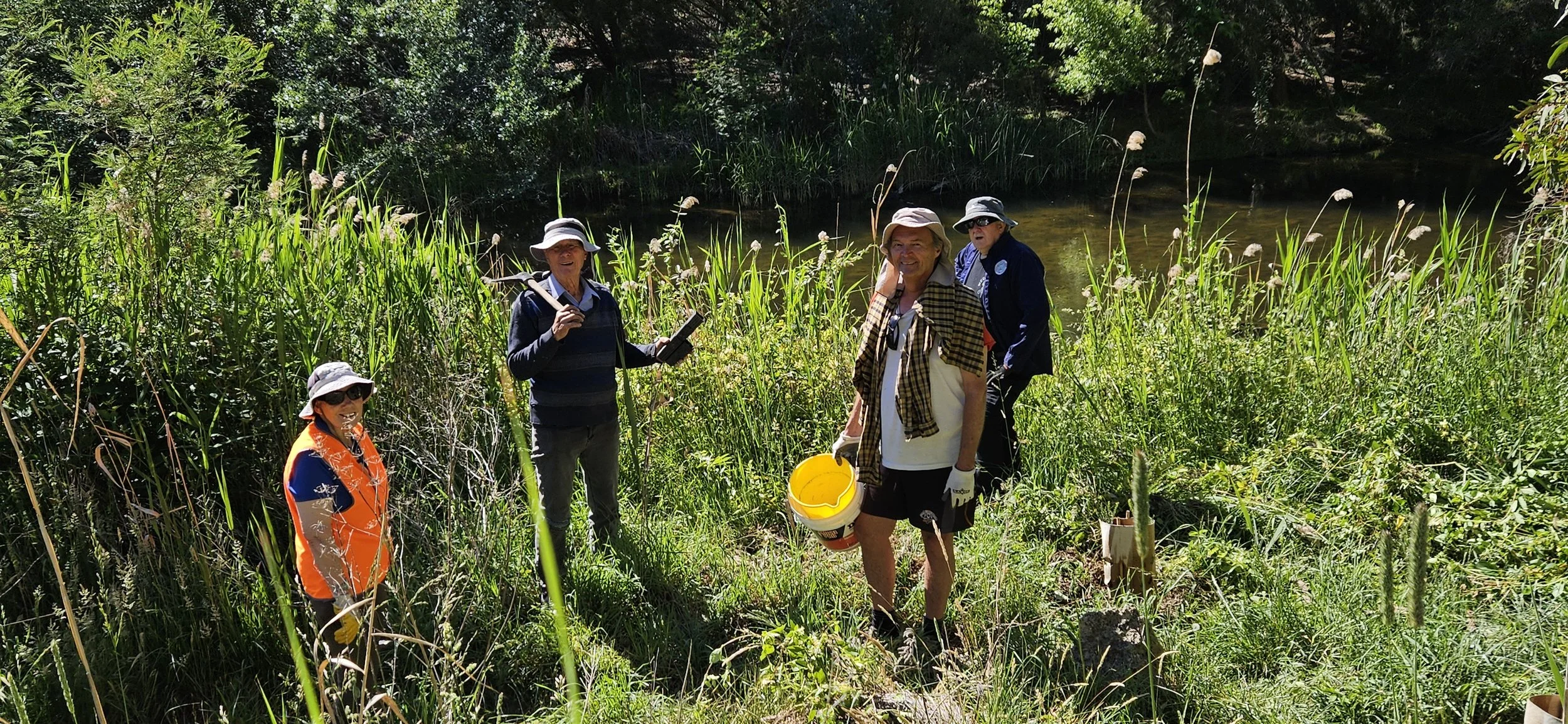
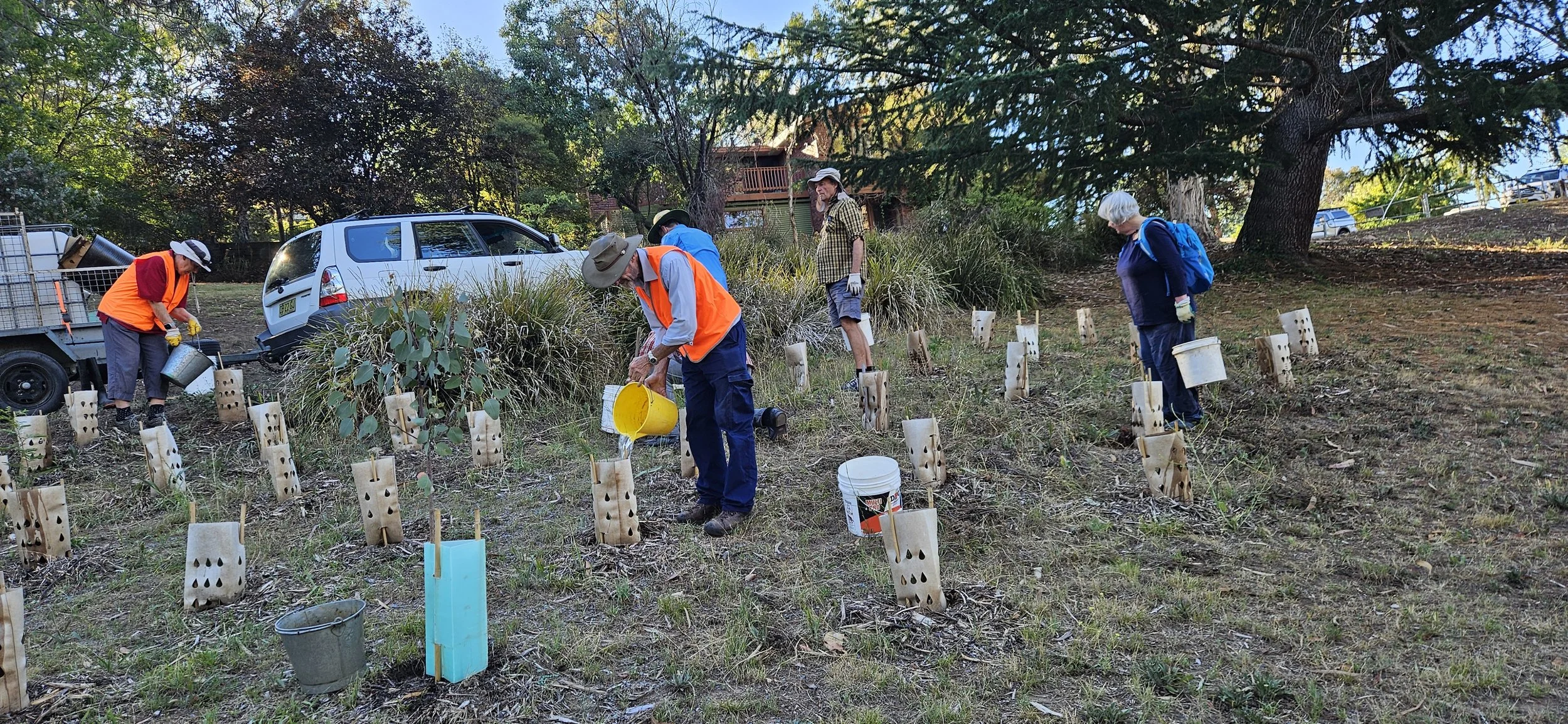
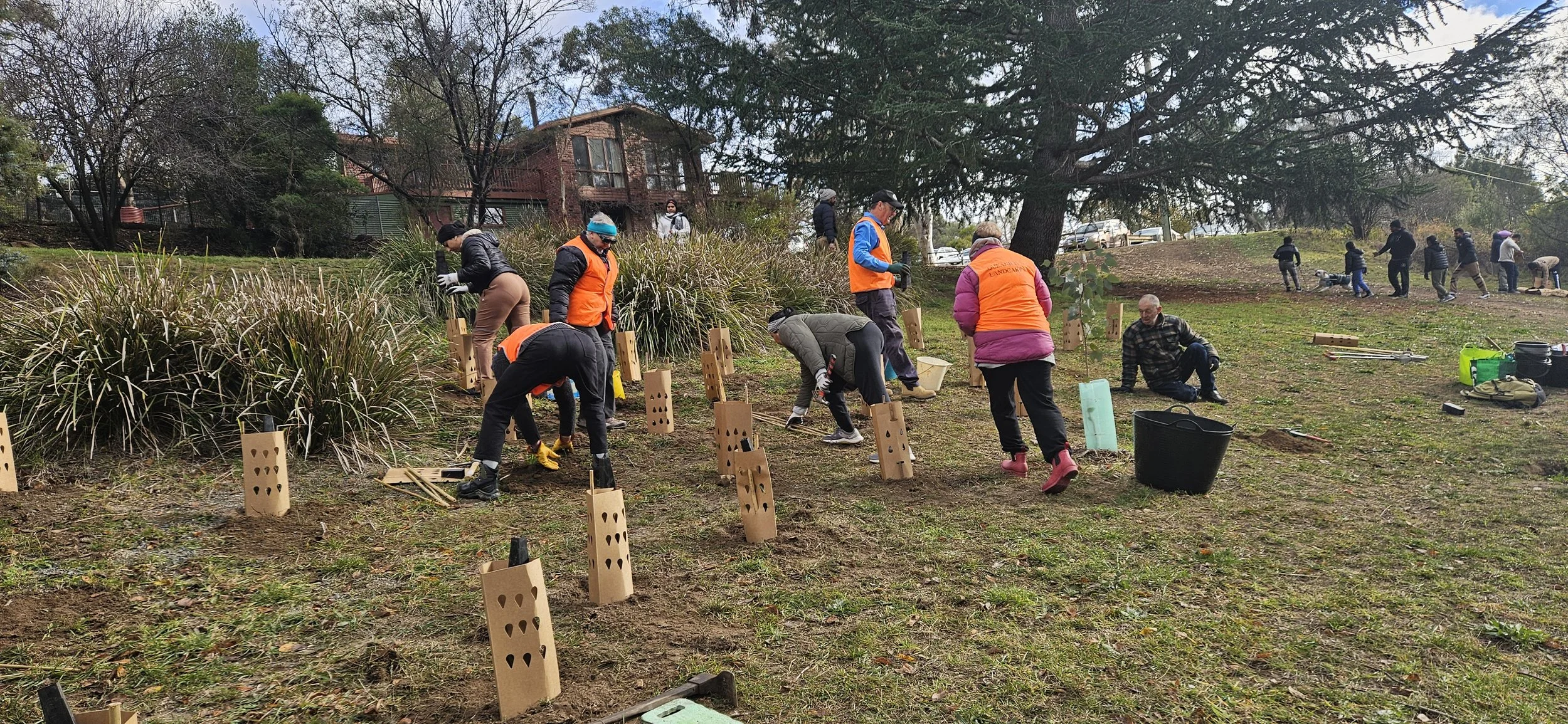
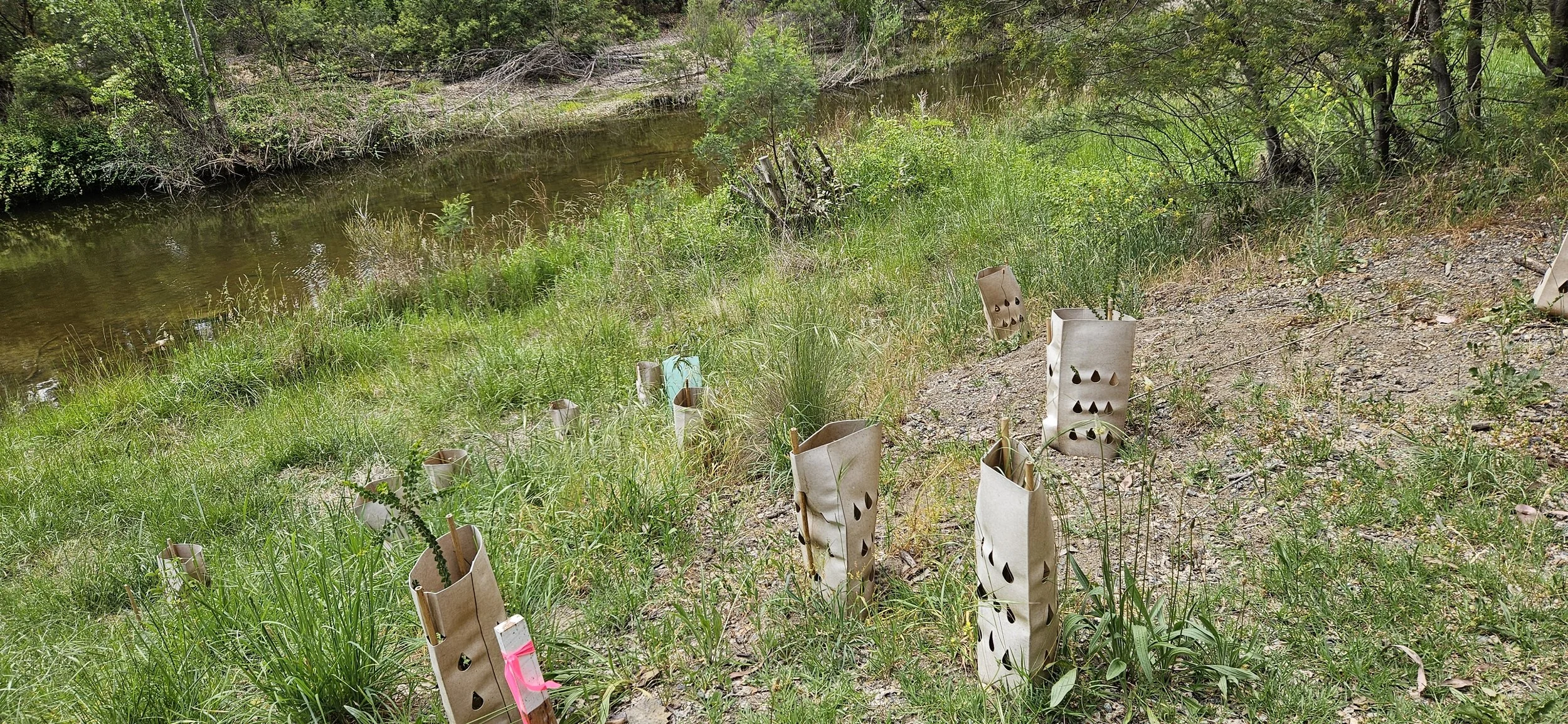
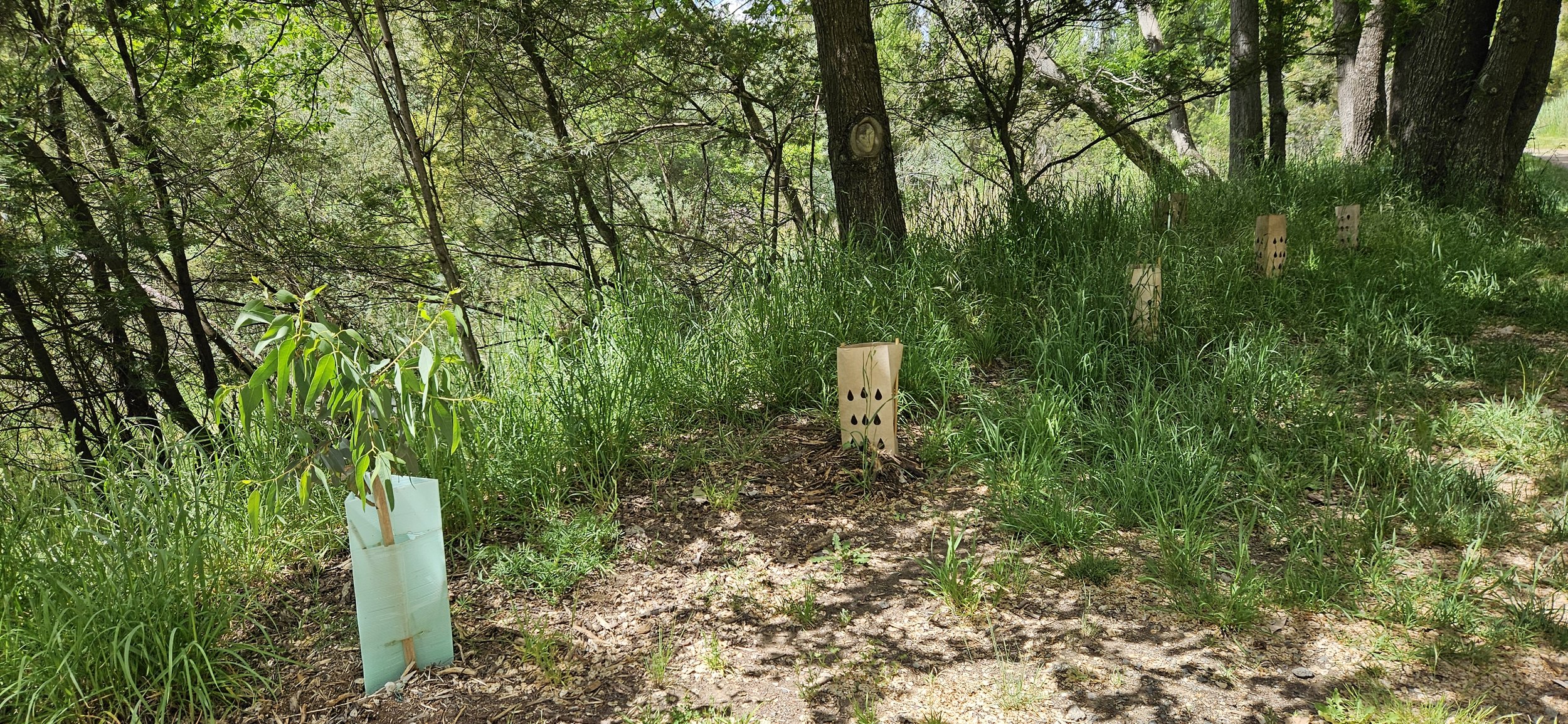
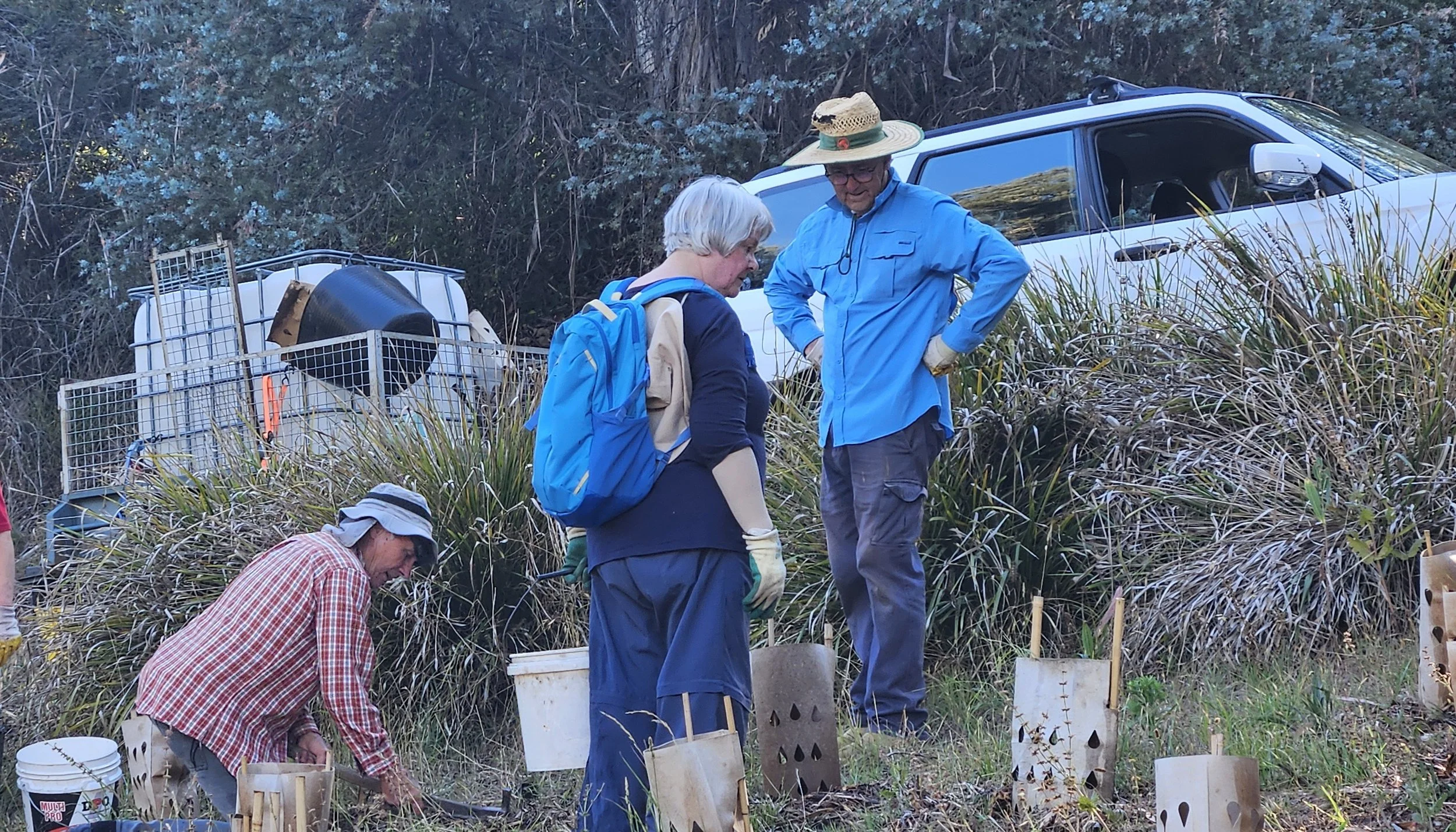
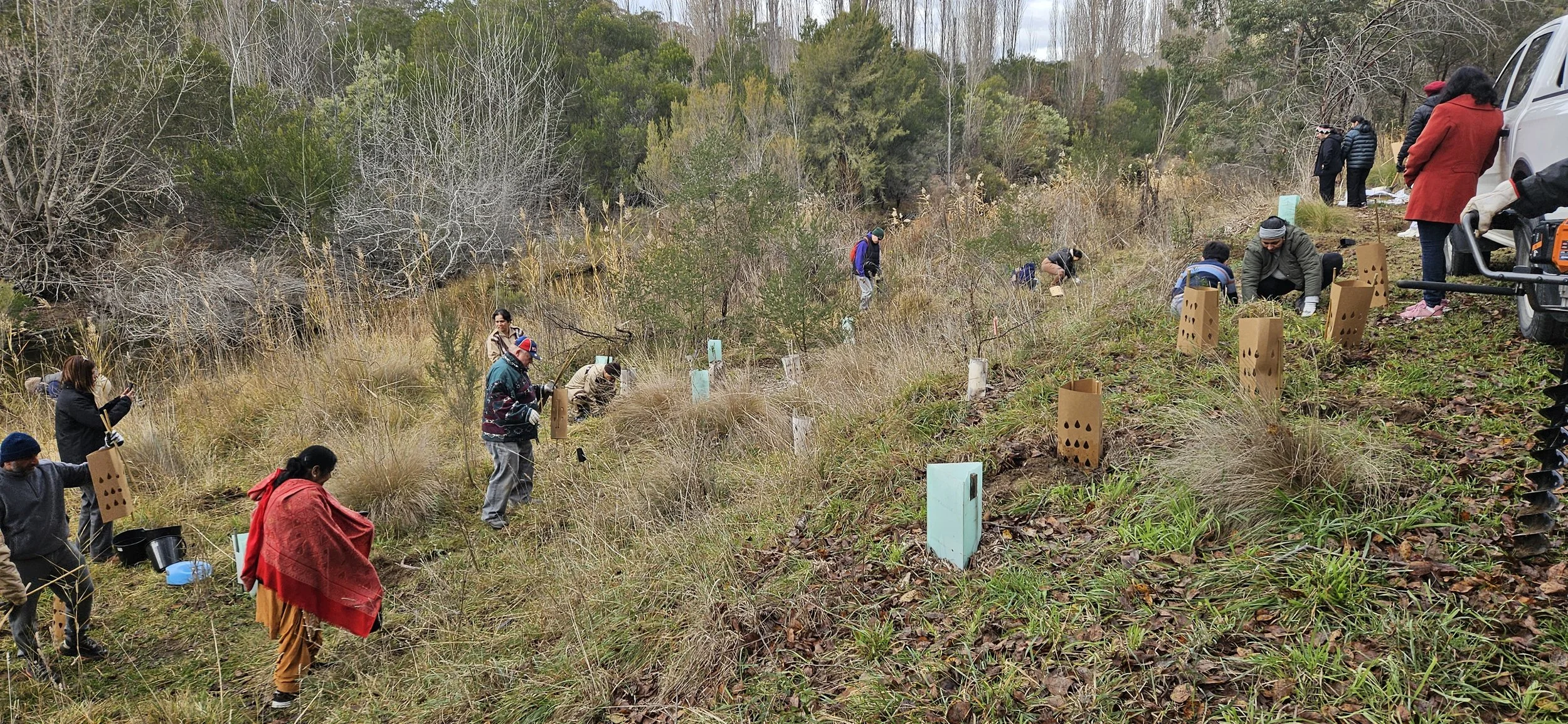
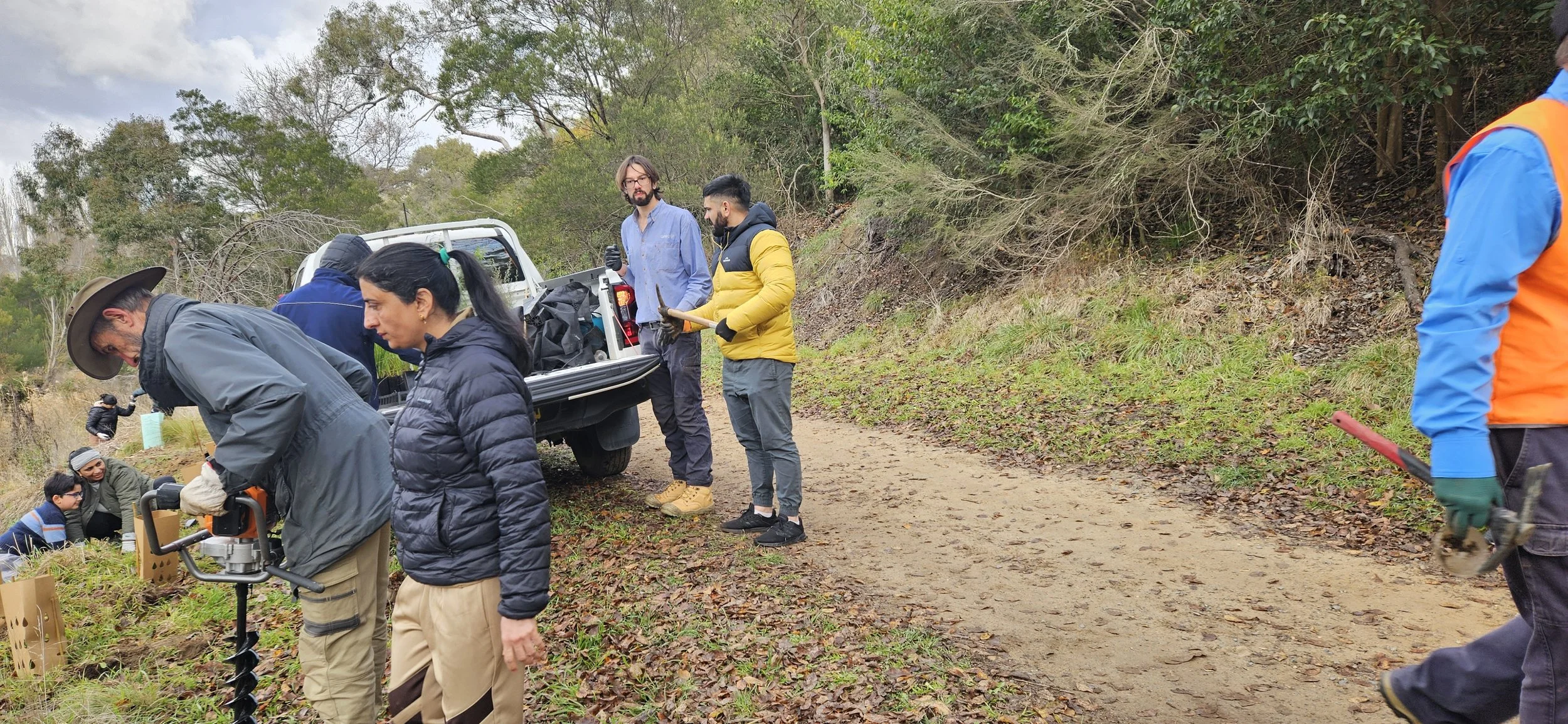
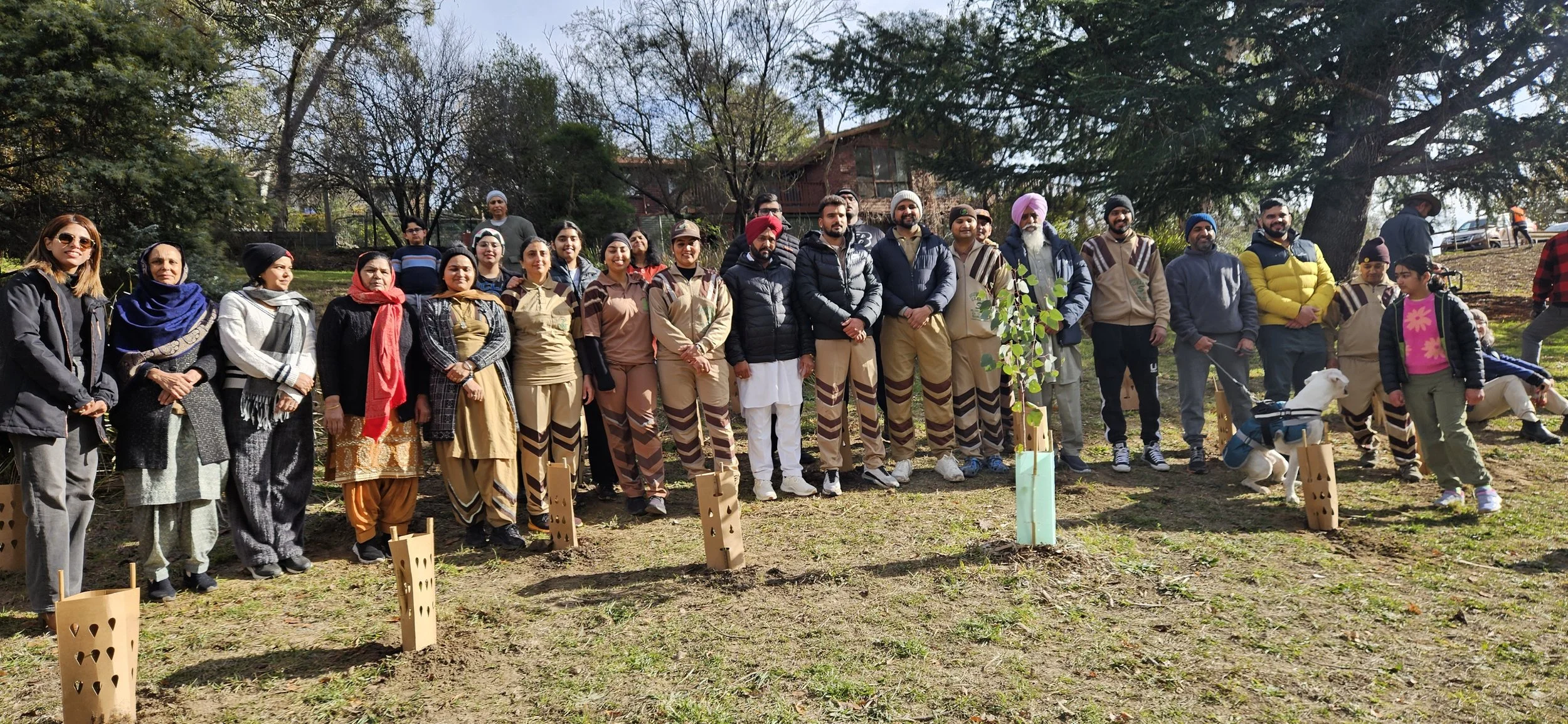
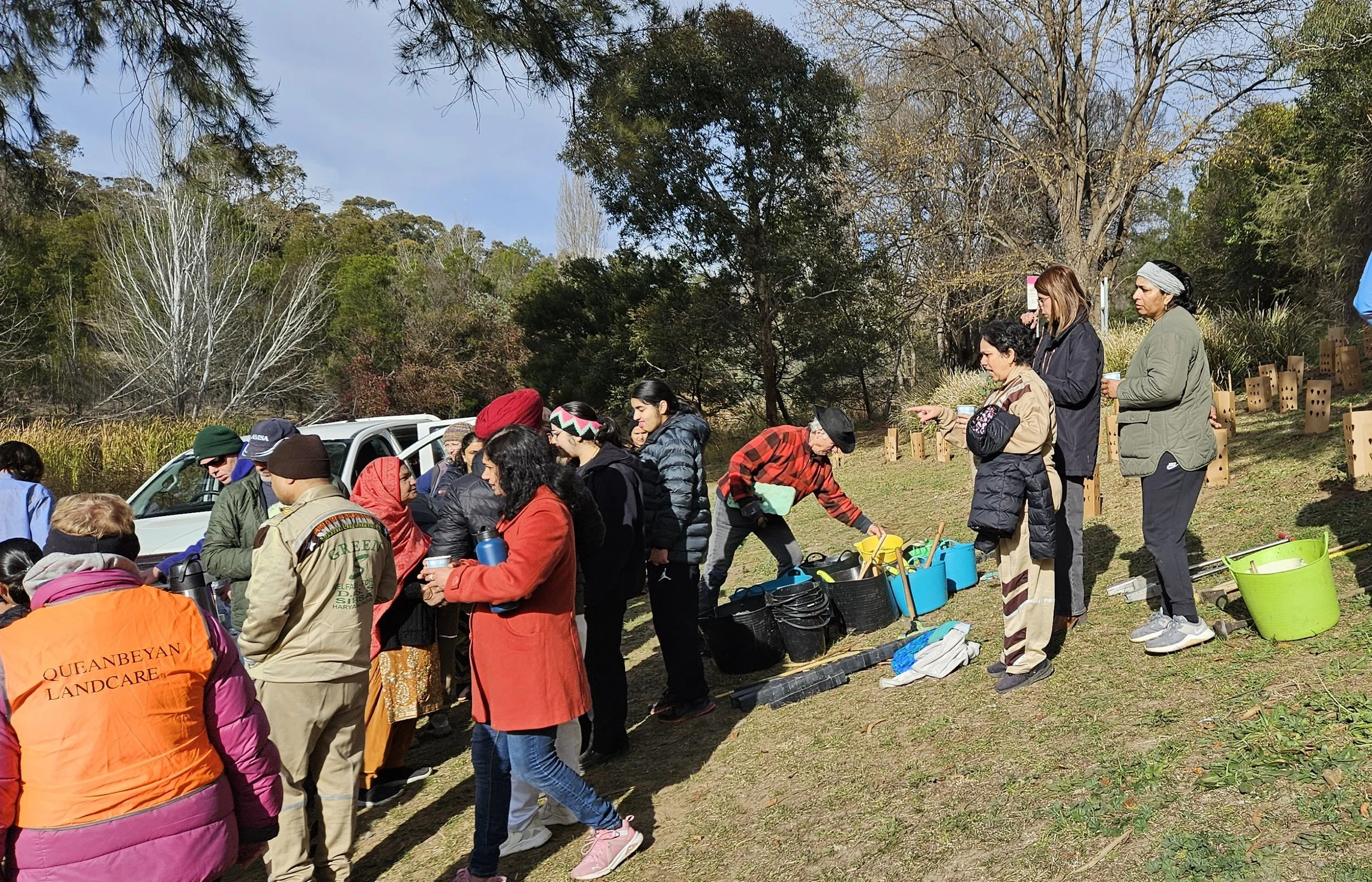

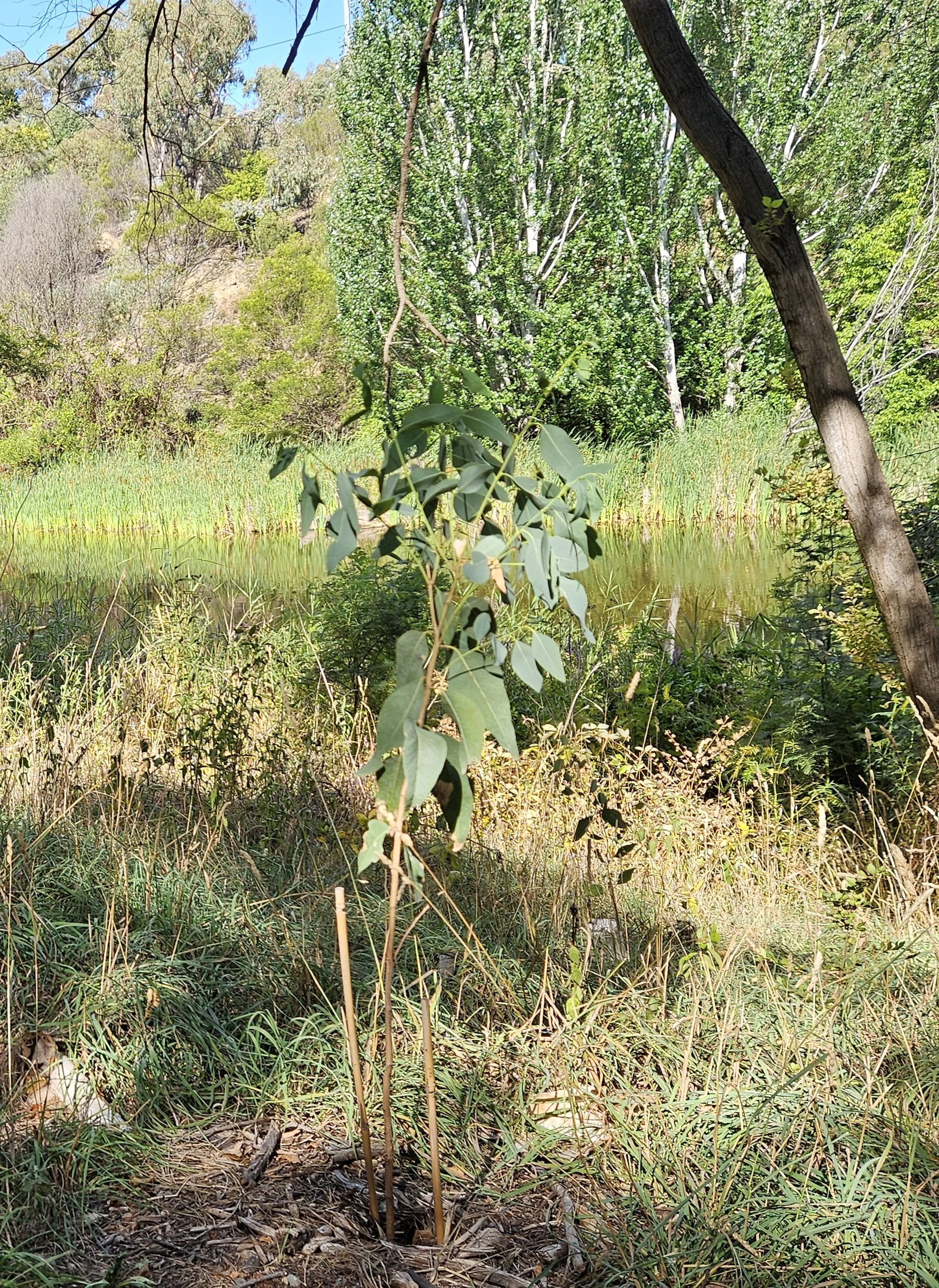
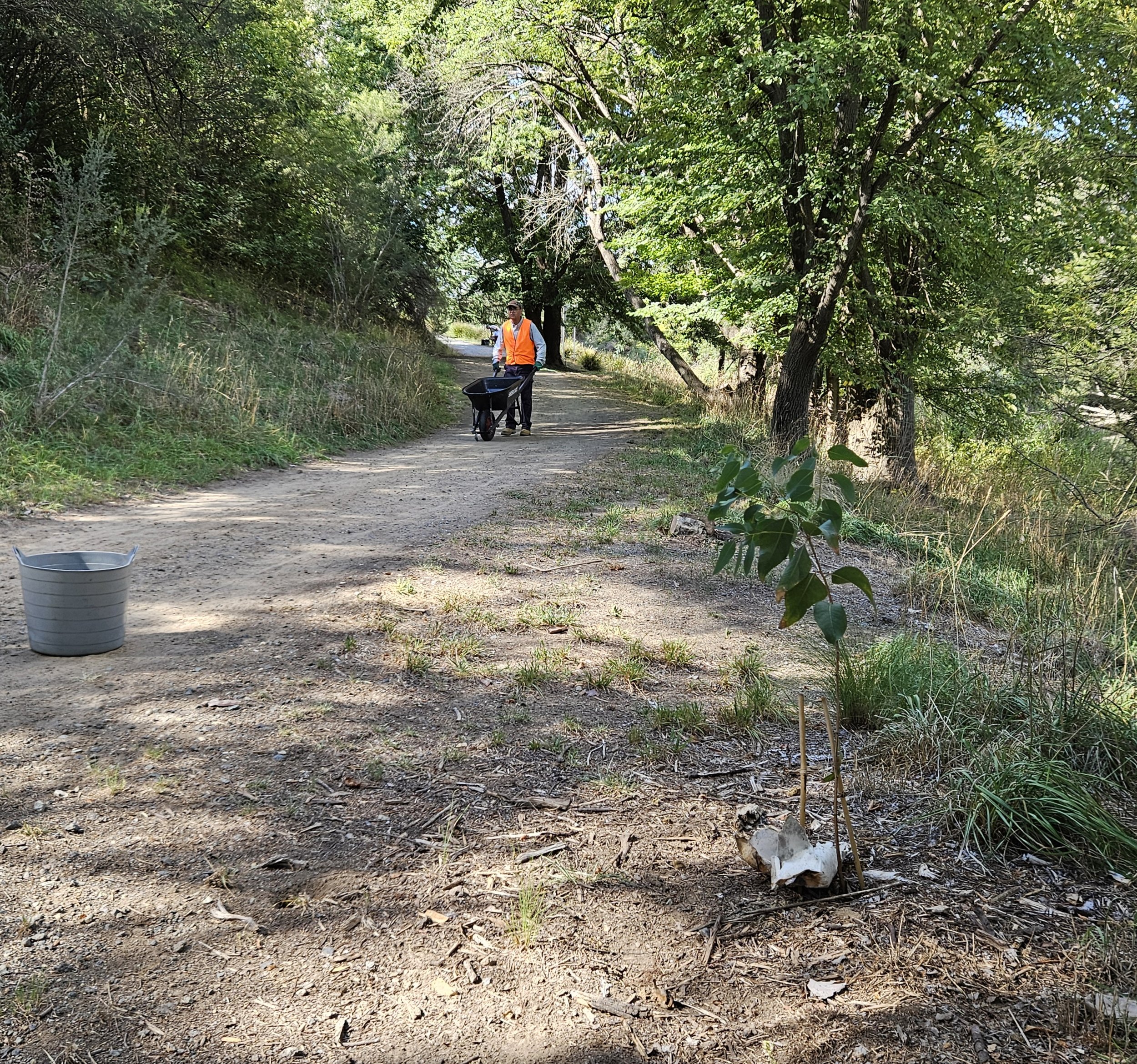
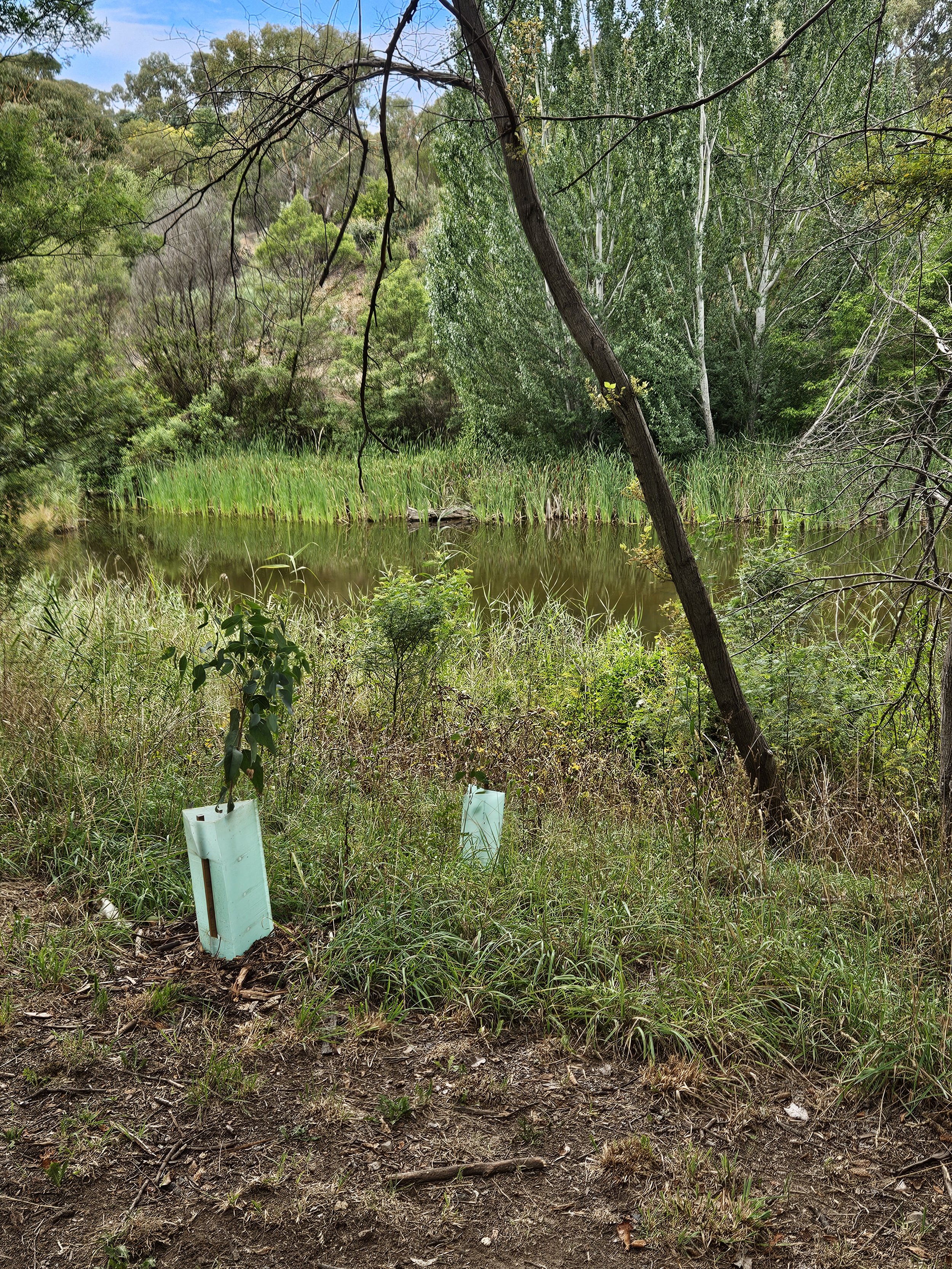
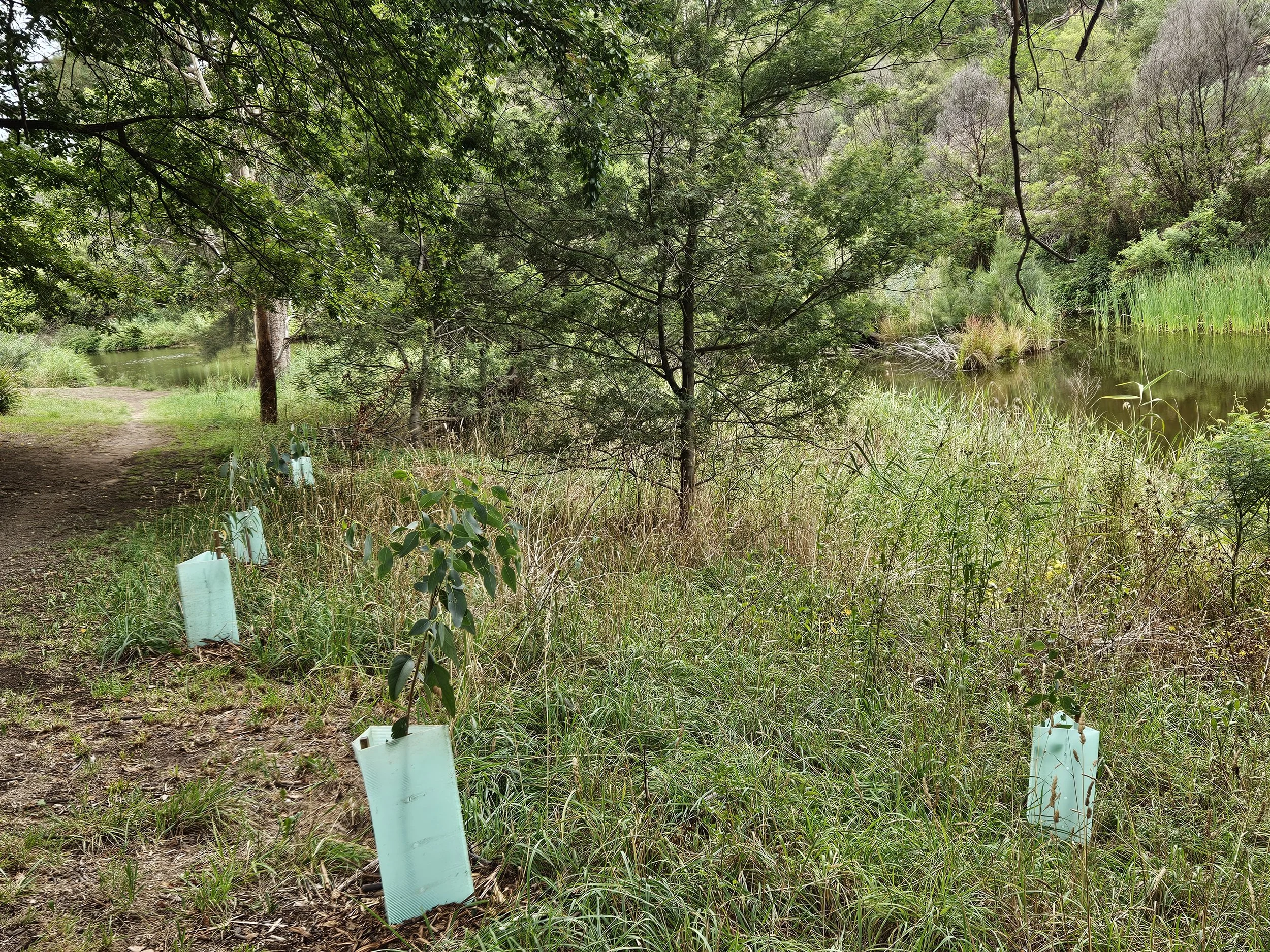
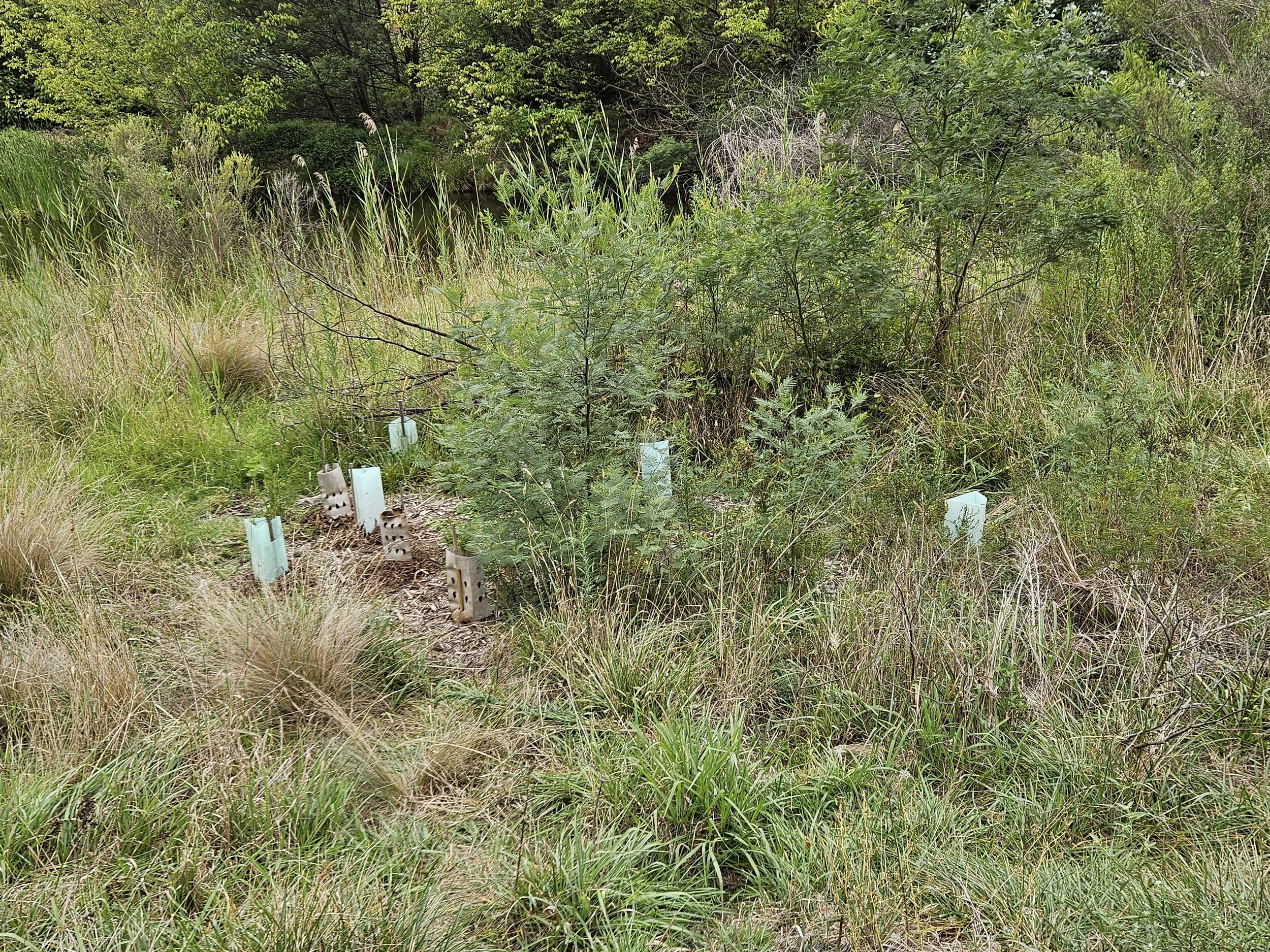
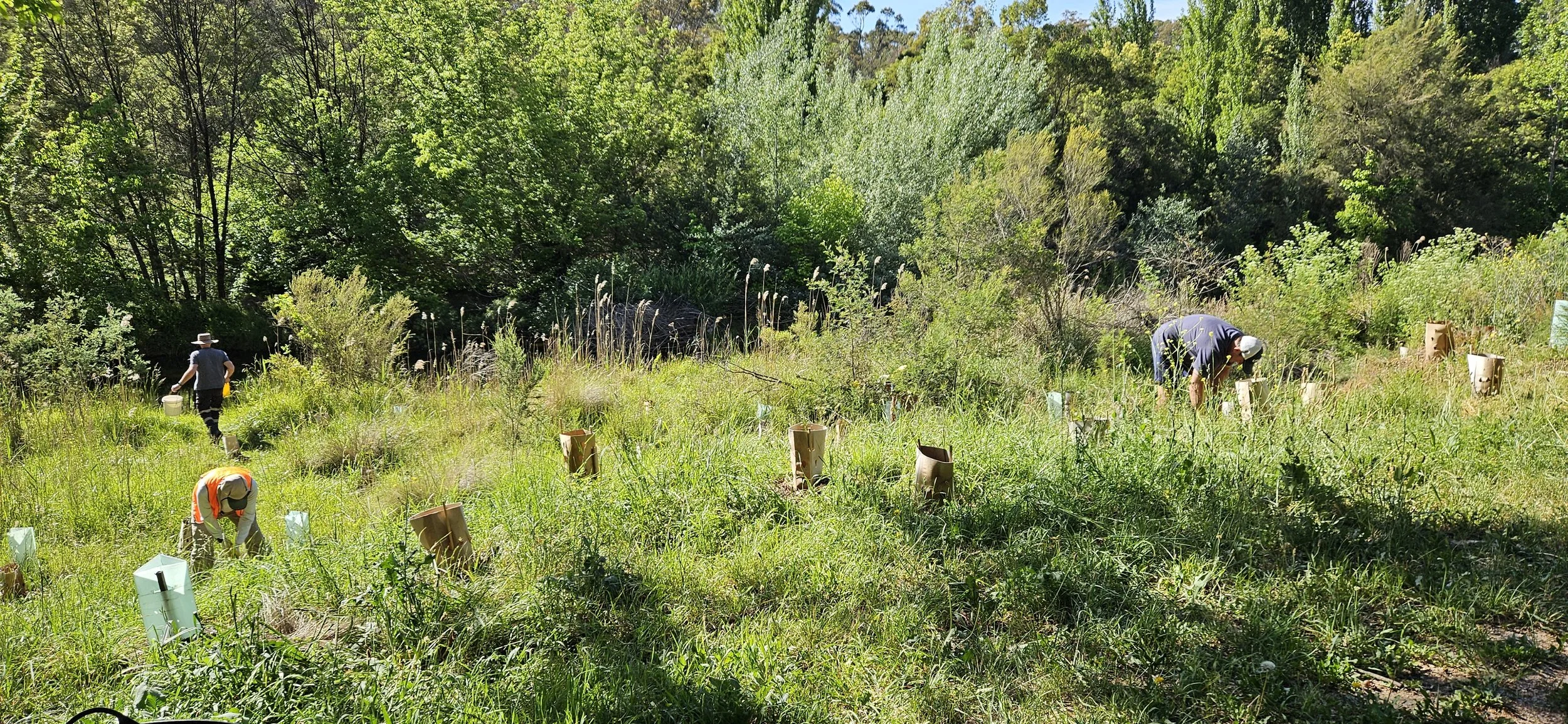
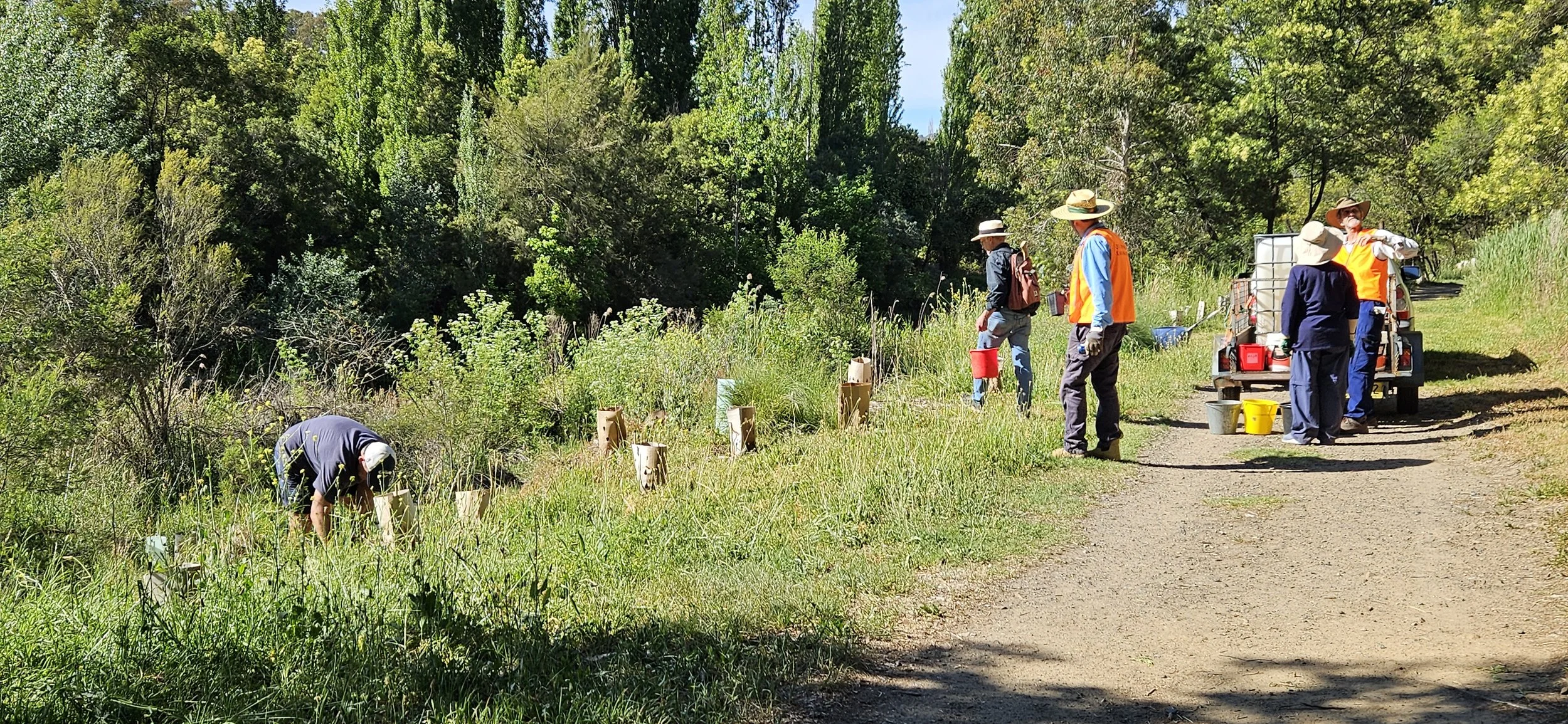
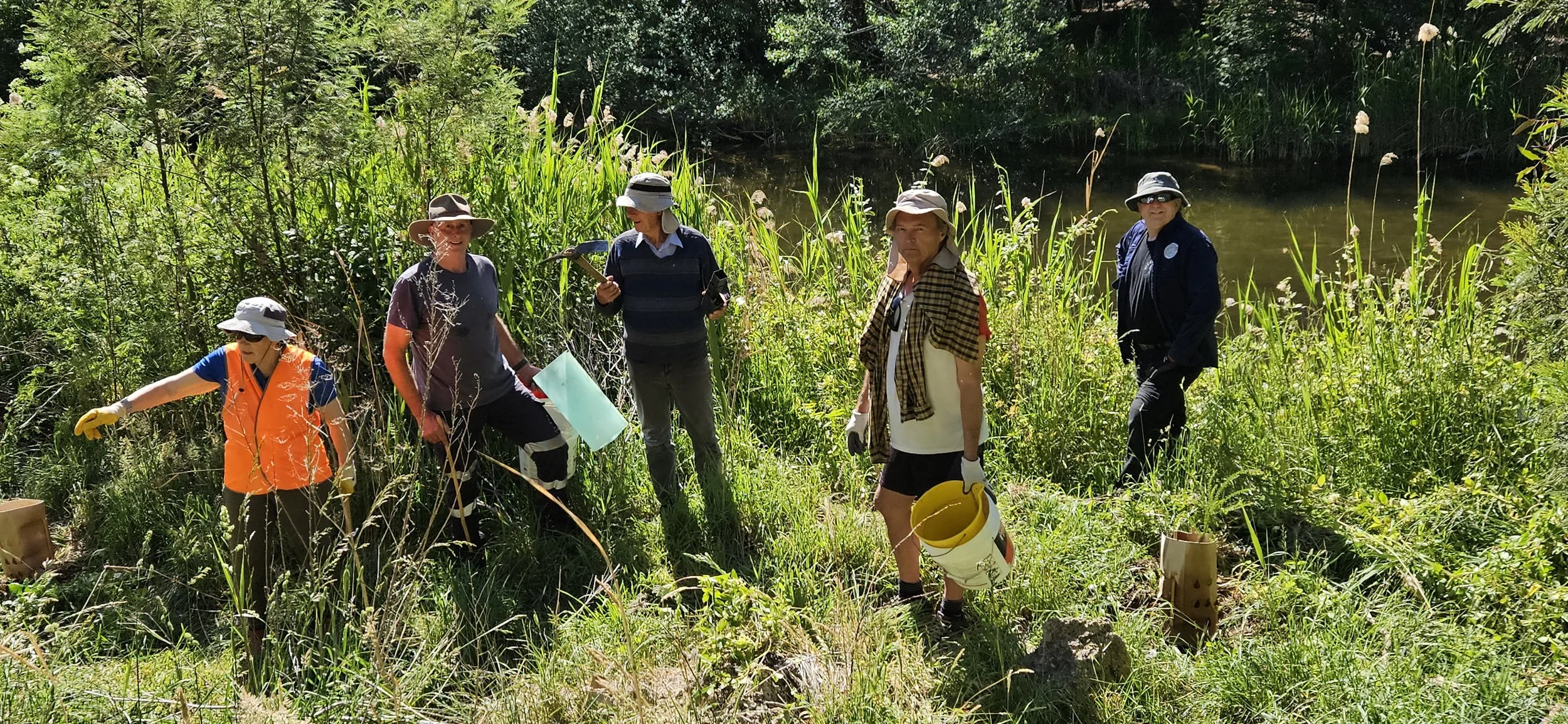
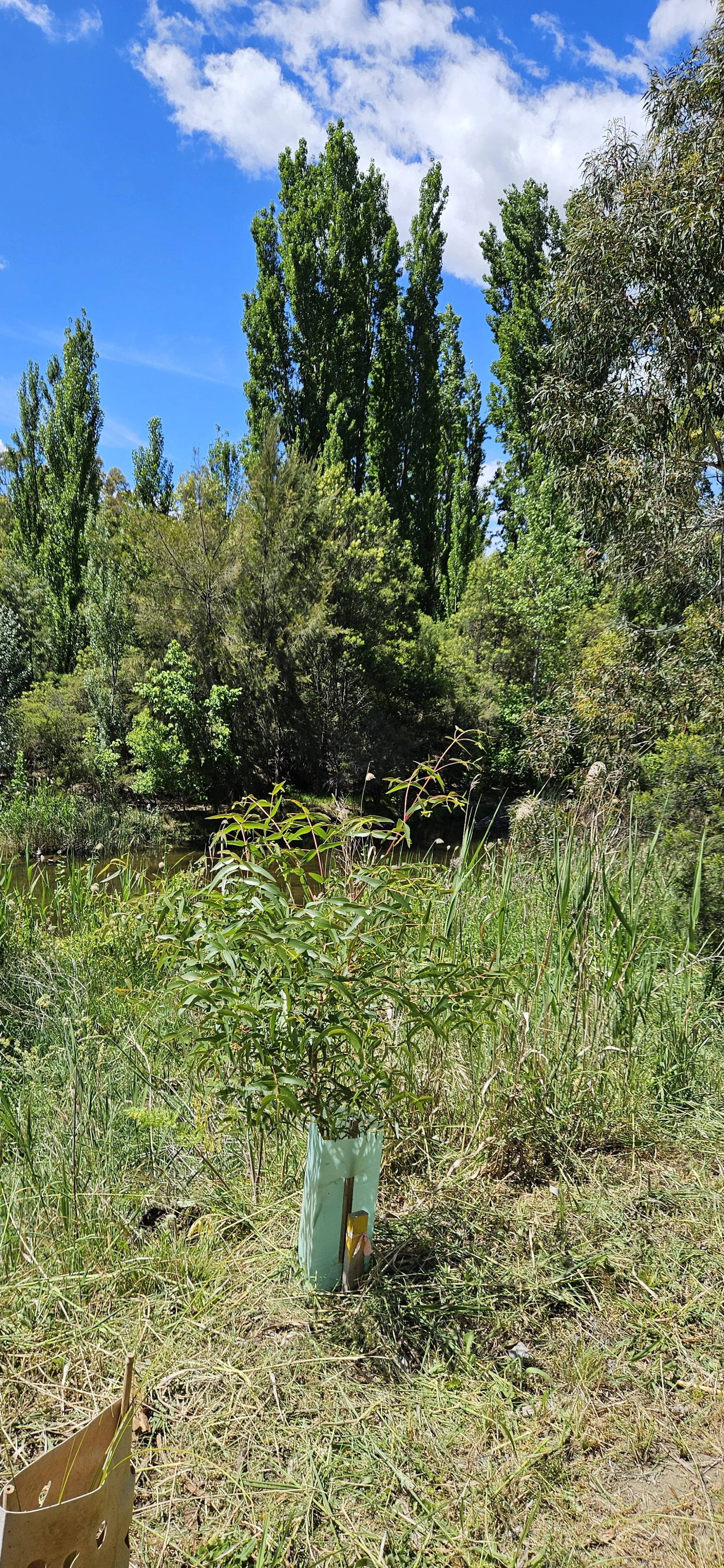
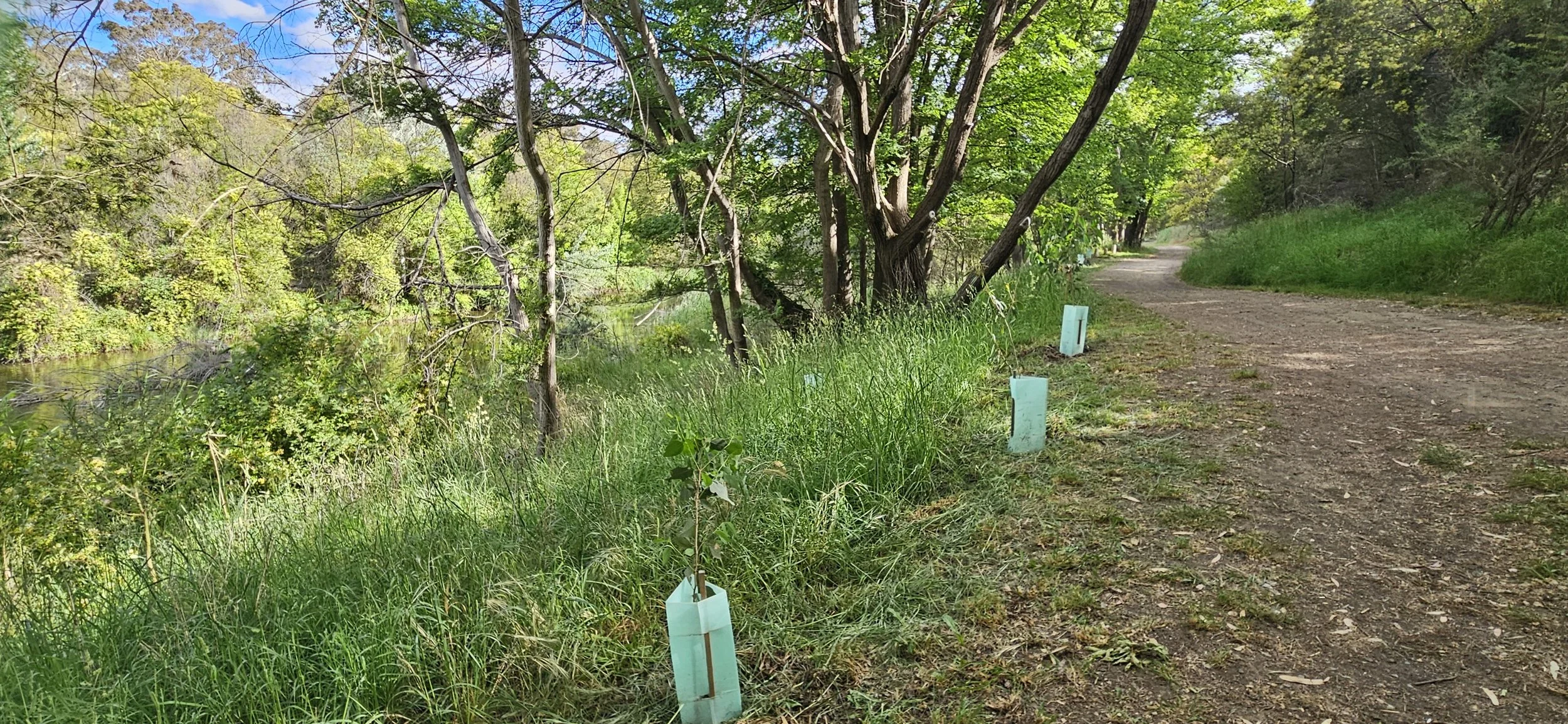
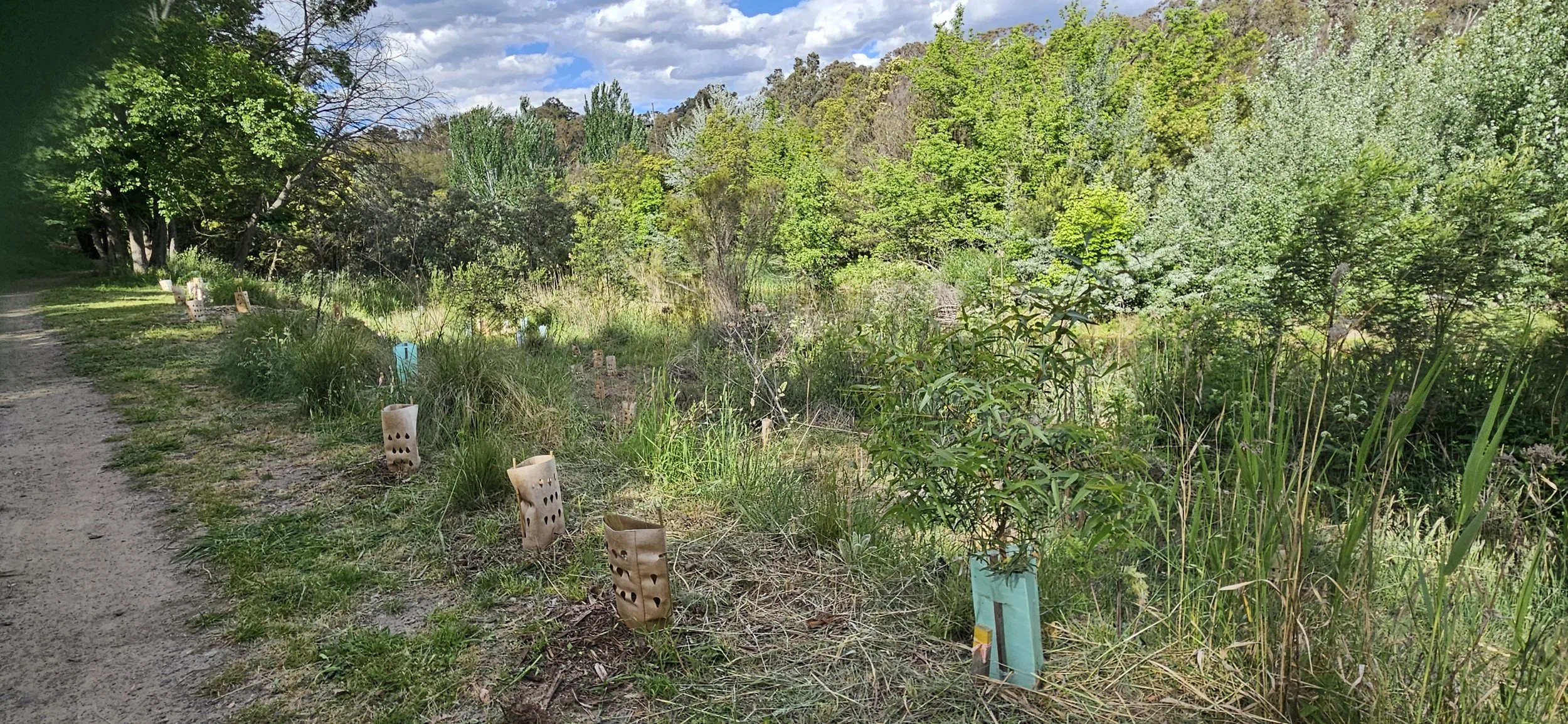
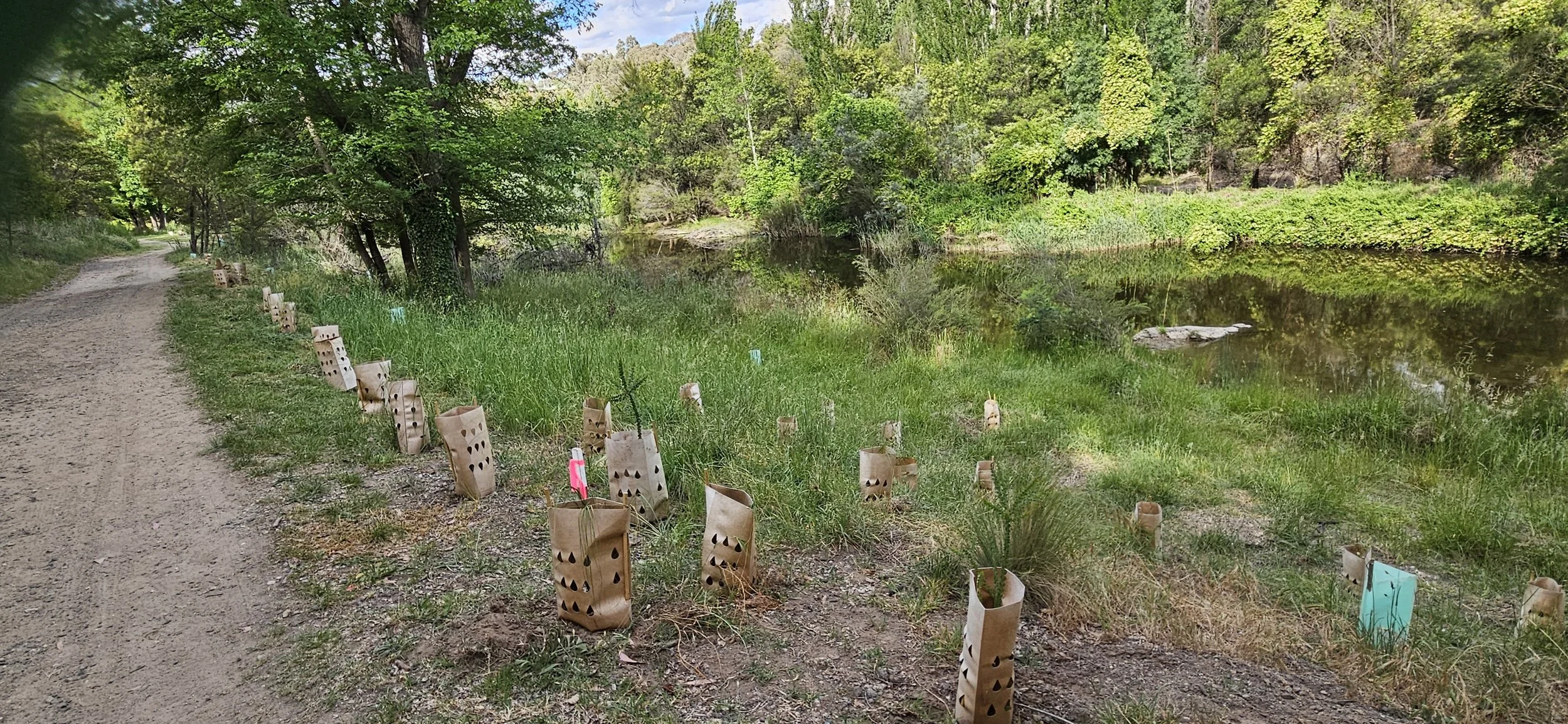
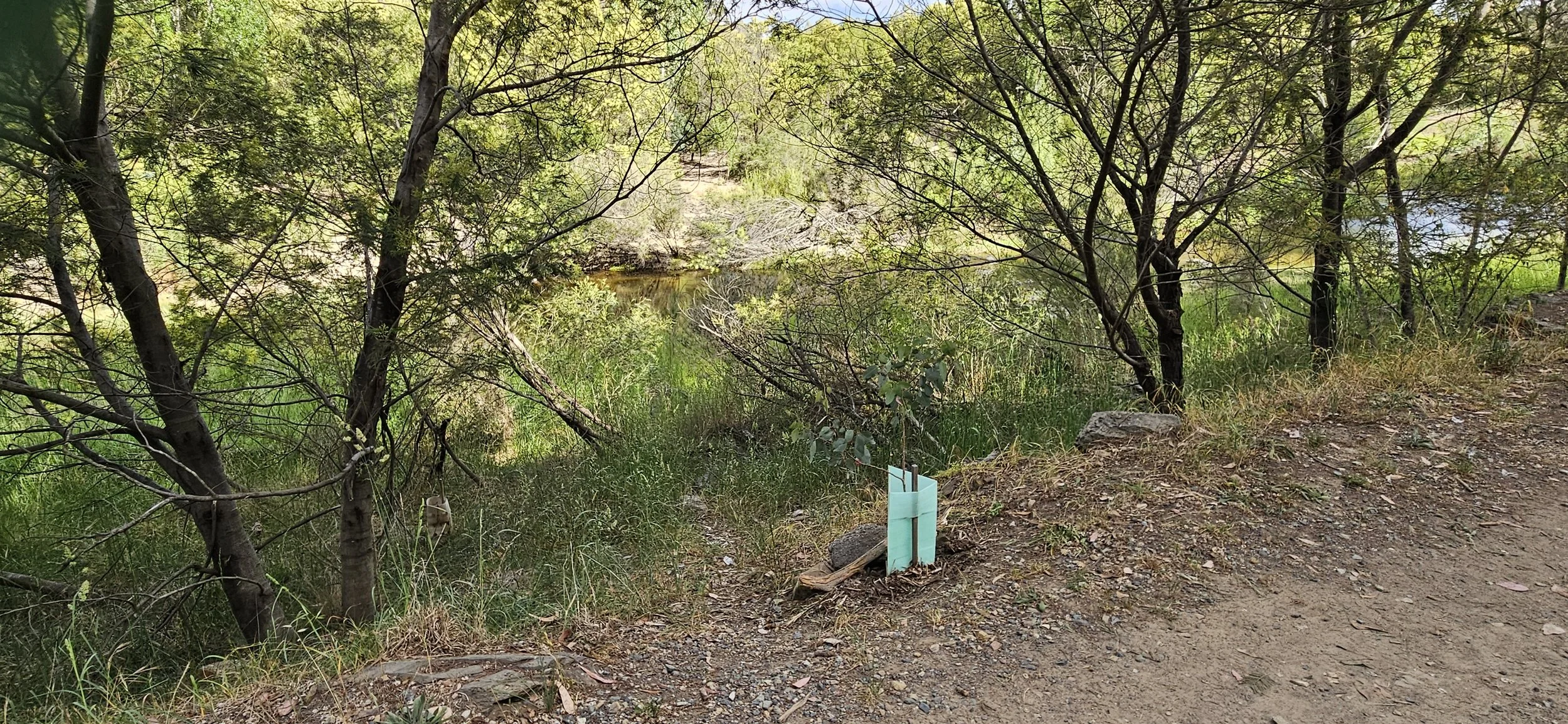
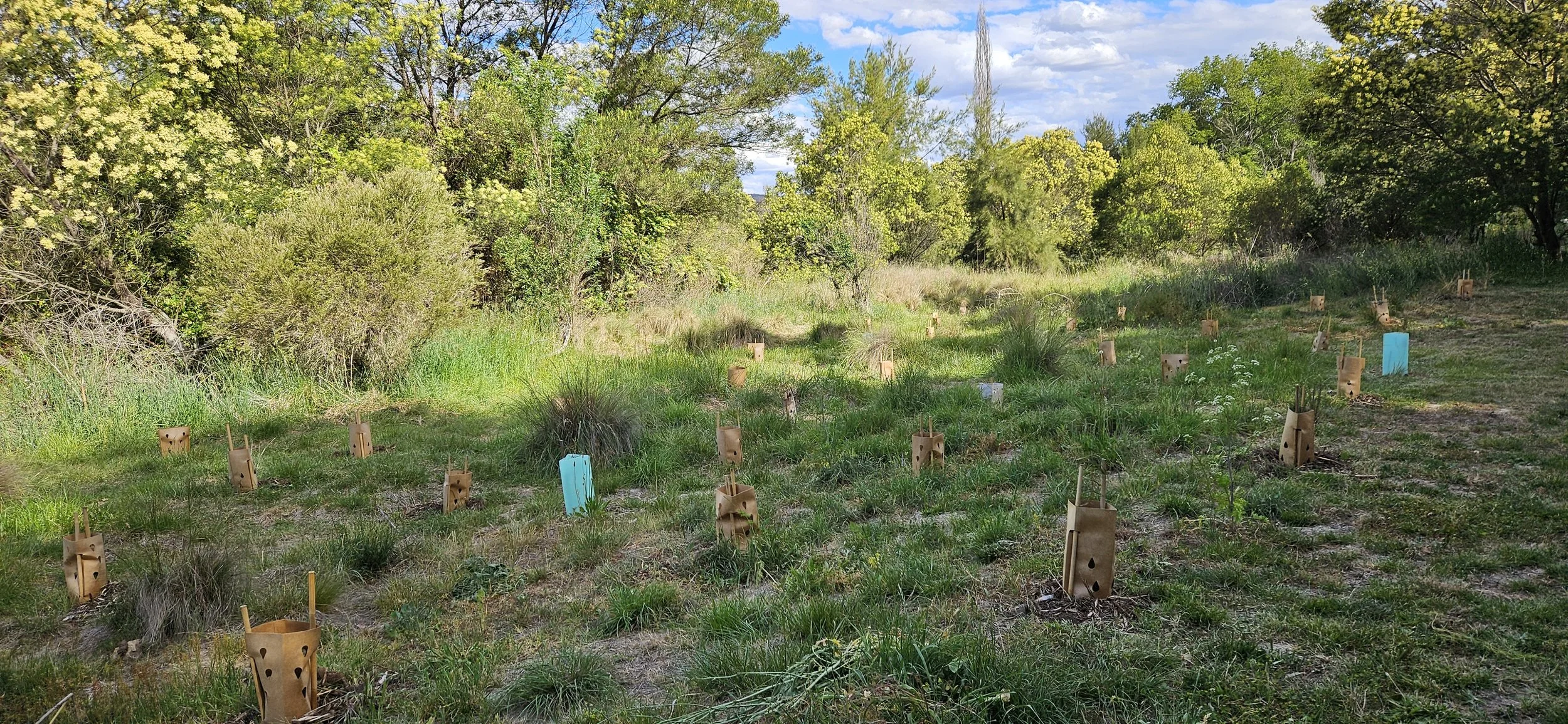
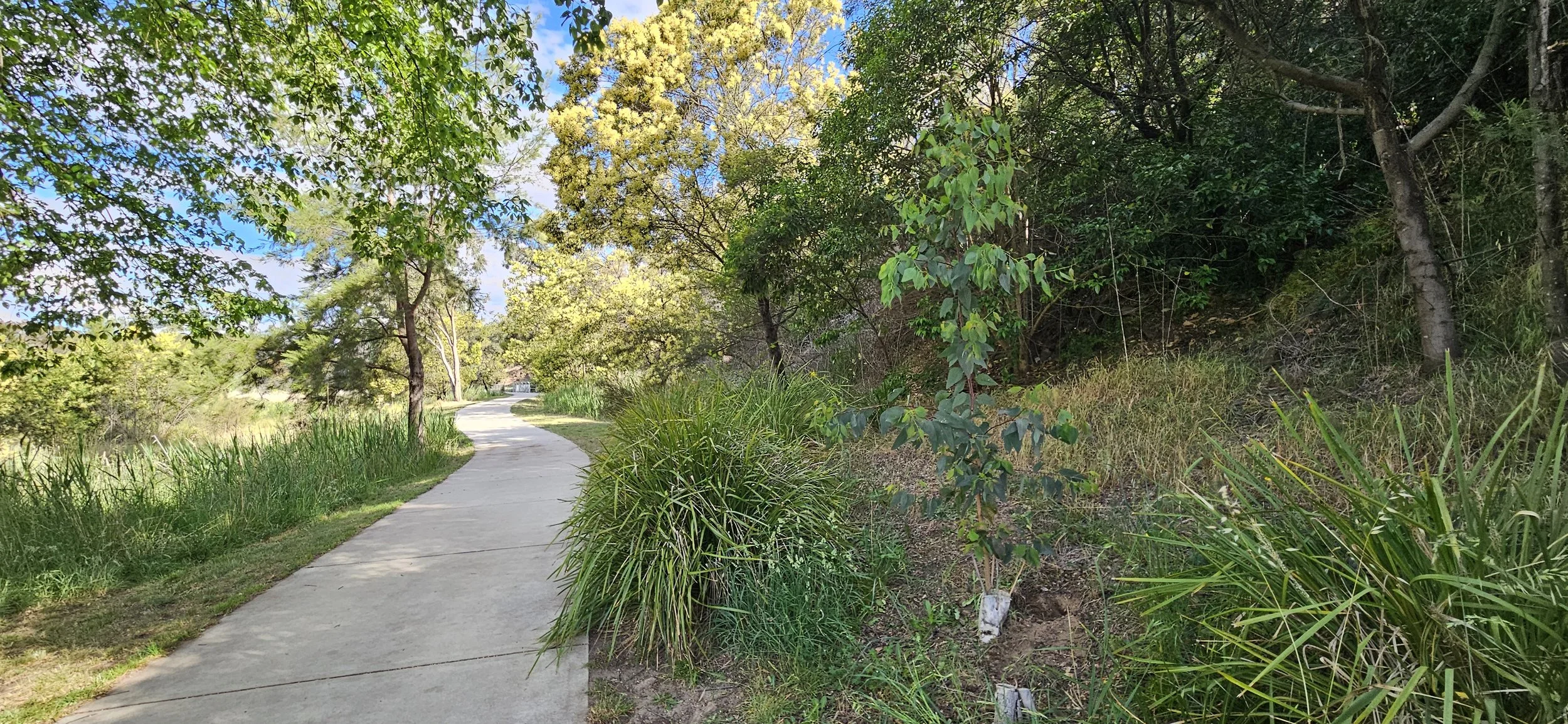
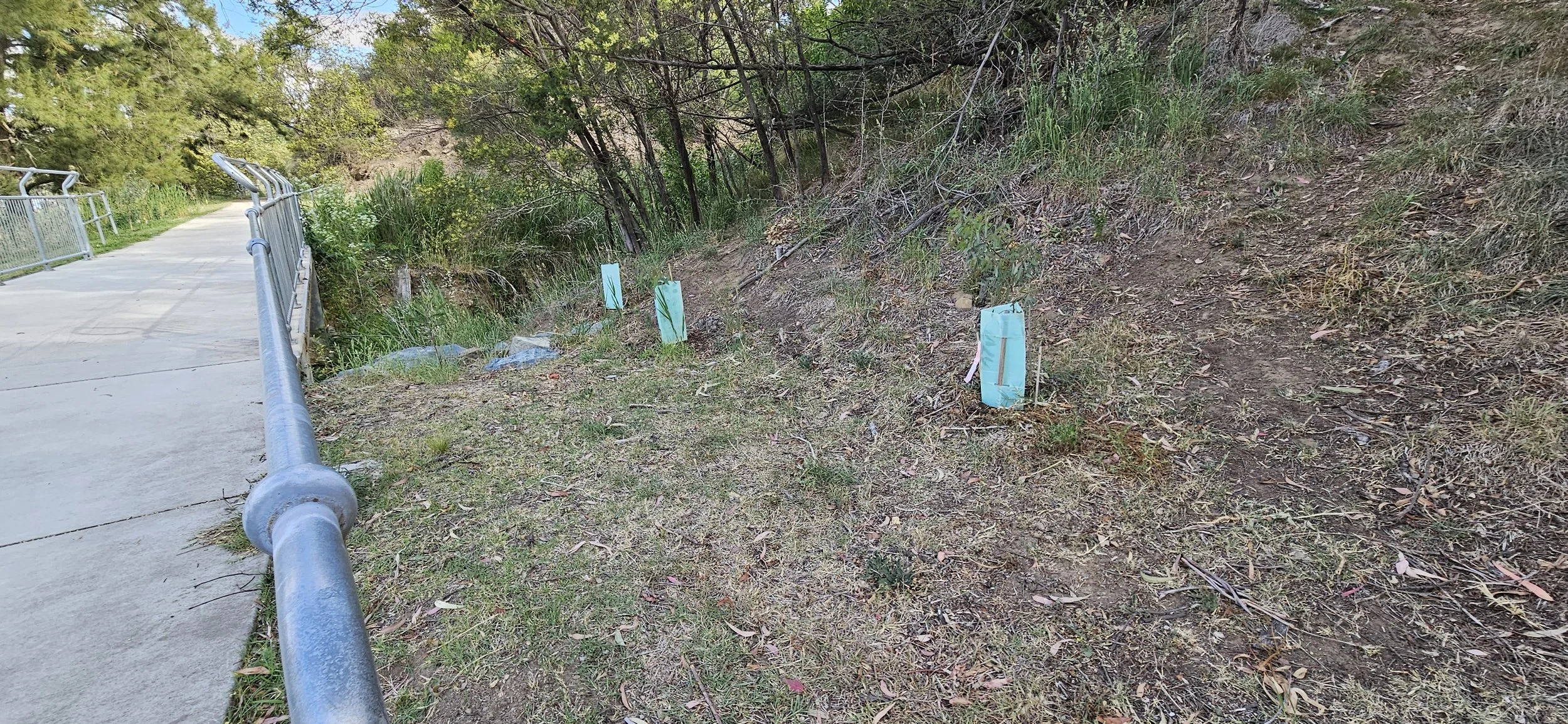
During March 2024 Council replenished gaps left by the failed 2023 plantings, adding 20 Casuarina cunninghamiana, 20 Callistemon viminalis, 5 Eucalyptus melliodora, 15 Eucalyptus viminalis and 15 Acacia boormanii. Queanbeyan Landcare members assisted Council in spreading mulch around the new plantings. A lack of vehicle access made maintenance tasks exhausting and inefficient.
Given this limitation, the group made the decision to step back from regular site maintenance, returning only for the 2024 World Environment Day walk along the river.
2024
Setbacks and lessons learned
This pause and the subsequent loss of new plants underscores the importance of organising adequate access and support for successful long-term restoration. For photos and stories from the 2024 World Environment Day walk, check out our Facebook post and visit our World Environment Day page.
A survey of the birds sighted in this area by local resident Steve Dovers over the years 2022 to 2024 is impressive.

2023
The beginning, again
In 2023 after noticing that Council had been planting natives and clearing woody weeds such as privet along the path Queanbeyan Landcare approached Council to discuss ways we could be involved in improving the success of the planting.
Queanbeyan Landcare members re-engaged with conservation efforts in the area between Dane Street and just beyond Barracks Creek as it was apparent that recent Council plantings required rescue and maintenance and there was sufficient local volunteer interest in working at this site.
In early December 2023 Tom Baker, Bill Willis and Michele Dovers met with QPRC staff to discuss a basic plan of action. Our proposal was simply to support the newly established plants by removing the annual weeds such as Datura, Honeysuckle, Variegated Thistle and Euphorbia that were in direct competition. We also sought to add to the overall diversity by planting bank stabilisers. Council provided a list of plants that were planted by them in early 2023. There were 25 of each of the following - Eucalyptus bridgesiana, E. melliodora, E. blakeleyi, Brachychiton populensis, Casuarina cunninghamia and Callistemon sieberi.
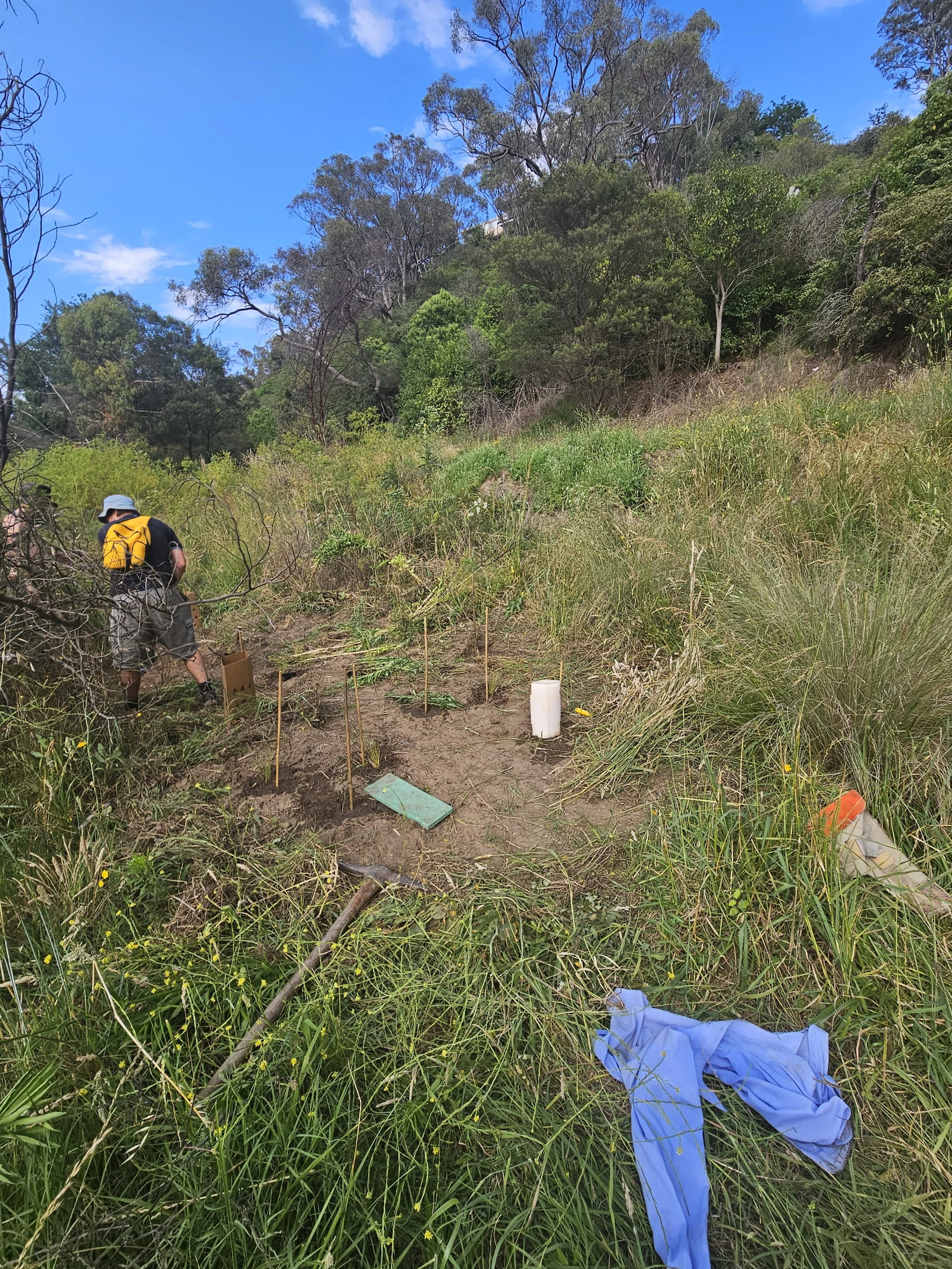
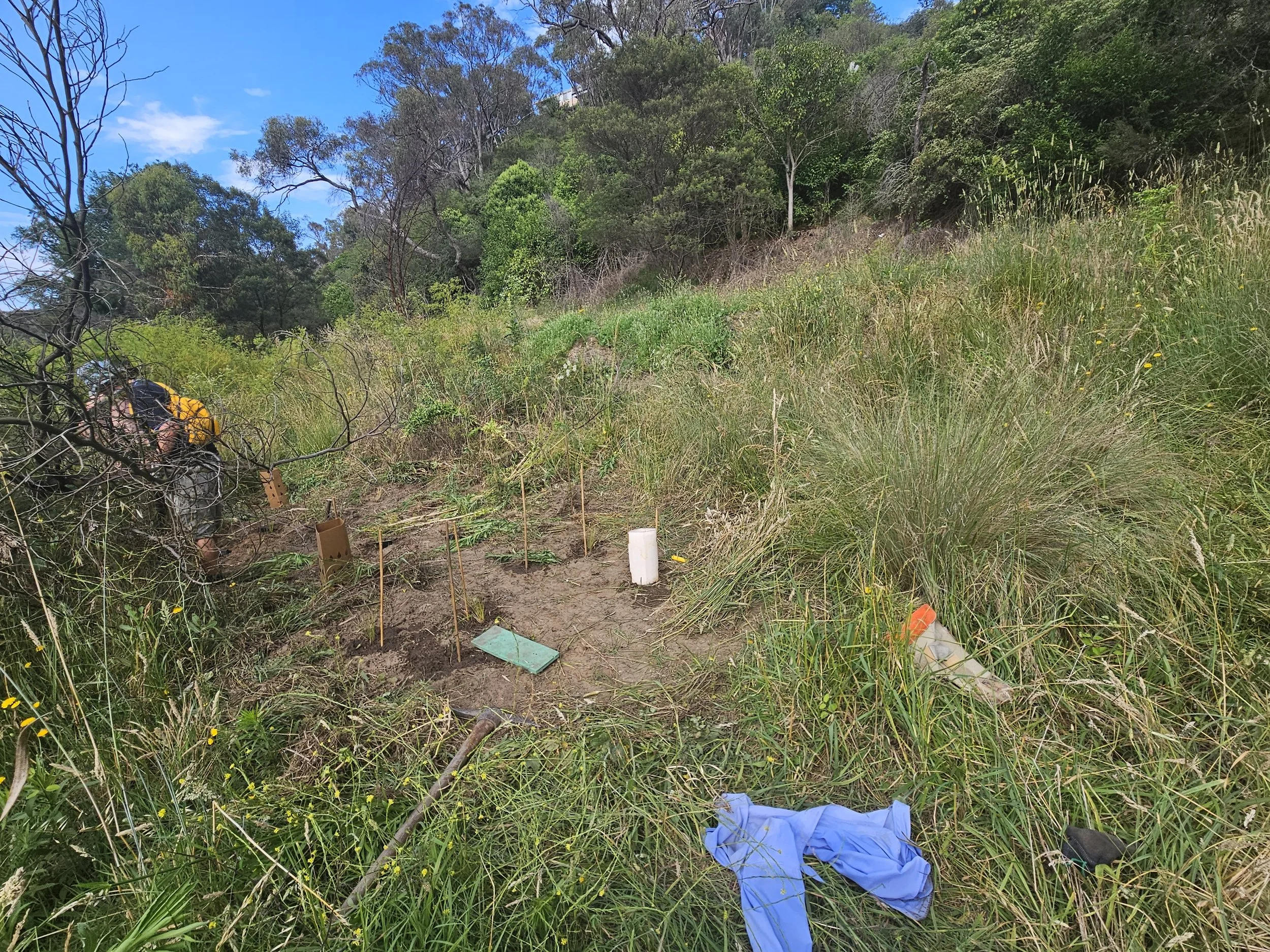
We held our first working group at the site in late December, selecting an area close to the water just upstream from the first stand of Elms for a dense planting of species that Landcare members had propogated and were suited to the site. They included River Callistemon Callistemon sieberi, Casuarinas and River Tussock. Such sites are prone to flood damage, so only flood plain-suitable species were used with some local riparian species such as river tea tree and bottlebrush being planted directly along the water edge for habitat but also to protect the river bank from erosion. Mulch was spread. Care was taken to not plant in a manner that obstructed areas where people obviously accessed the river.