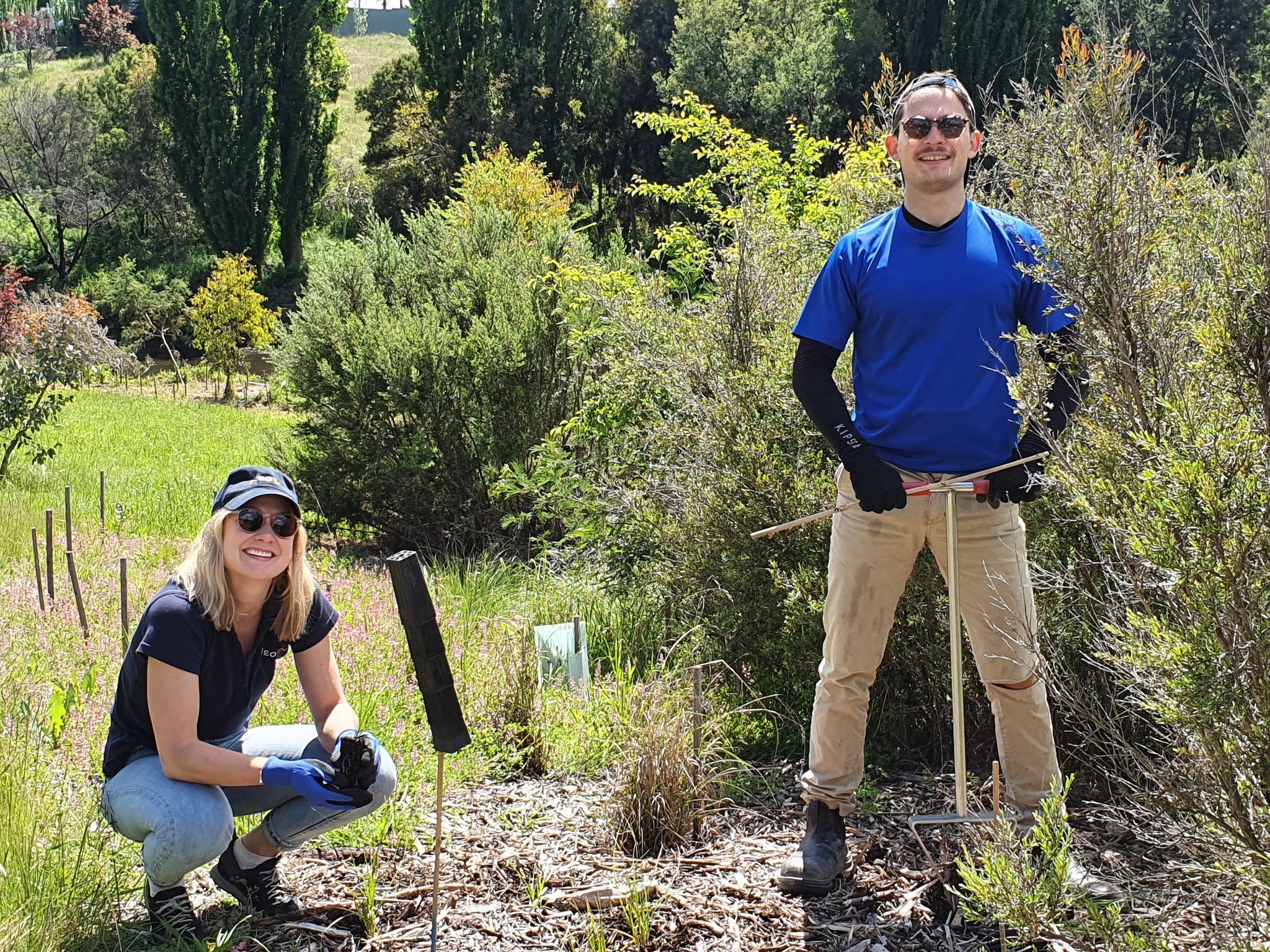
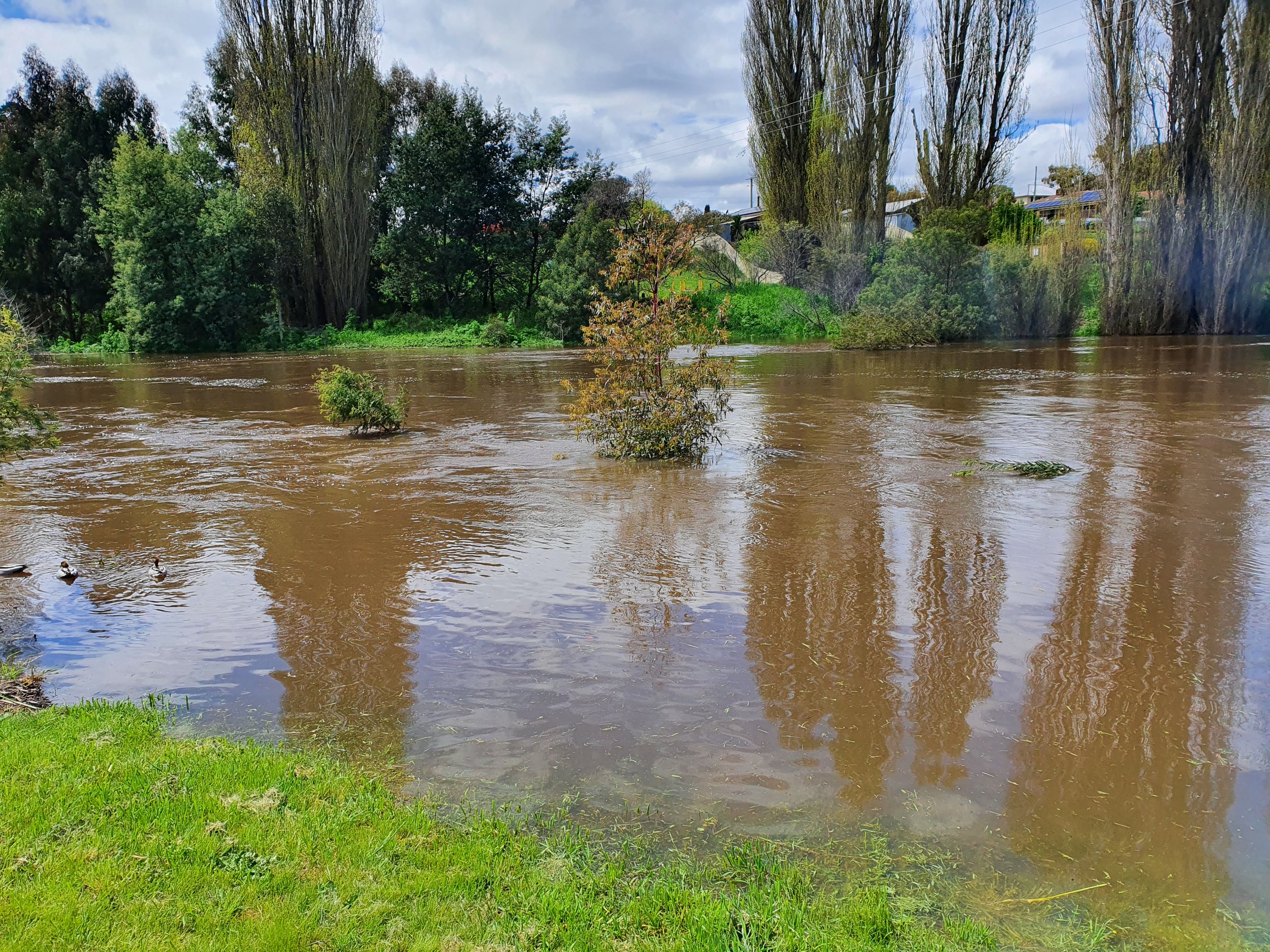
National Tree Day
Planet Ark's National Tree Day started in 1996 and has grown into Australia's largest community tree planting and nature care event.
Queanbeyan Landcare has participated in every National Tree Day working with Council and other community groups or organising our own celebratory plantings.
2026 National Tree Day (Bicentennial Park)
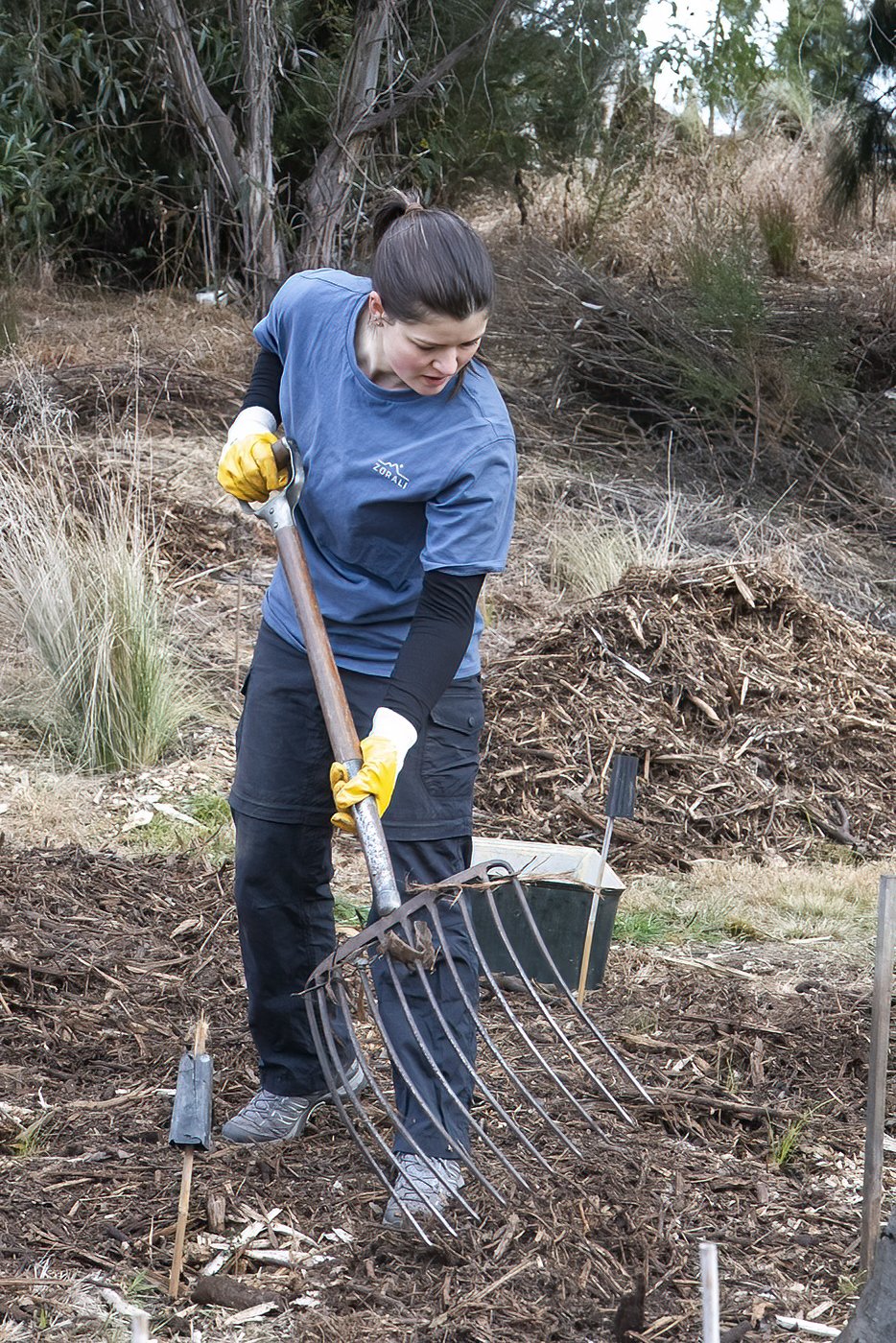
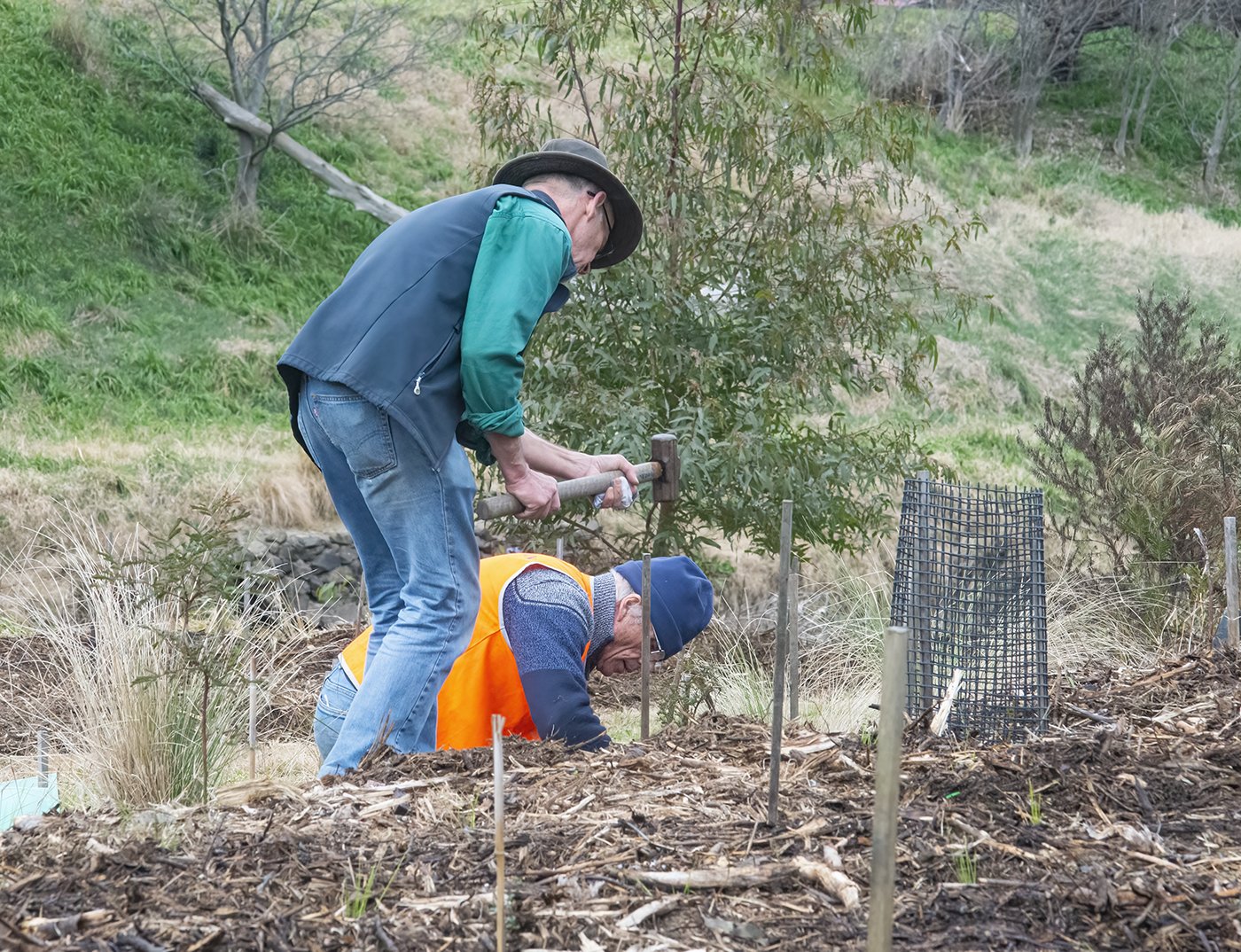
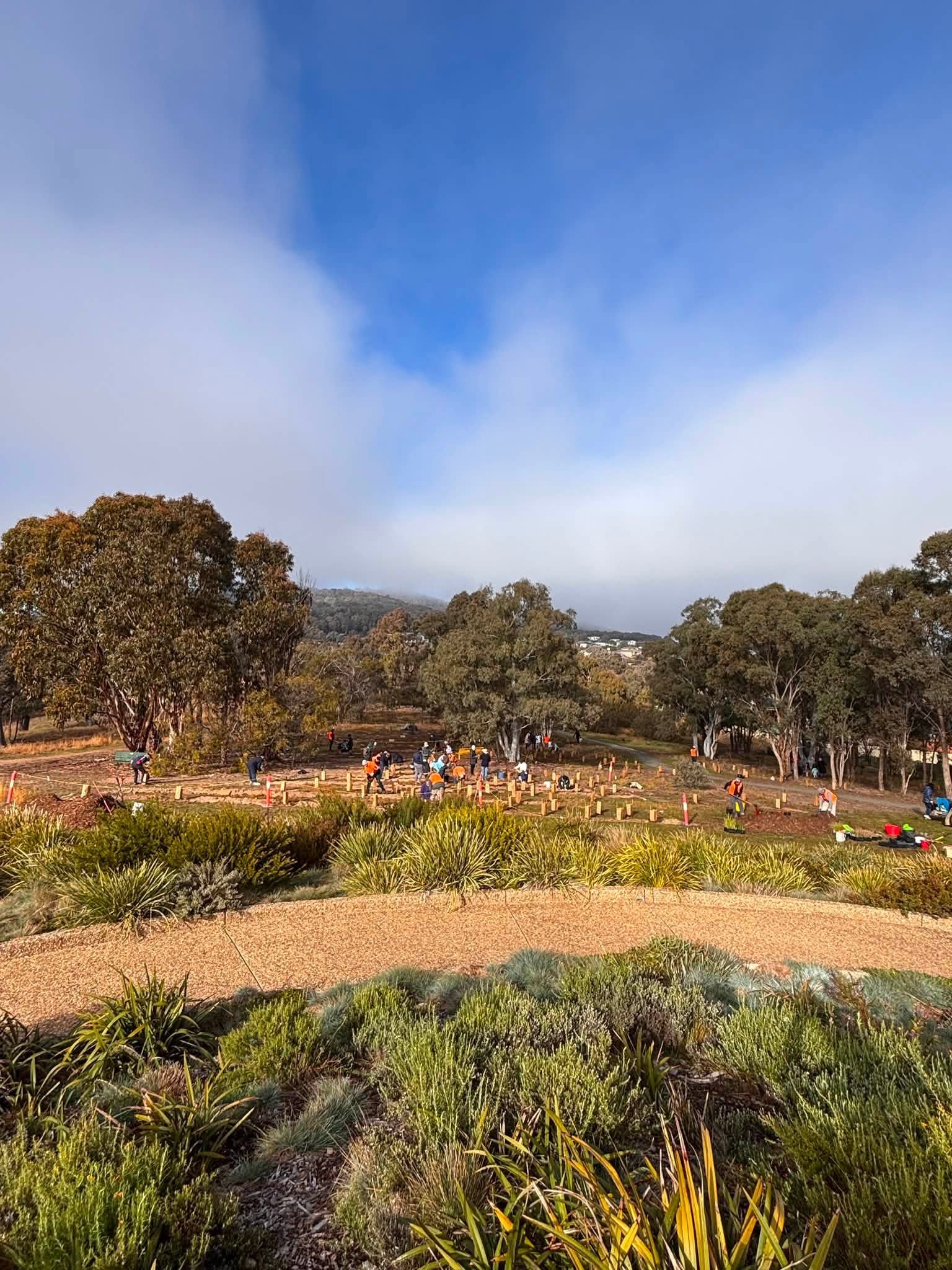
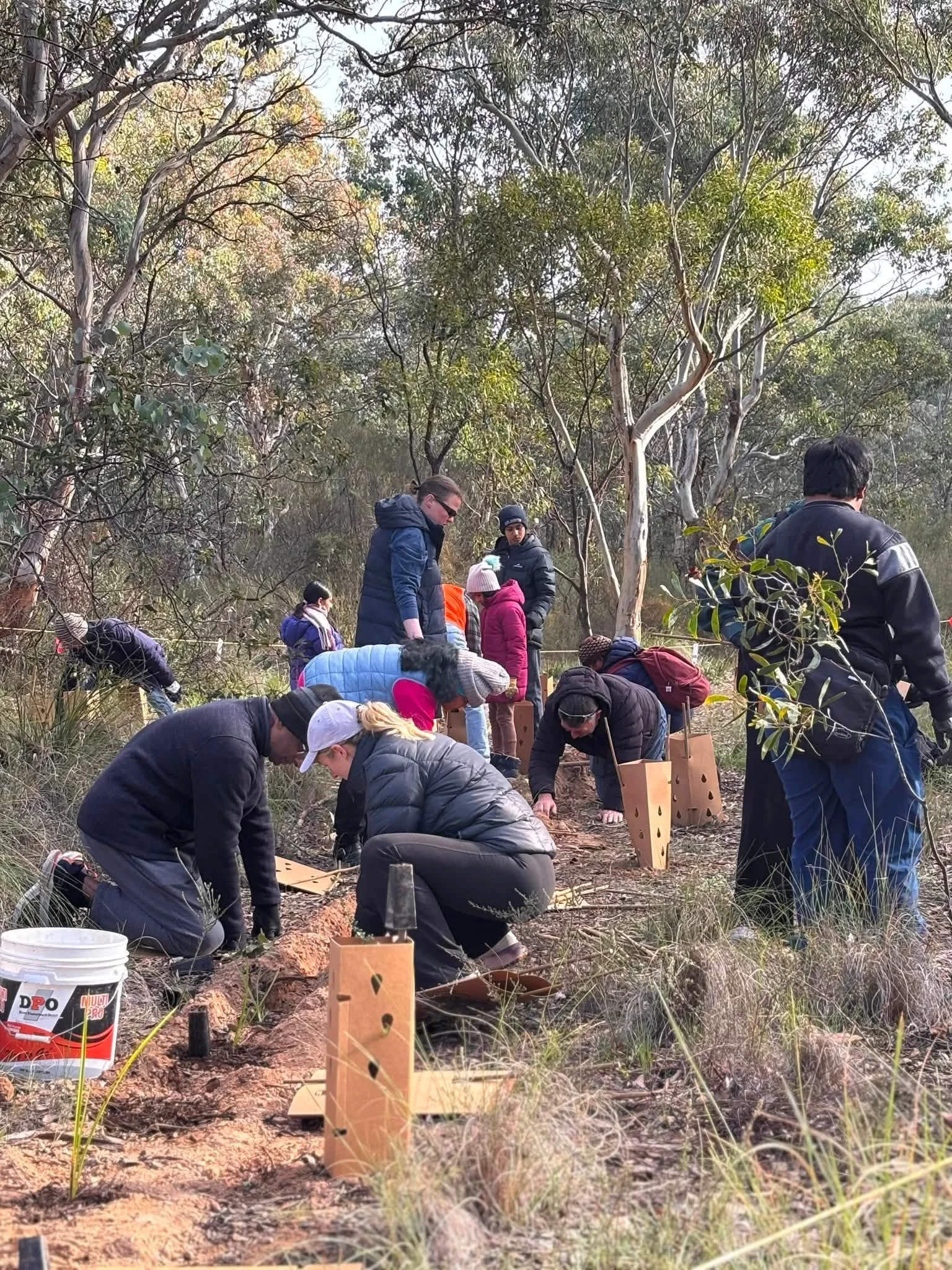
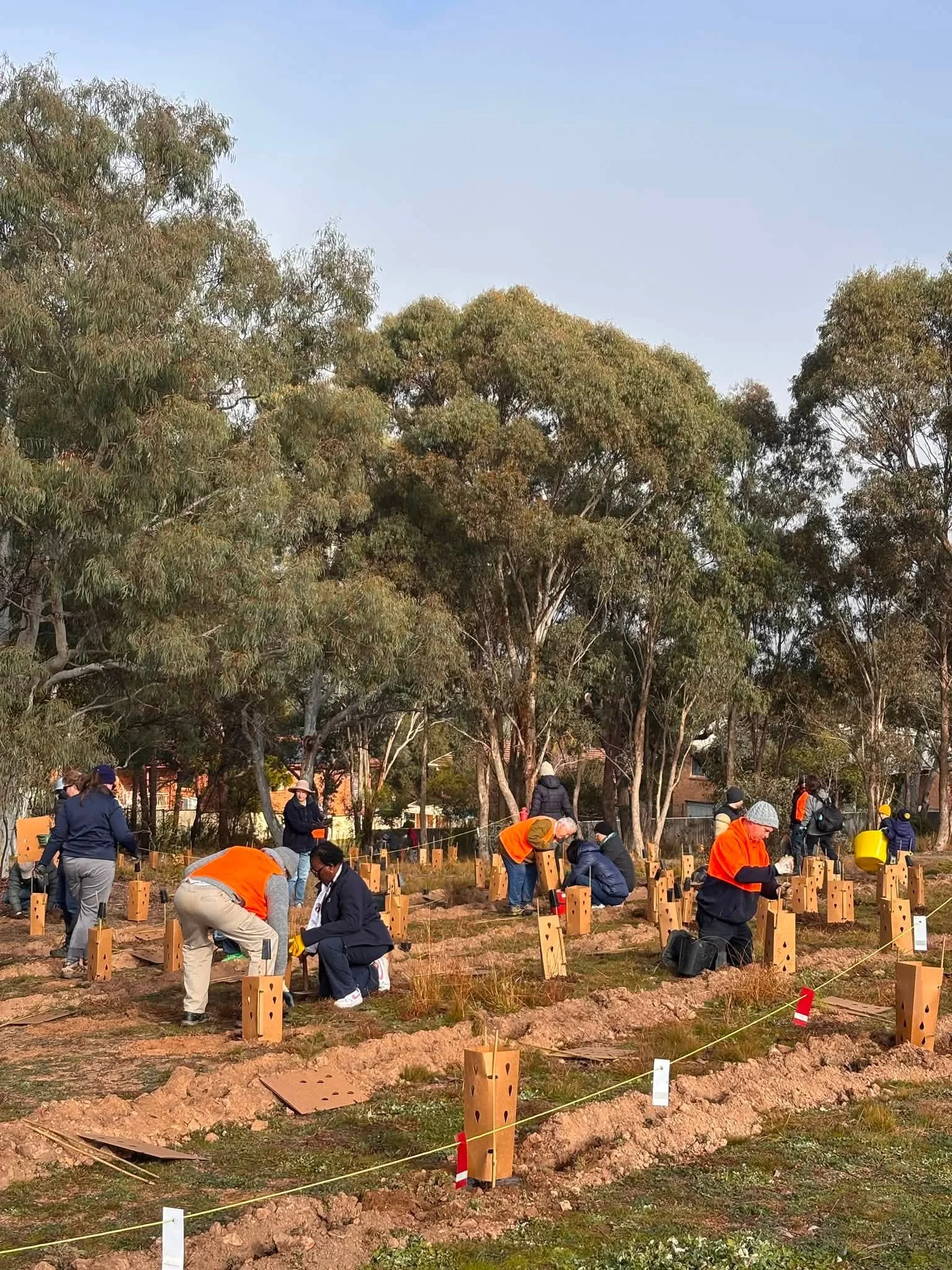
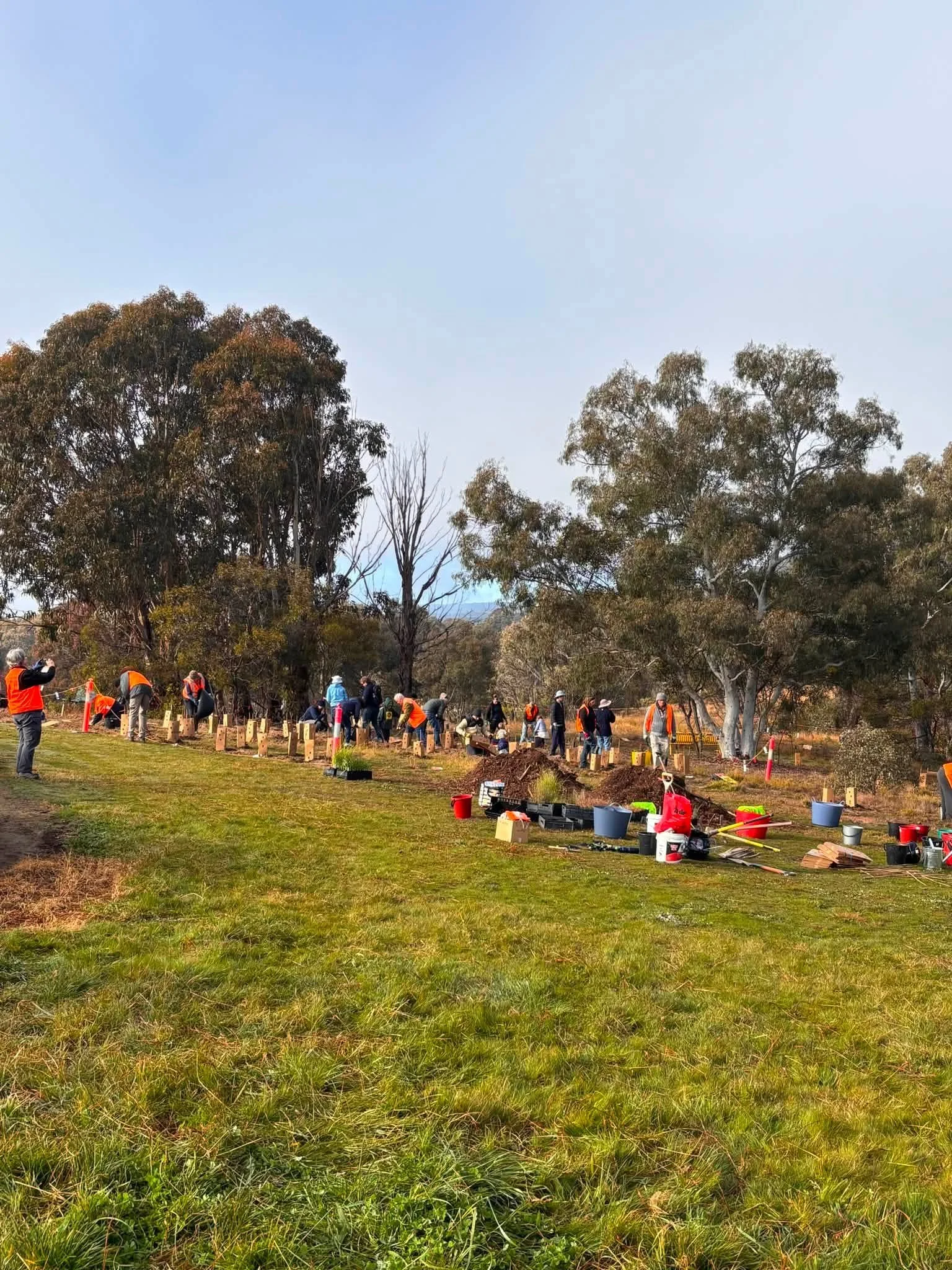
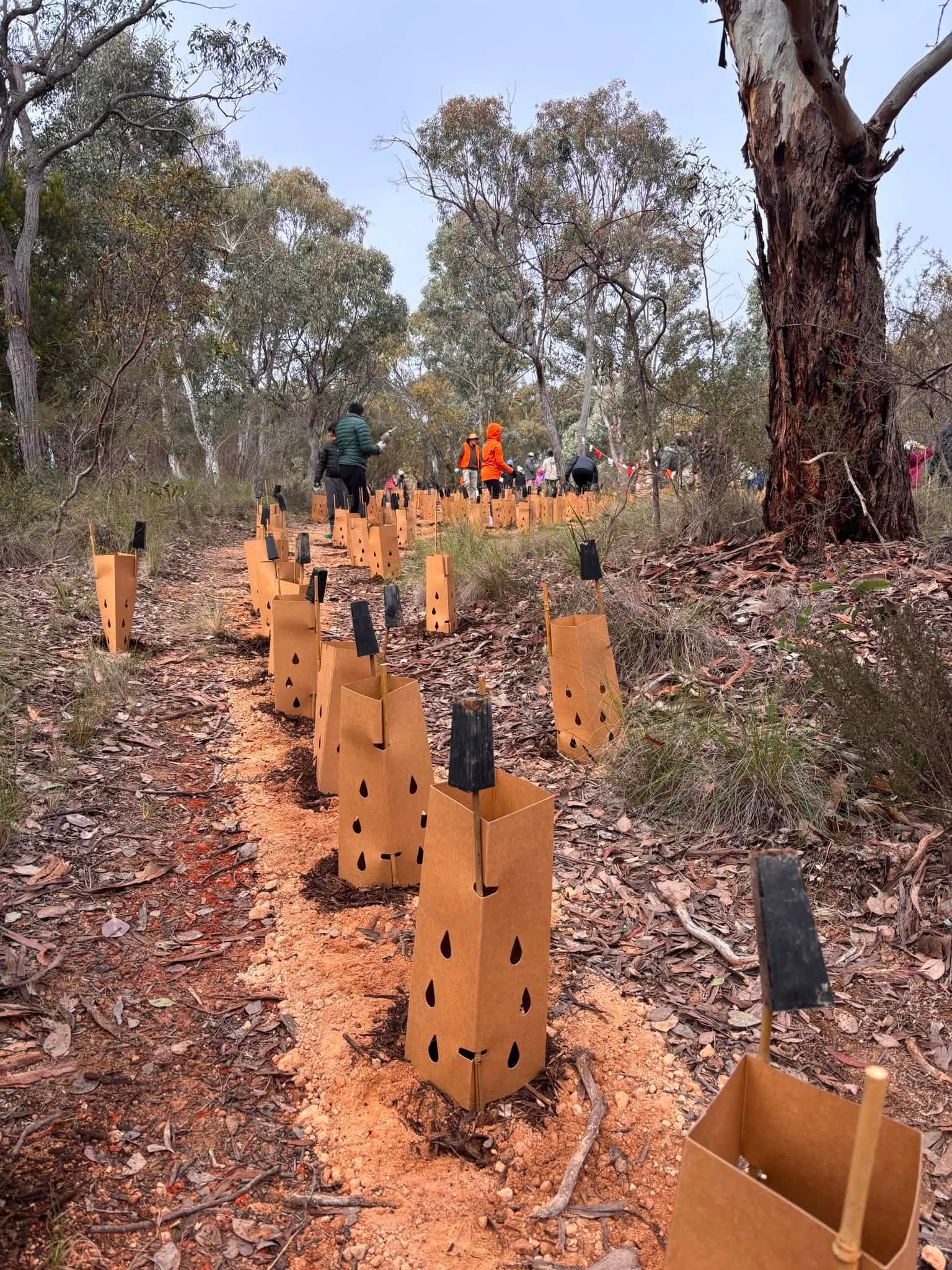
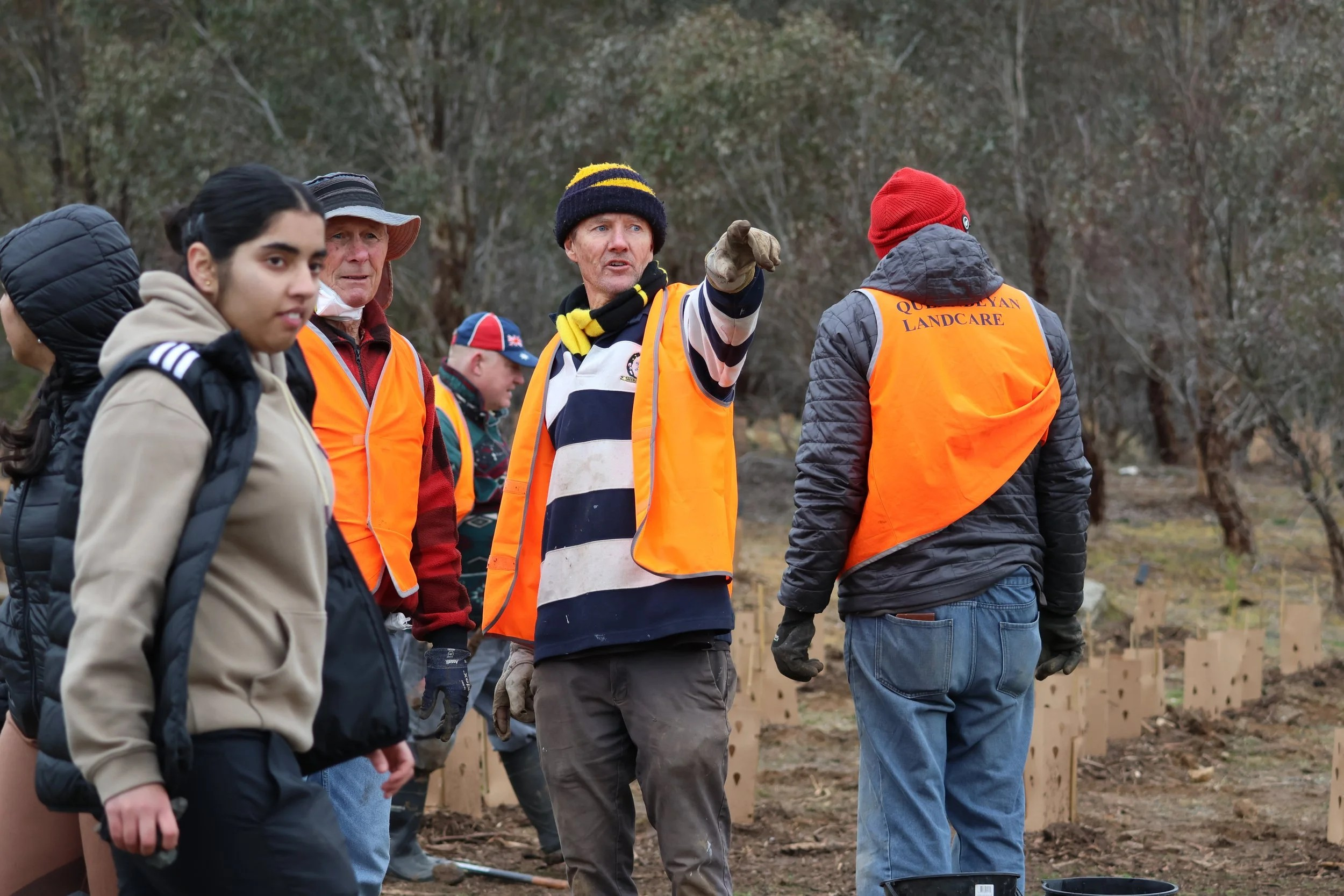
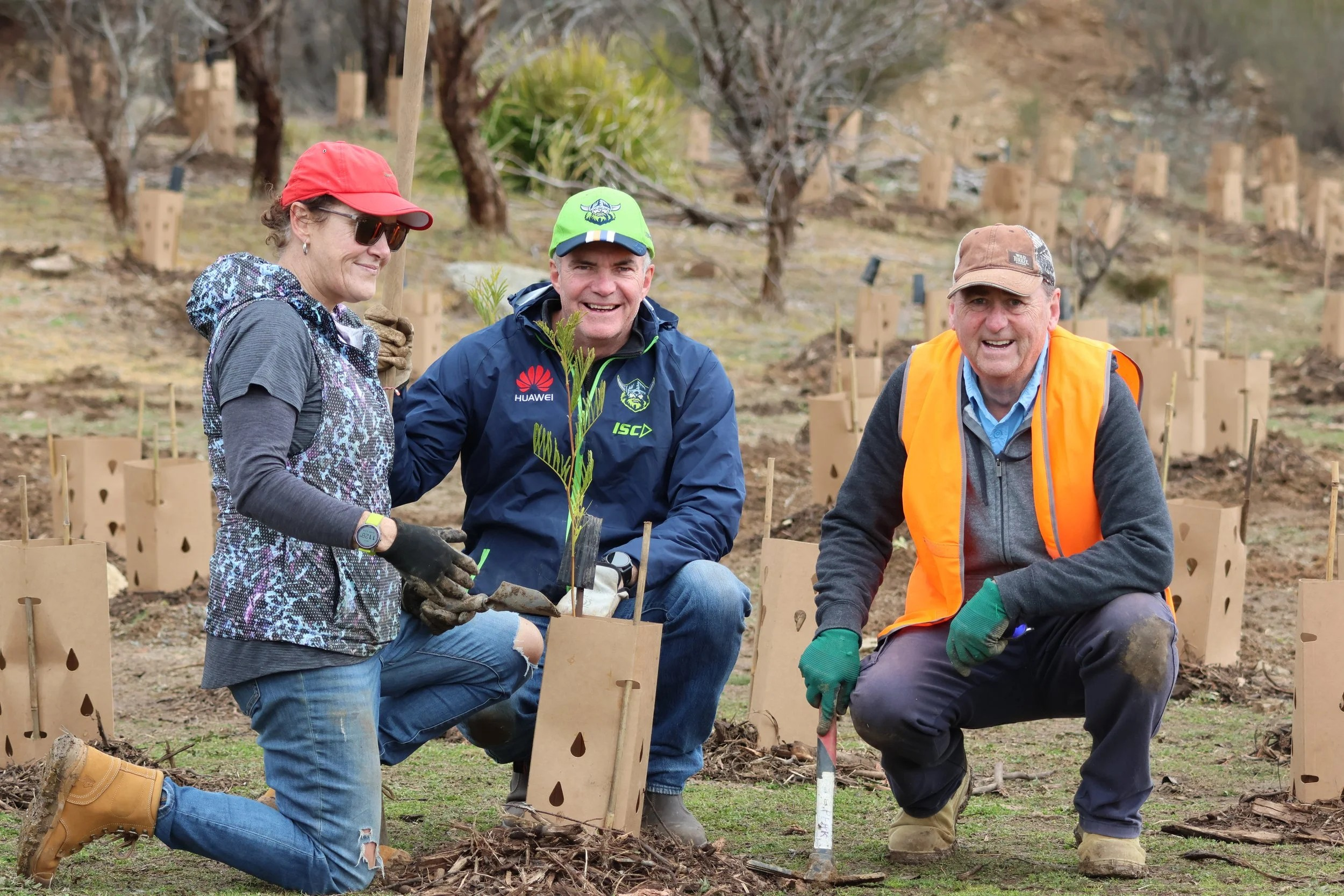
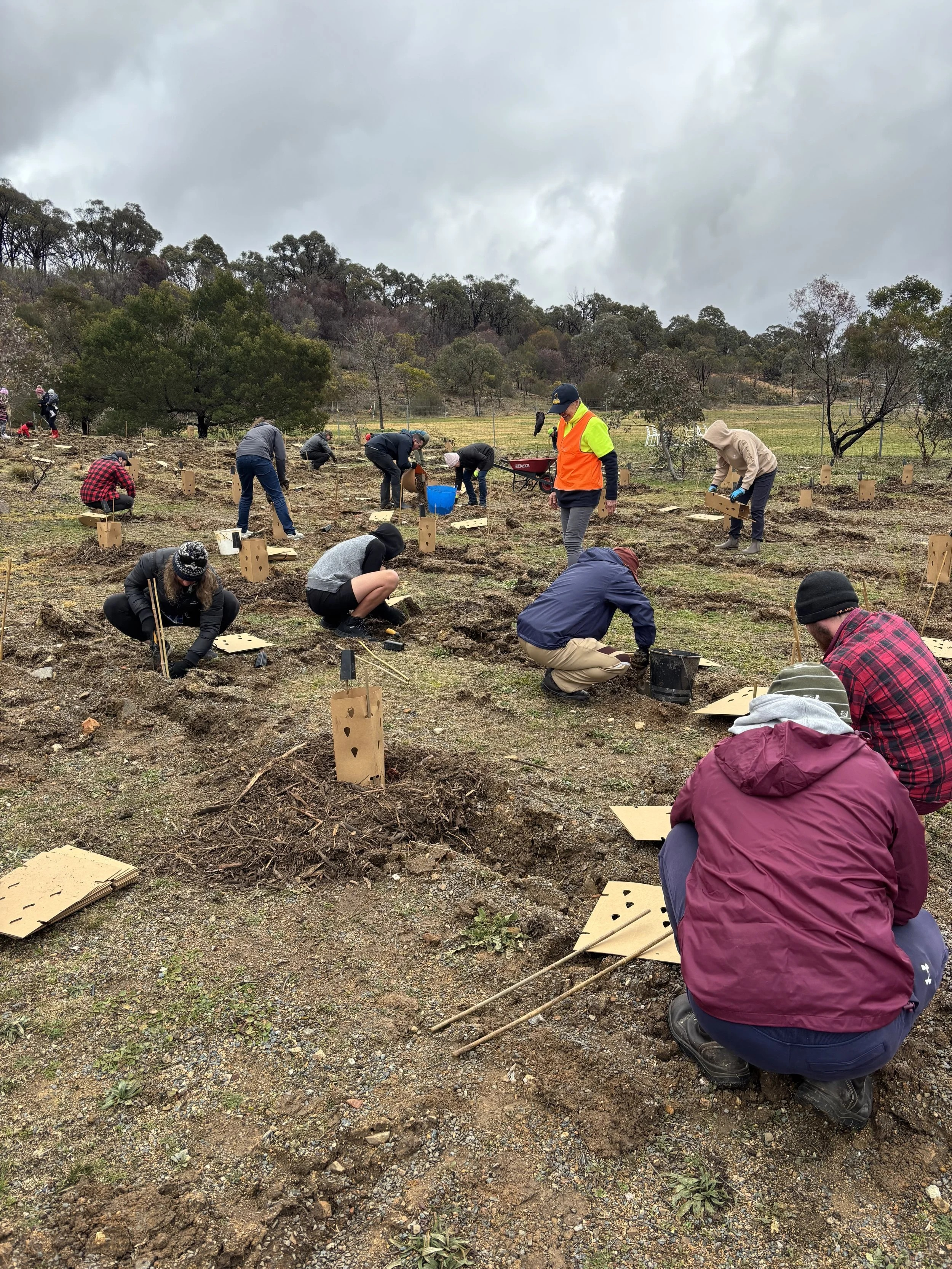
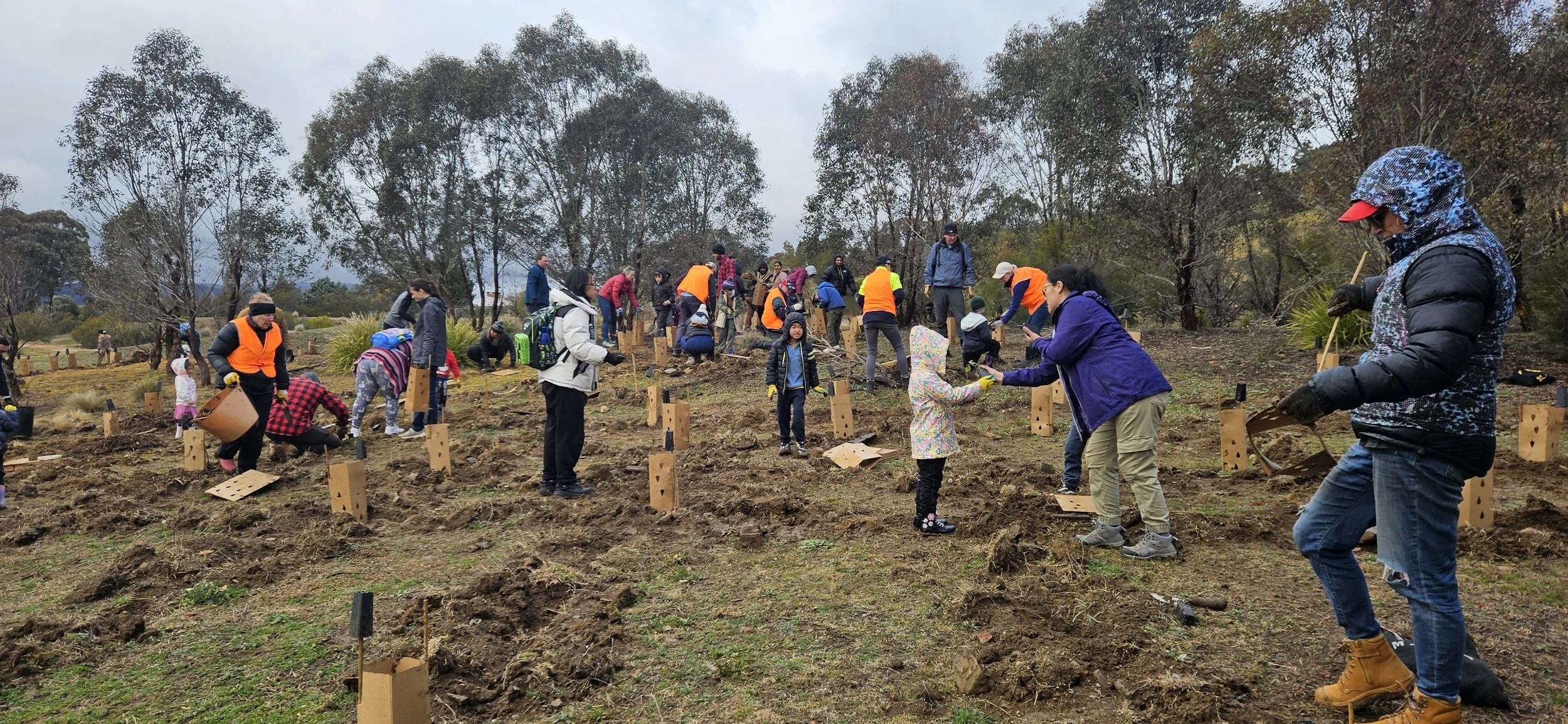
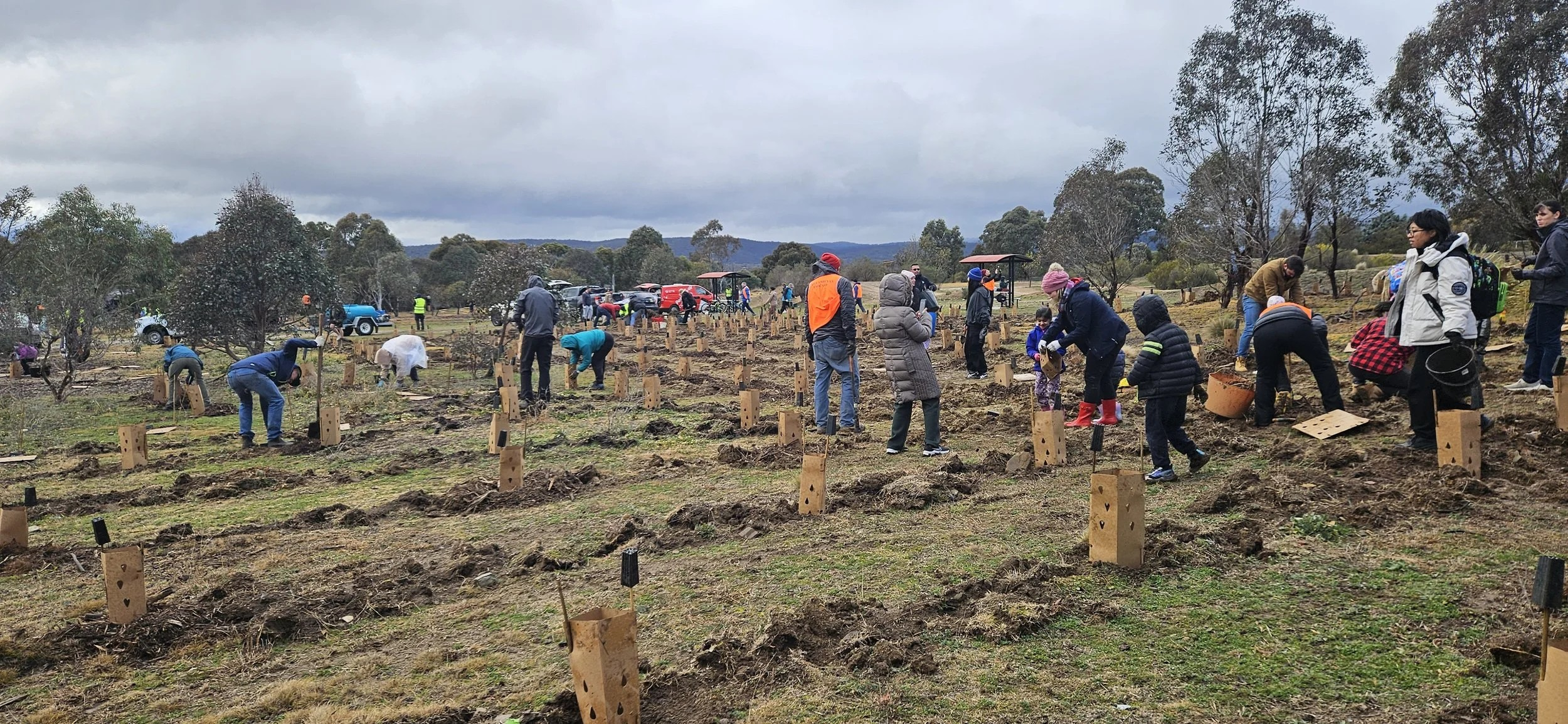
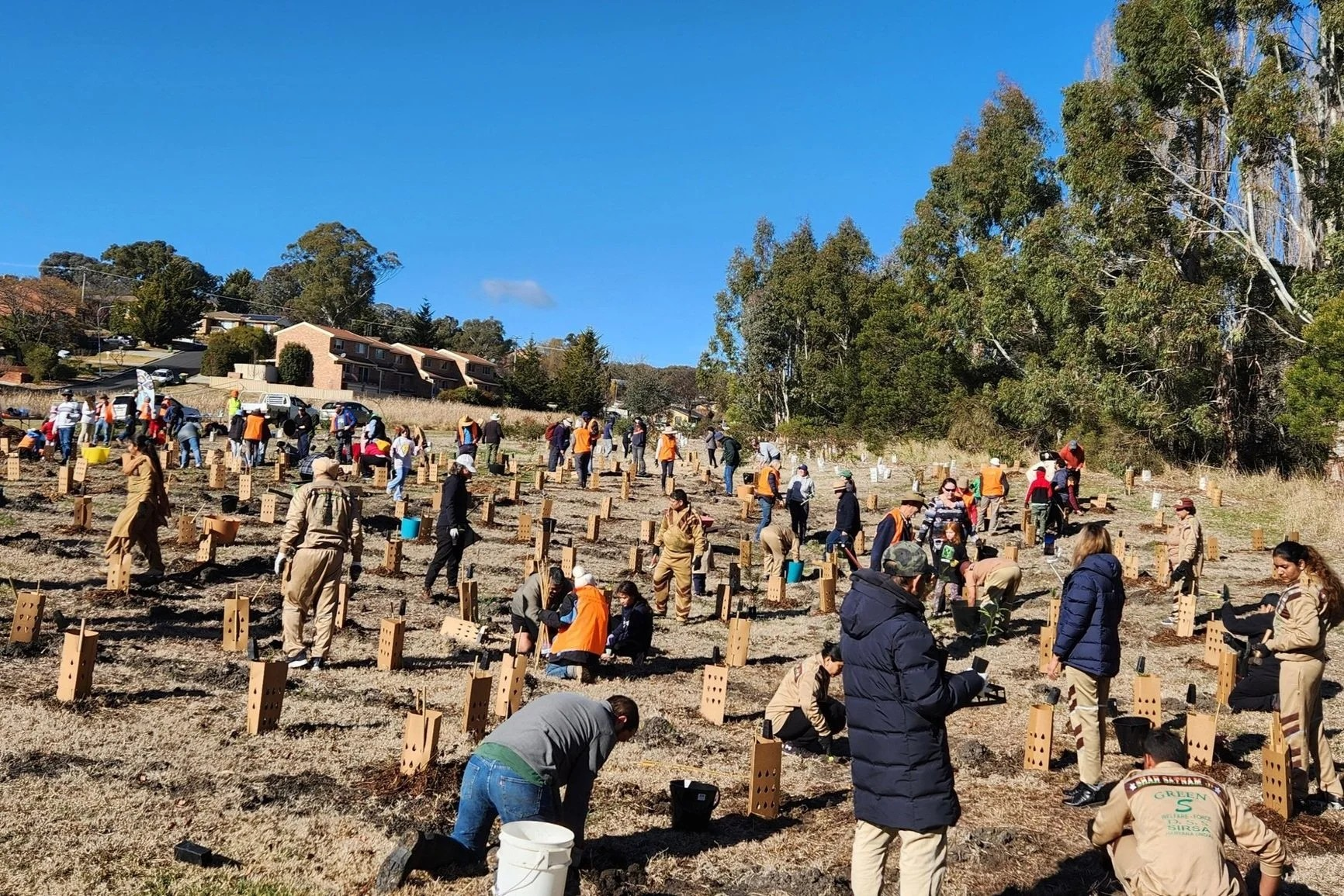
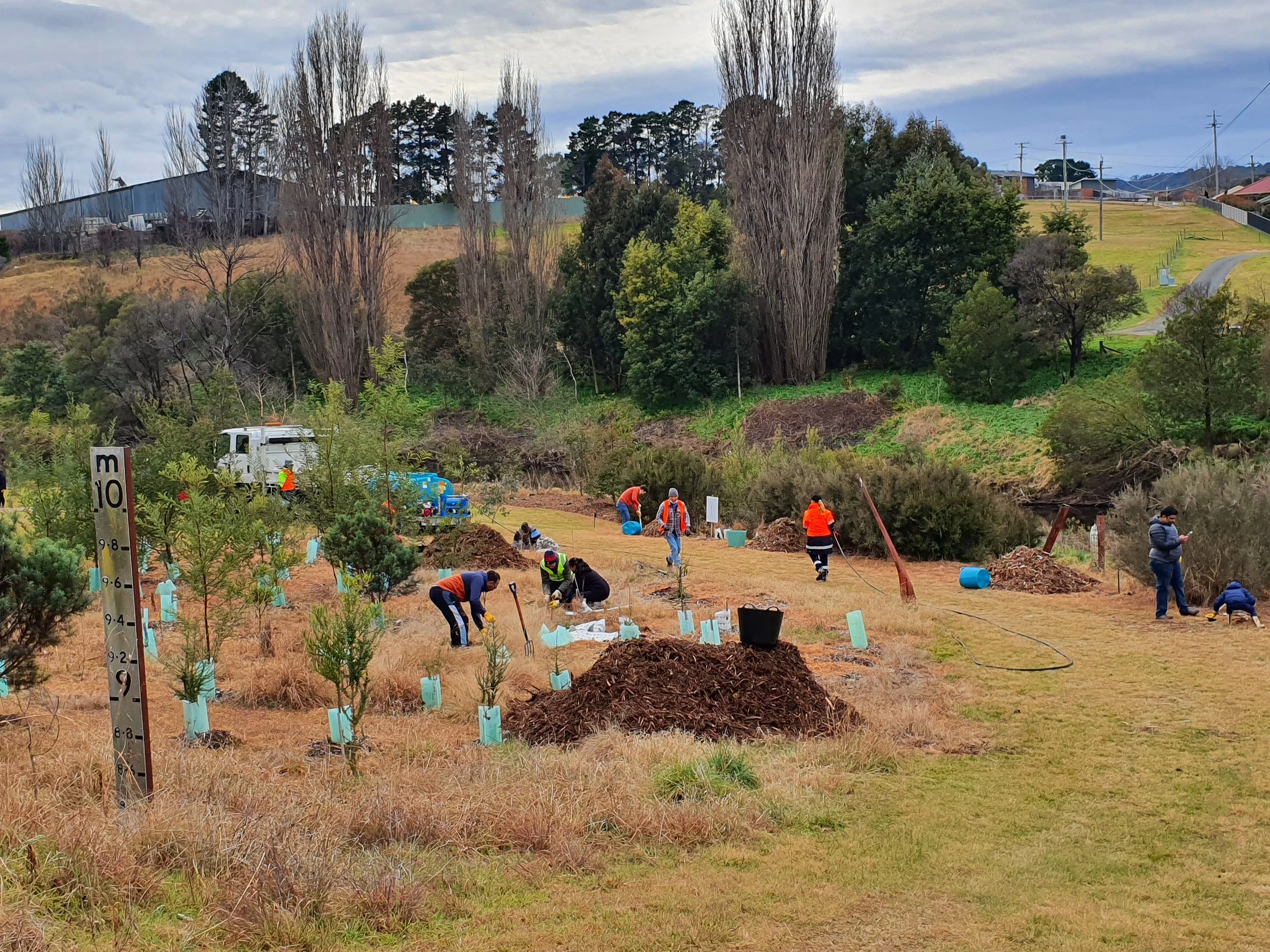
Over a thousand native plants in the ground, staked, mulched and watered, all in just two and a half hours – that was National Tree Day on 26 July 2026 at Queanbeyan’s Bicentennial Park. That’s quite an achievement, so how, who and when?
Months ago, Queanbeyan Landcare, Queanbeyan Palerang Regional Council (QPRC) and the highly dedicated local care group selected two sizable planting areas at the park as the site for National Tree Day and sourcing tube stock for the species selected. QPRC staff dug lines of trenches and auger holes the week prior to the event. Promotion of the day attracted over 200 registered volunteers who were joined by Council staff and 24 Queanbeyan Landcare members. Planting can be a challenge for anyone on a hilly, dry site, so guidance and the provision of appropriate tools was appreciated by everyone.
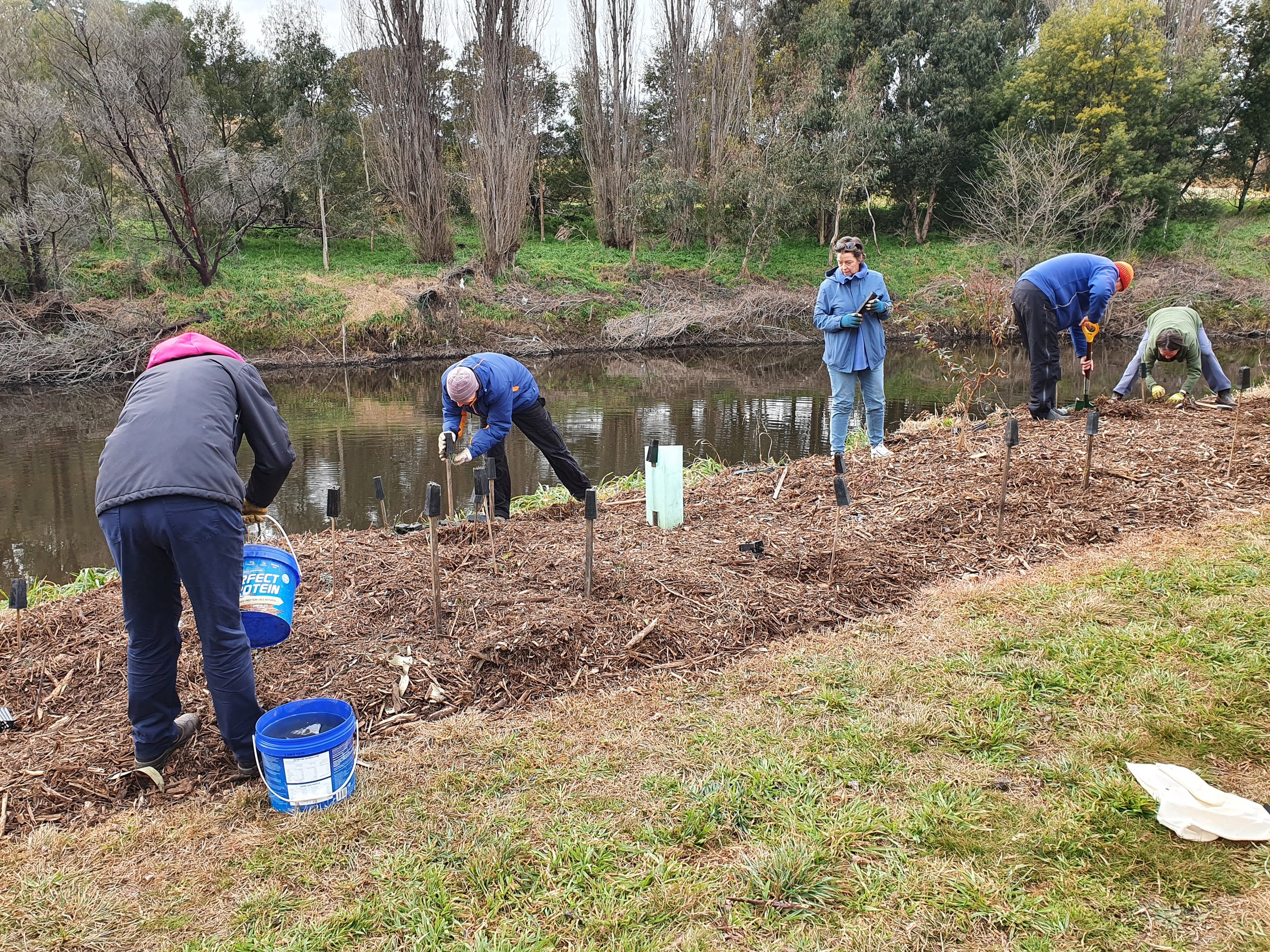
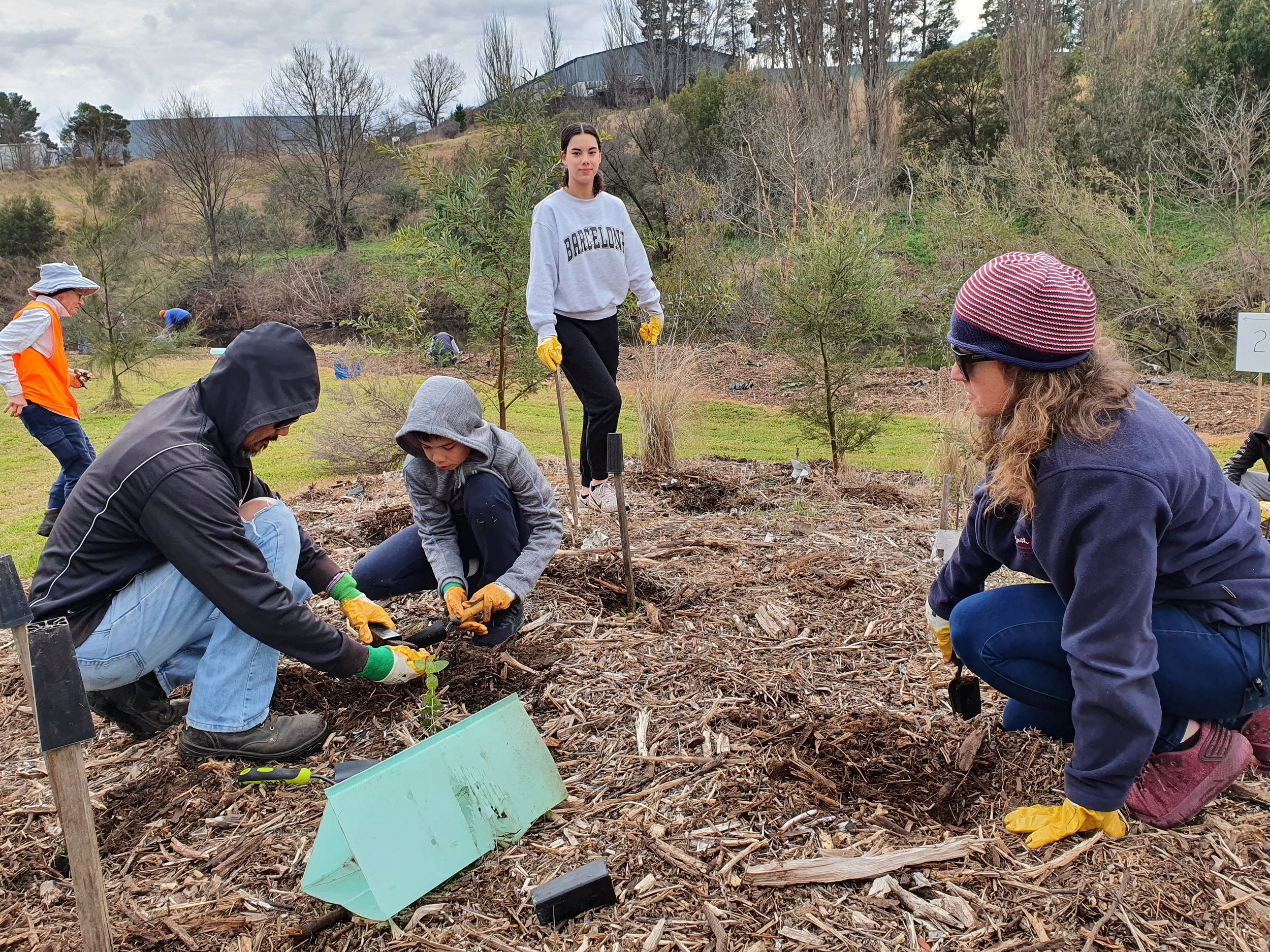
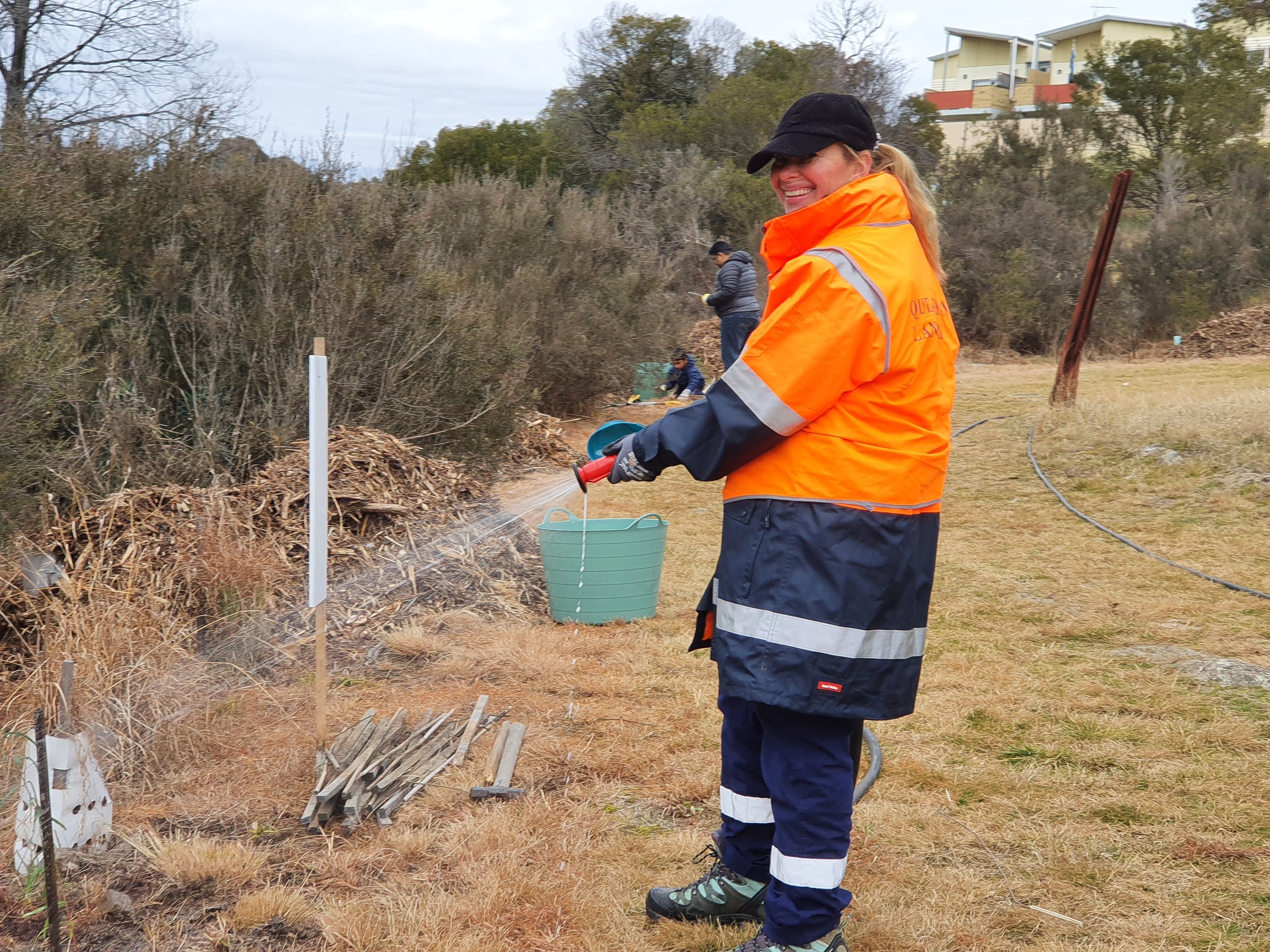
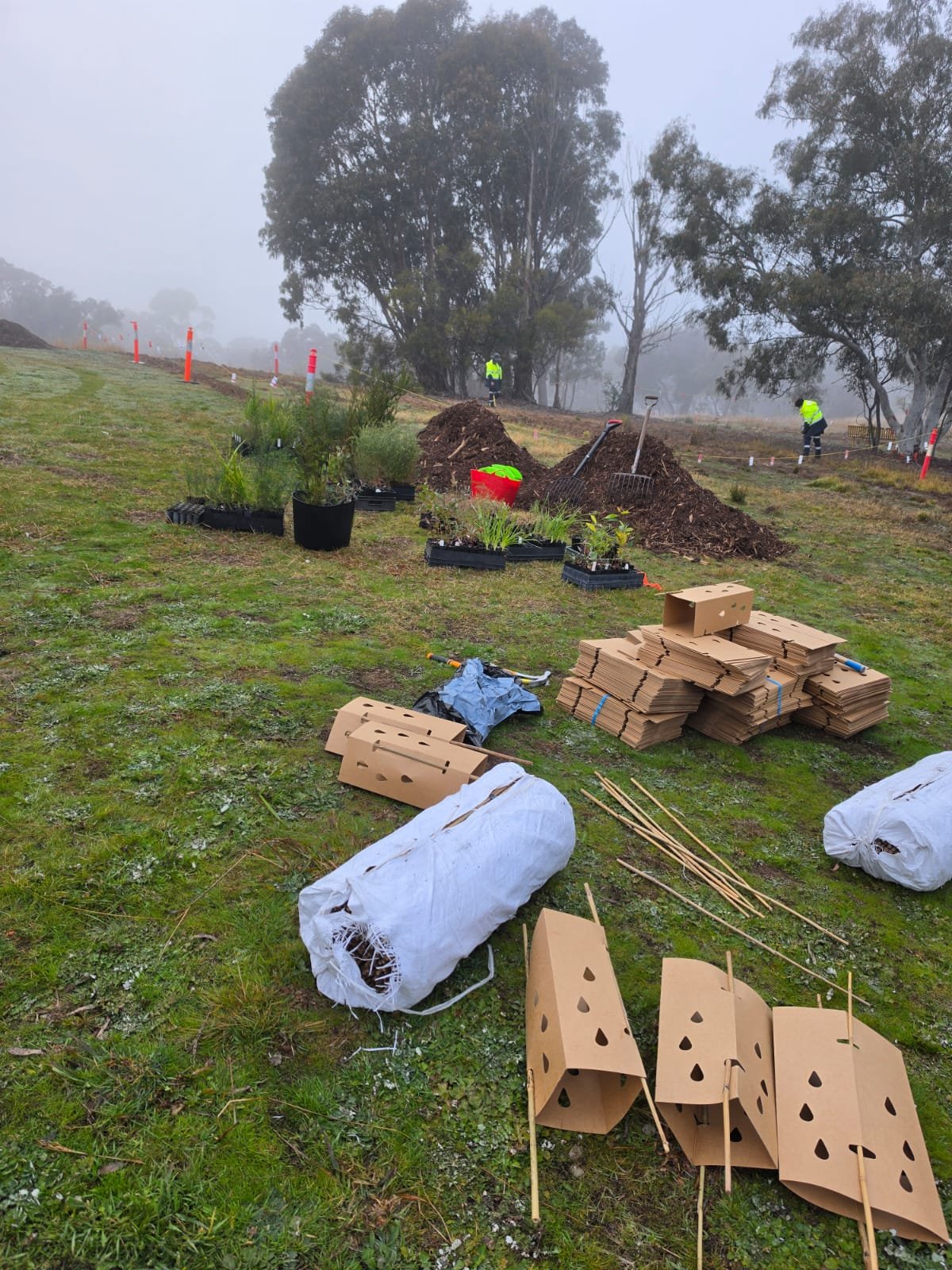
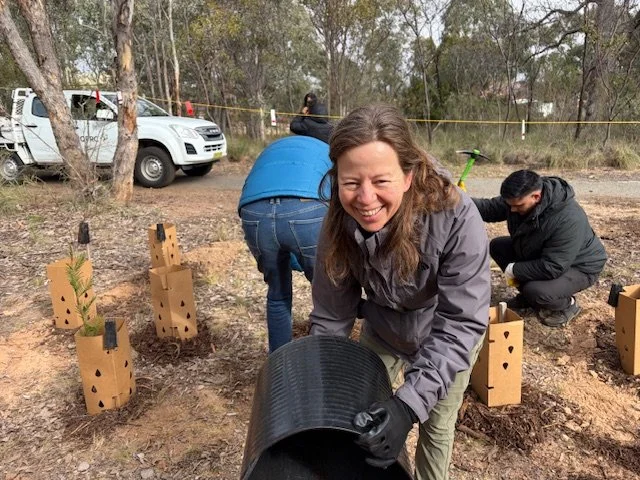
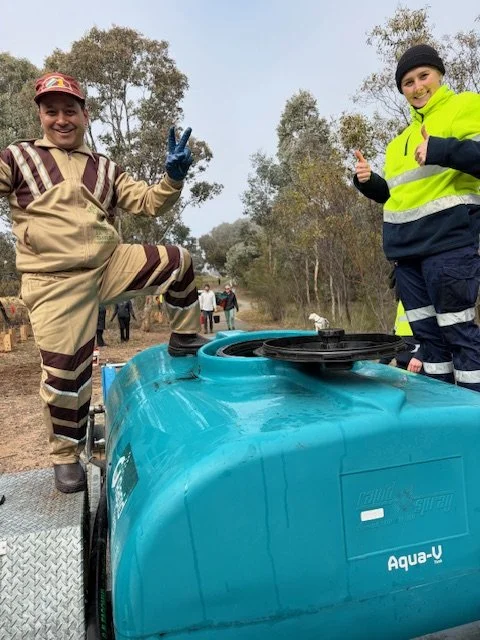
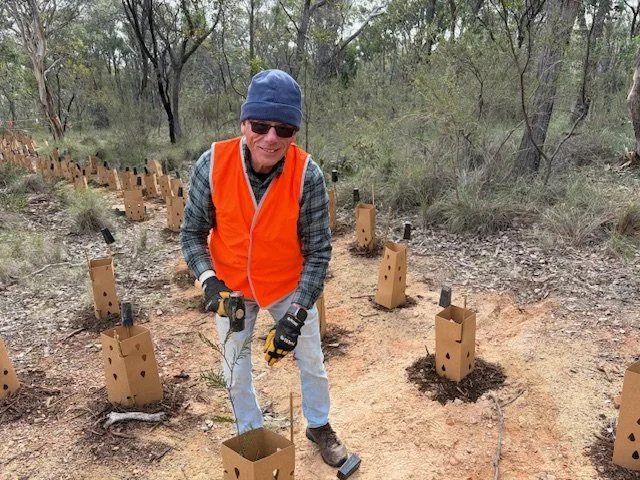
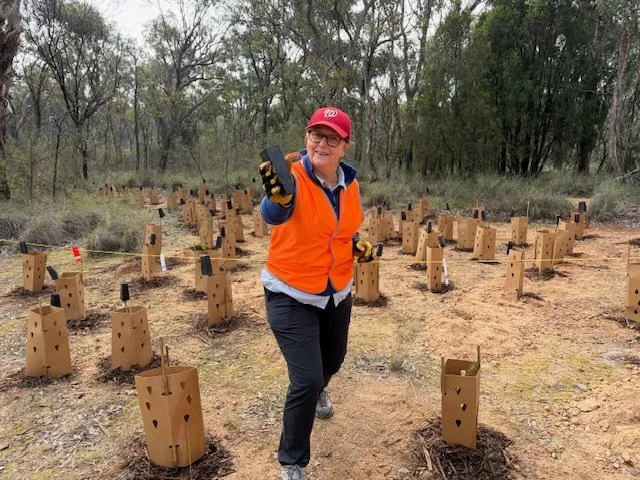
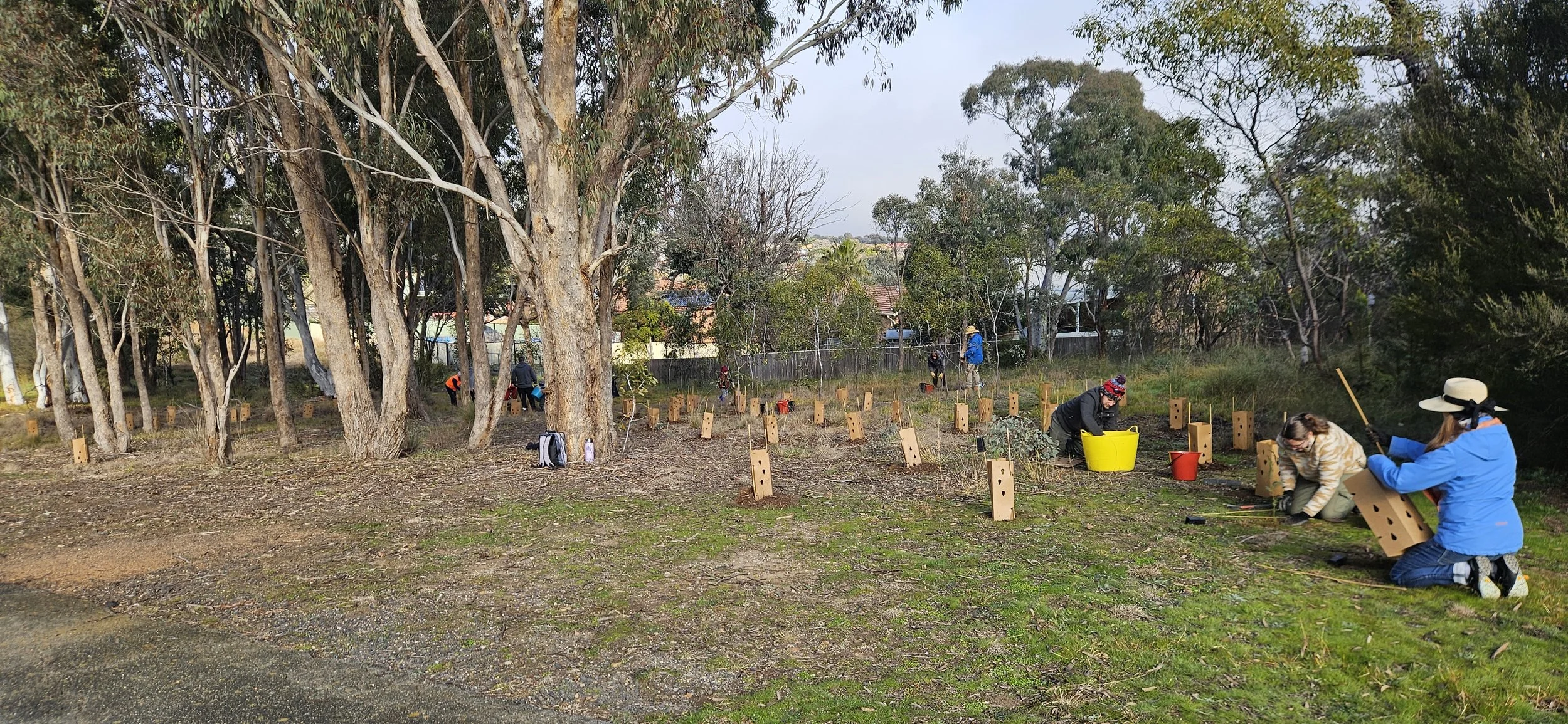
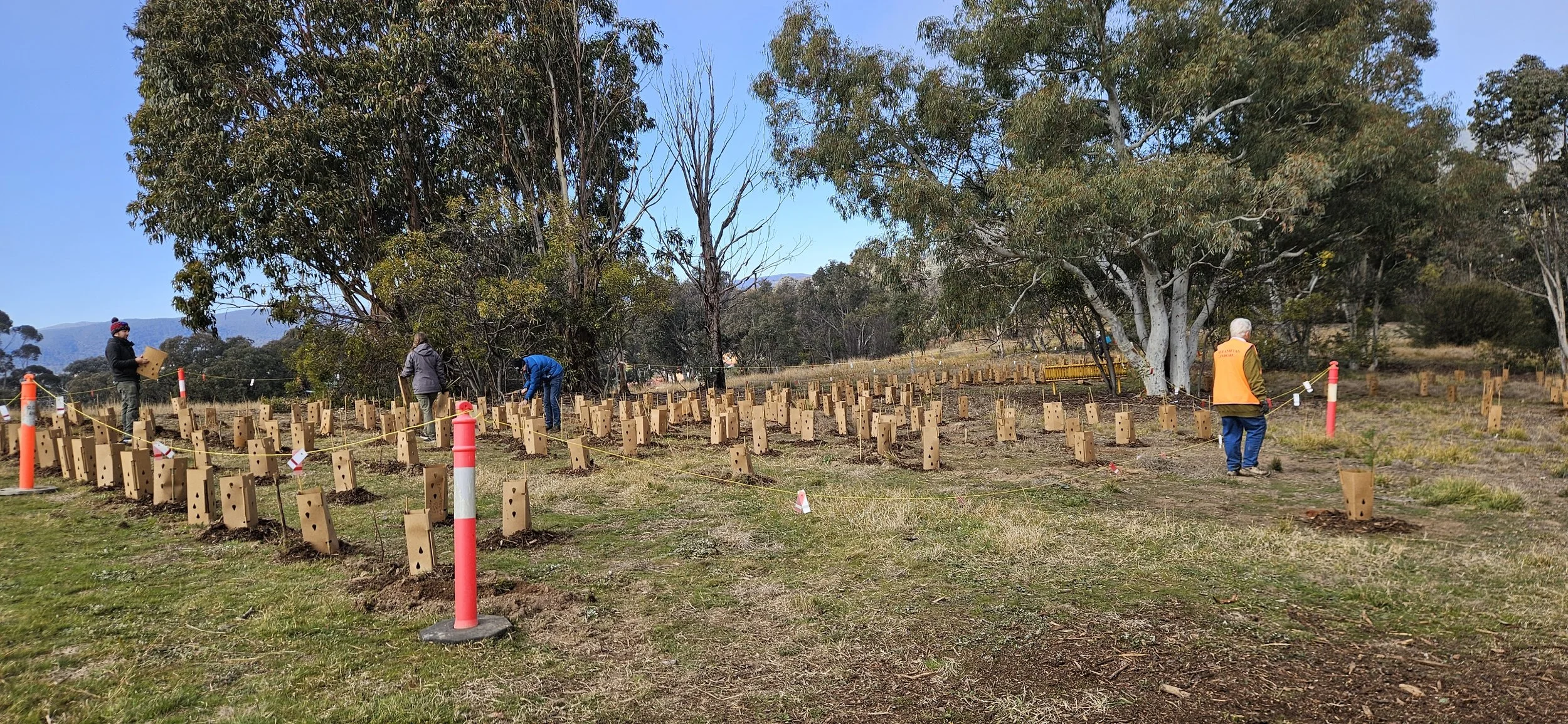
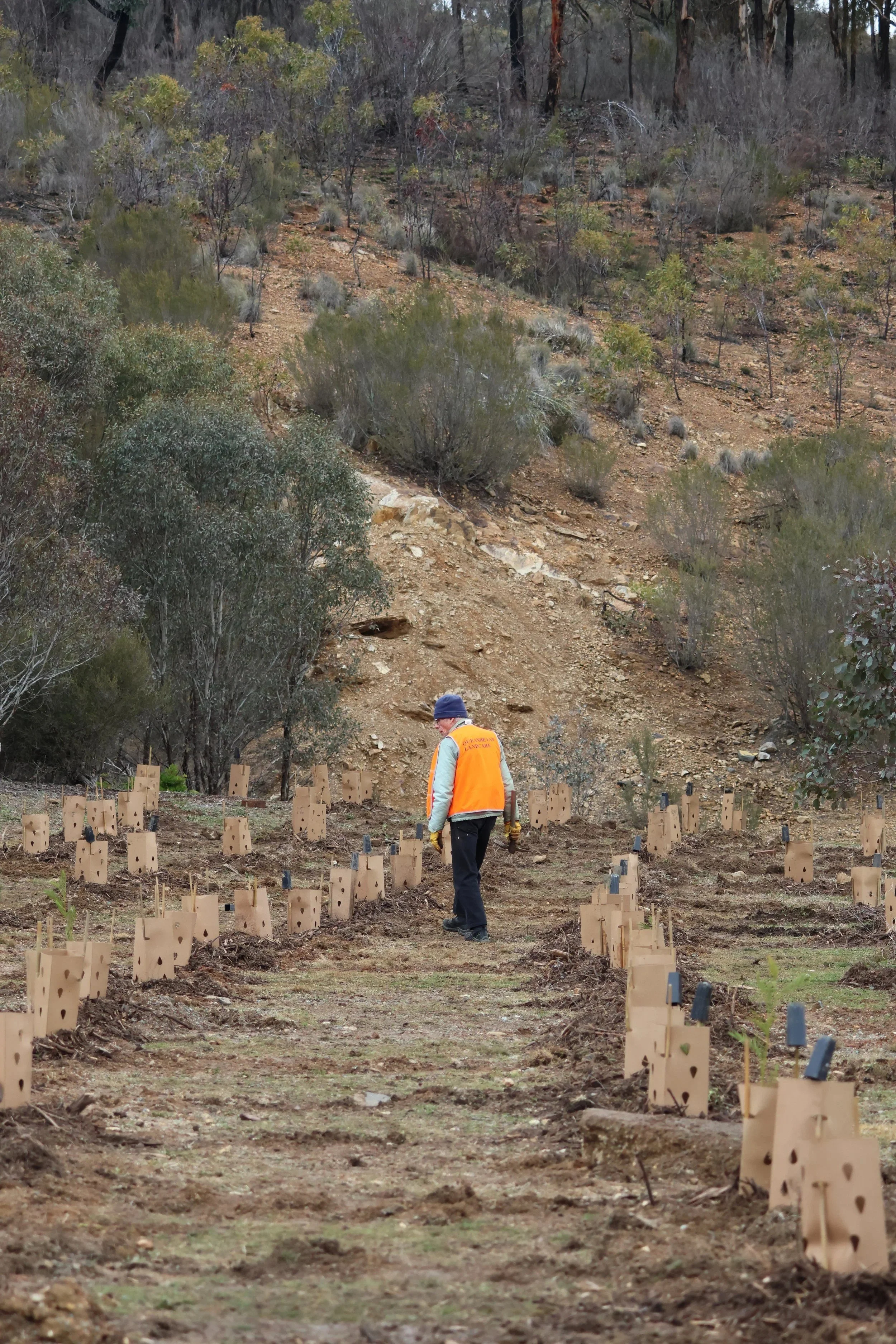
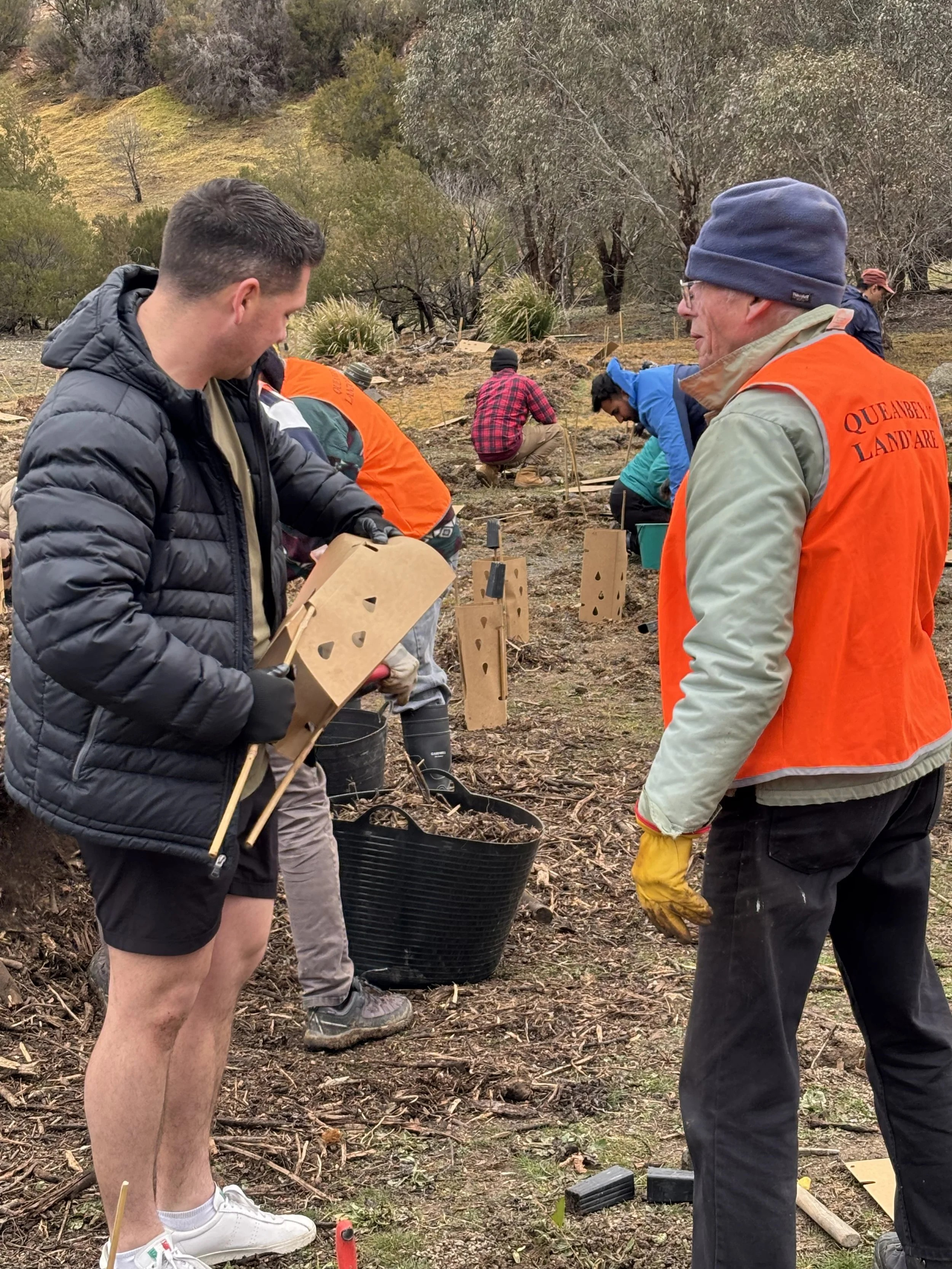
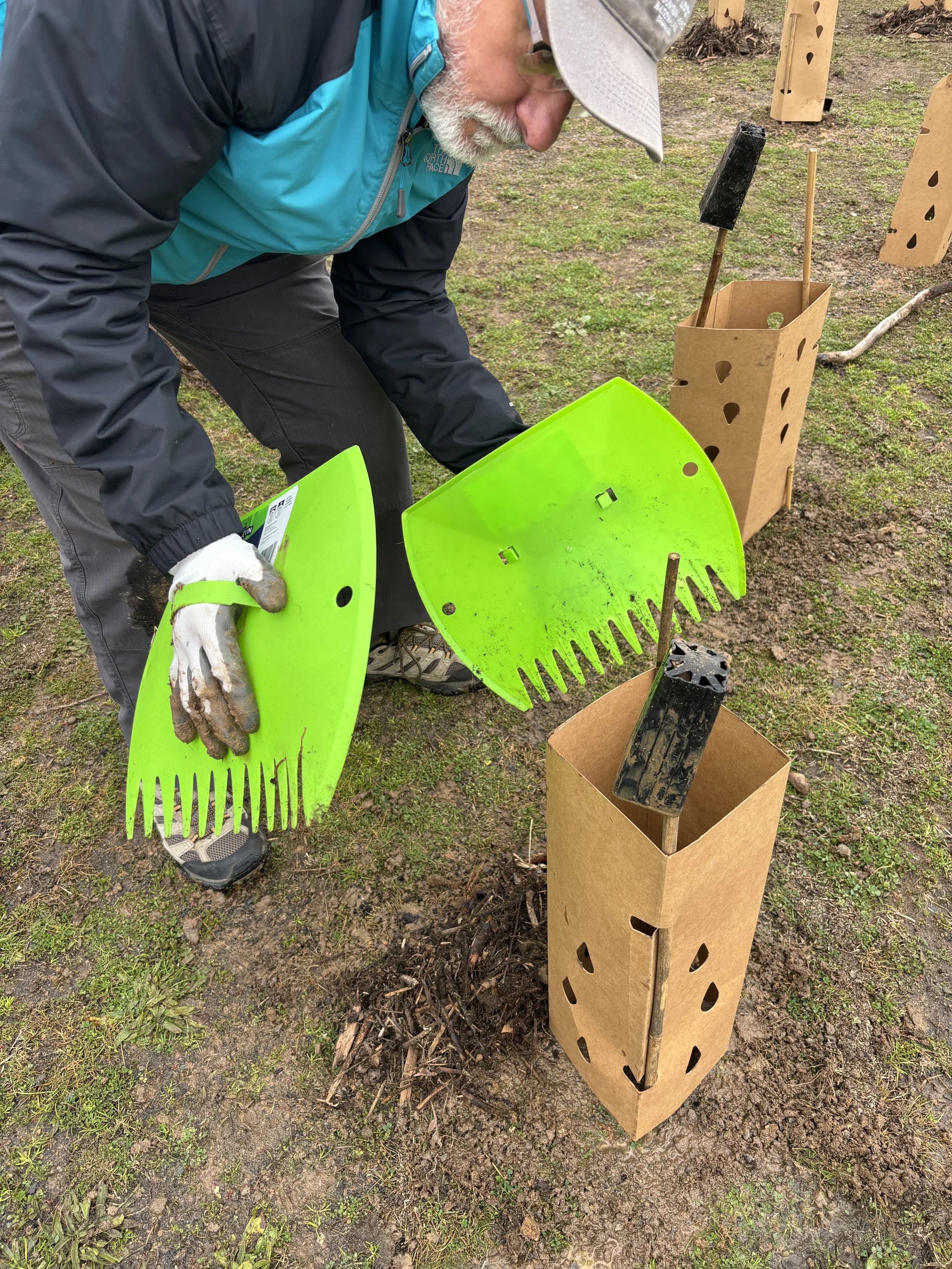
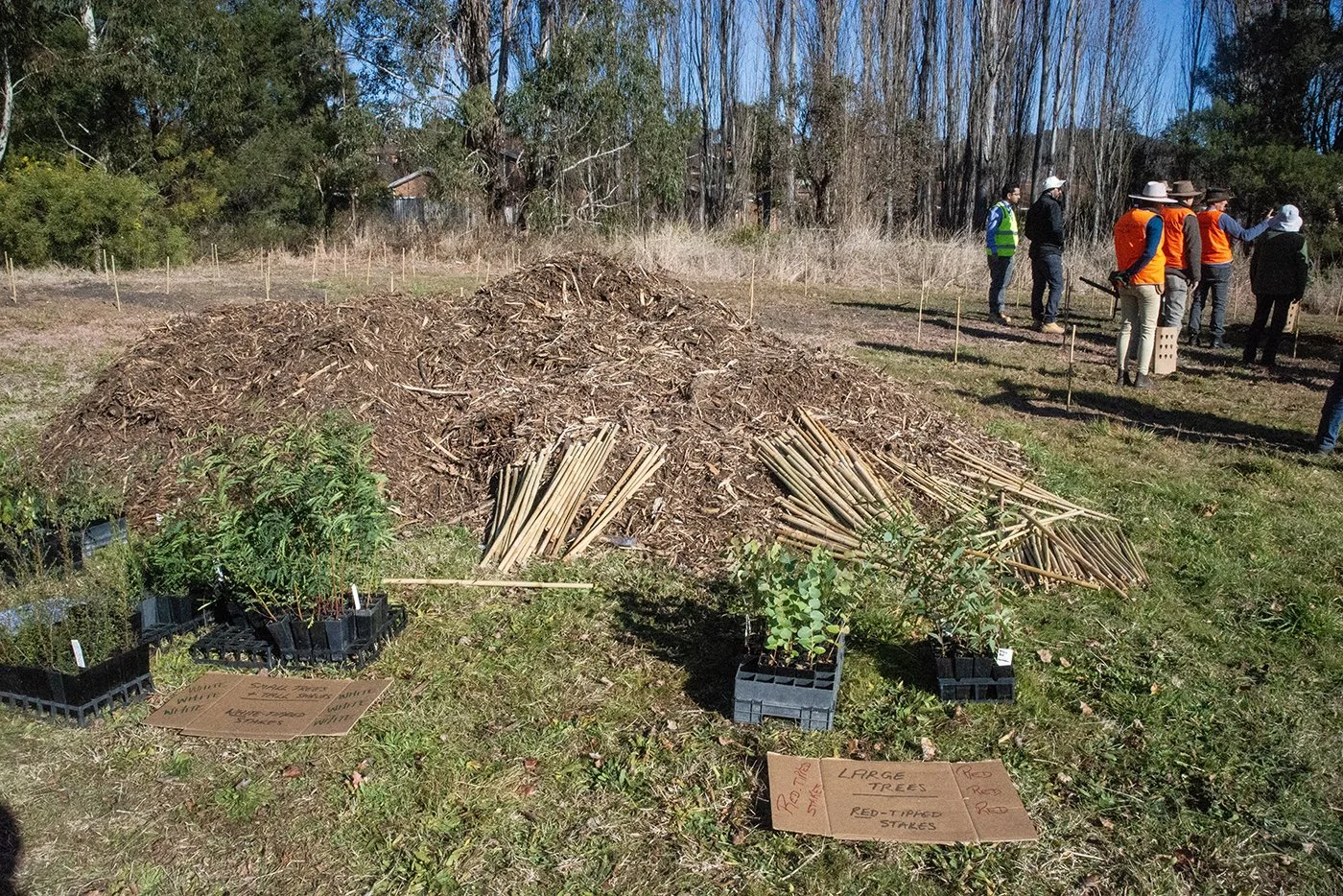
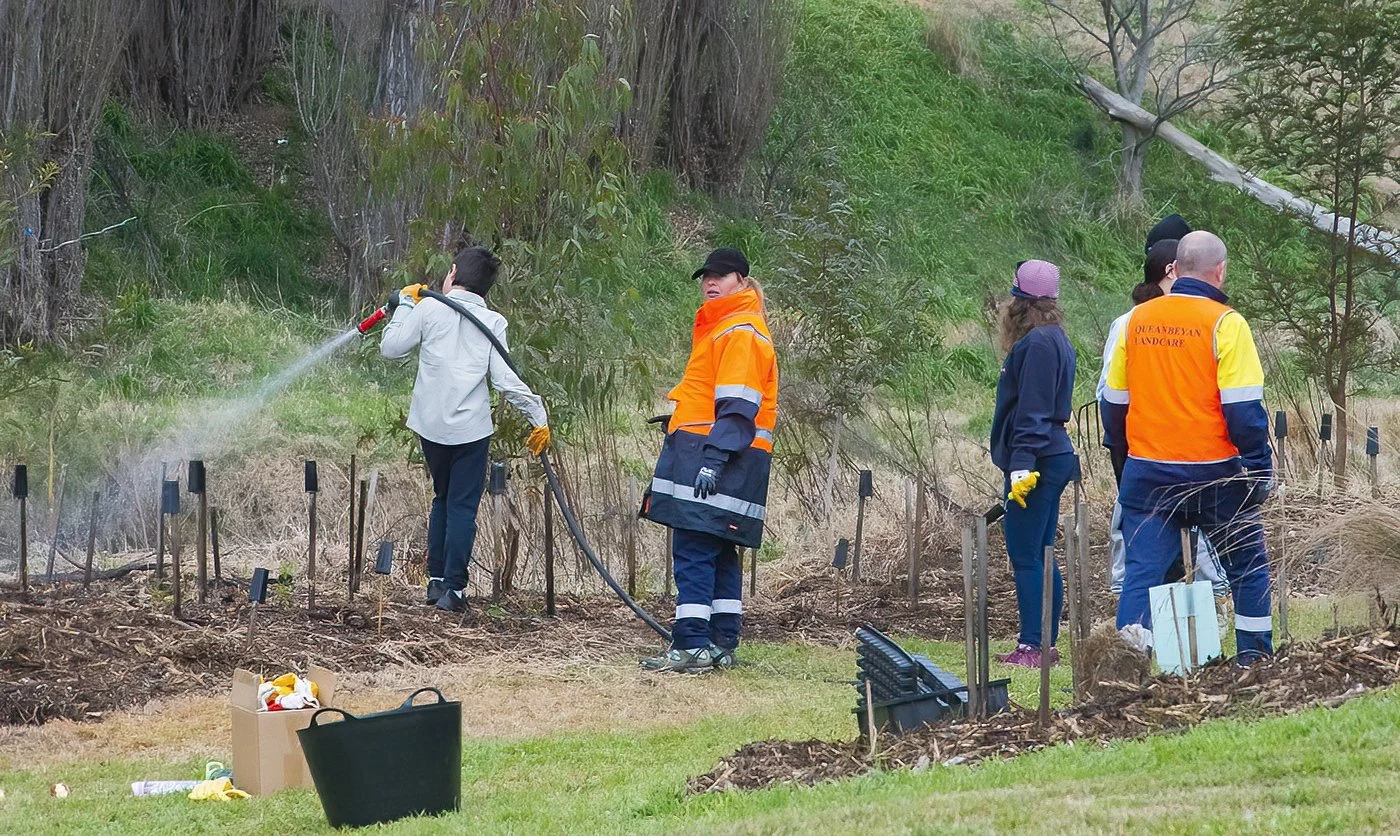
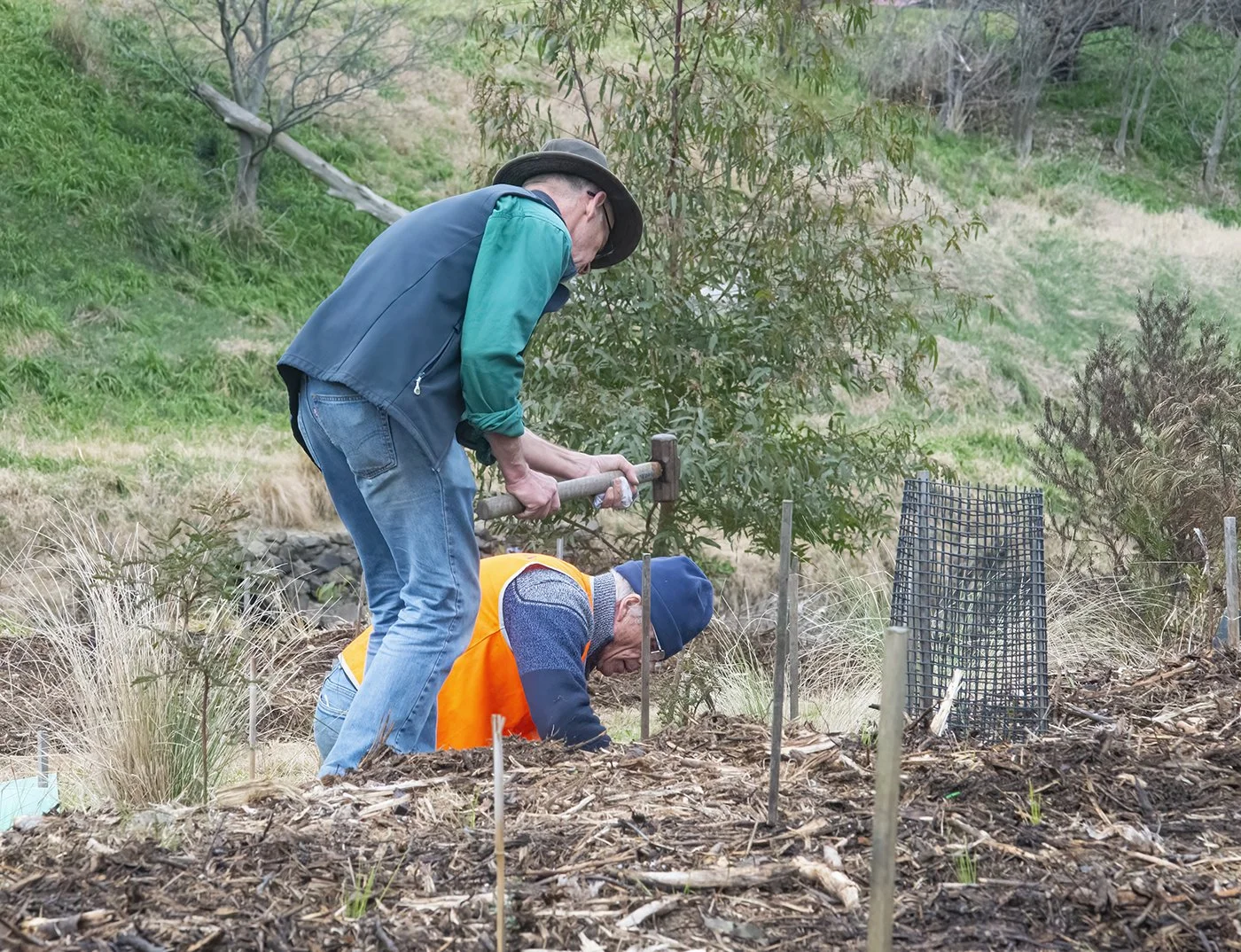
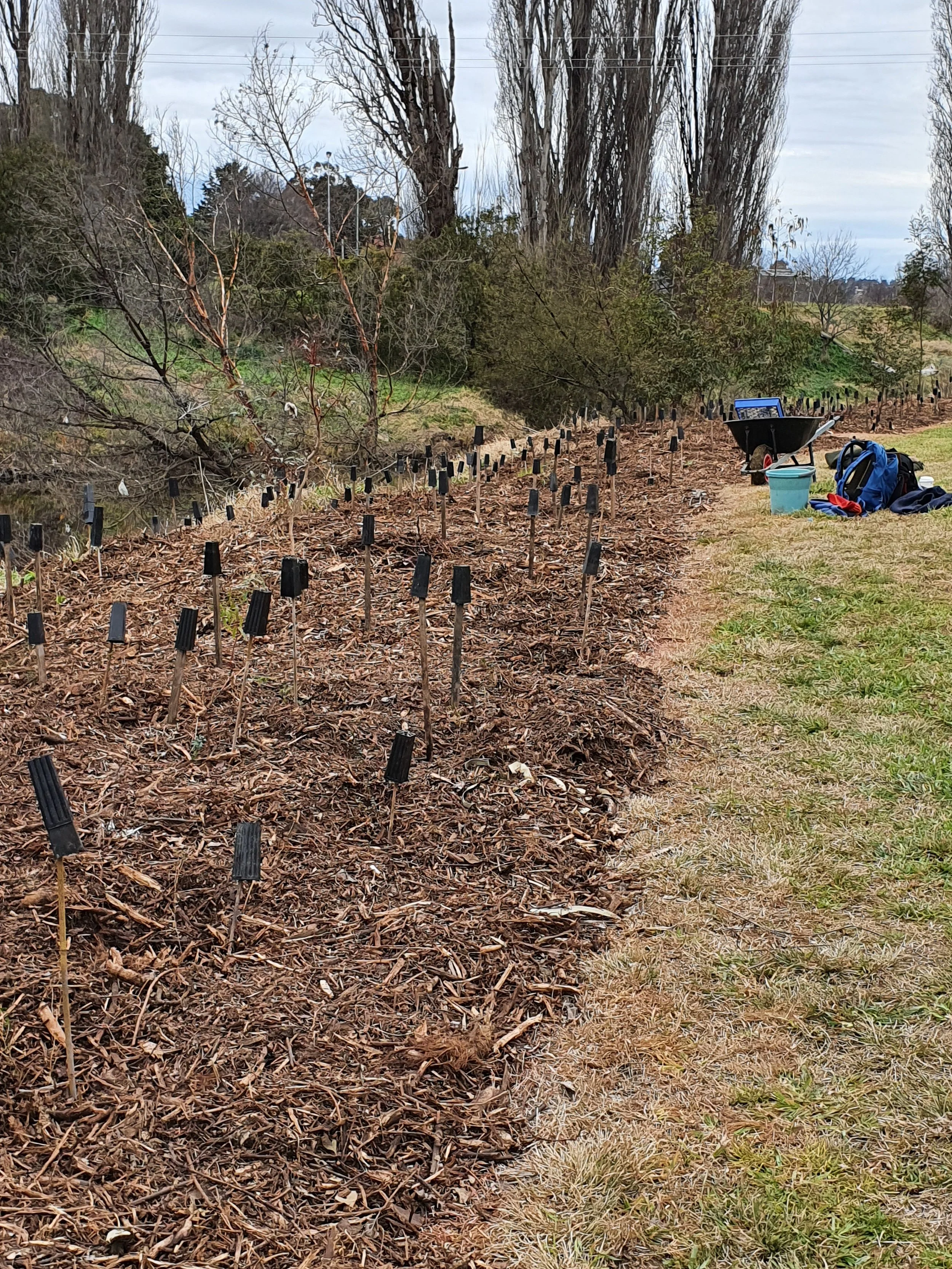
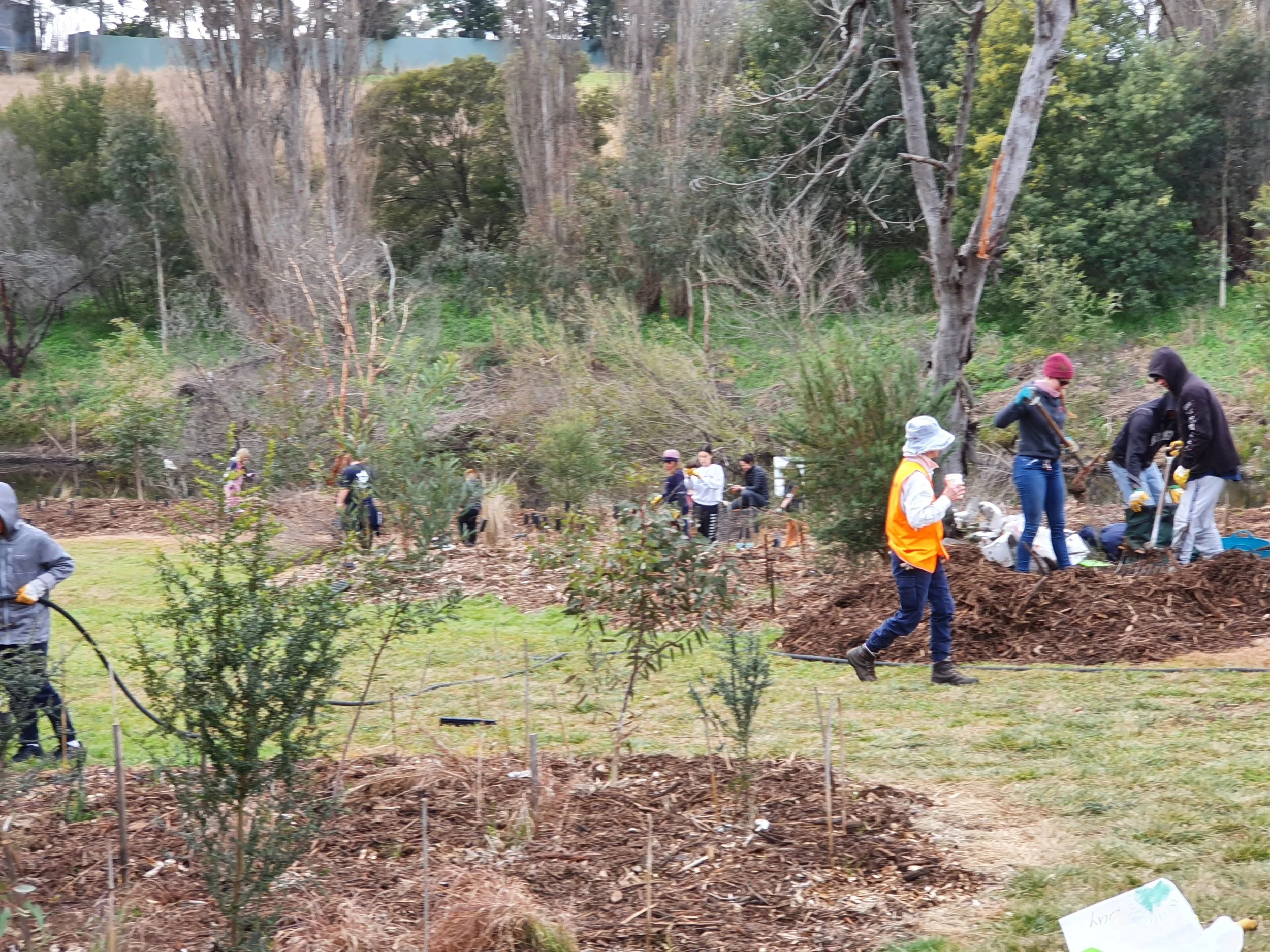
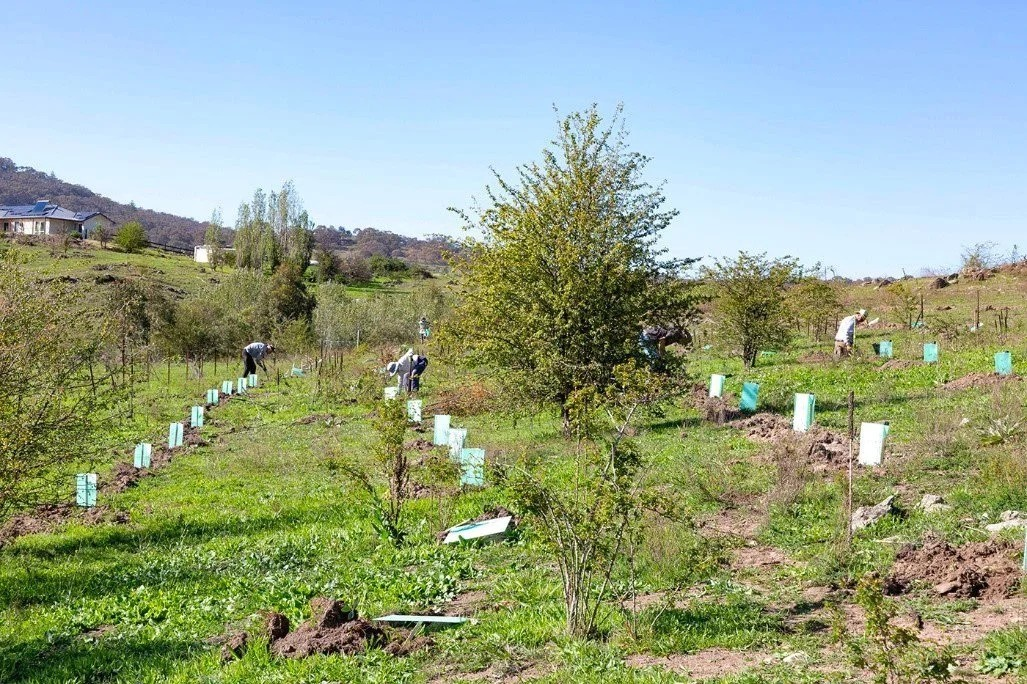
At the two sites (known as North and South Bicentennial), the day began with placement of plants to get a good mix of different species and plant types across the sites, volunteer registration, a briefing and demonstration of planting technique from Landcare members. Then onto getting plants in the ground with stakes, tree guards and mulch for each plant. The Council water cart moved across the site, with volunteers going back and forth to bucket water around each plant.
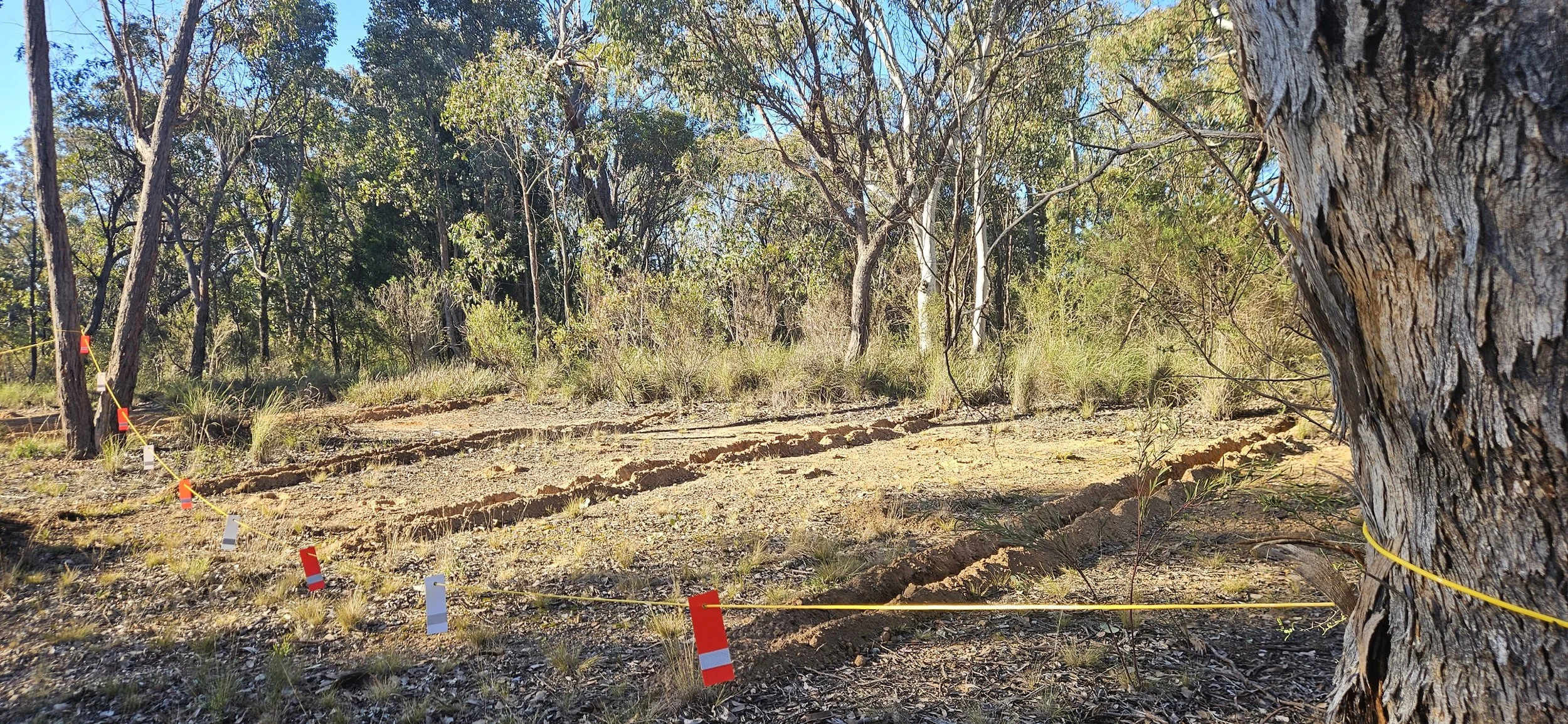
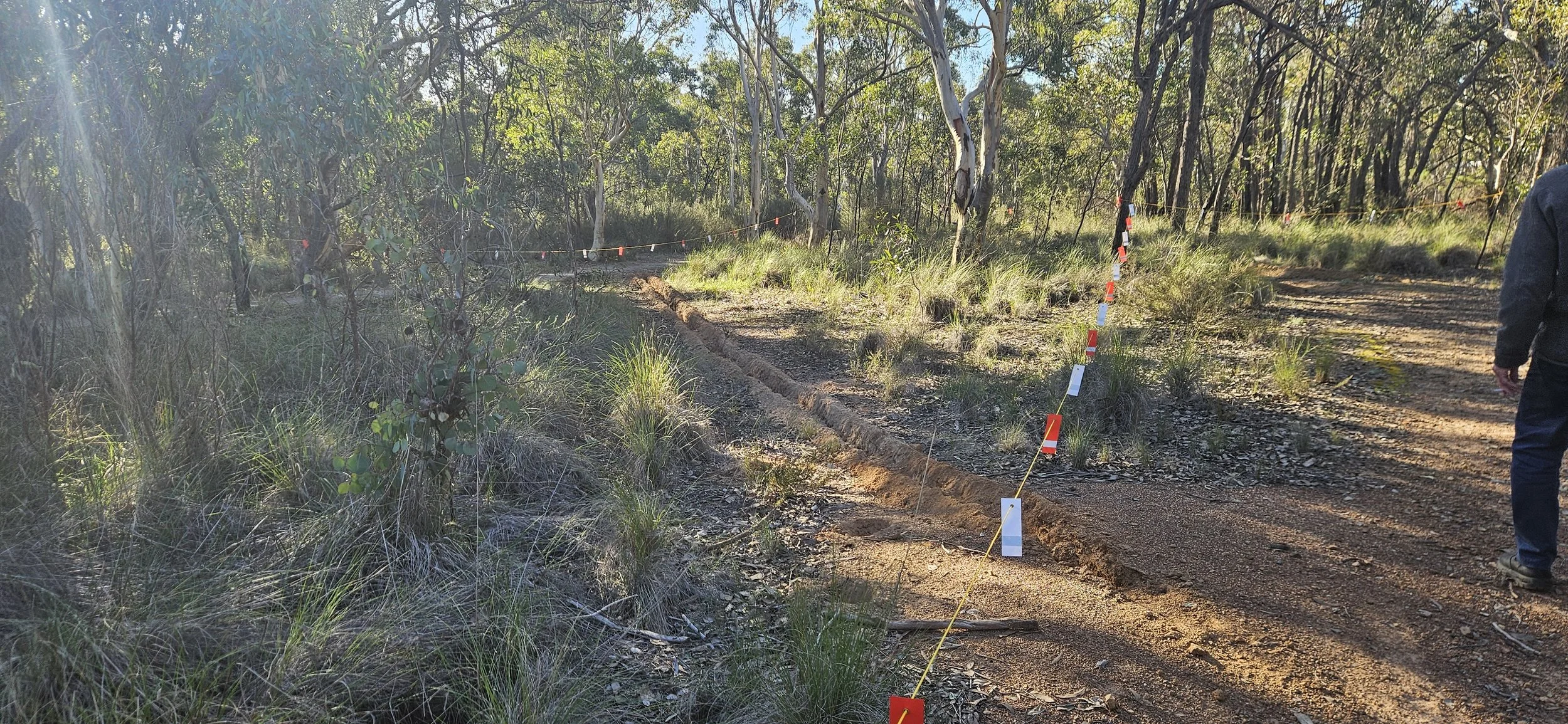
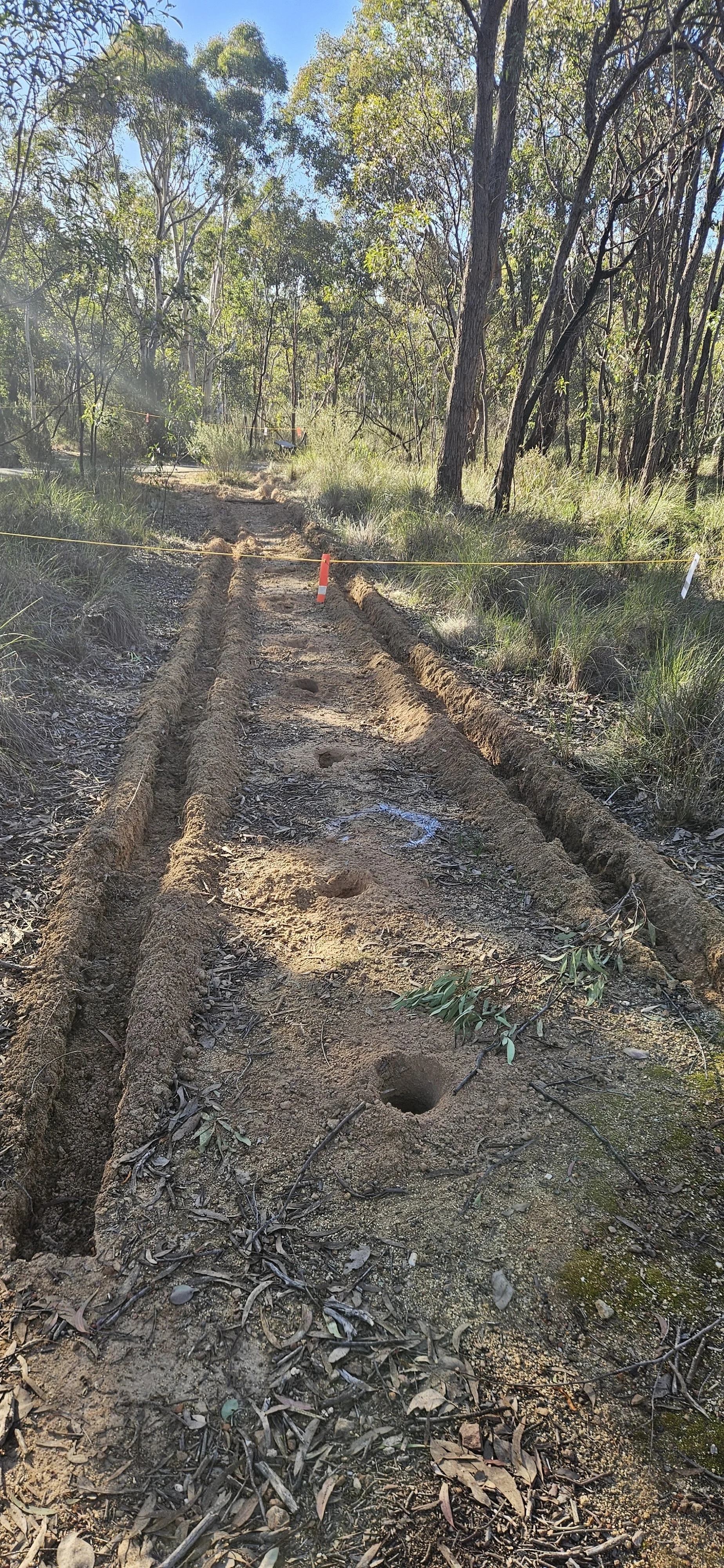
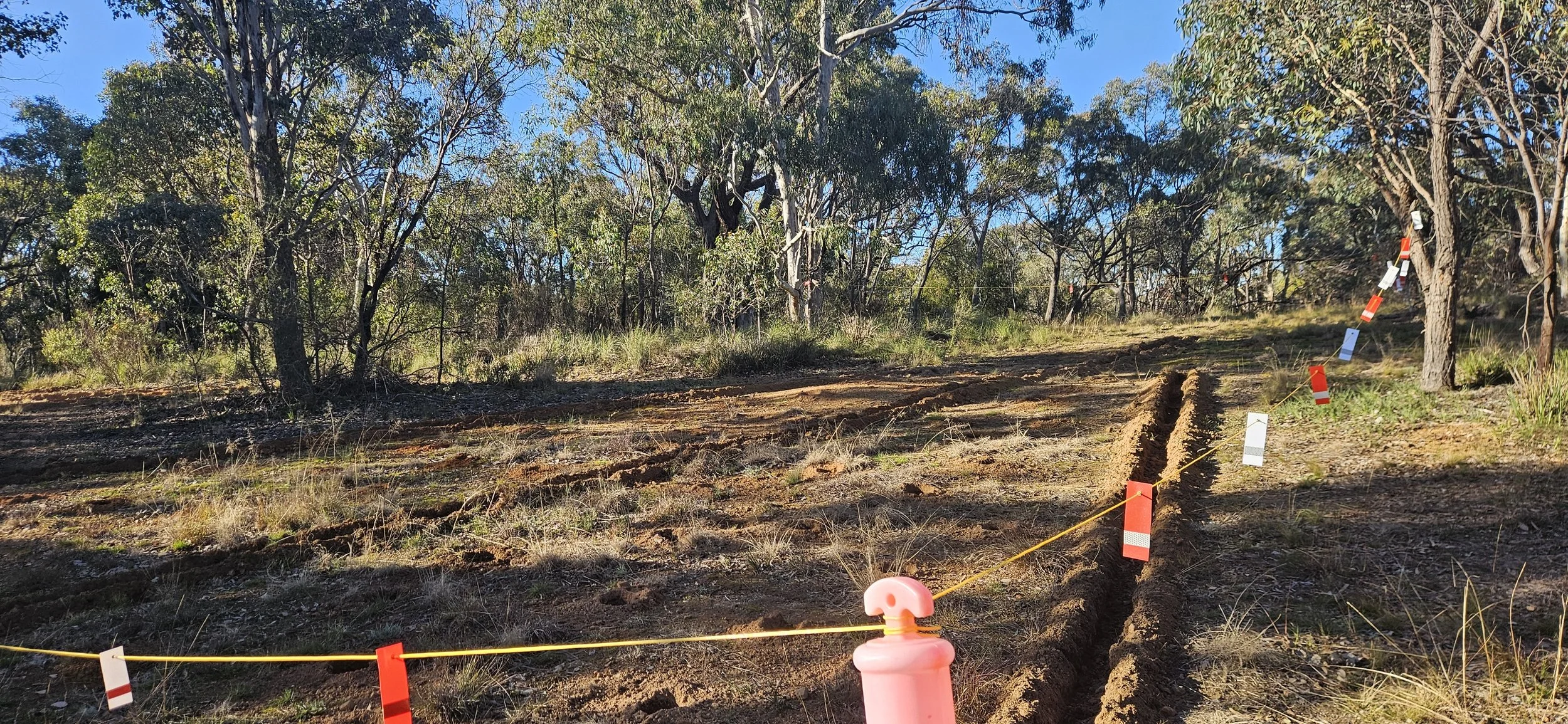
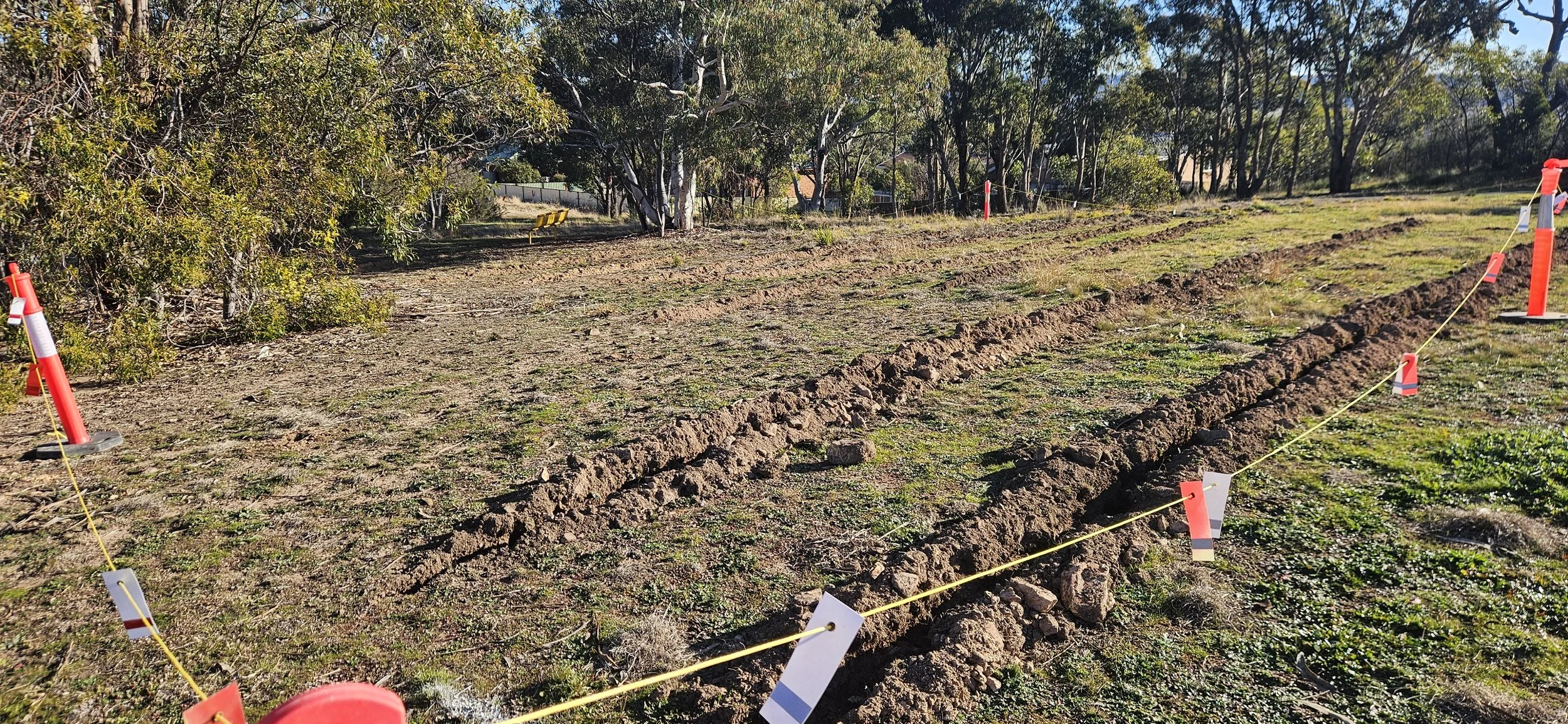
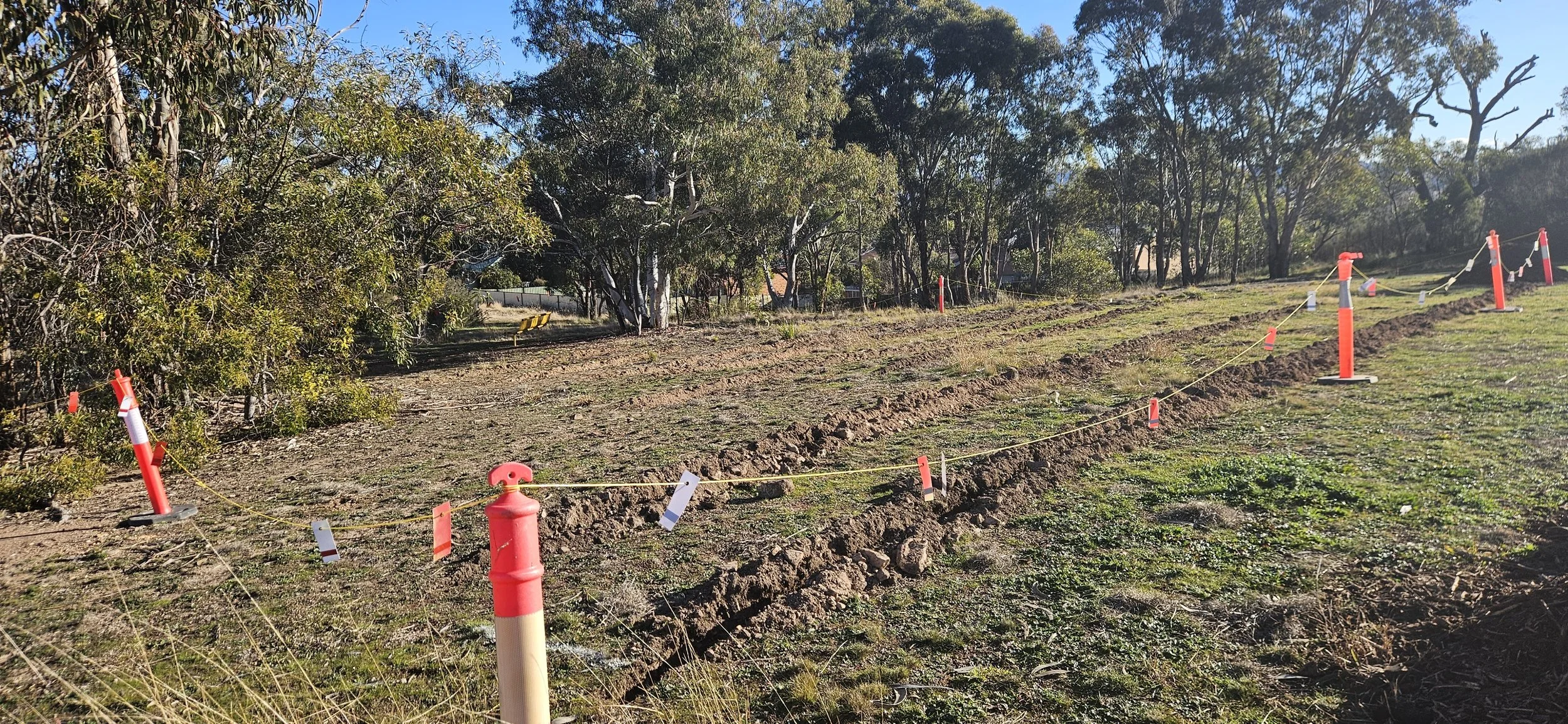
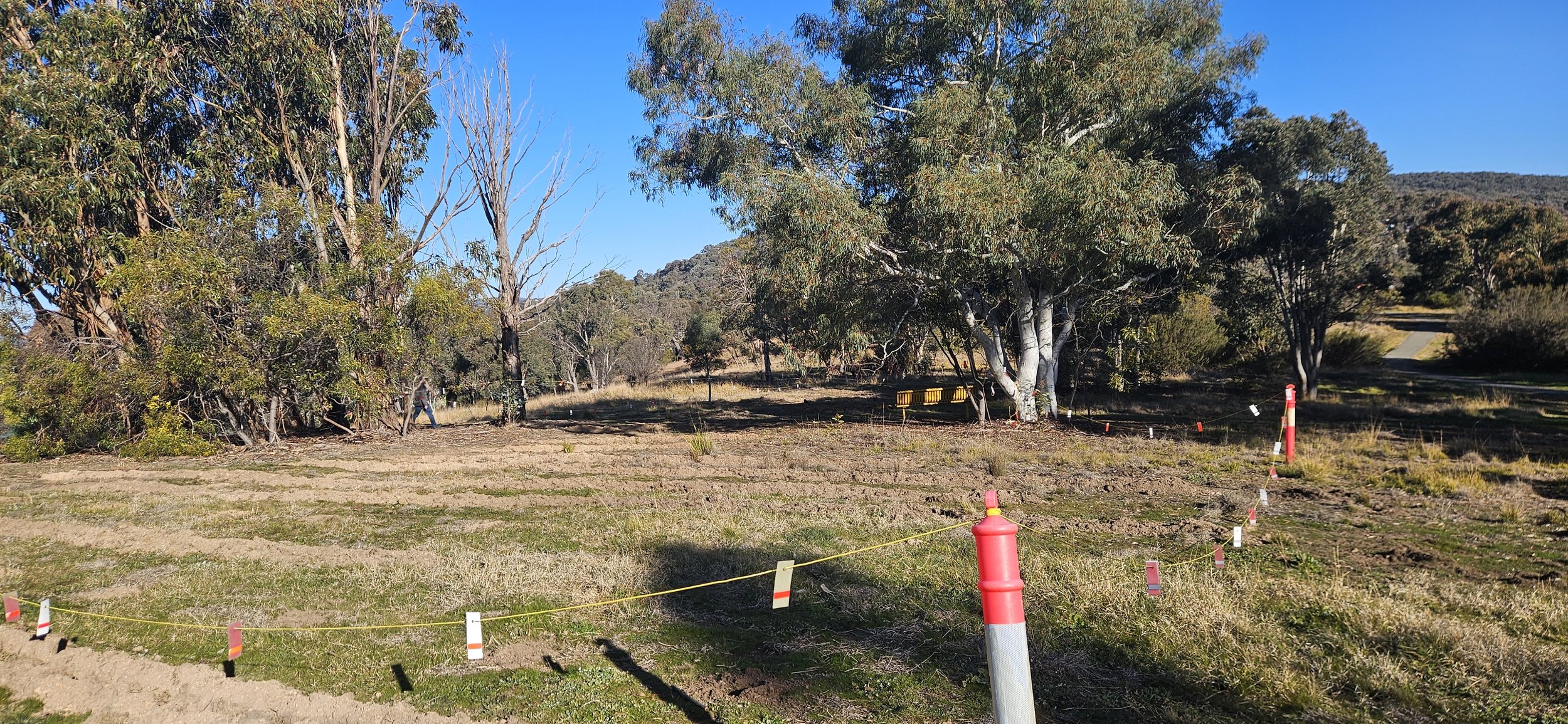
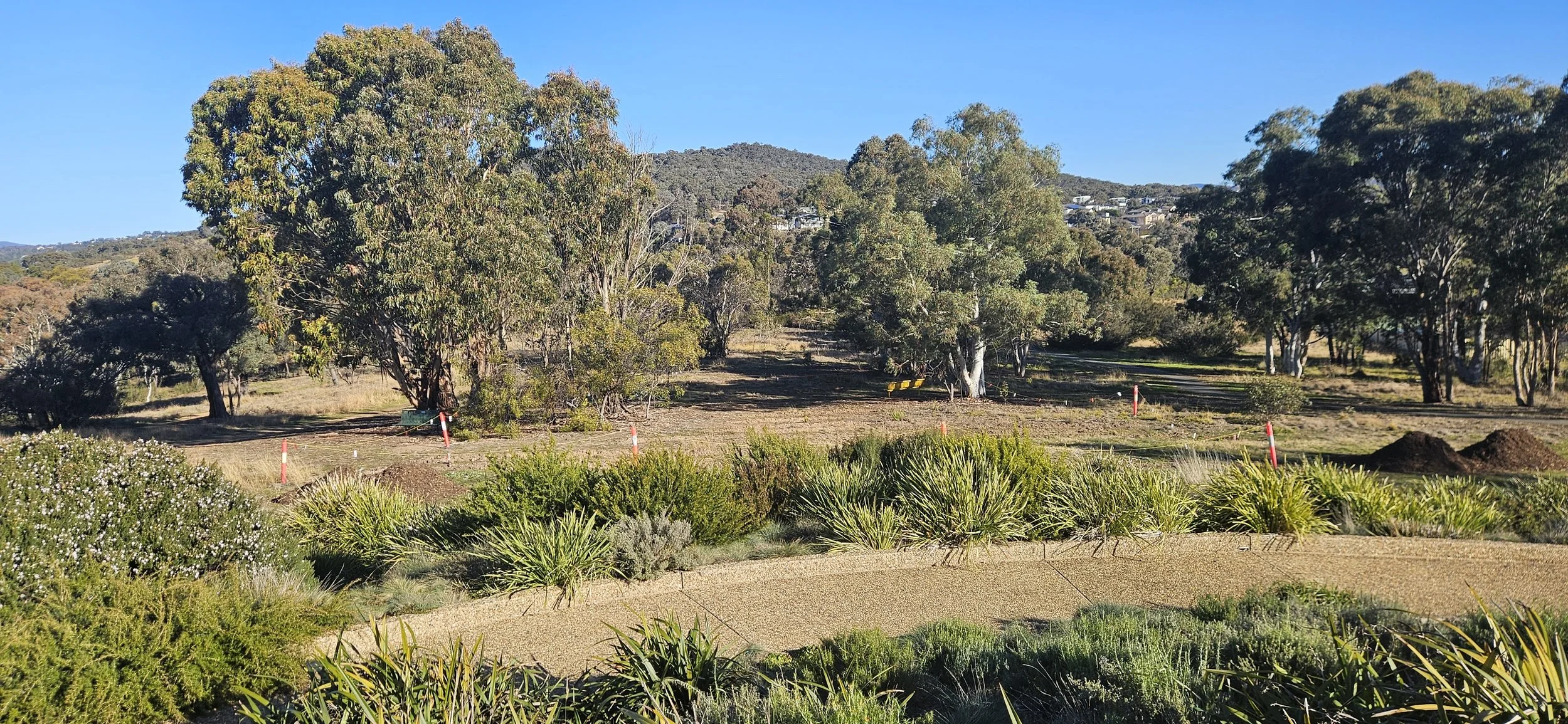
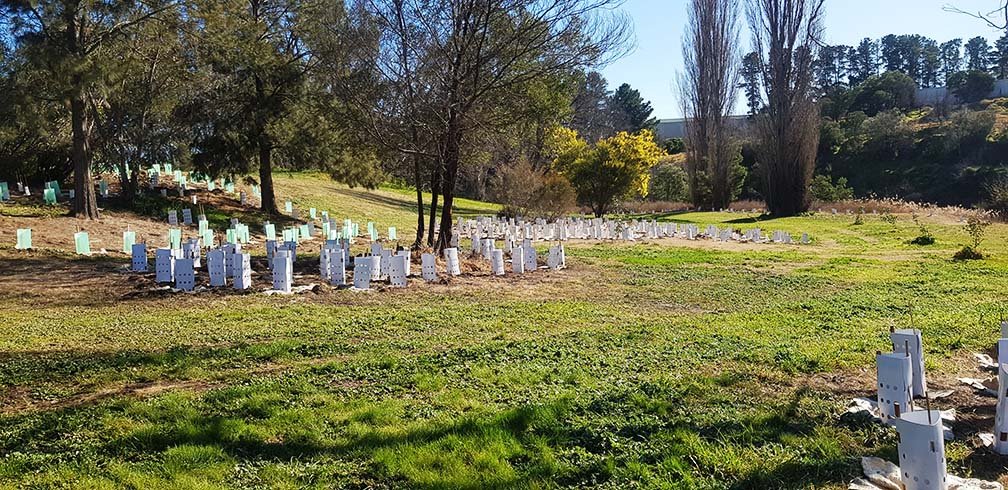
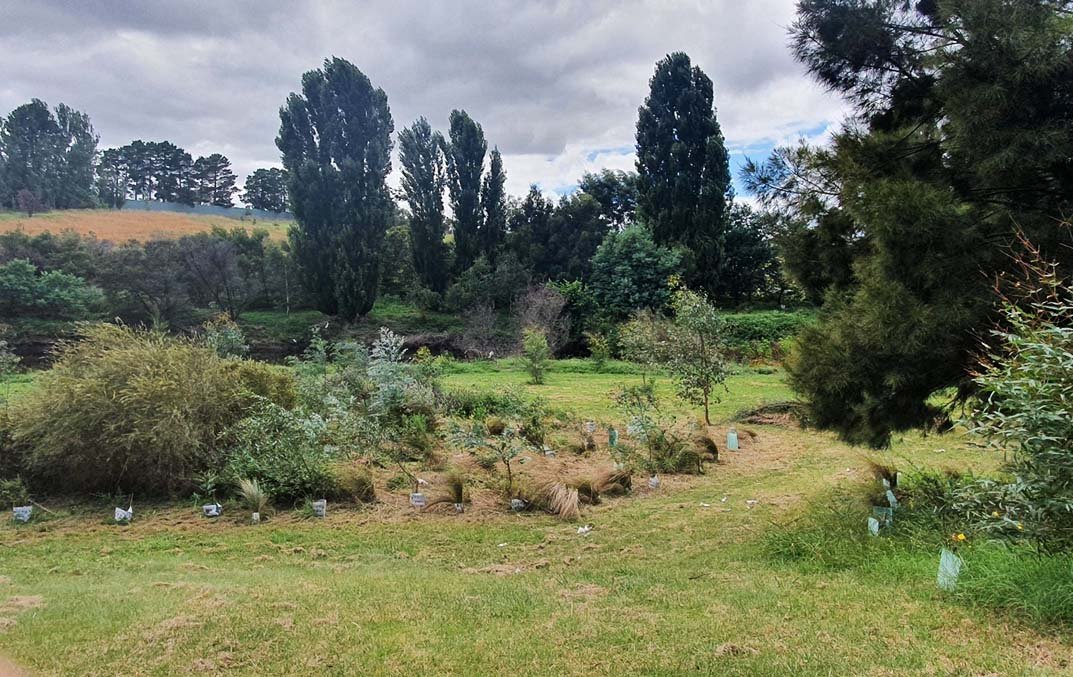
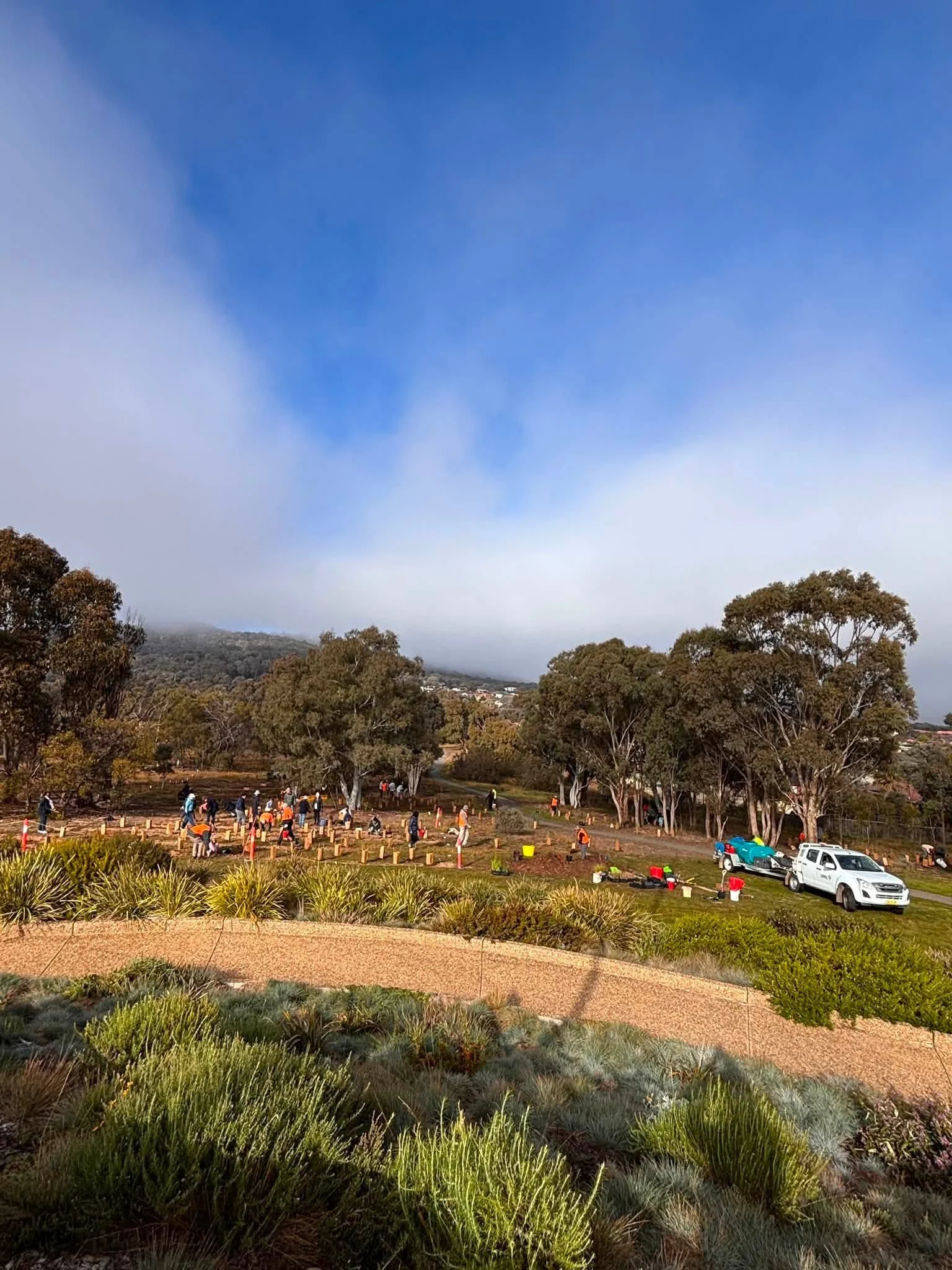
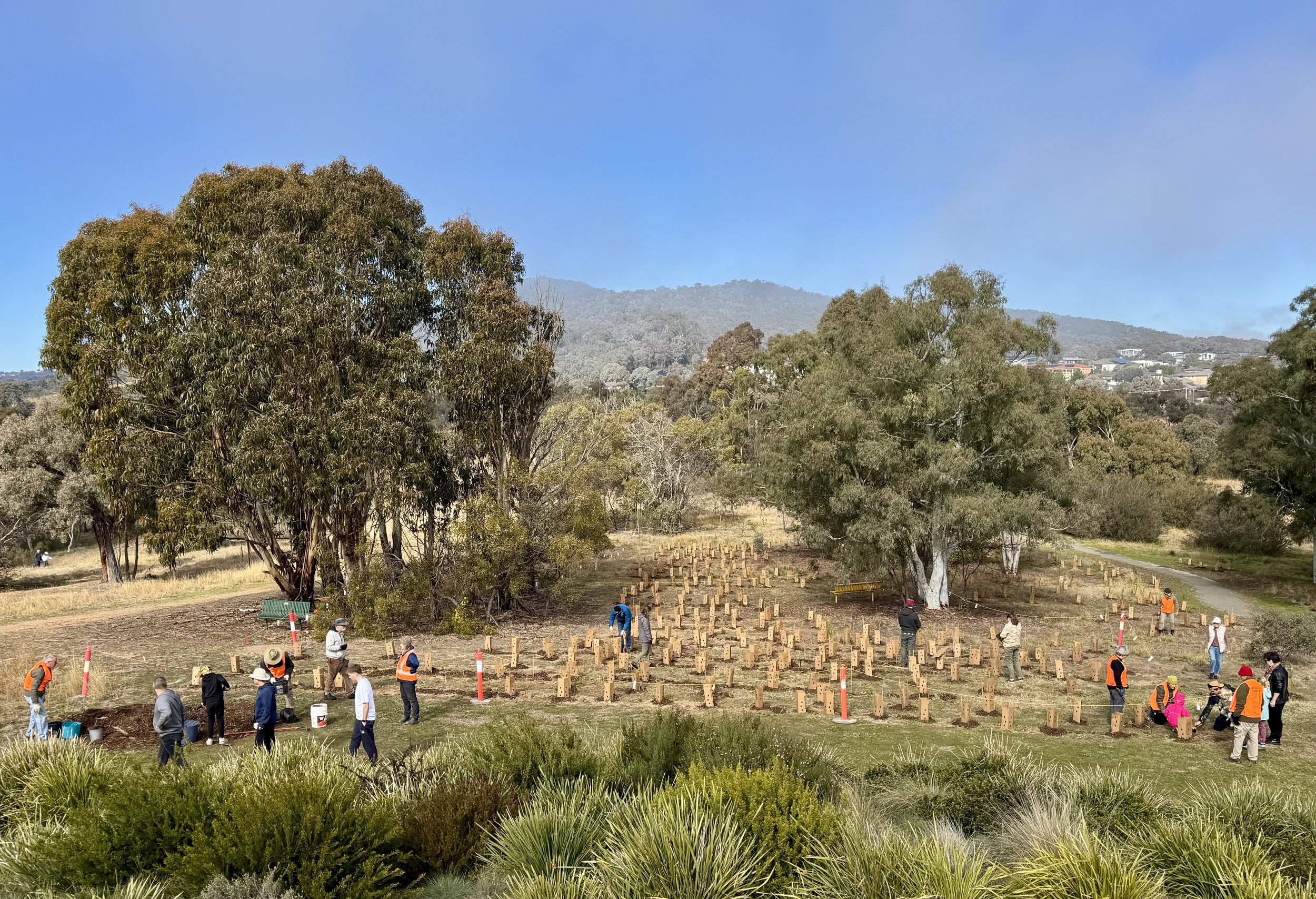
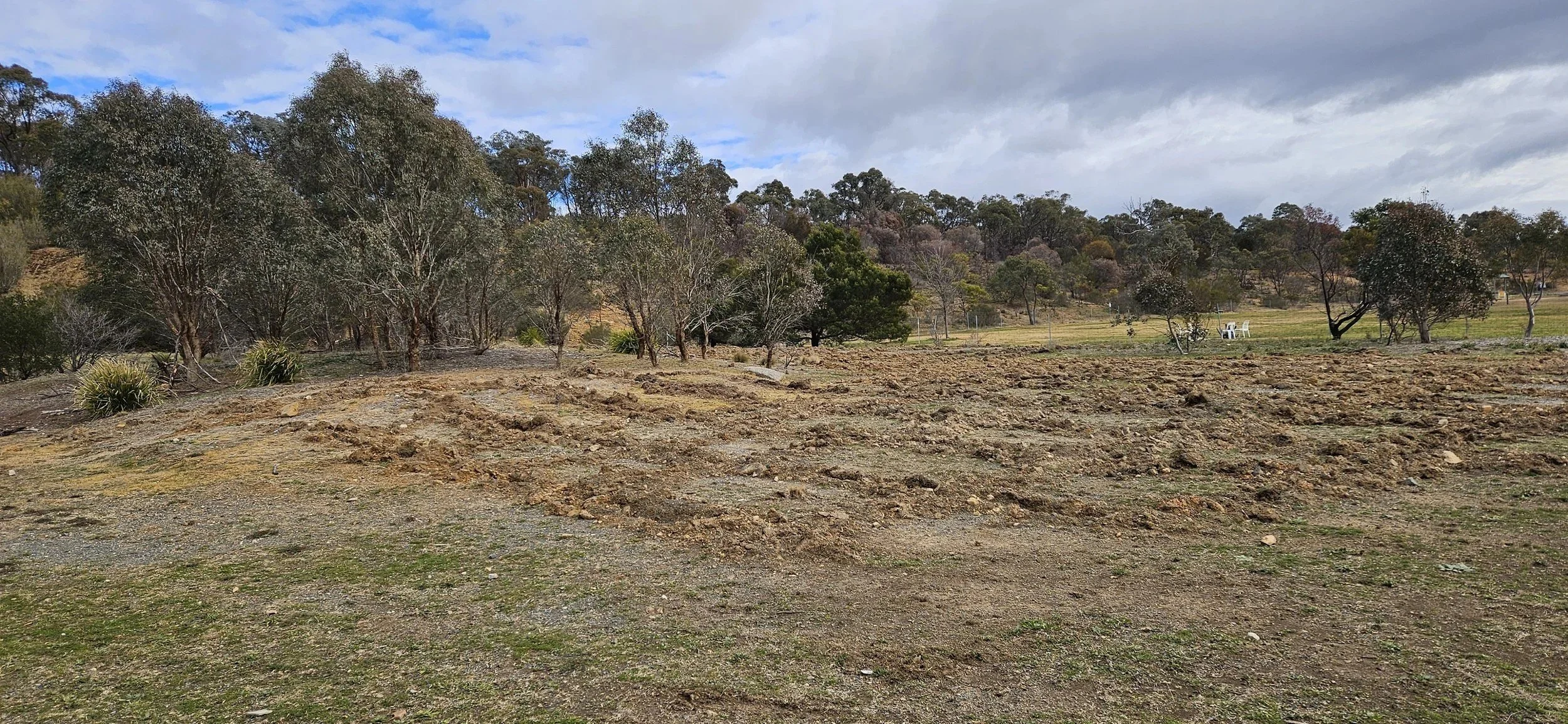
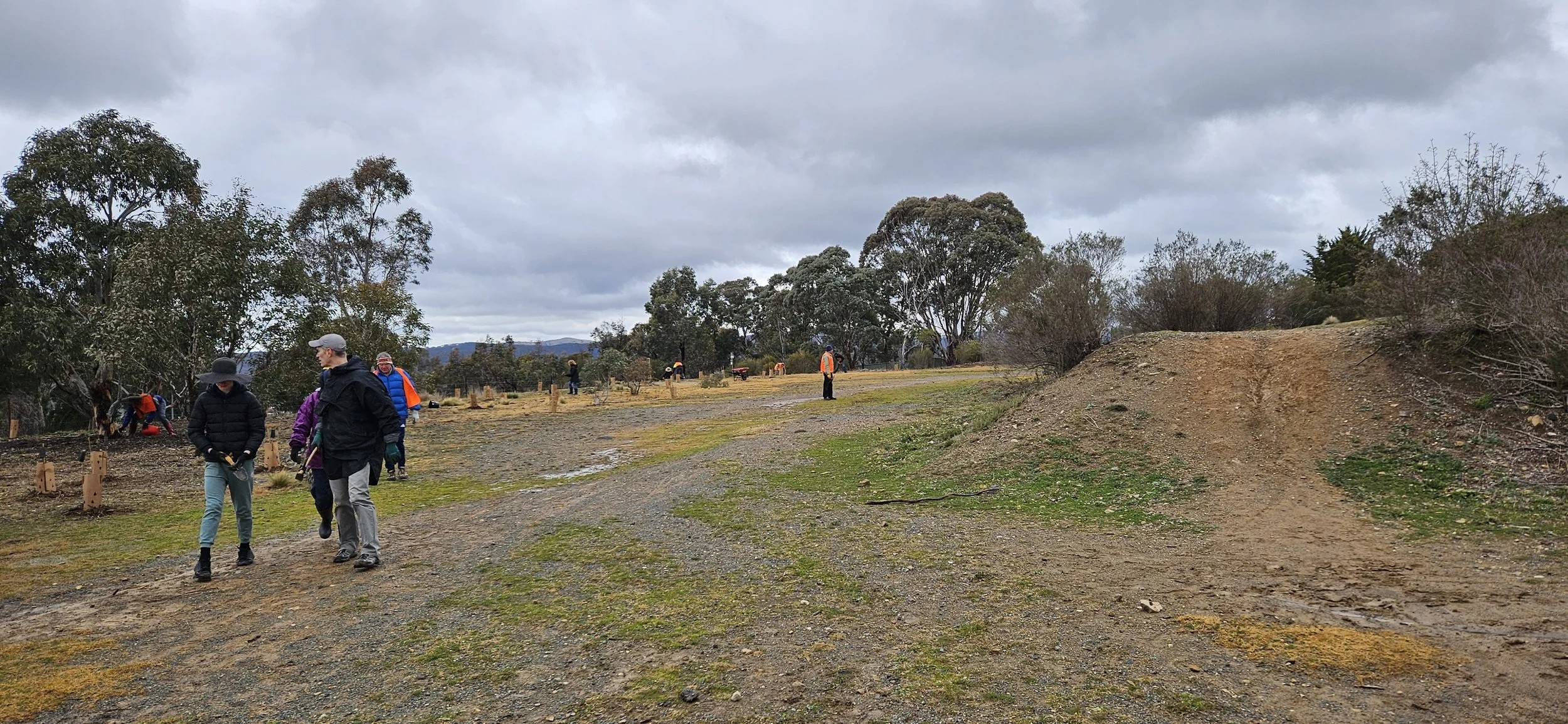
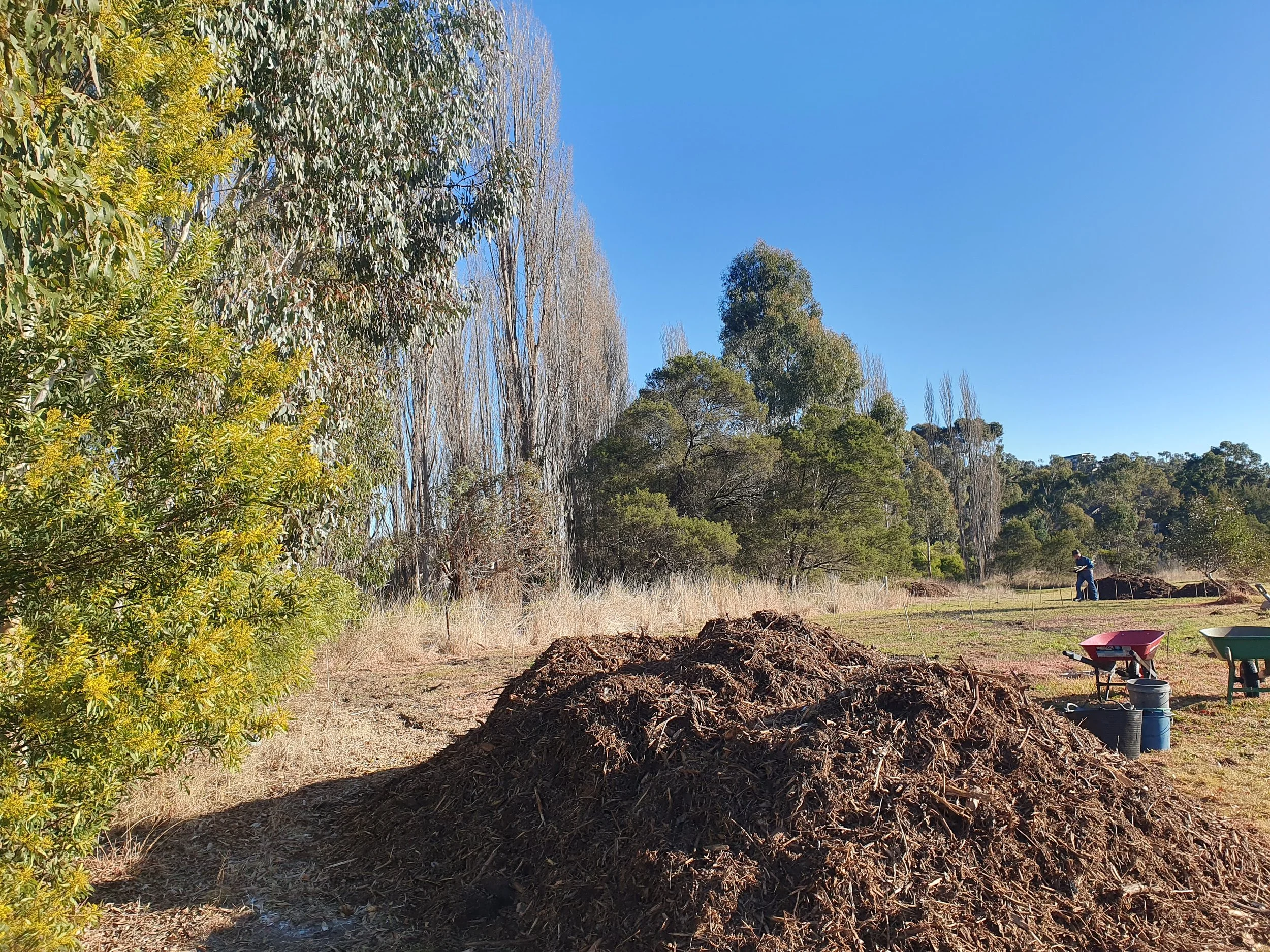
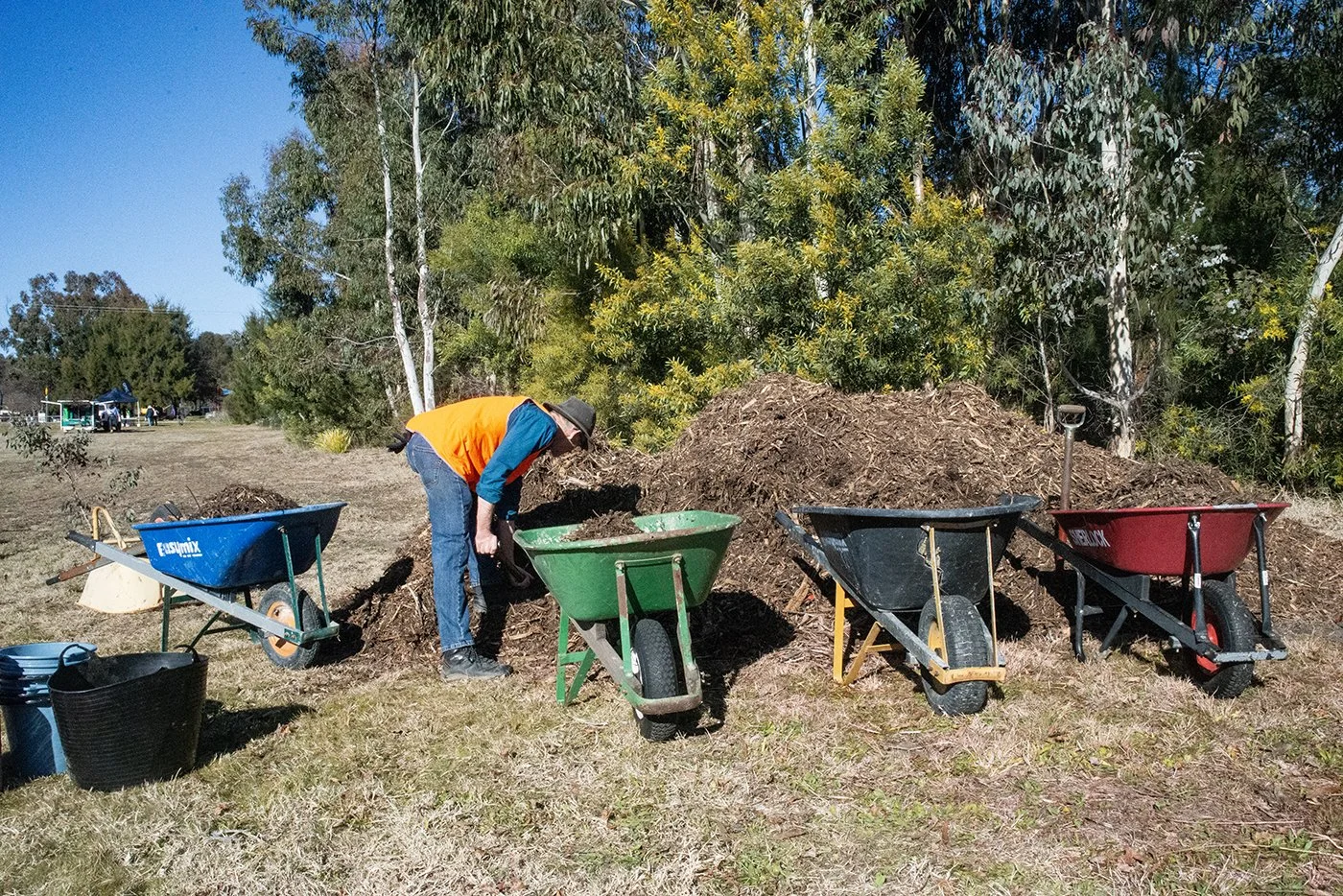
Above: North and south Bicentennial prior to planting
The two sites were different. Planting at the North site focused on several degraded areas and along some highly erodible tracks within the existing dry sclerophyll forest. Species which would maintain the open canopy cover with a shrubby understory were selected.
The more open site to the South was used to place a greater variety of trees, shrubs and lots of native grasses, while keeping recreational access intact. The plantings are in keeping with many years of balancing public access and use of the park with maintaining and enhancing this valuable ecological asset.
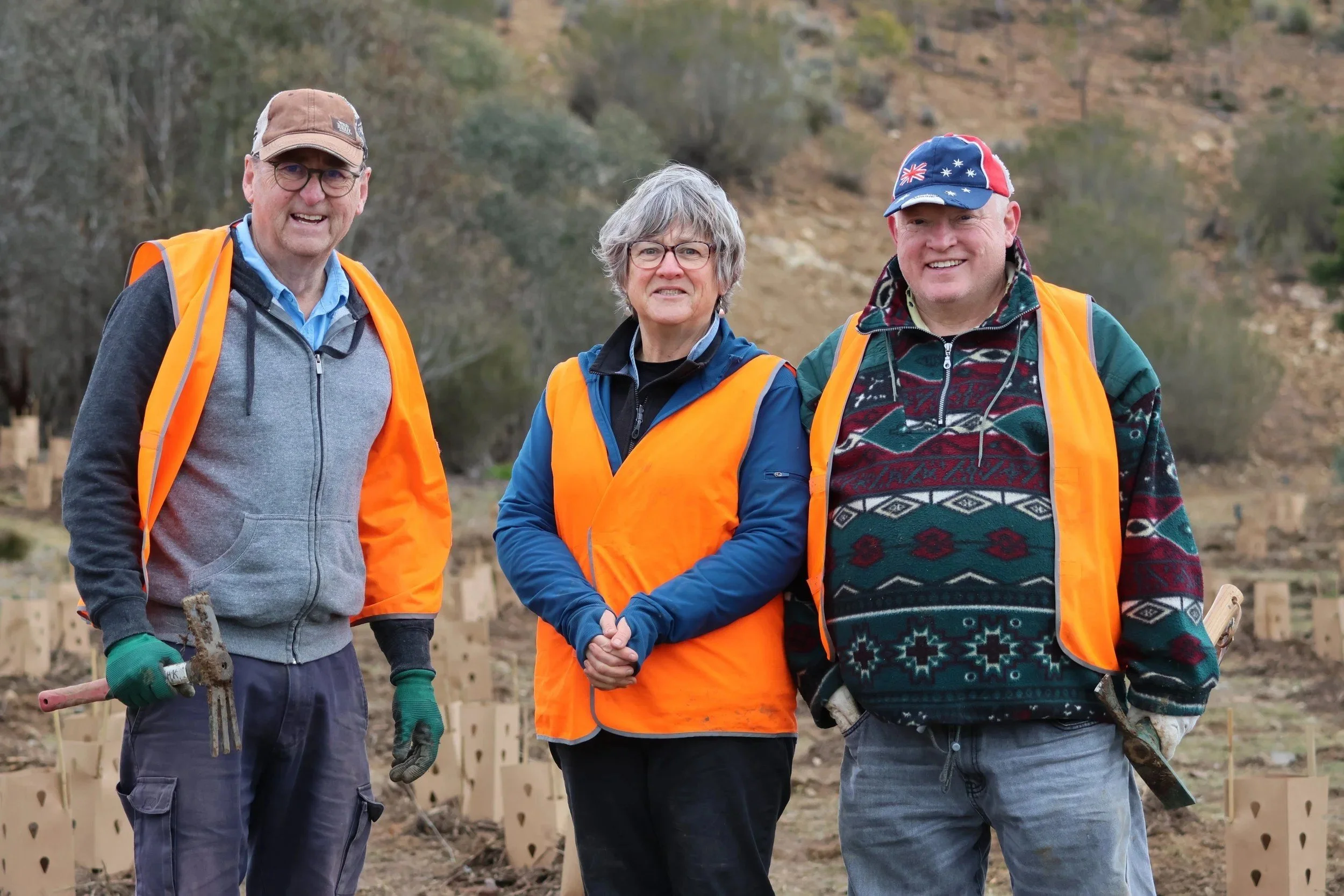
This has been possible through a collaboration between QPRC and the working group of nearby Landcare members (the knowledge and dedication of Helen, Sandra and Paul is truly impressive). Our website provides details of care at the Park since 1992 - History Project Stories Bicentennial Park as well as details of the current work program Bicentennial Park.
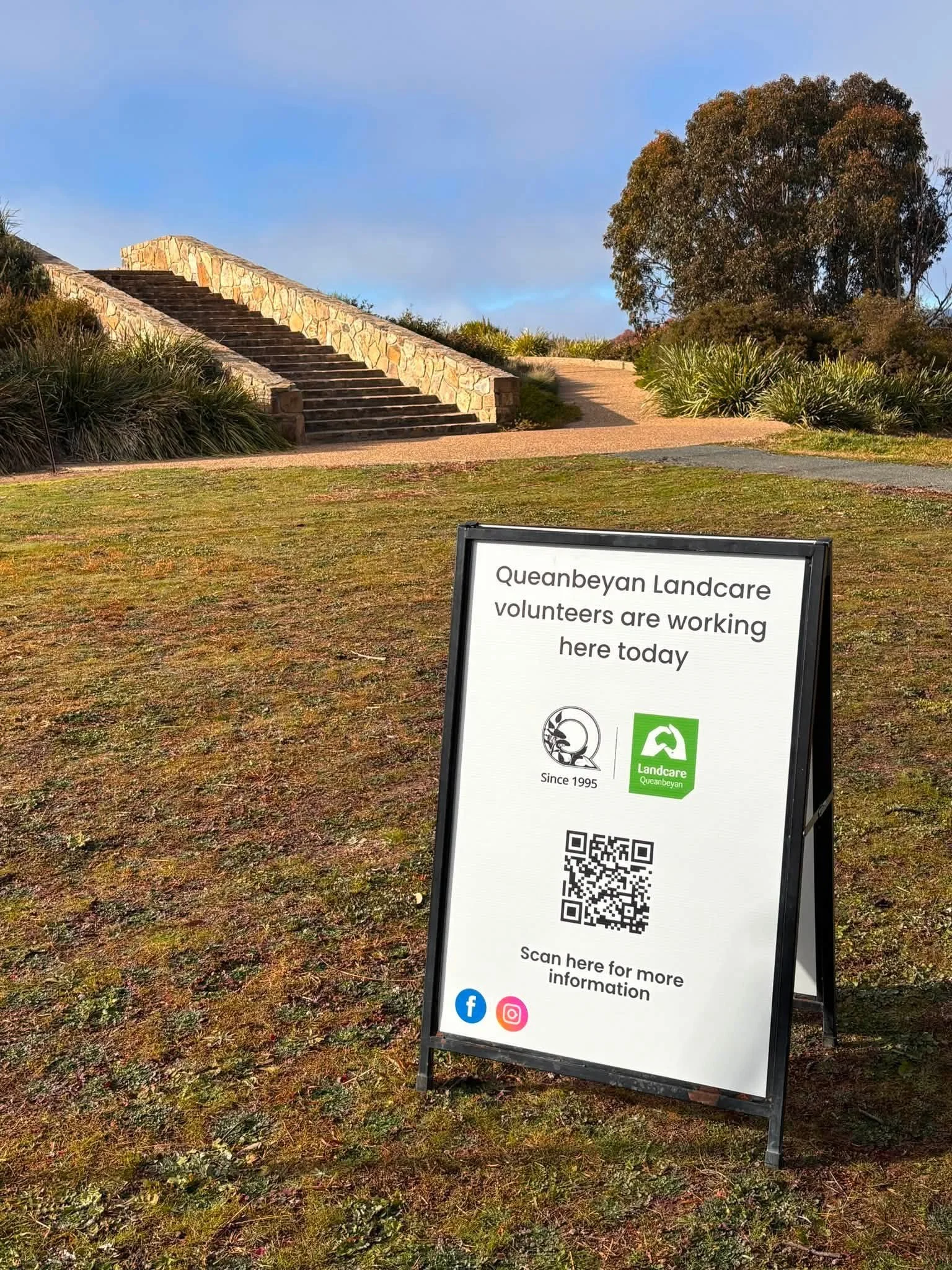
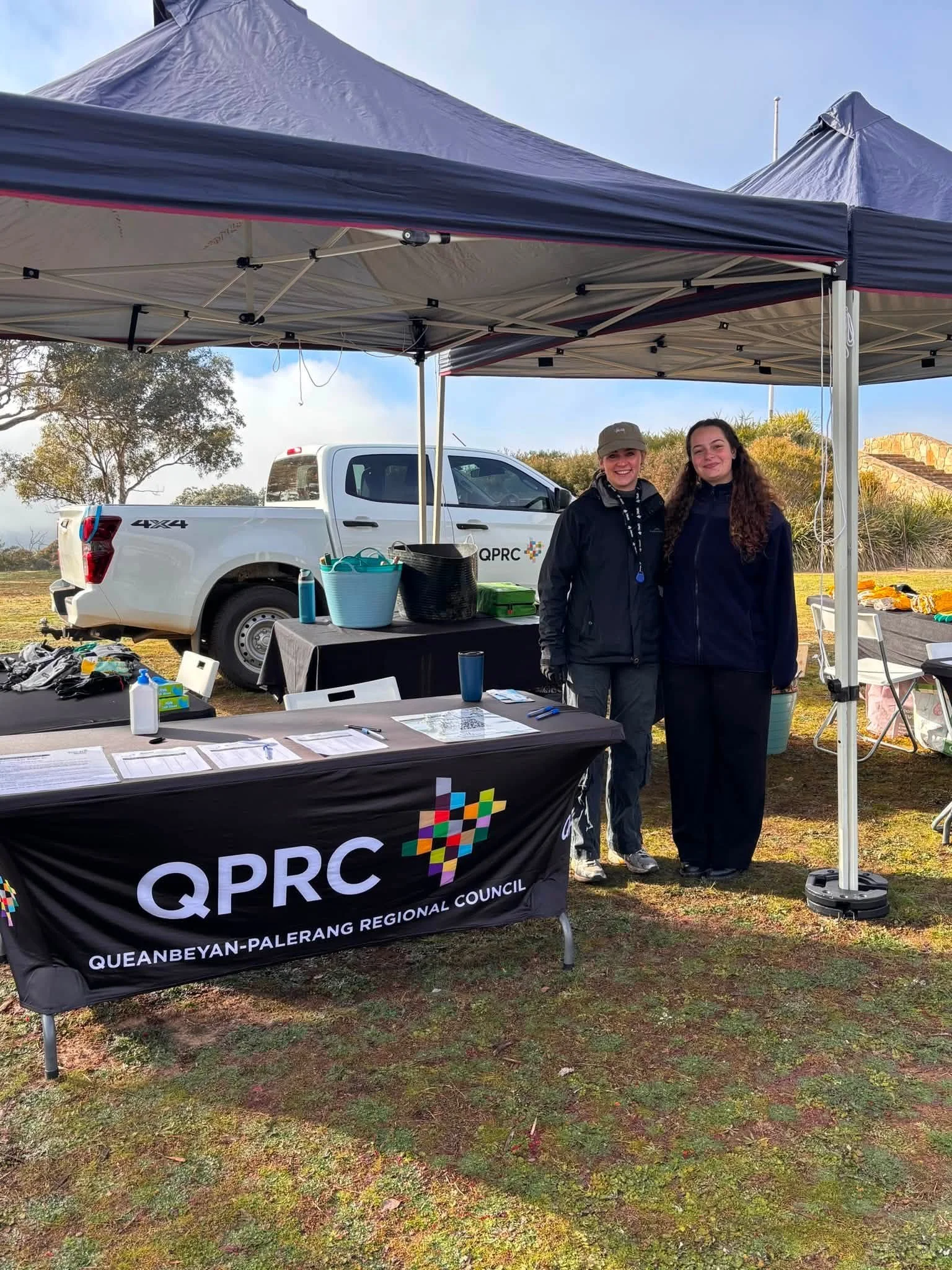
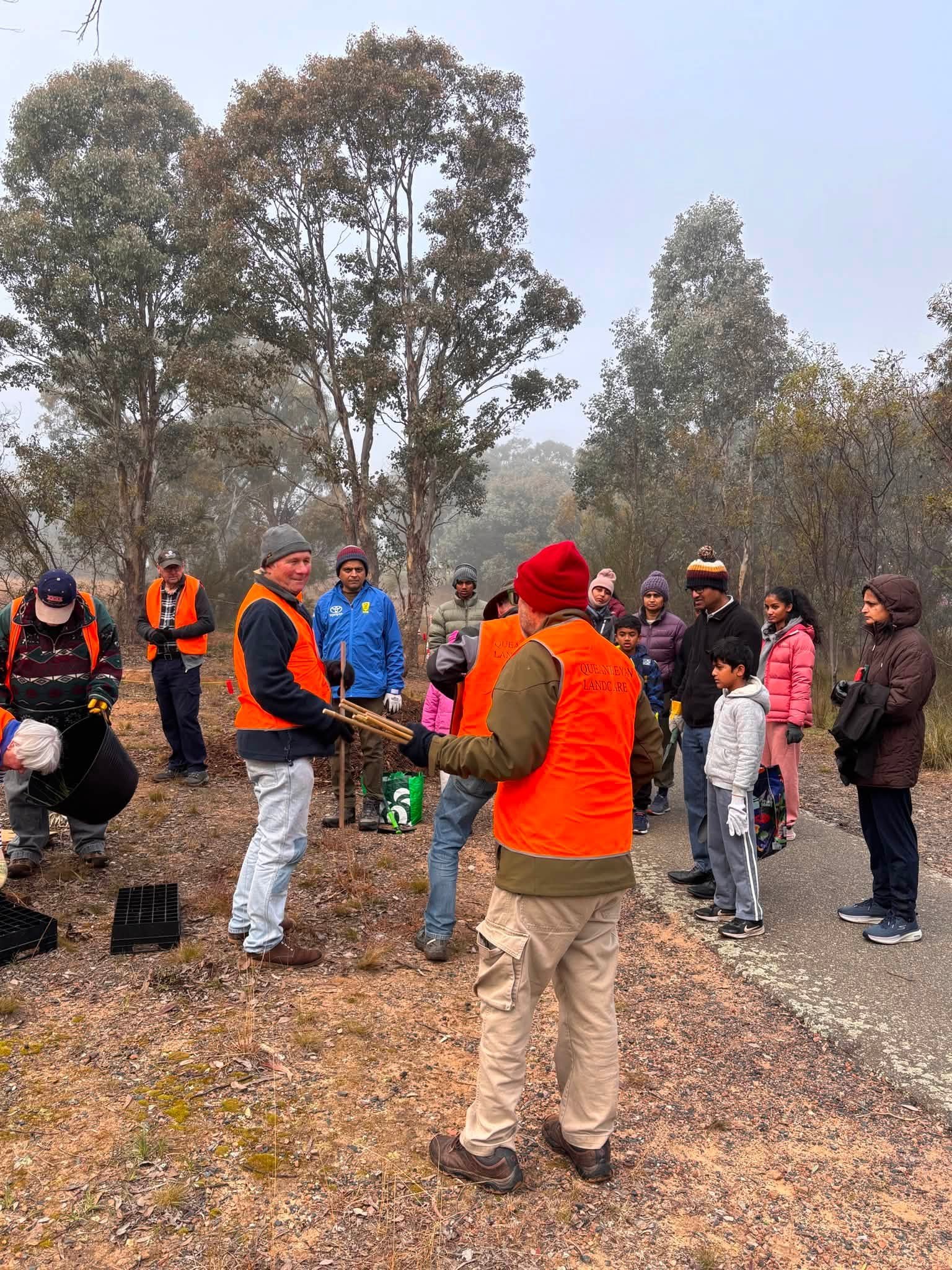
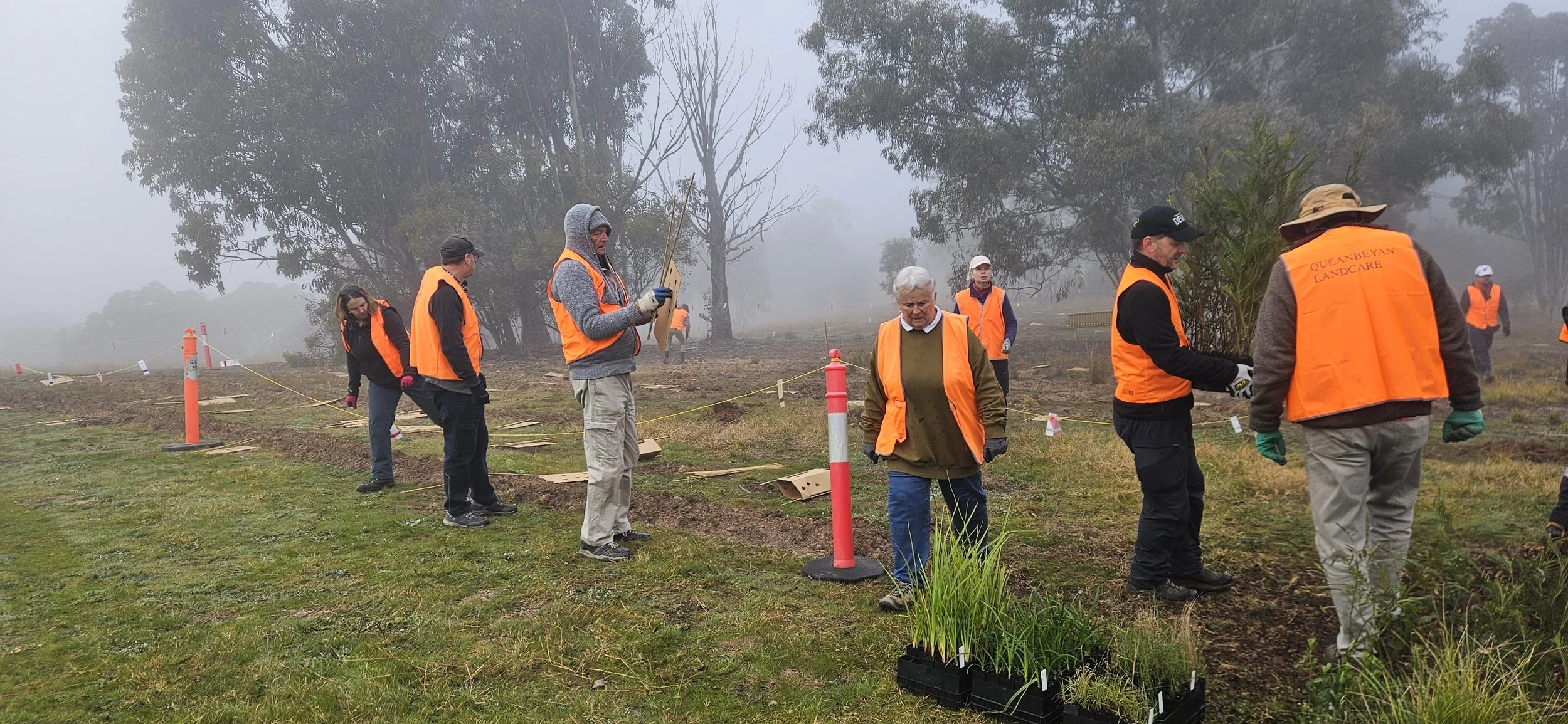
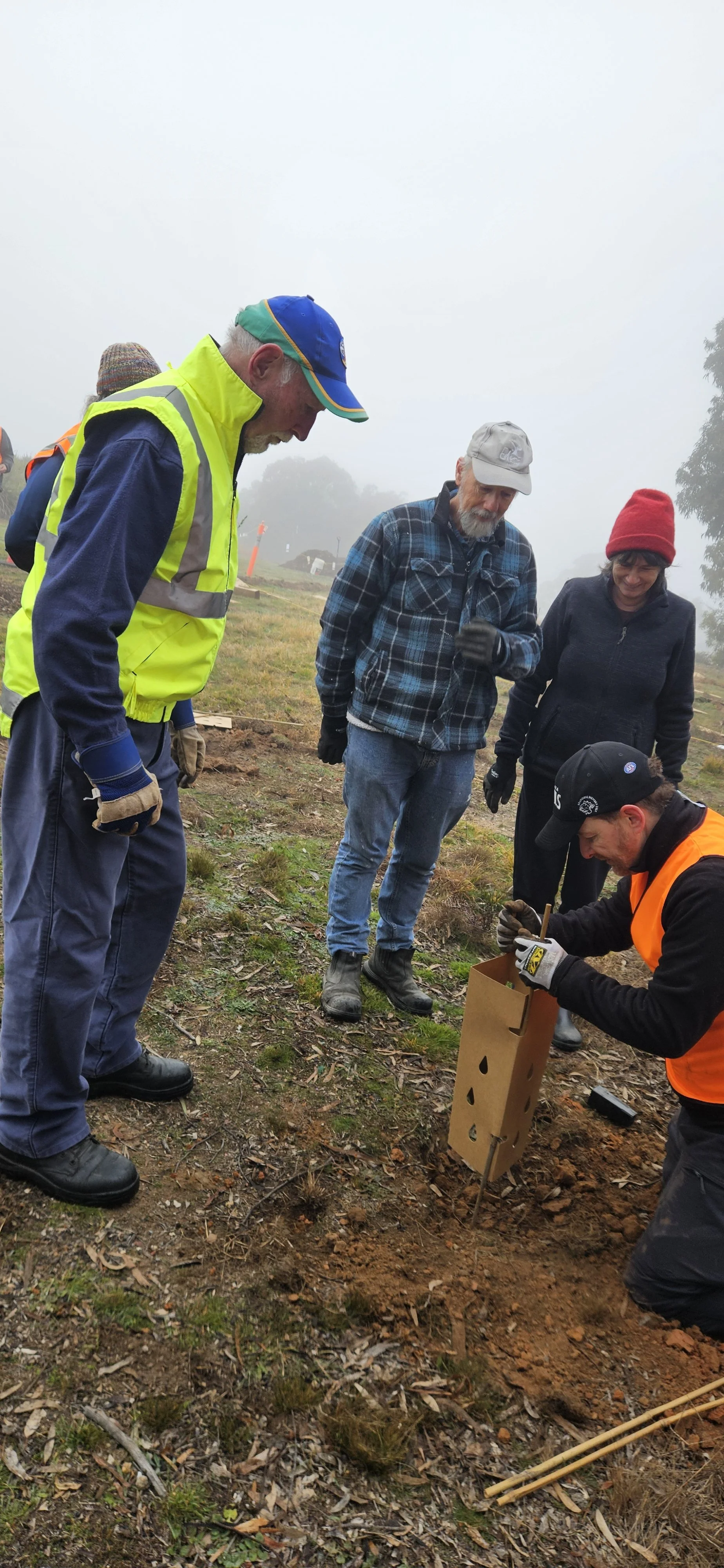
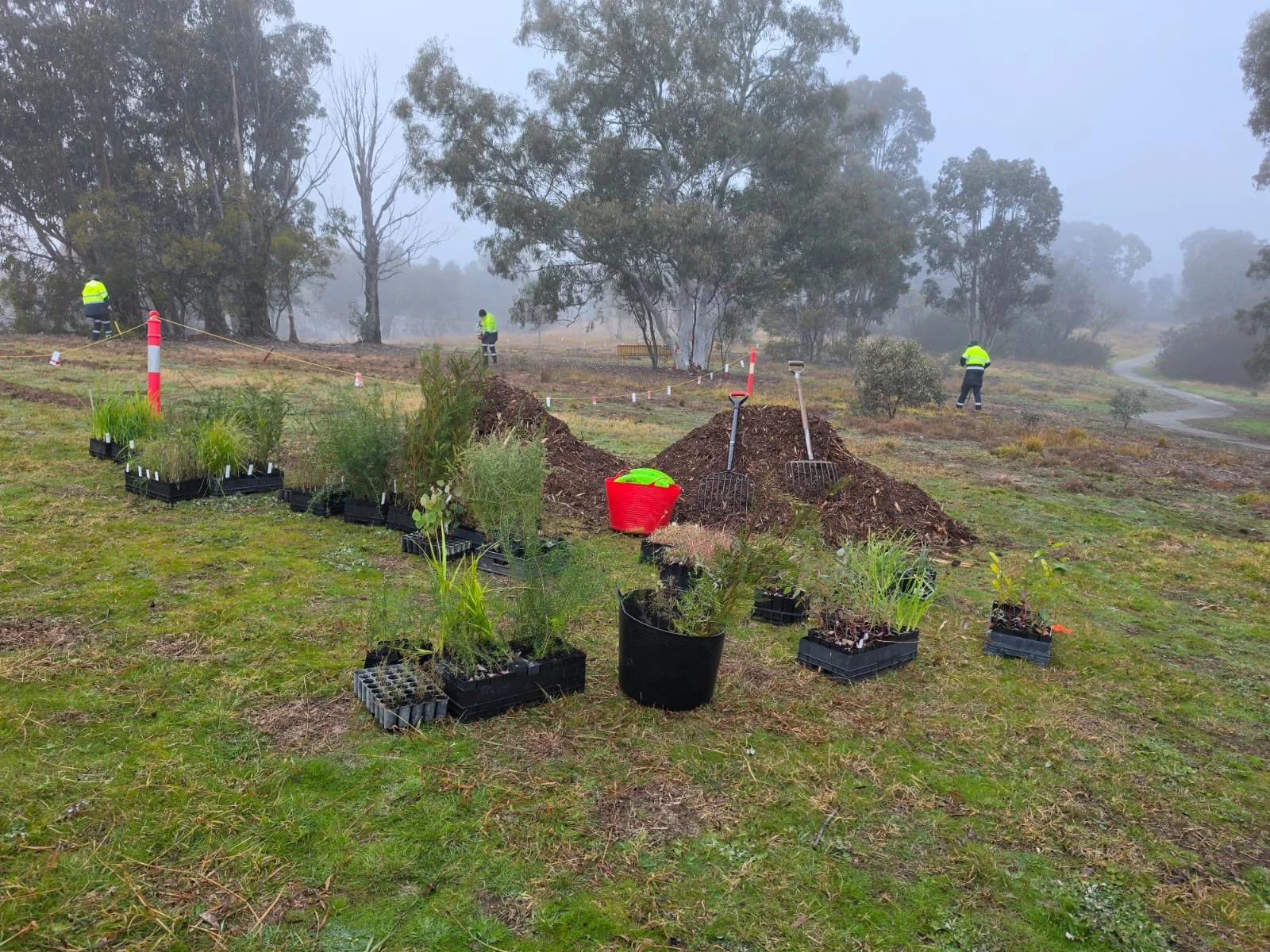
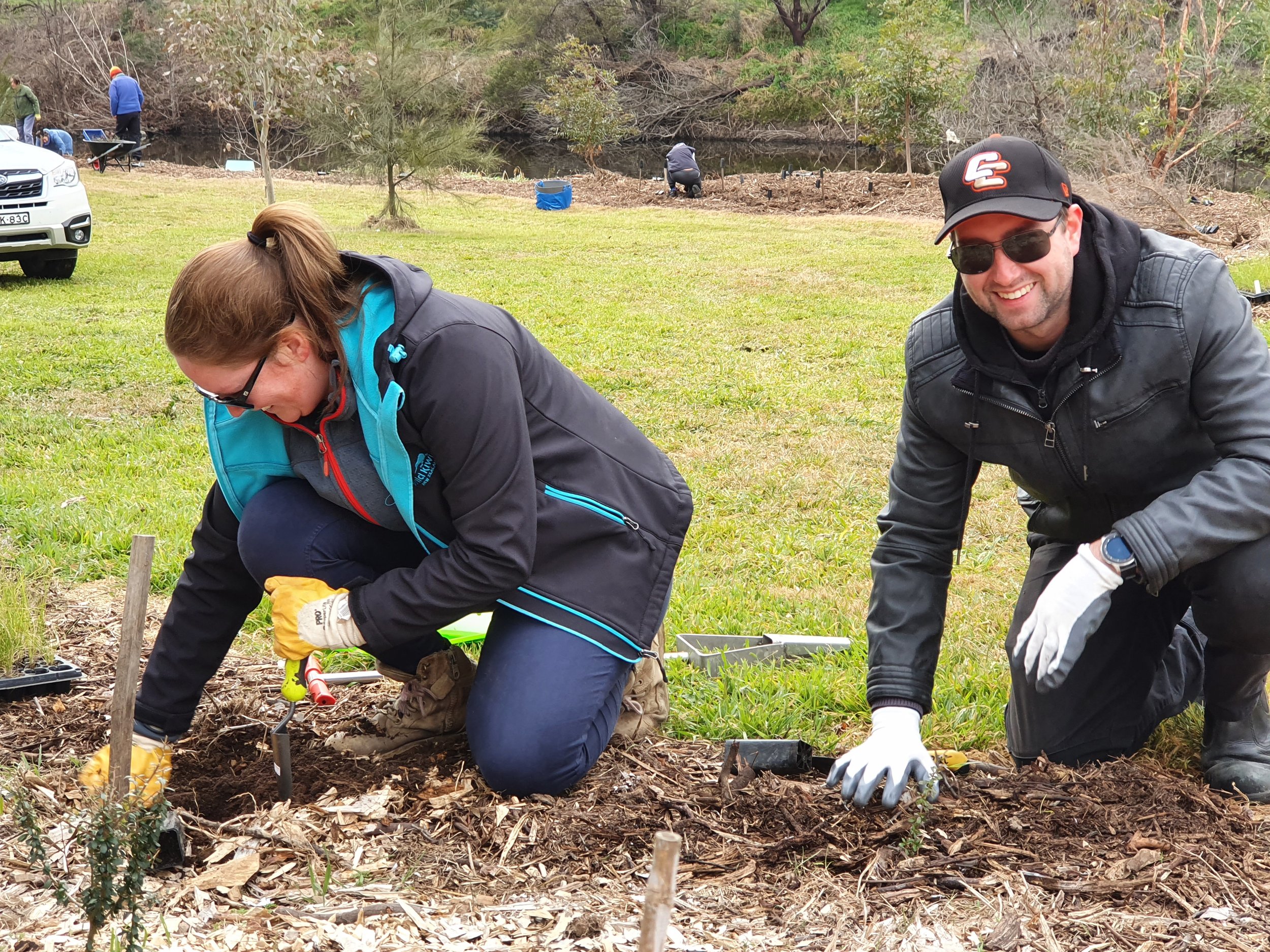
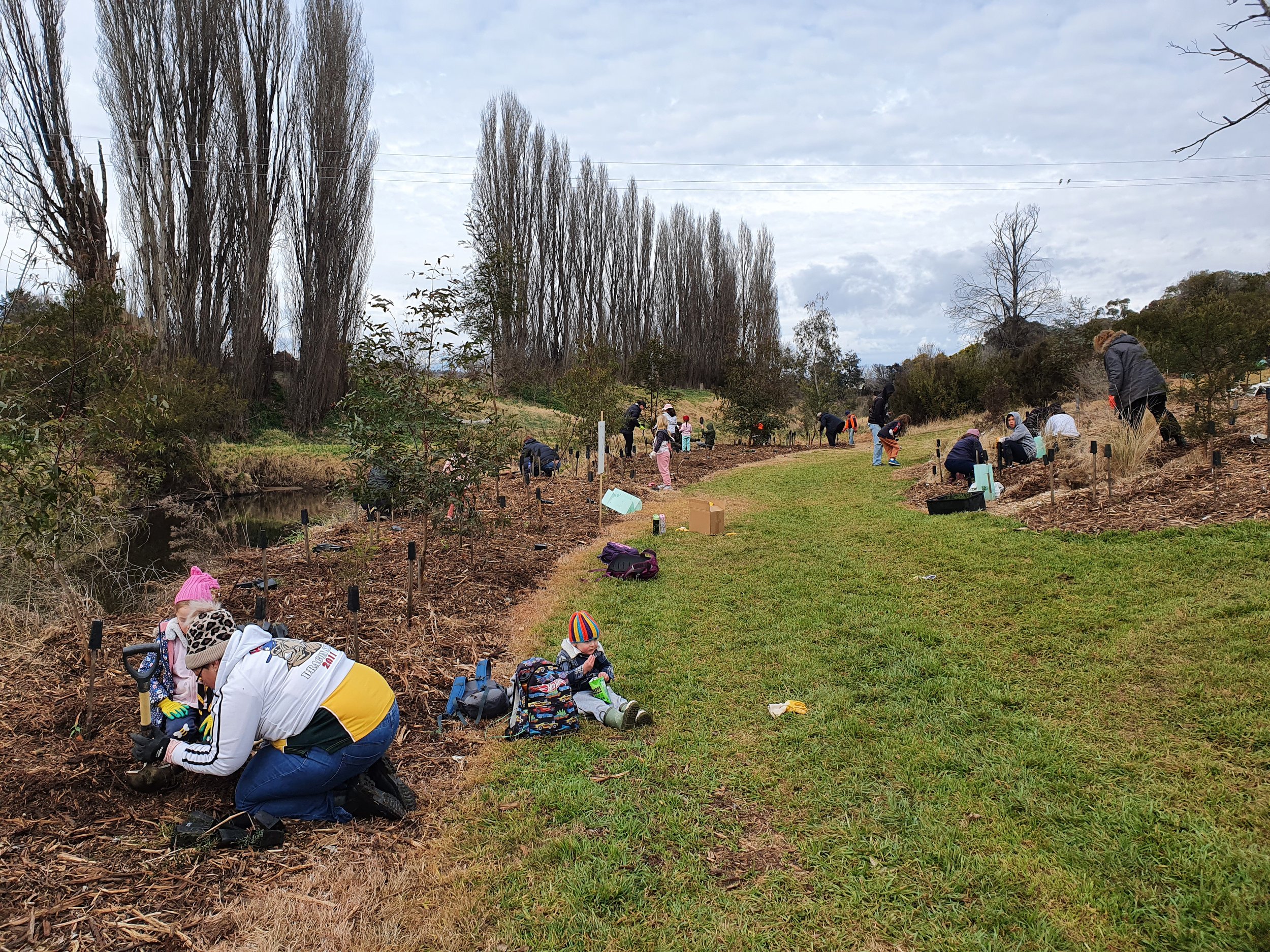
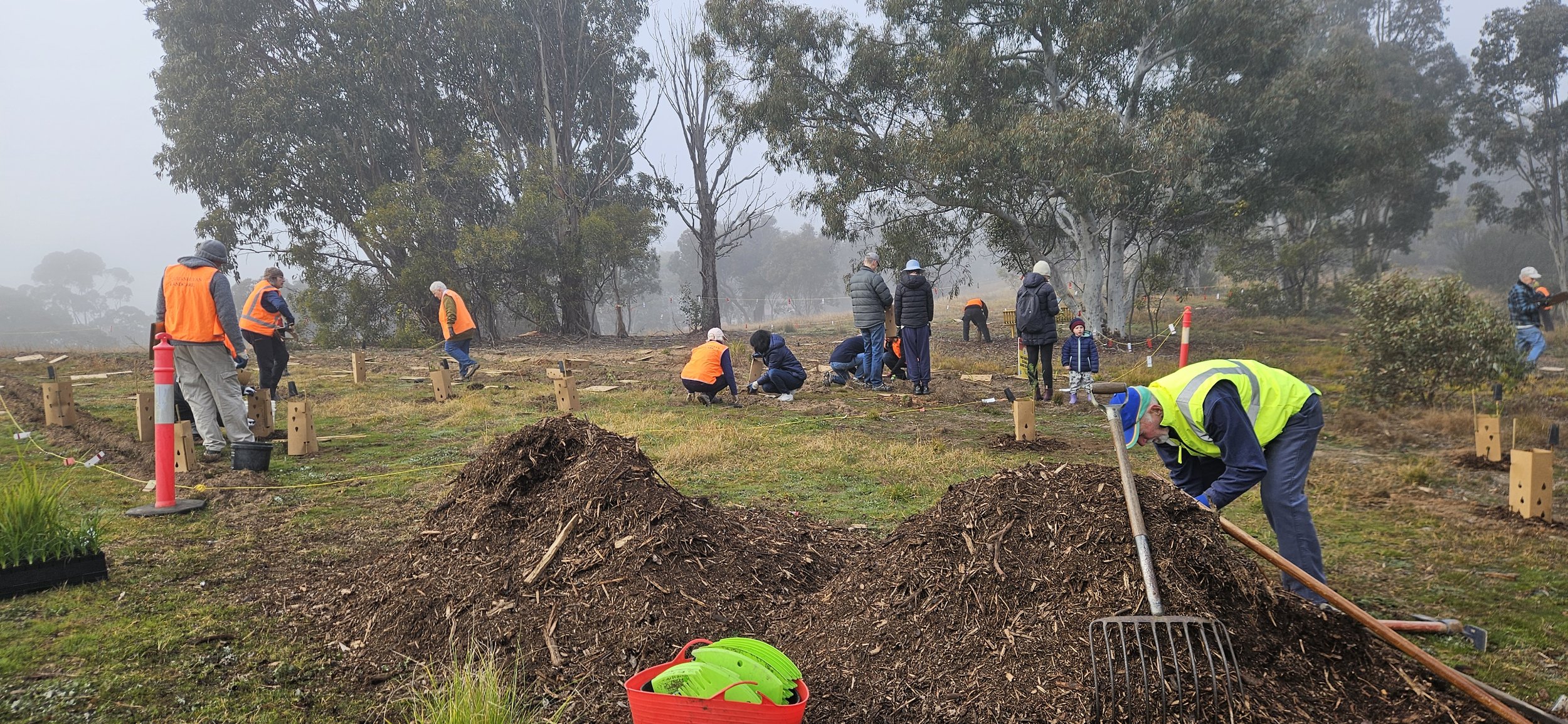
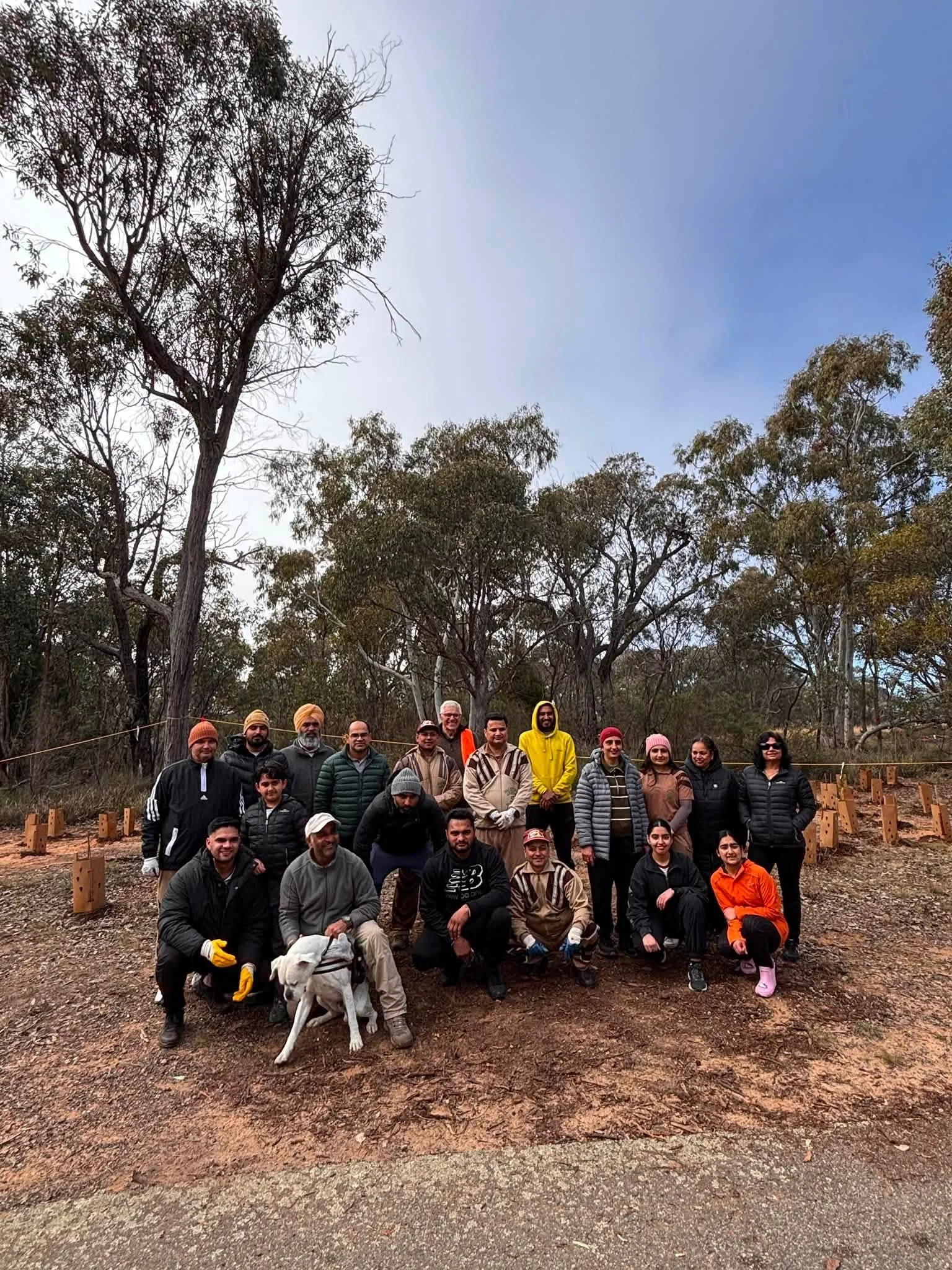
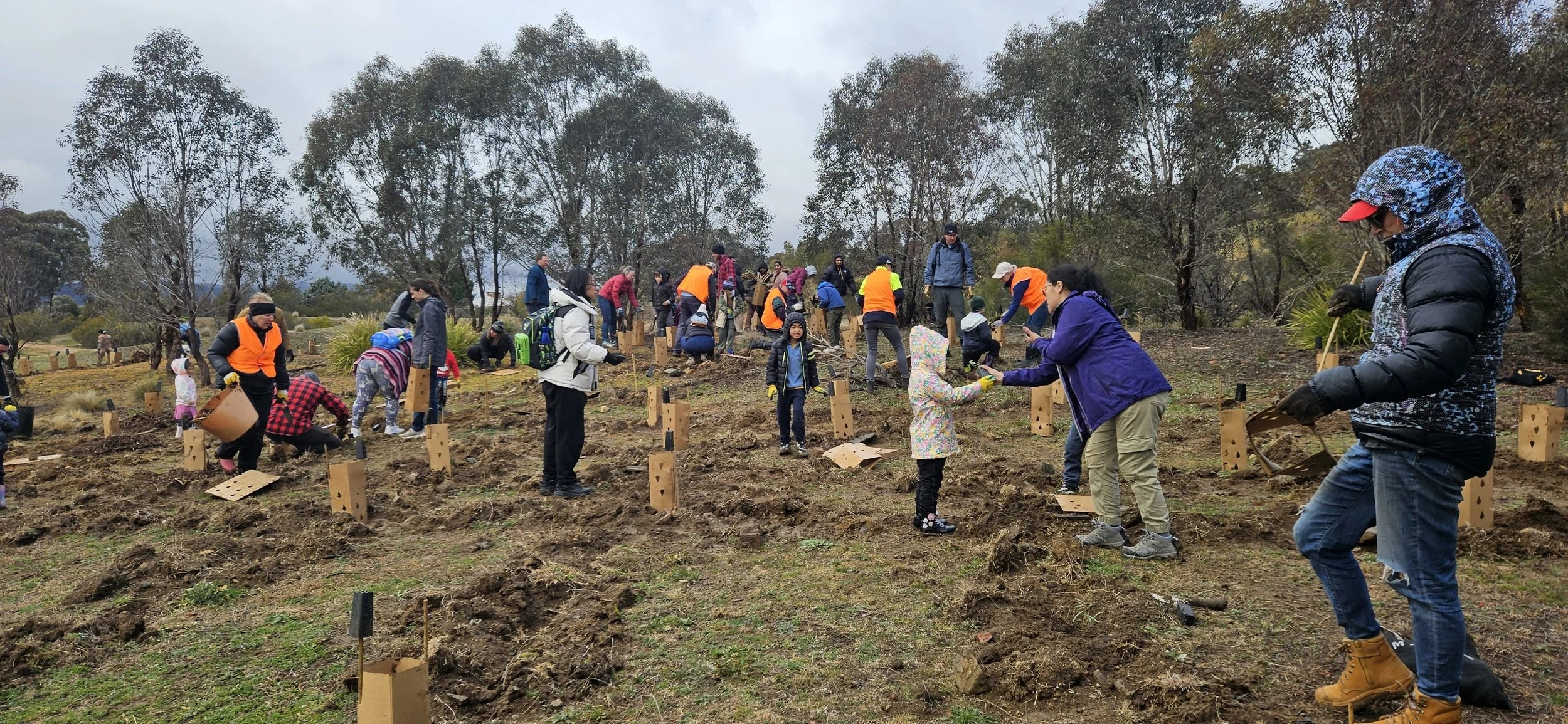
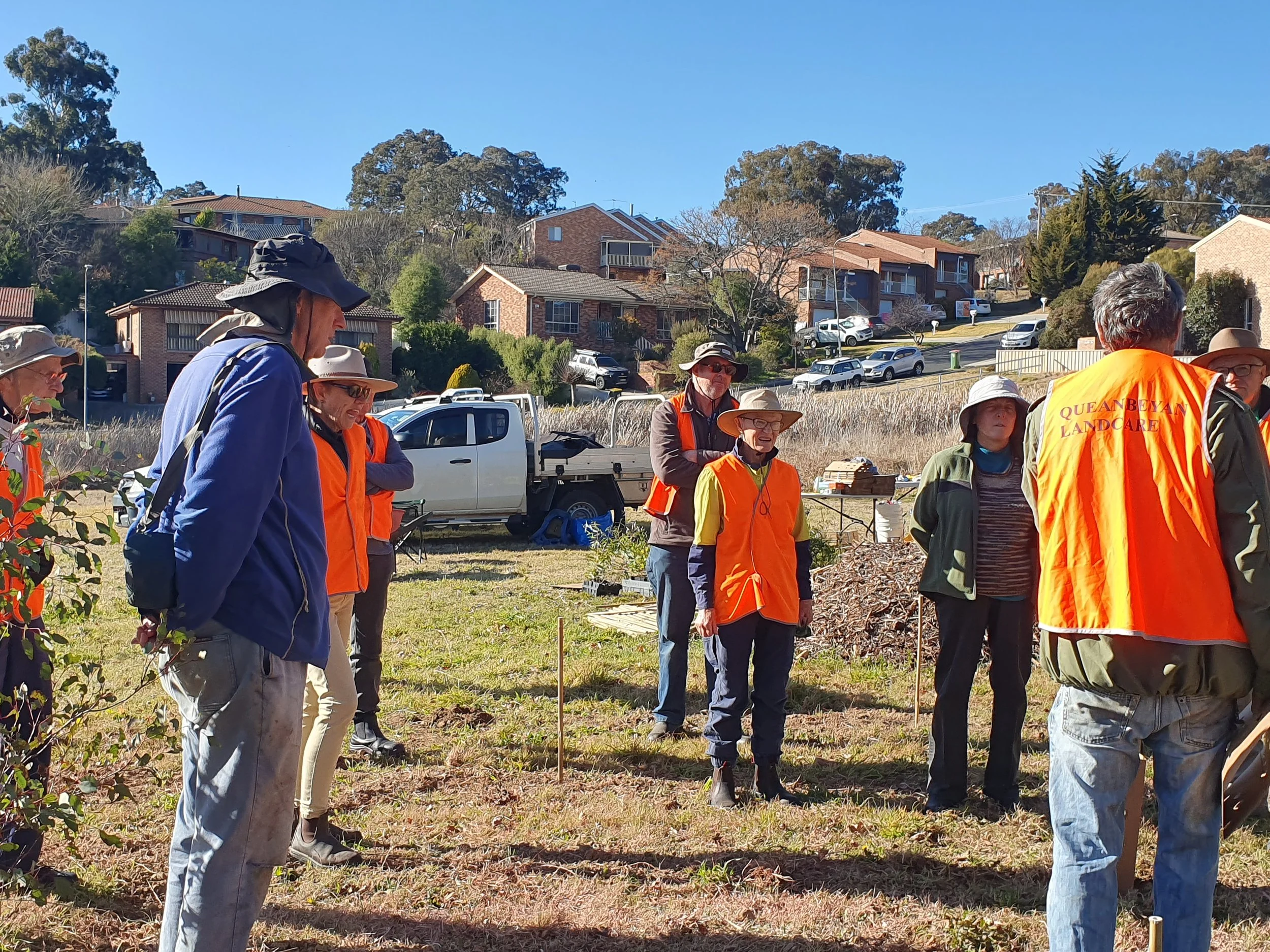
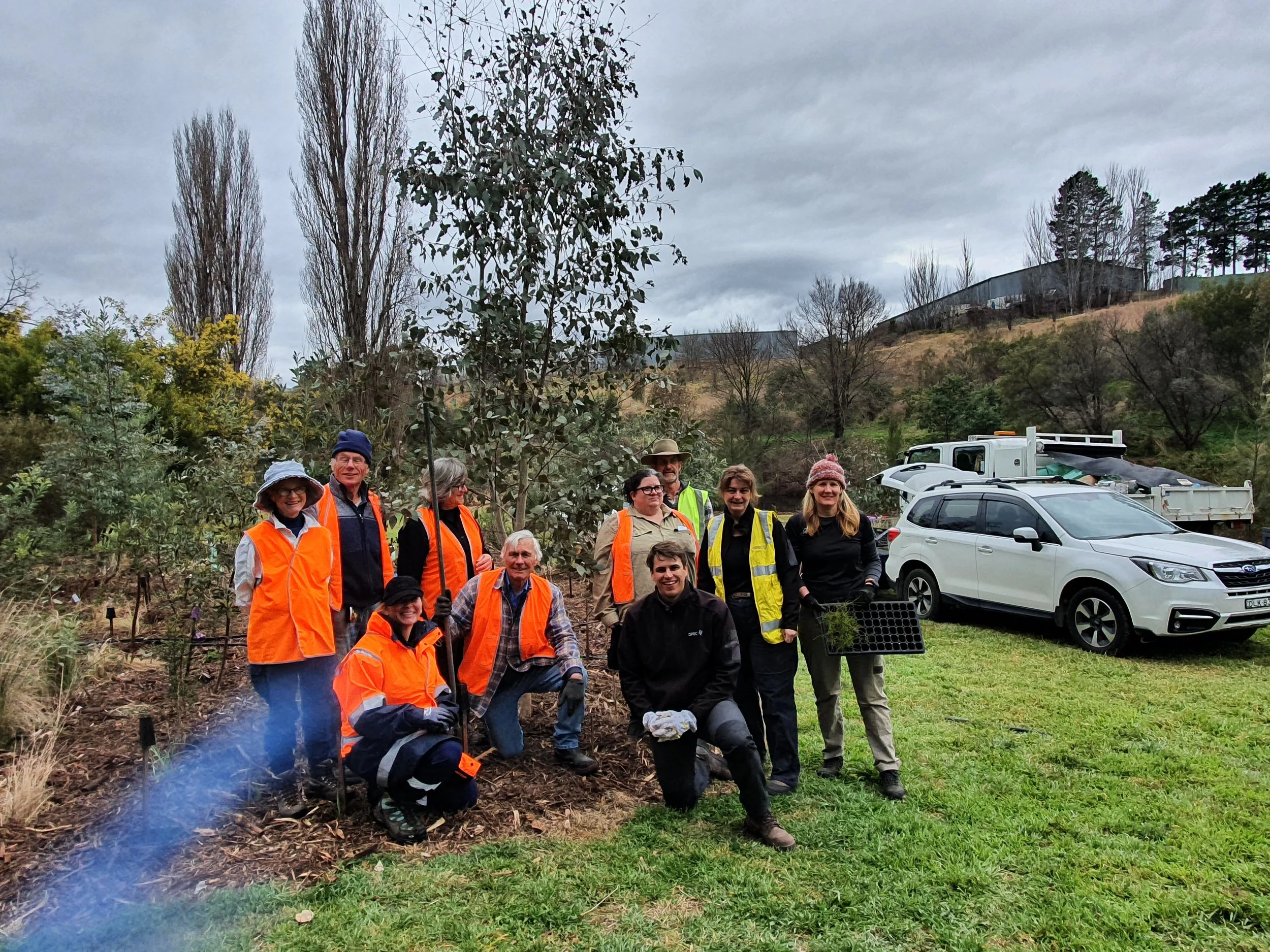
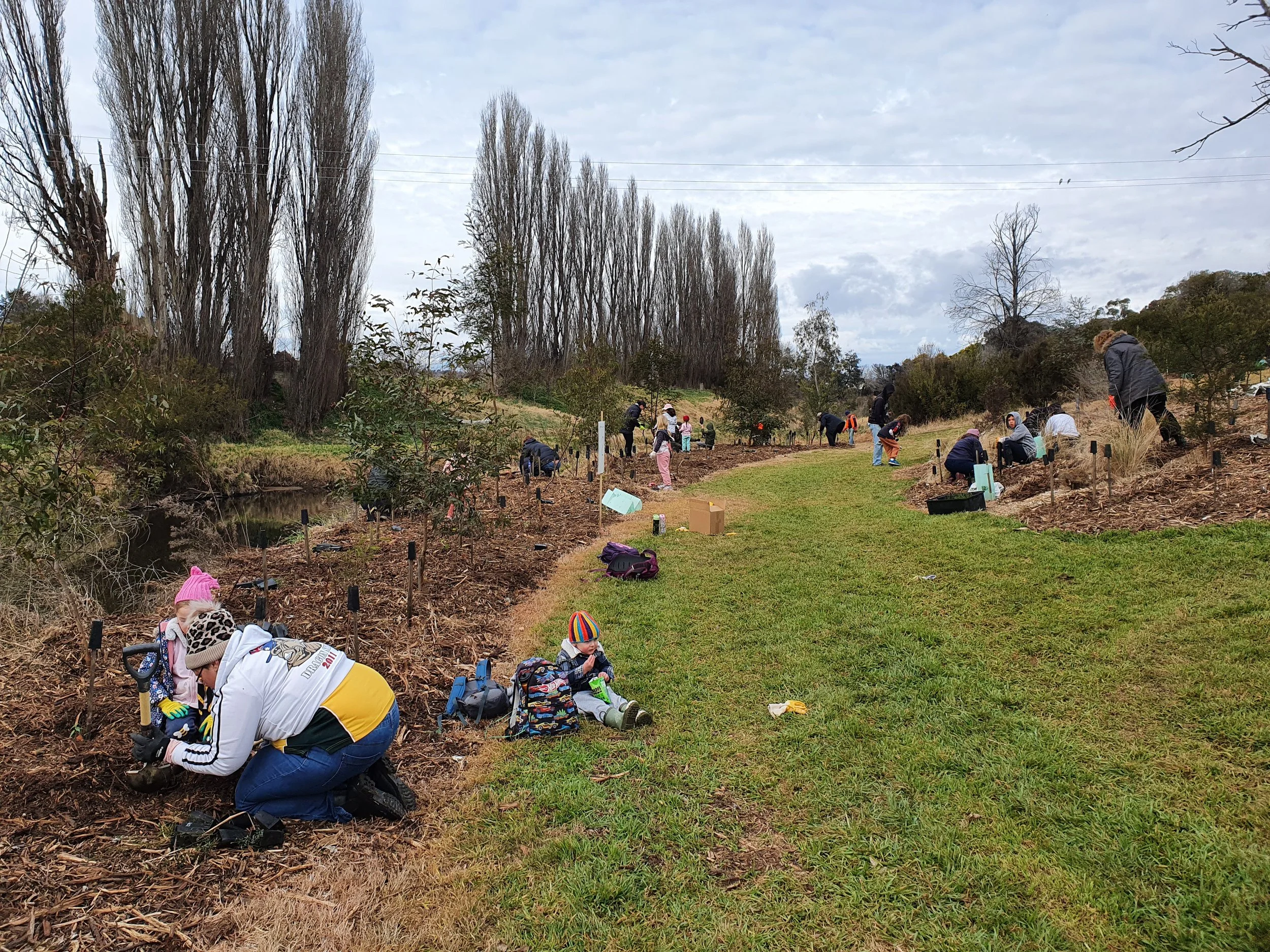
Above: Despite the mist and cold, the volunteers’ enthusiasm and hard work was unstoppable!
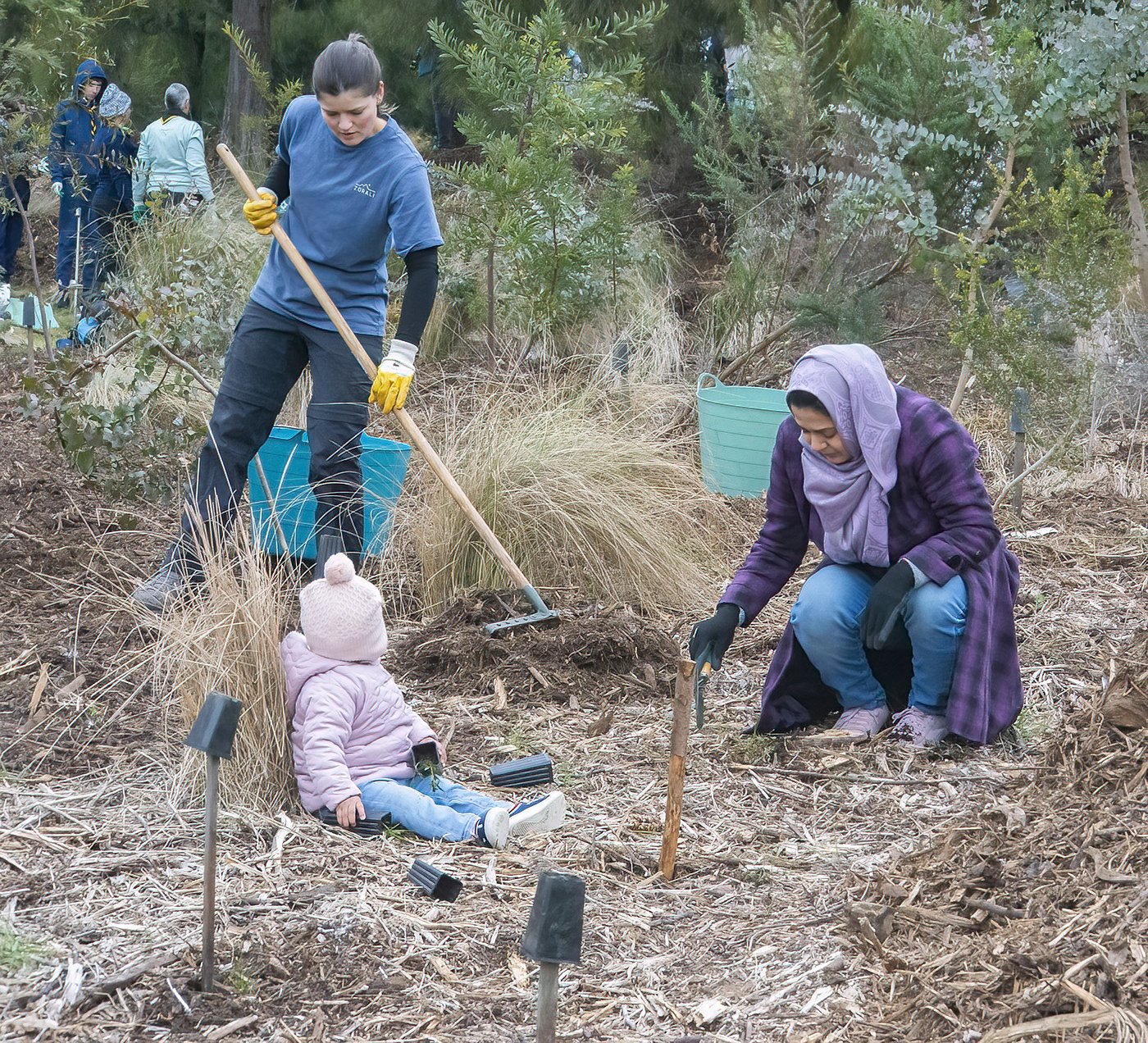
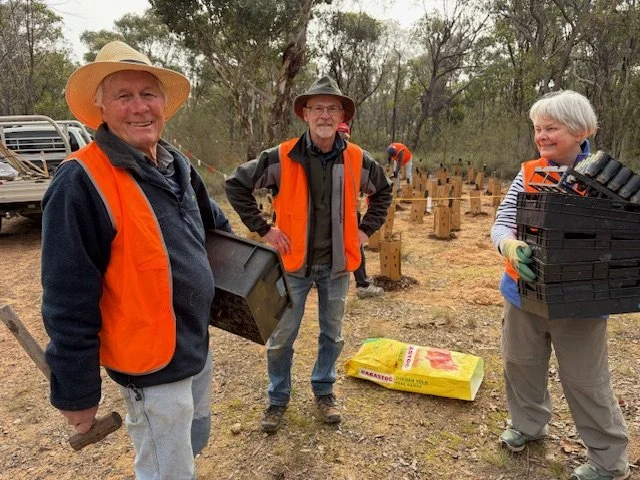
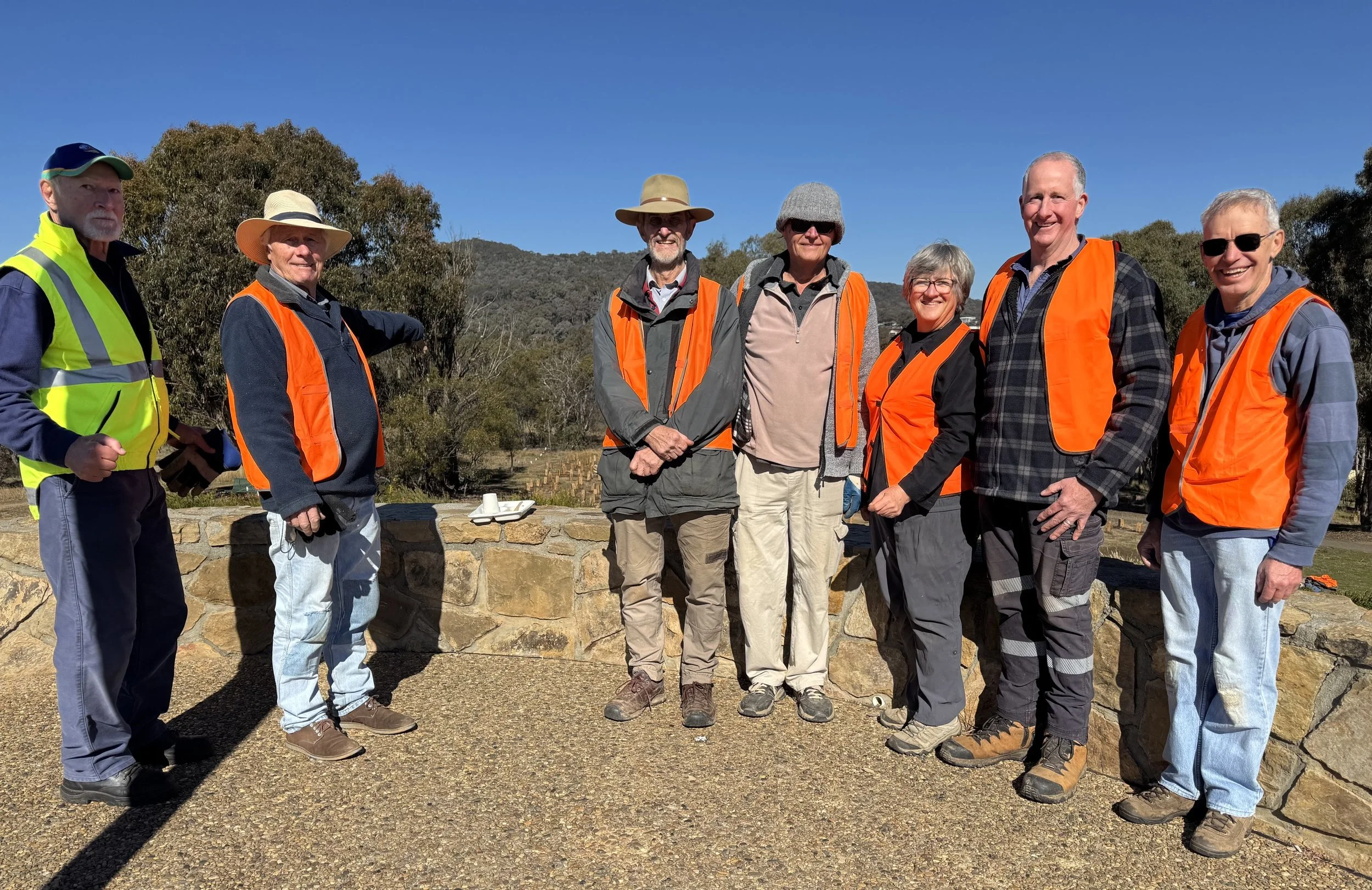
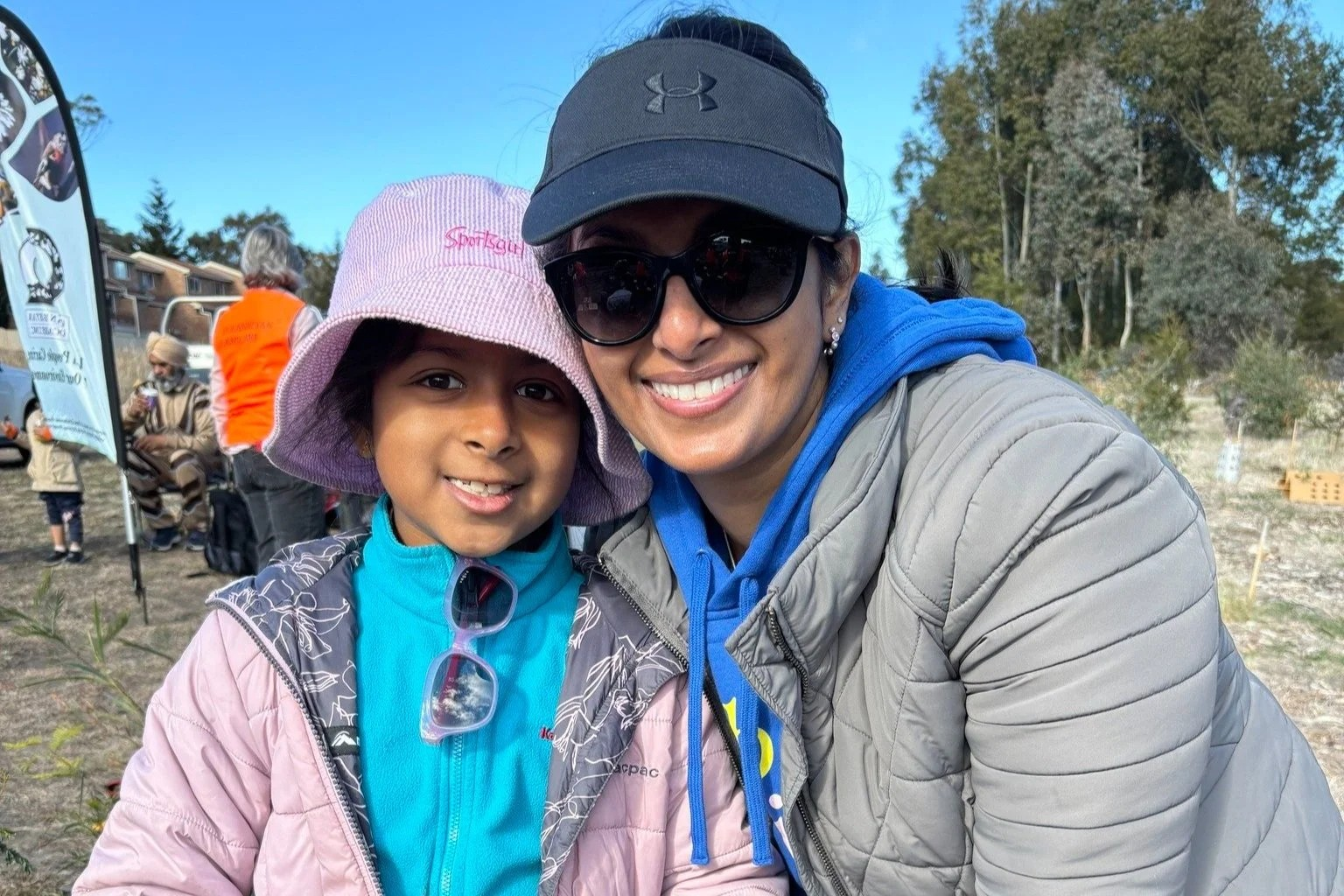
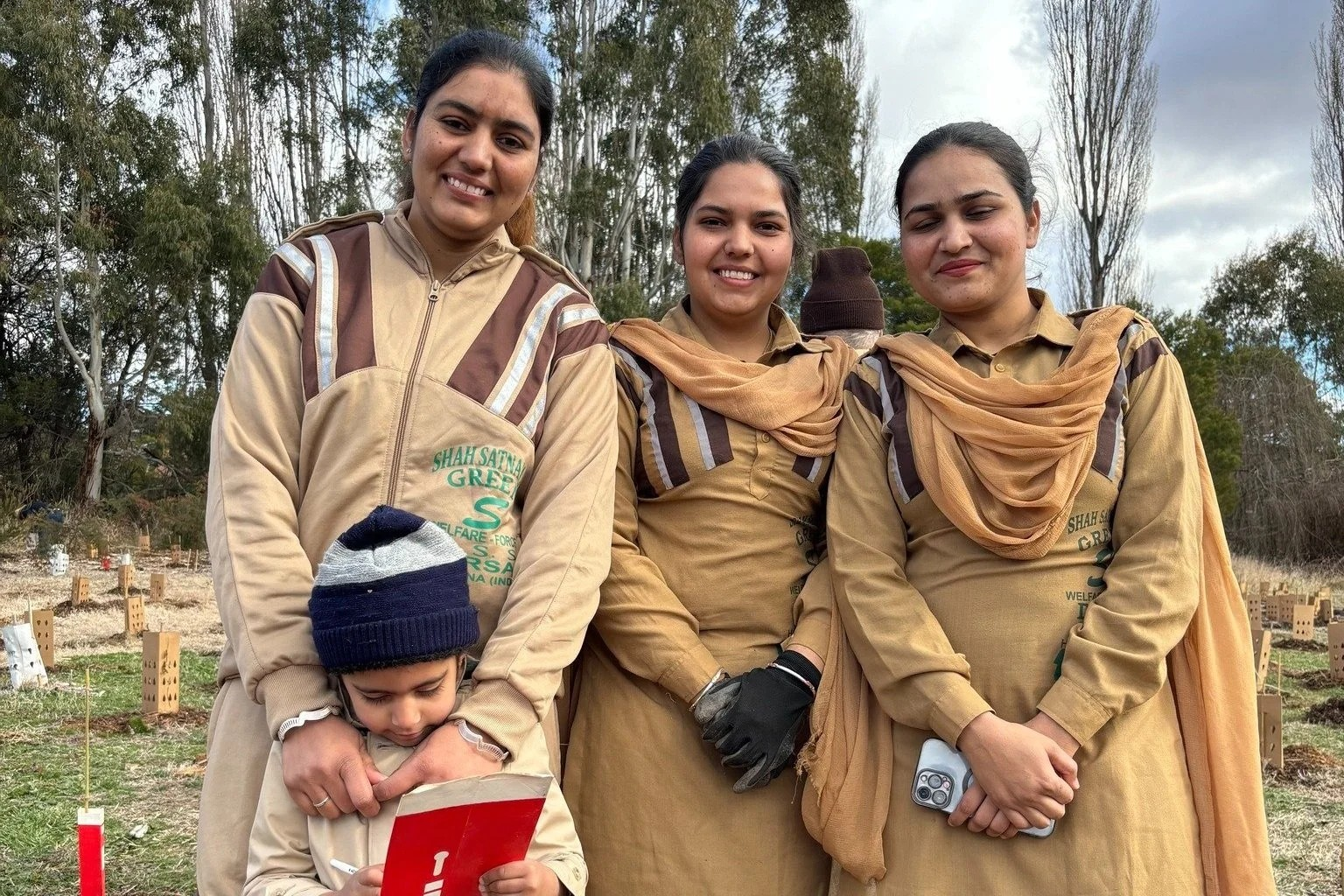
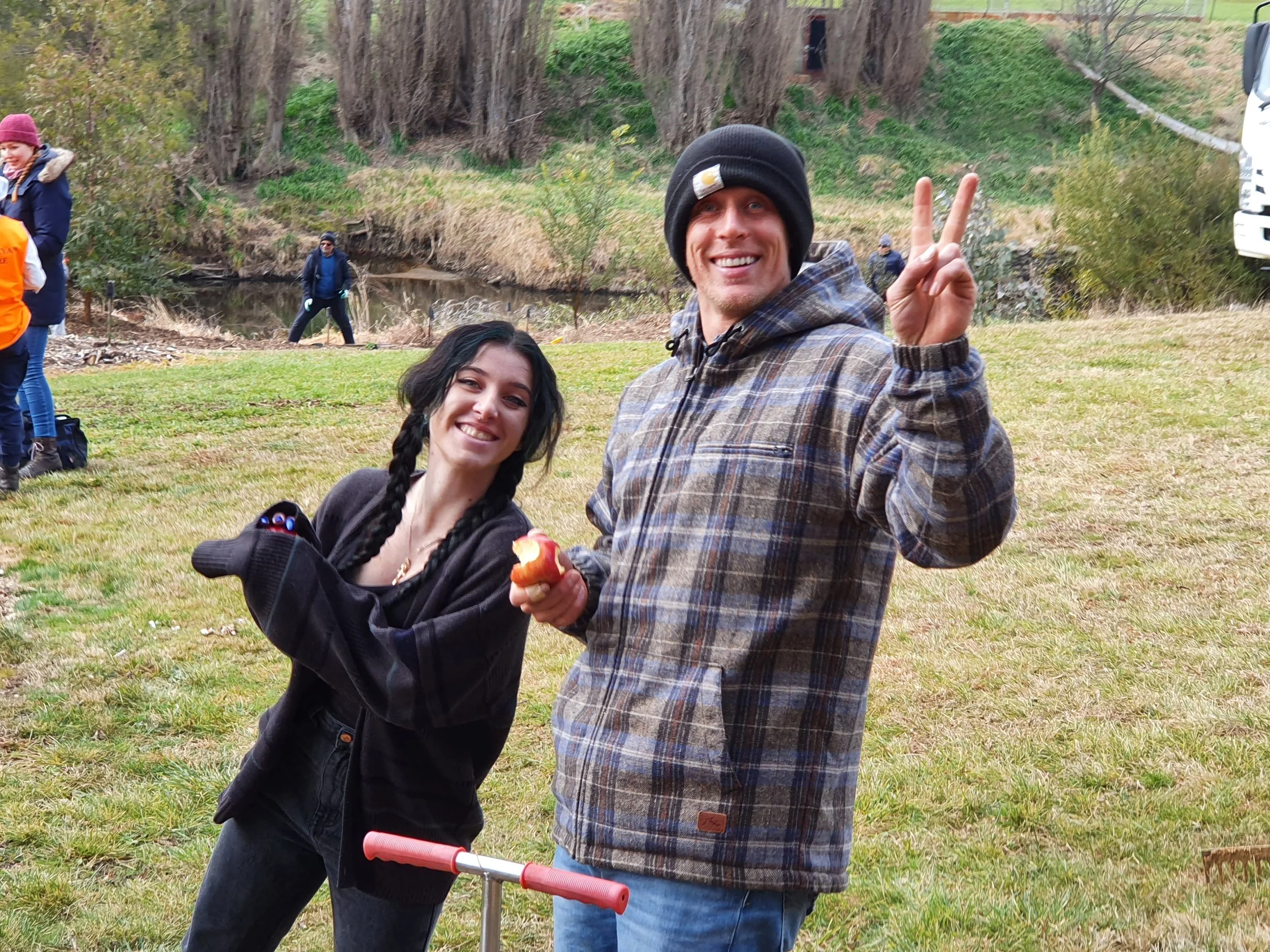
It was hard to count amidst the crowd and movement, but there were about 200 people on site. We had lots of locals, including family groups and their enthusiastic children, and once again we welcomed the happy and energetic group from Sri Sathya Sai Global Council Australia, who have joined us on several past planting days. A few Landcare members even got to join them for their delicious picnic afterwards.
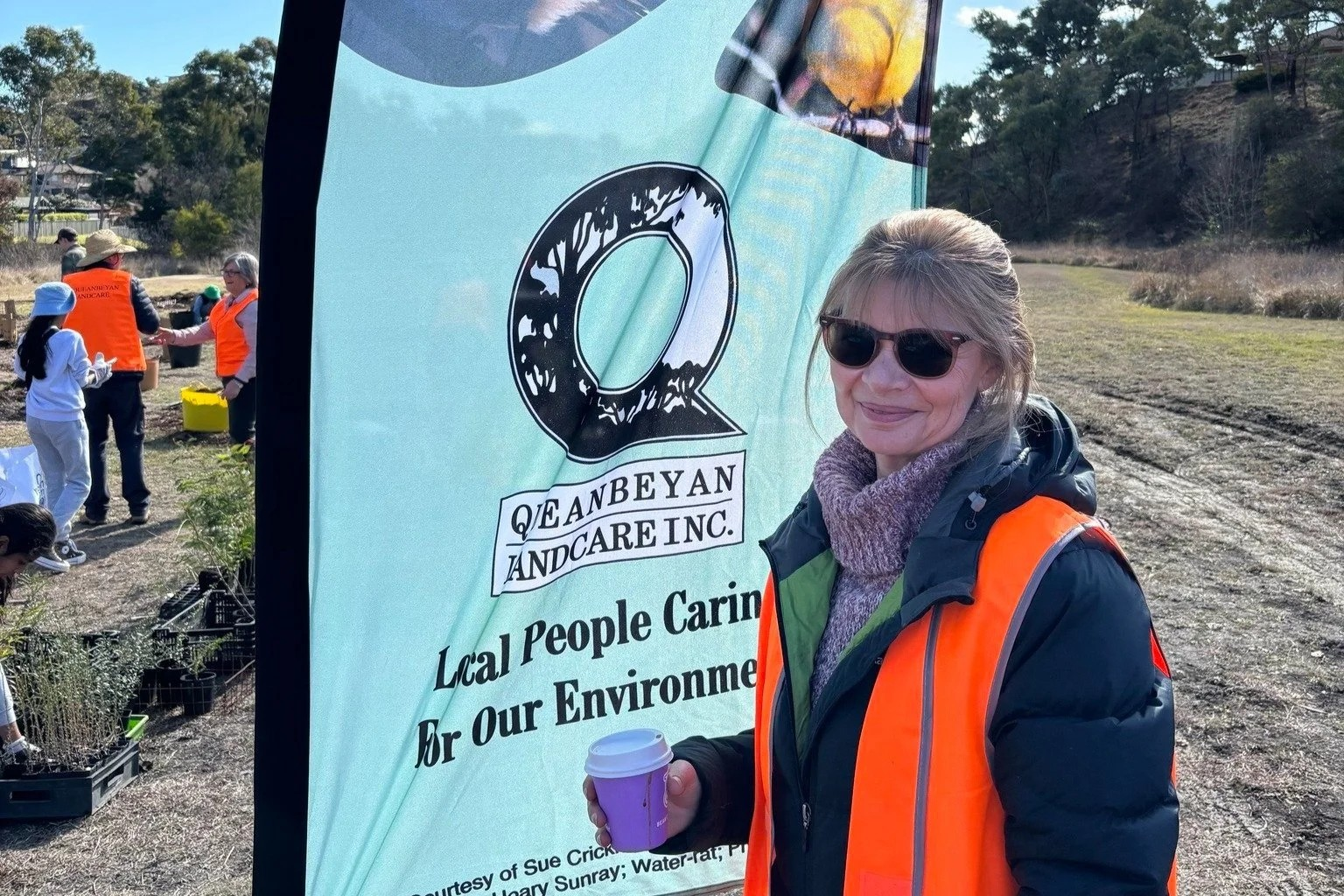
Thanks to our QLC volunteers: James A, Liz O, Lindsay P, Garrie M, Kate S, Sandra D, Fran C, Guy V, Helen E, Liz S, Will R, Mel M, Tom B, Steve D, Michele D, Ian J, Ed S, Malcolm B, Gary M, Bill W, Jodie R, Bruce T, Helen H, Tom B.
We were very appreciative of QPRC councilors Mareeta Grundy and Bryce Wilson attending, both expressed their admiration for the efforts and offered ongoing support.
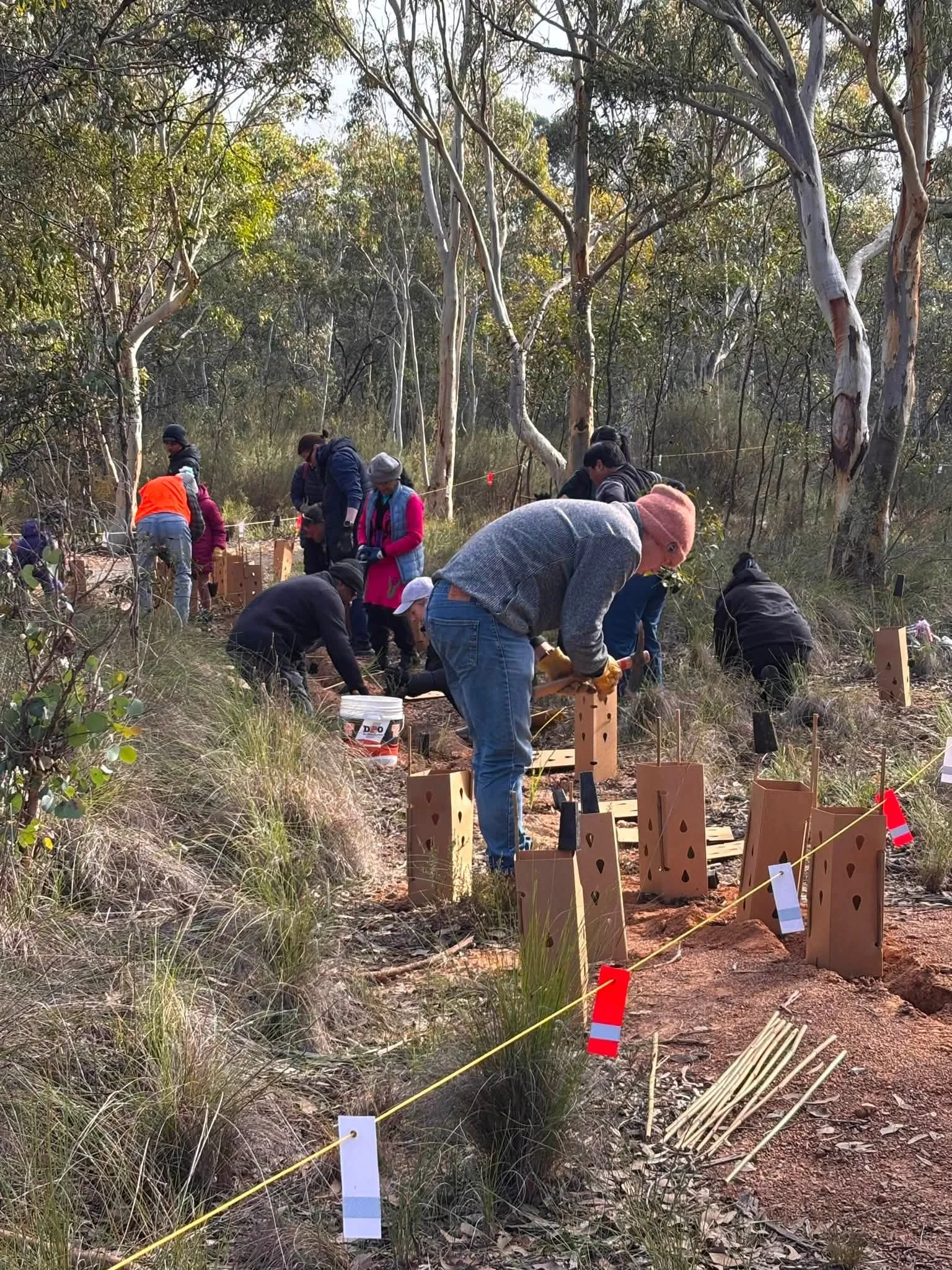
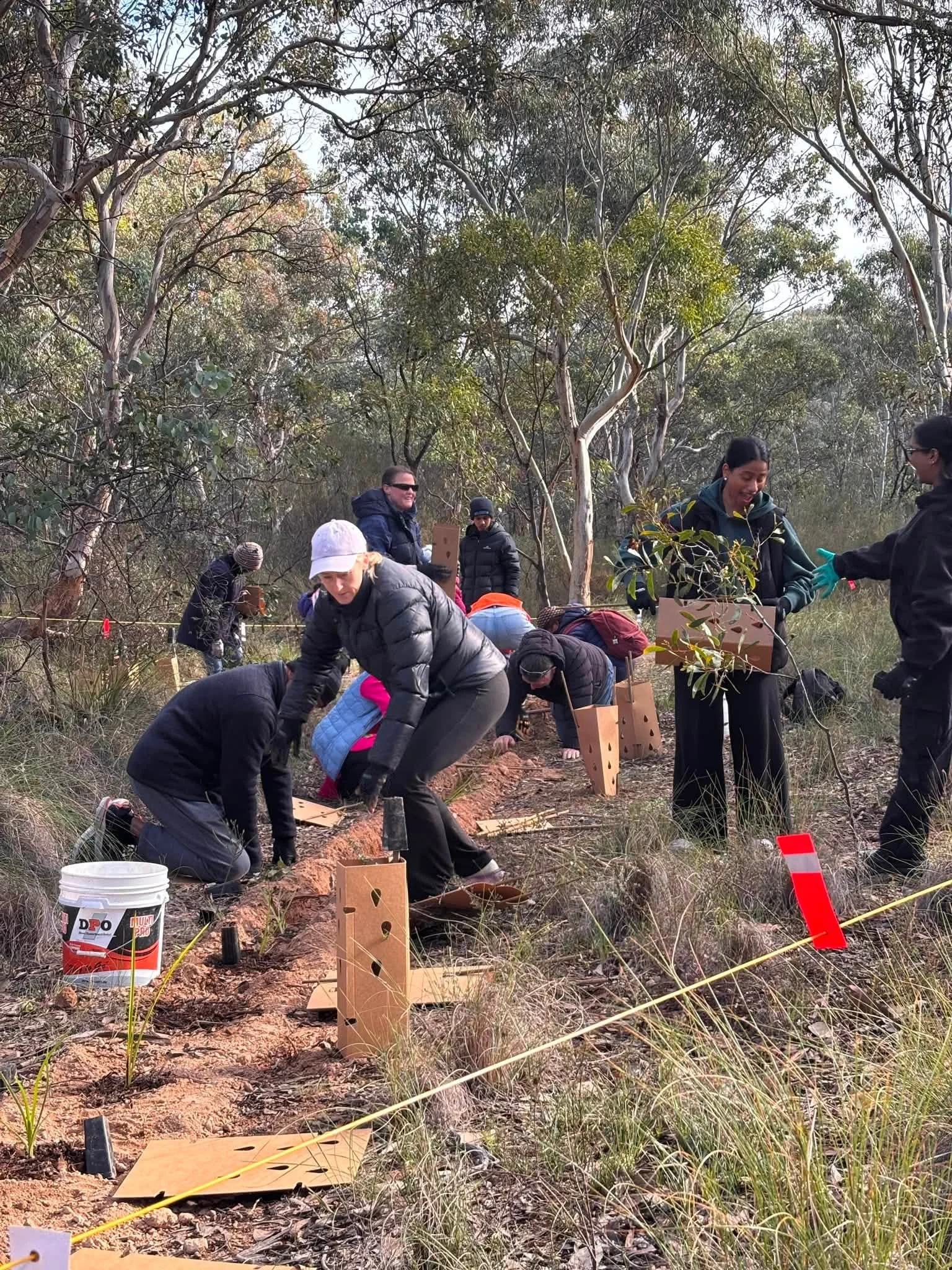
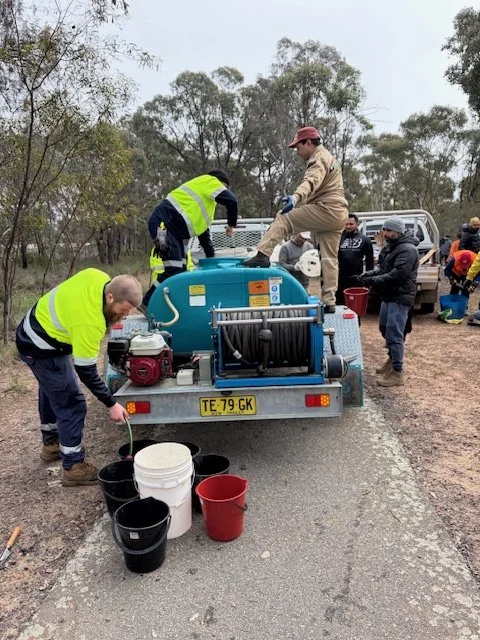
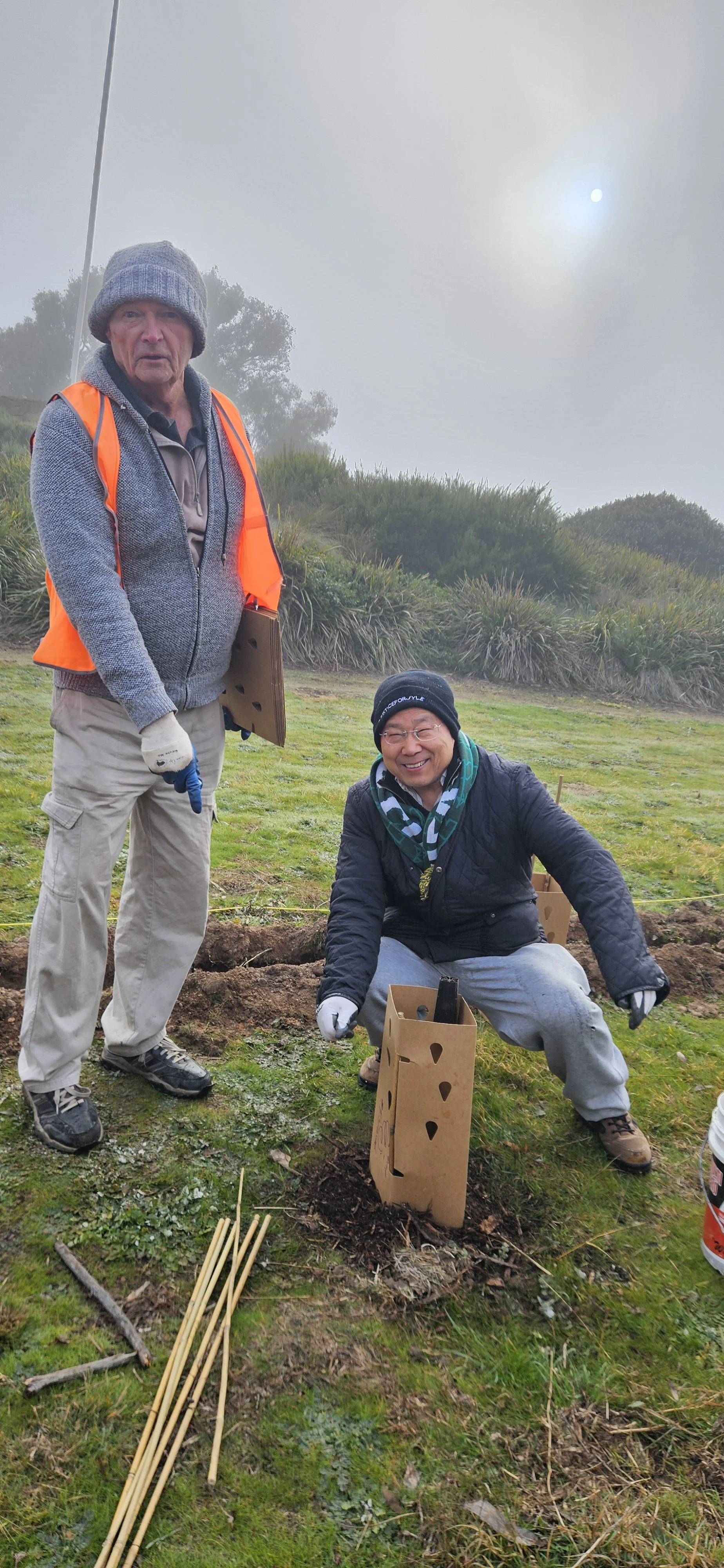
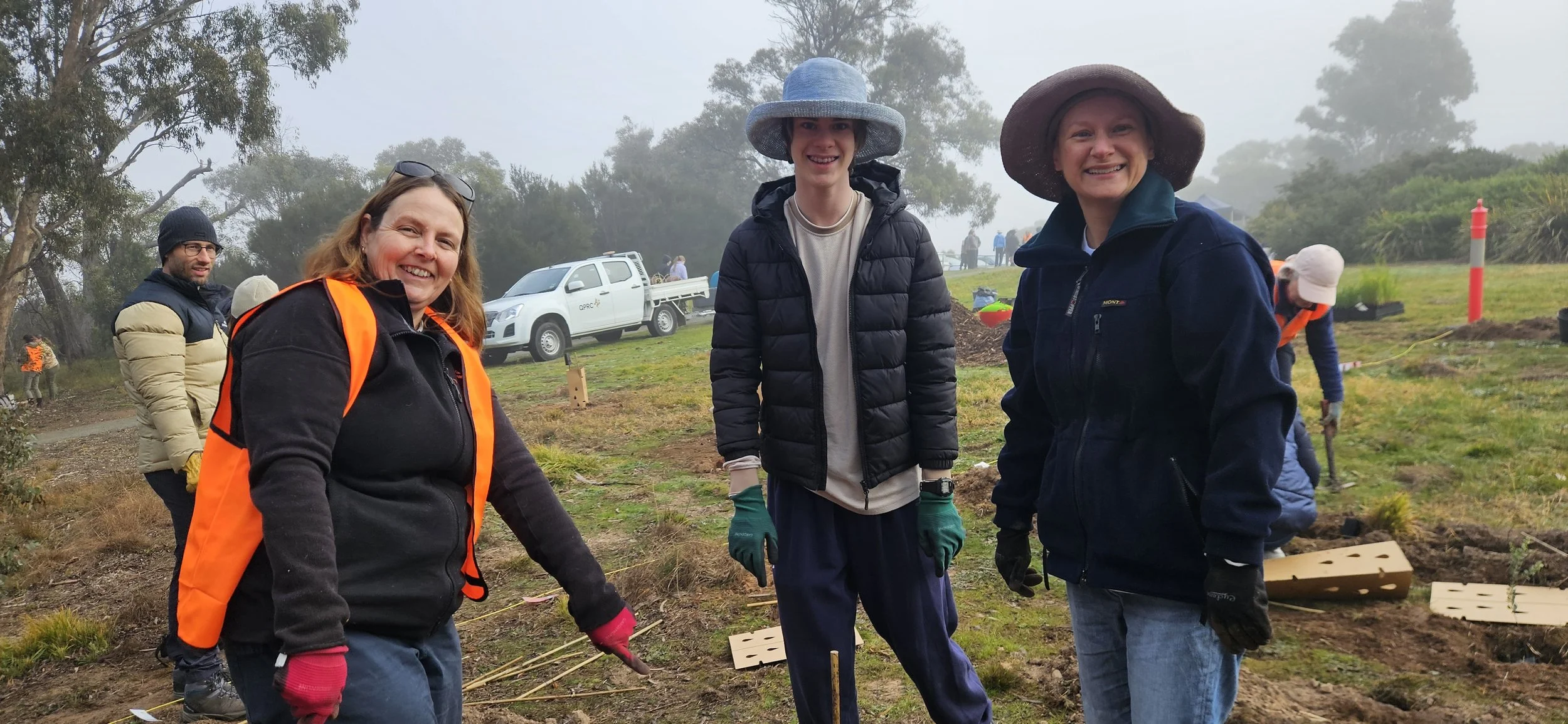
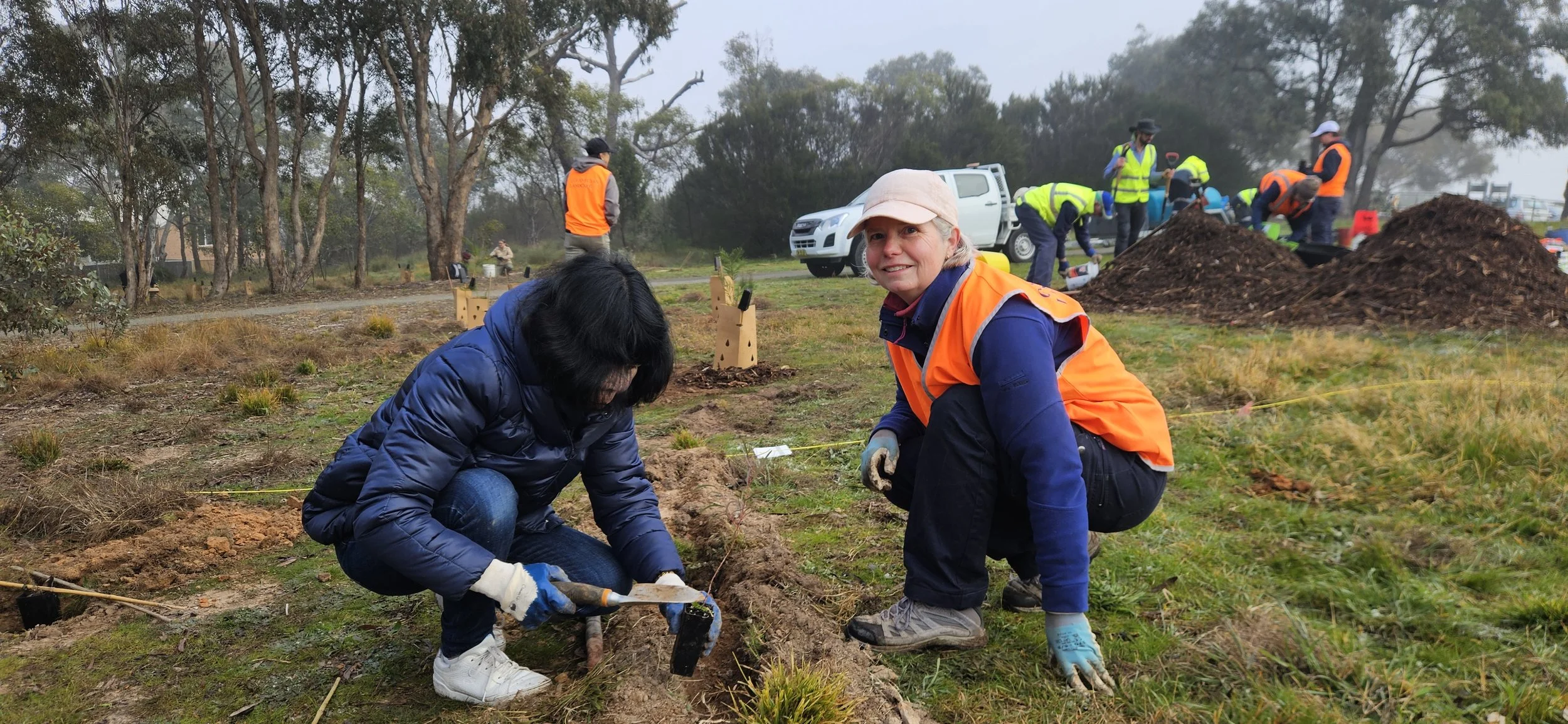
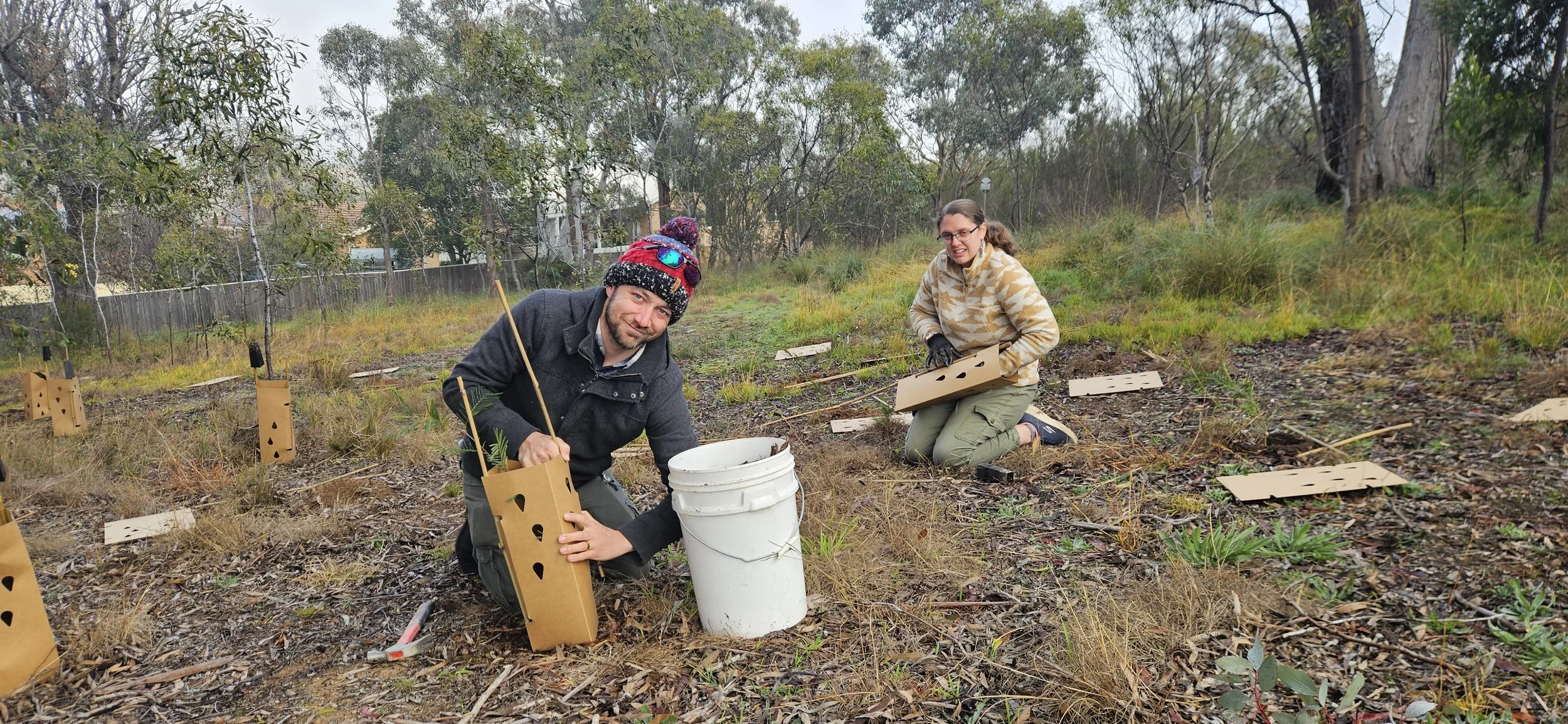
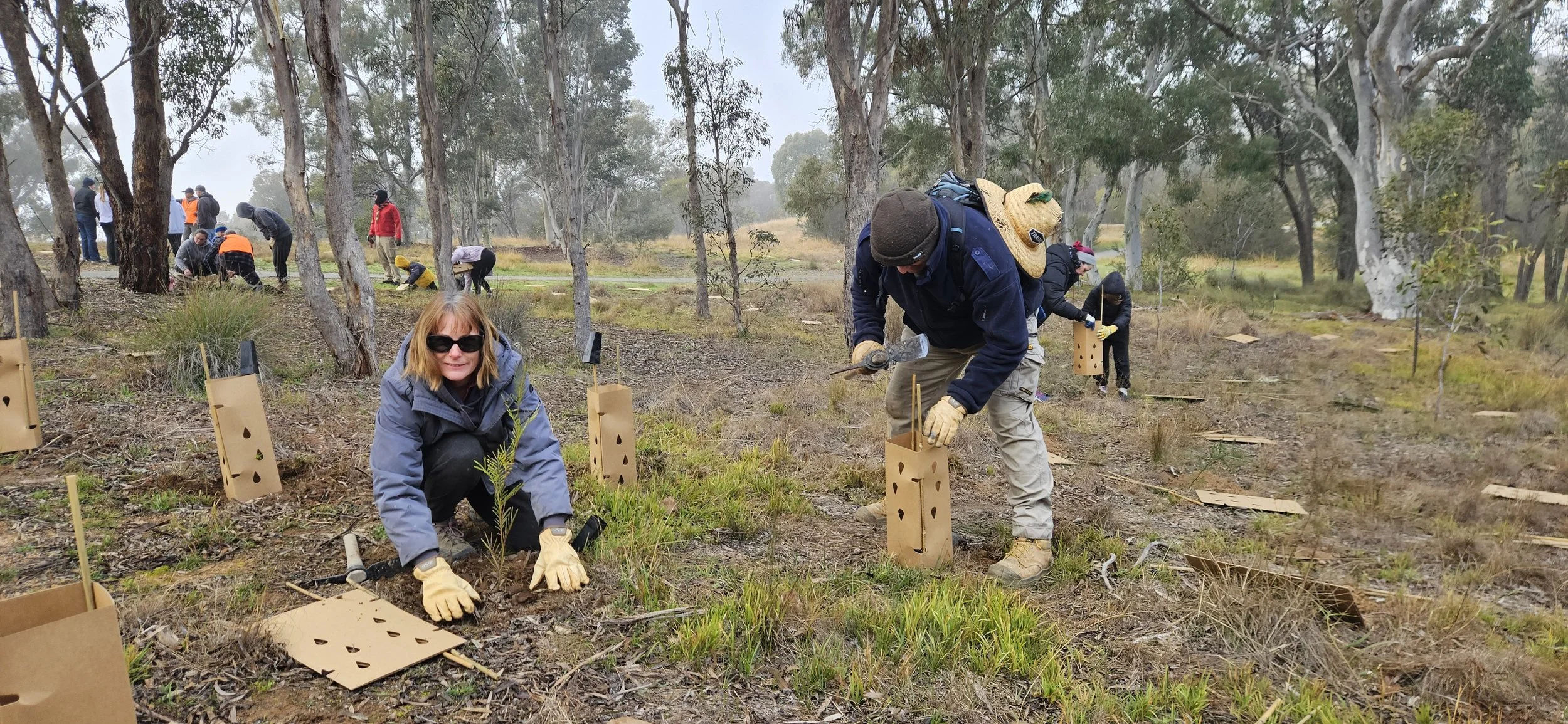
Many thanks to the QPRC team for the great job they did in preparing, promoting and organising the day – Megan, Indi, Cameron, Bella, Lauren and especially Emery who doesn’t just organise everything but carts, carries, augers holes and wields the brush cutter and mattock with aplomb.
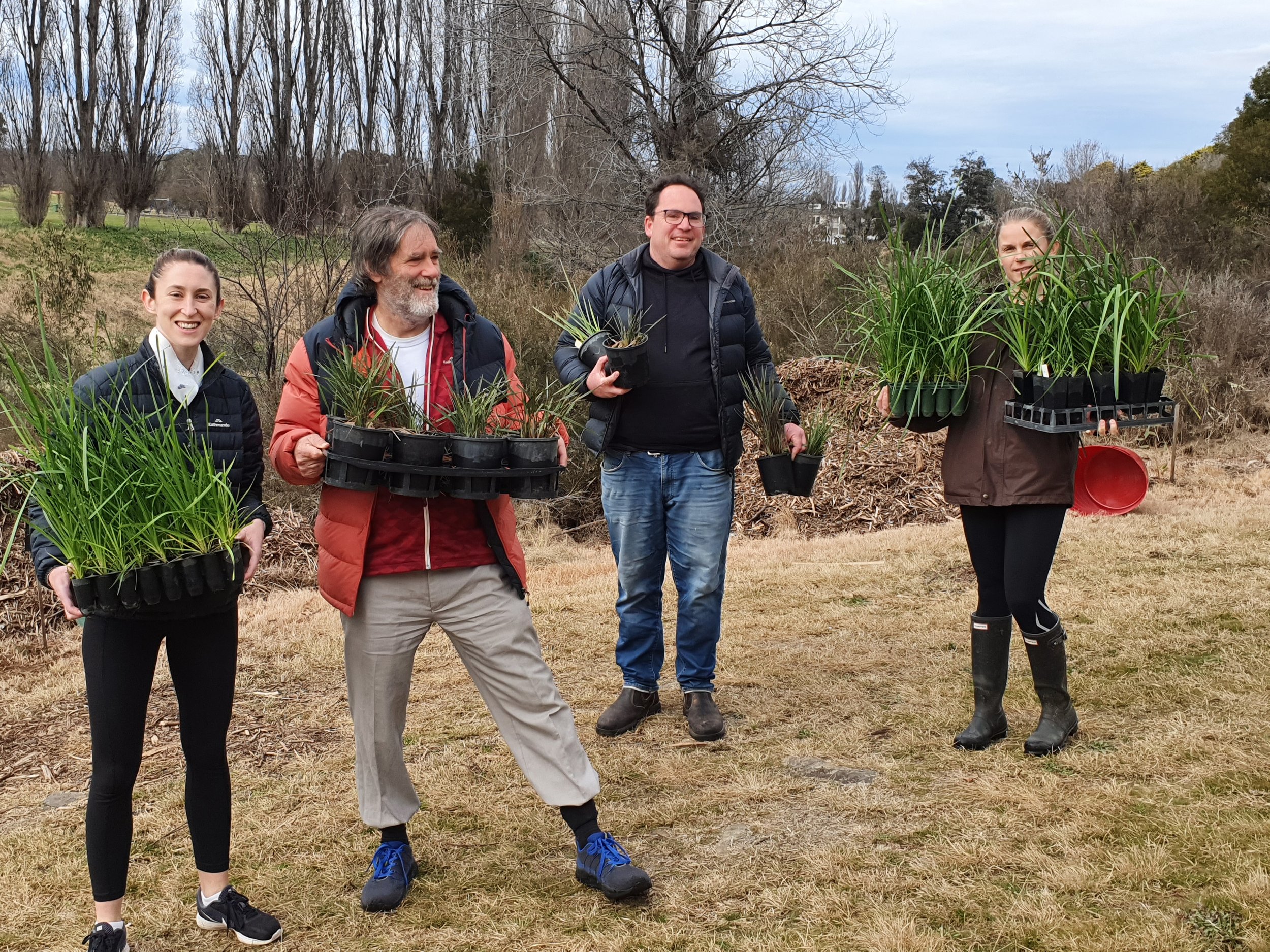
QPRC provided the bulk of the plants with Queanbeyan Landcare adding plants propagated by QLC members (thanks, Tom, again!) as well as many purchased from Landcare’s Southern Tablelands Tree Start Growers Network thanks to Planet Ark’s Seedling Bank fund.
And so the story of Bicentennial Park continues with QPRC and QLC discussing ways to support this new planting by keeping the tree guards in place, watering when needed, and keeping weeds under control.
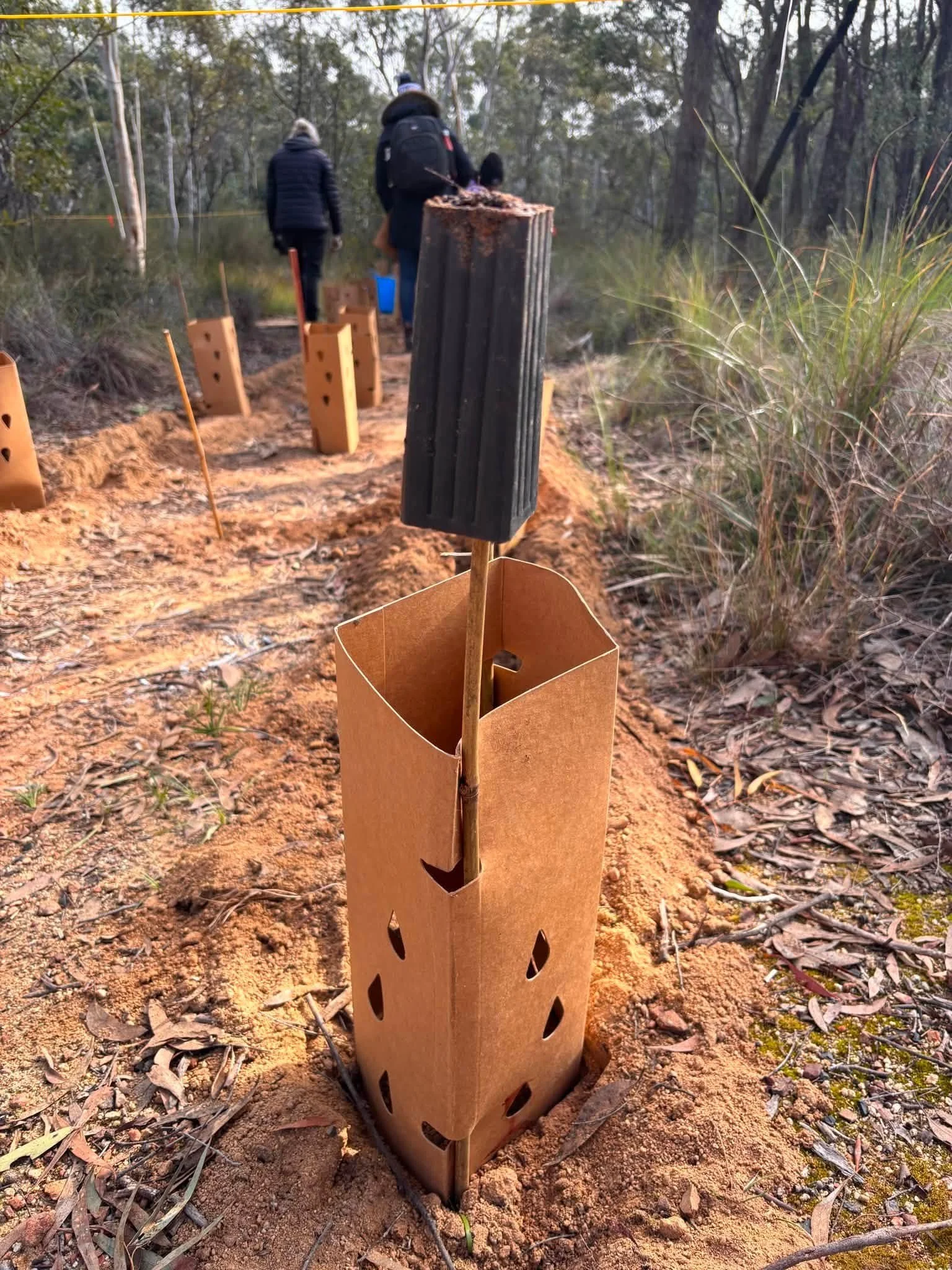
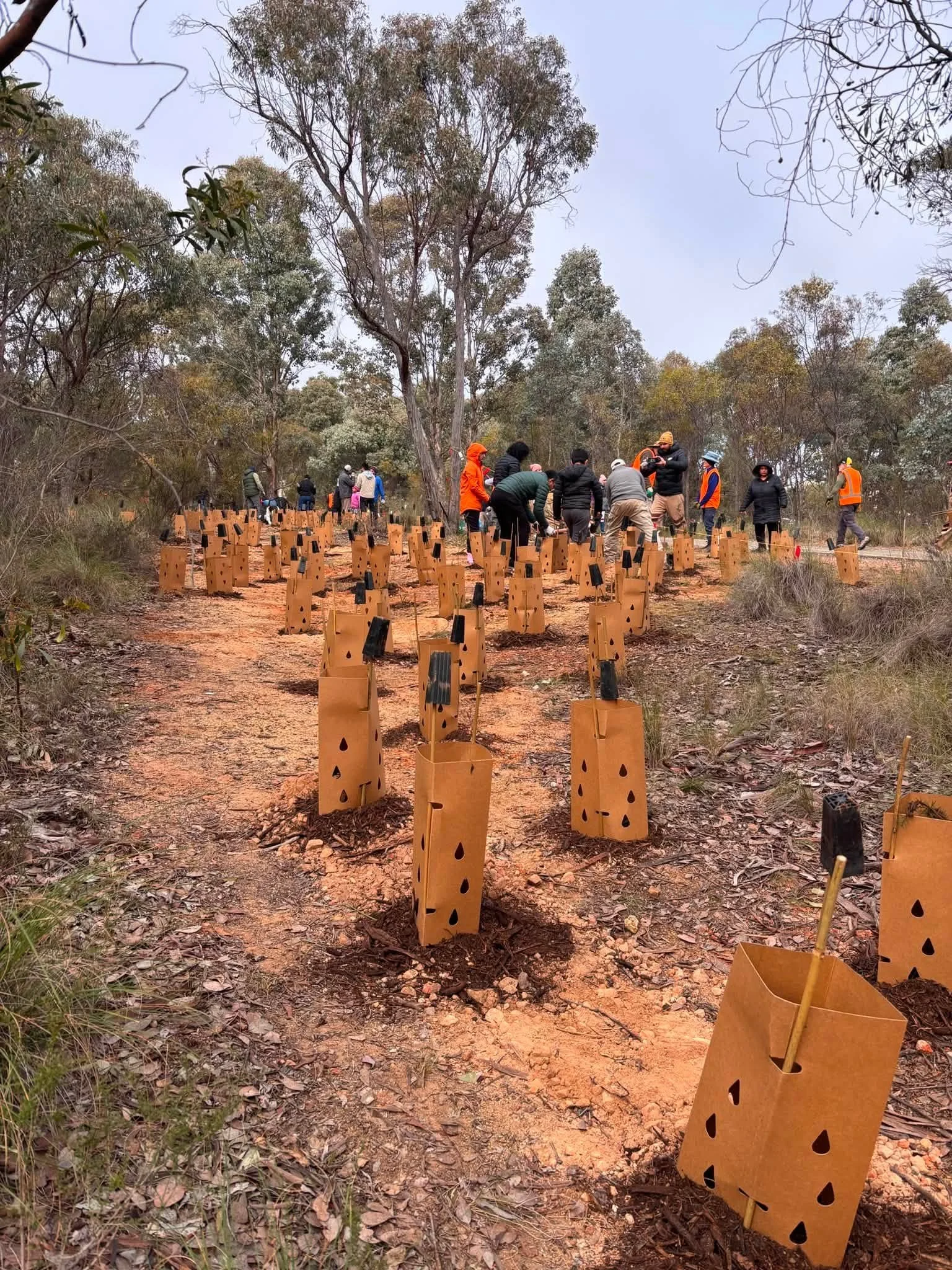
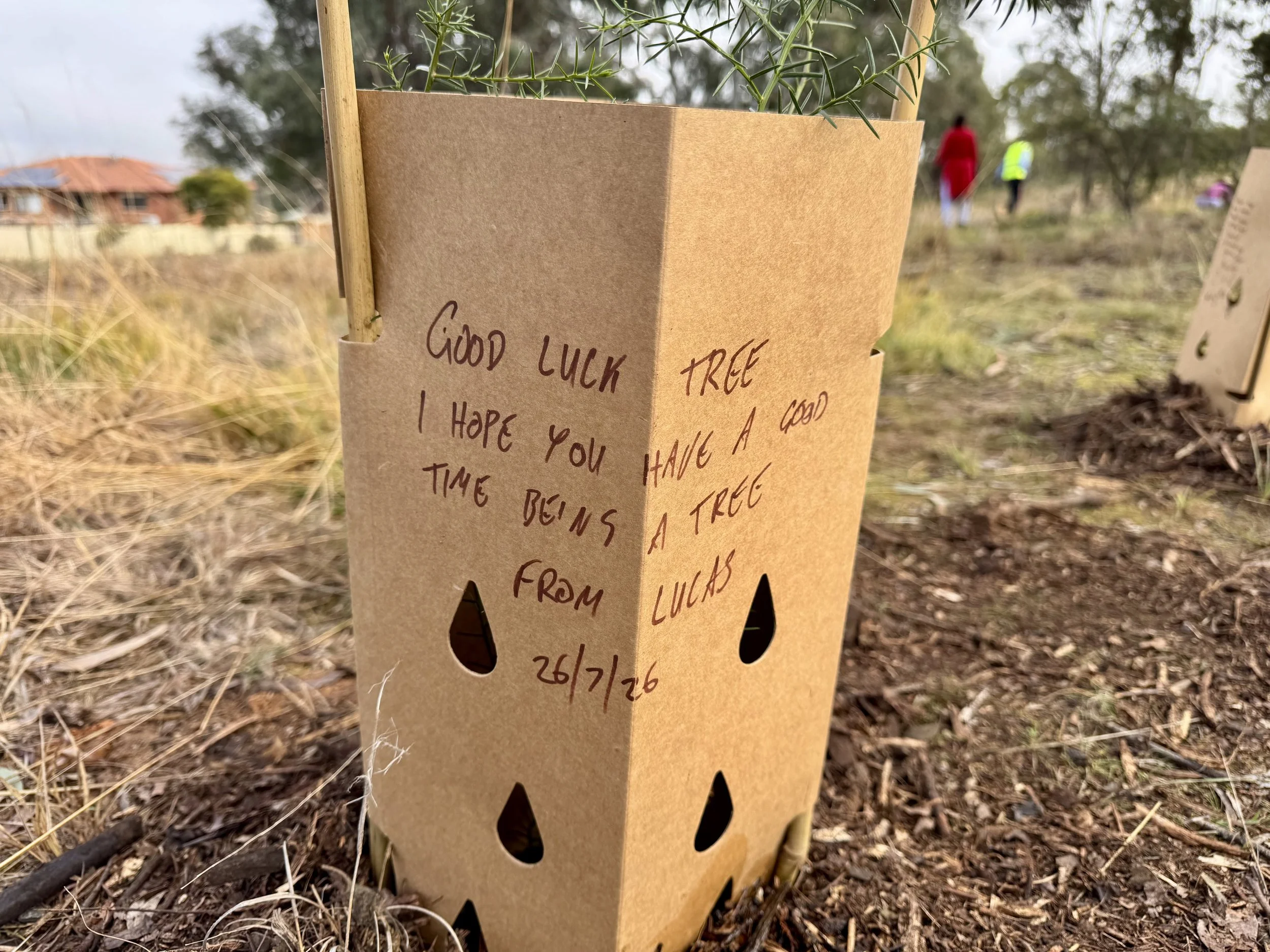
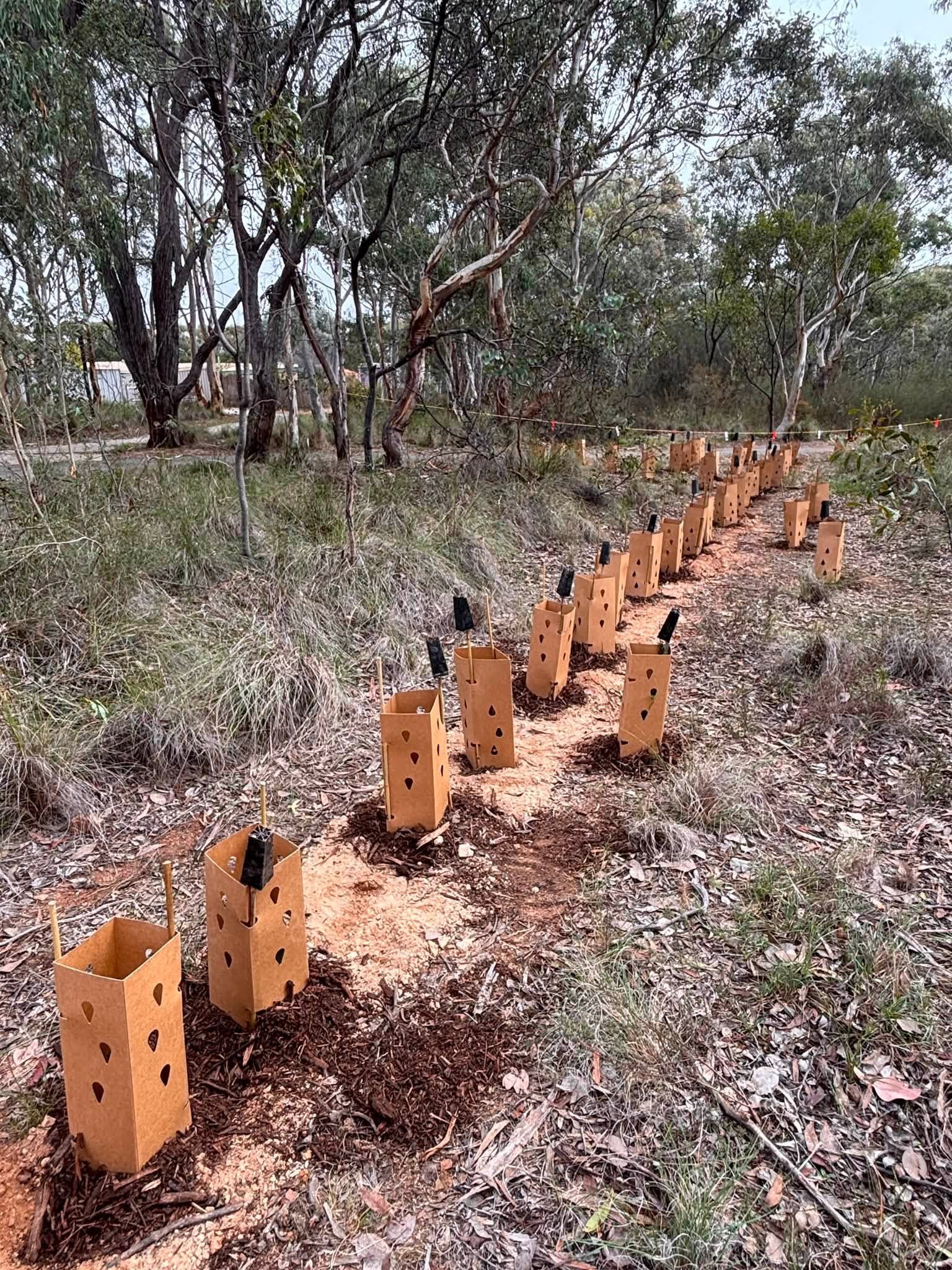
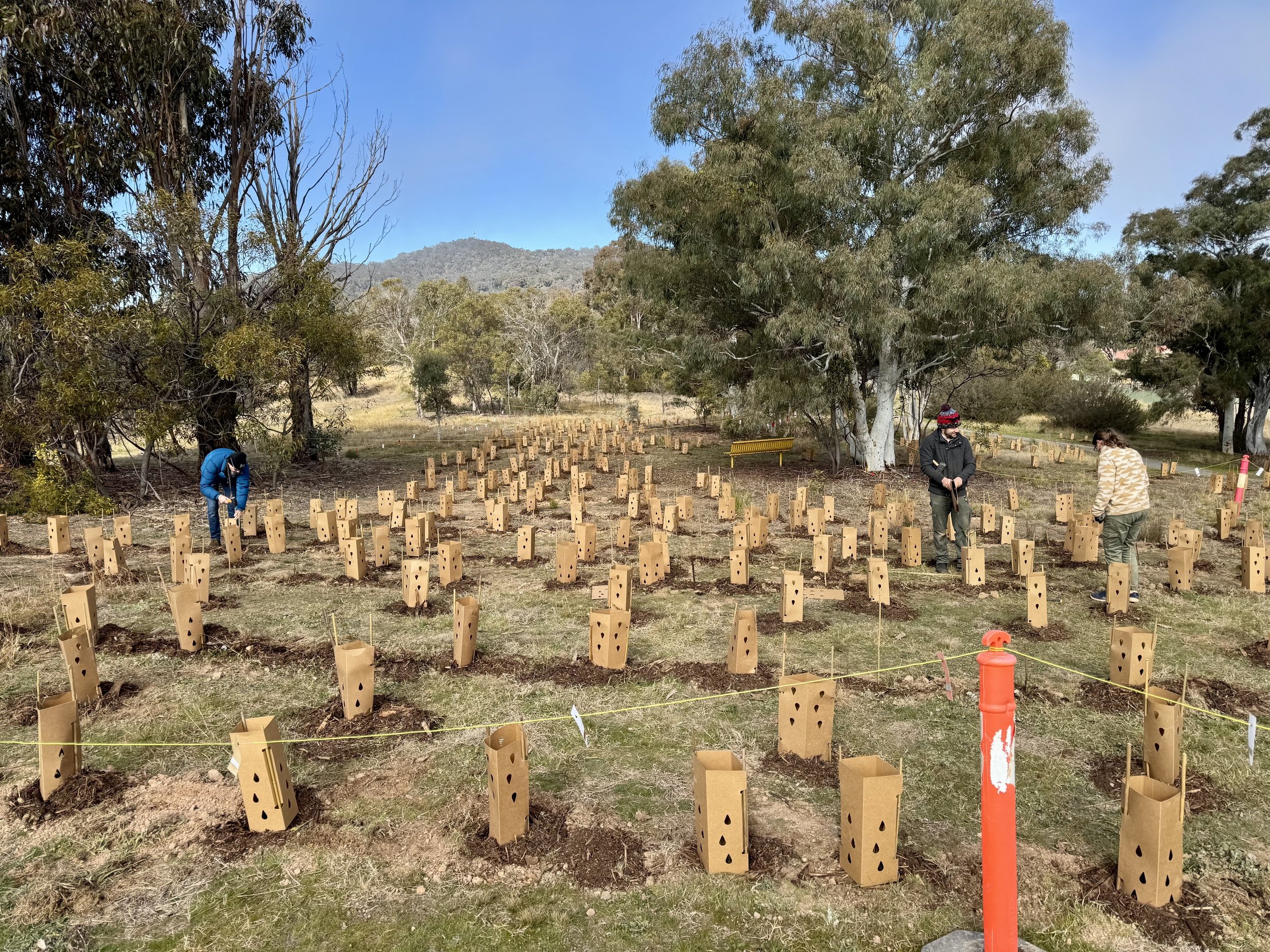
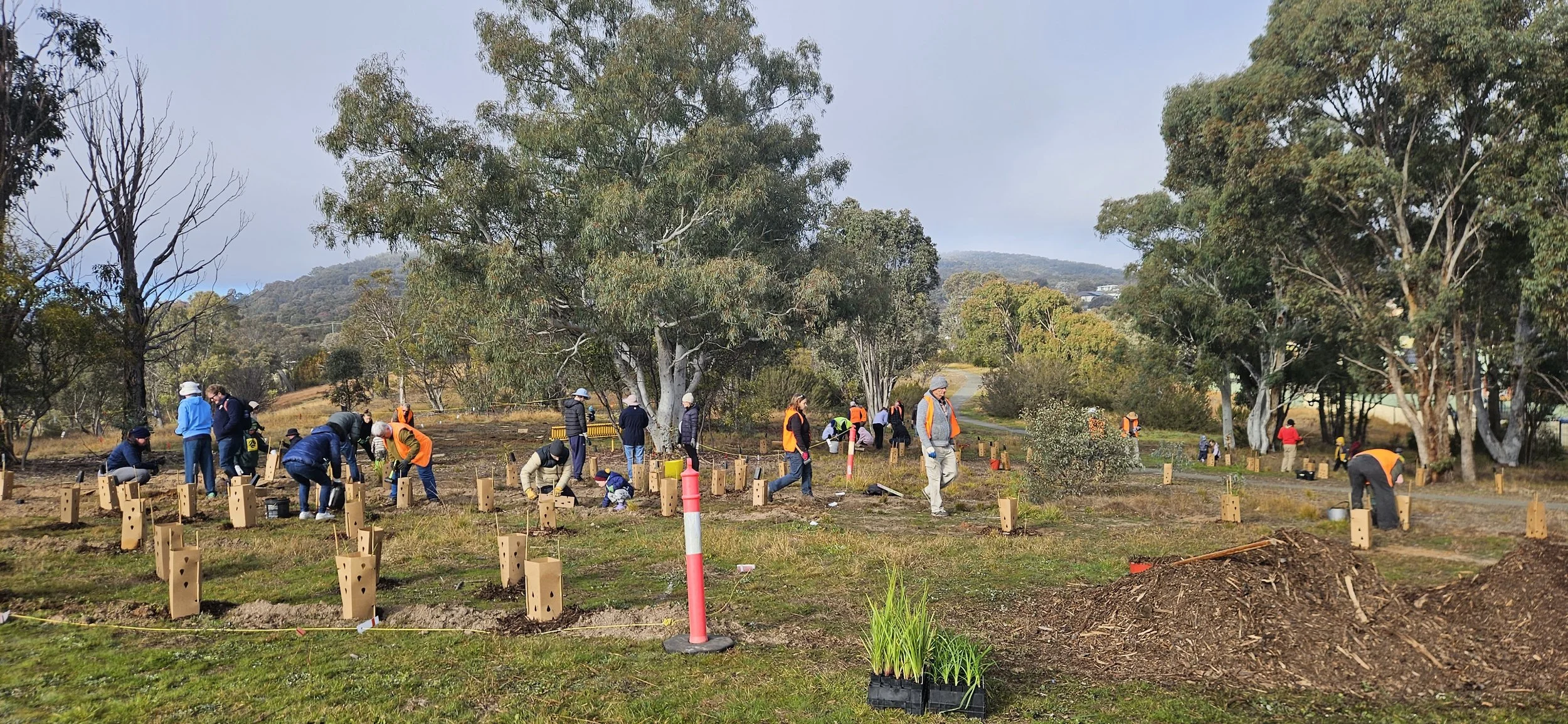
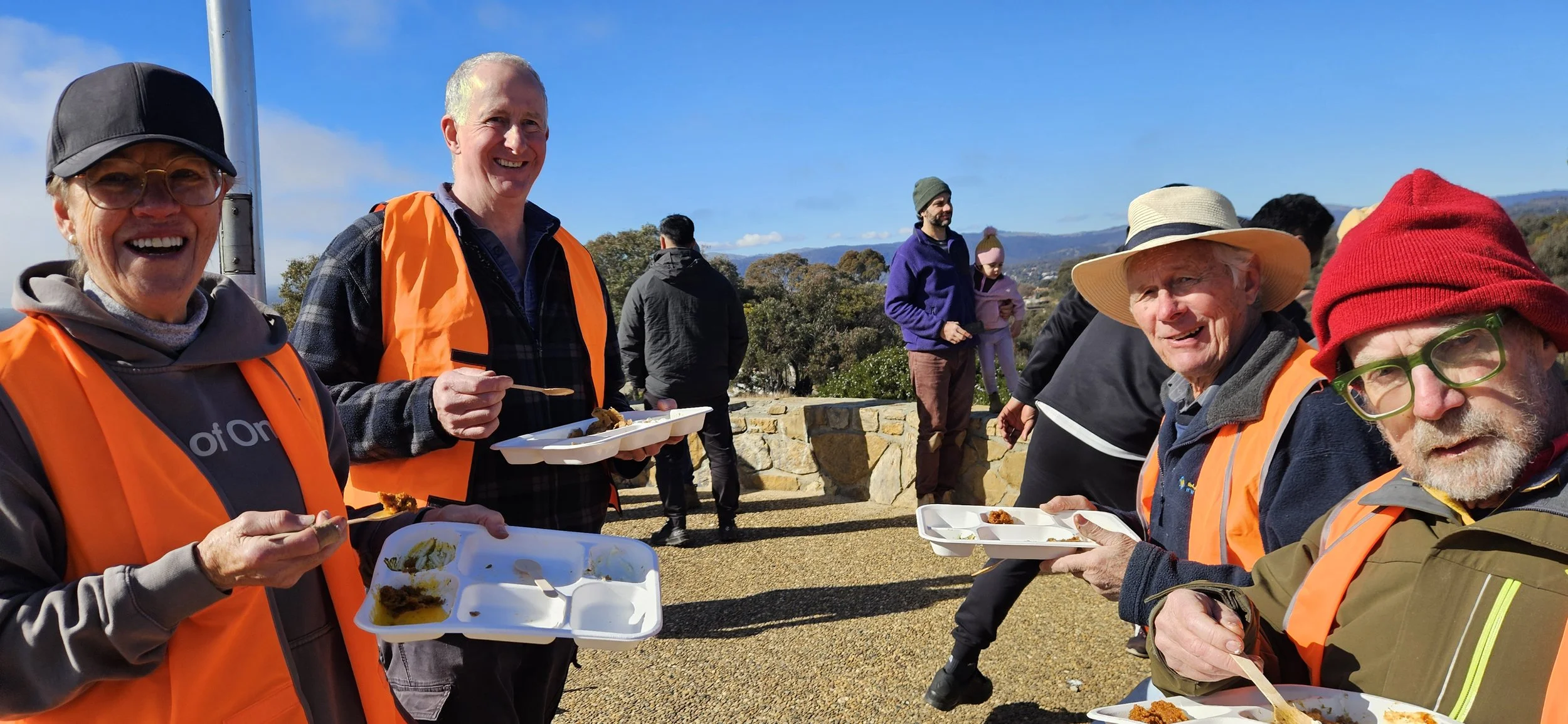
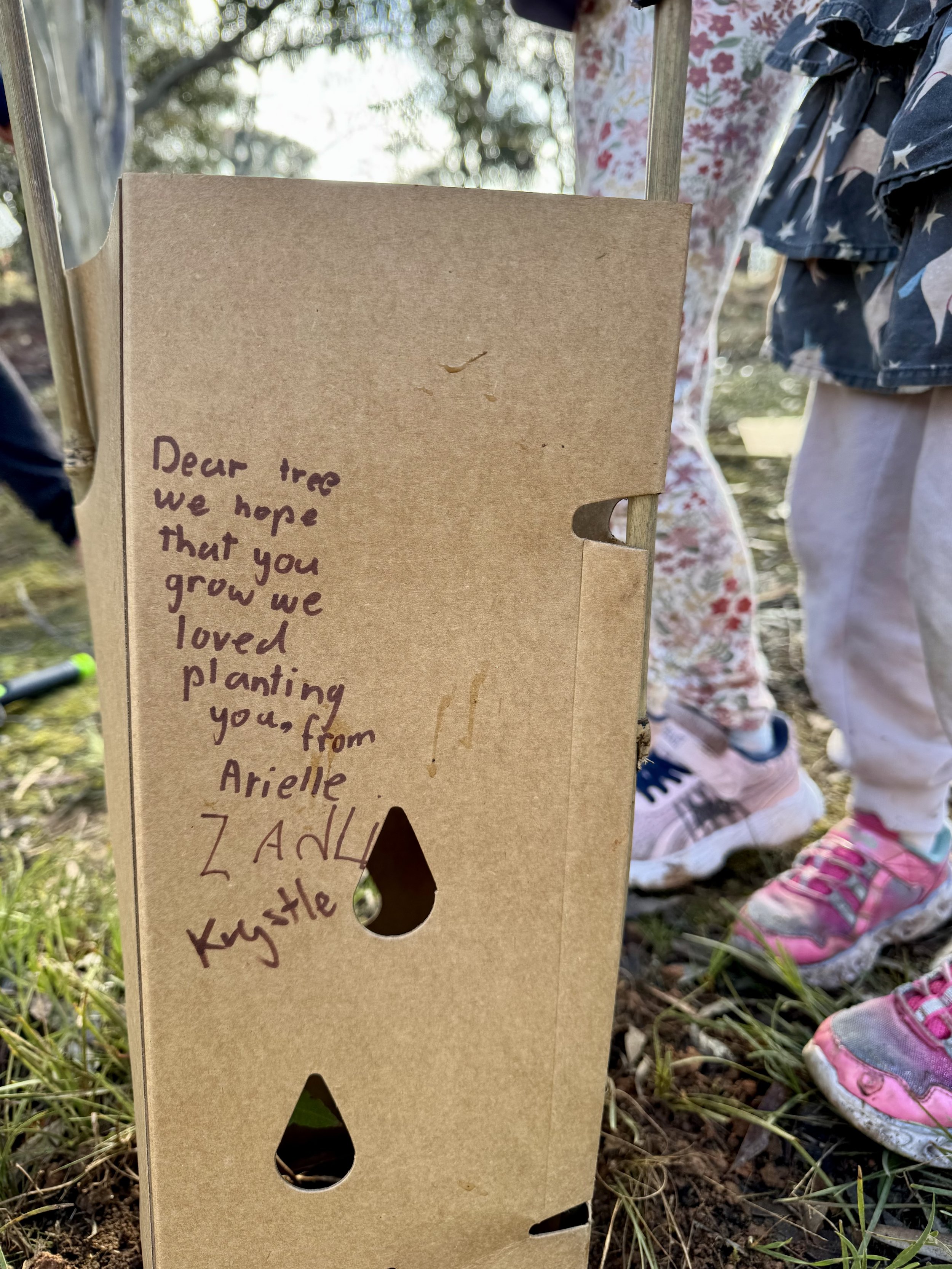
Photos: Fran C, Michele D, Steve D, Garrie M and Bill W
Queanbeyan Landcare keeps records of plantings so that survival of different species can be monitored over time, so for those interested in the detail, here’s what went into the ground:
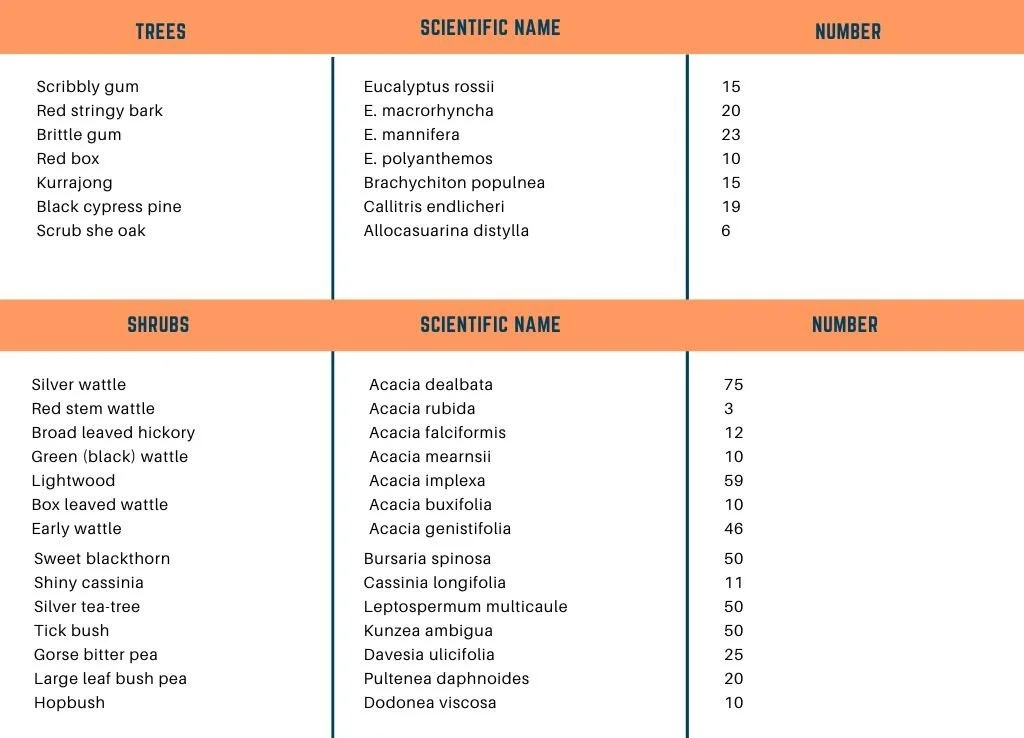
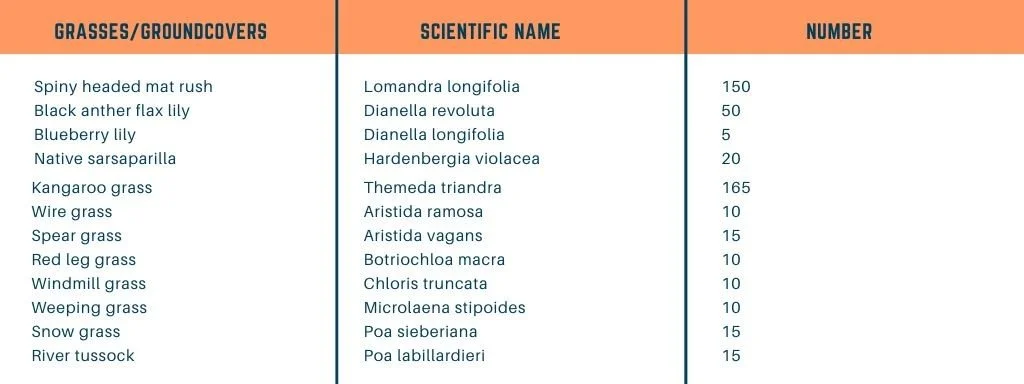
Included in the above list, Queanbeyan Landcare supplied:
Trees: 15 x Kurrajong, 20 x Red stringybark, 15 x Scribbly gum, 19 x Callitris, 23 x Brittle gum, 6 x Scrub sheoak.
Small trees and shrubs: 30 x Bursaria, 3 x Acacia rubida, 9 x A dealbata, 12 x A falciformis, 9 x A mearnsii, 11 x Cassinia longifolia.
Smaller plants: 150 x Themeda triandra, 100 x Lomandra, 5 x Dianella.
2026 National Tree Day (Fernleigh Park)
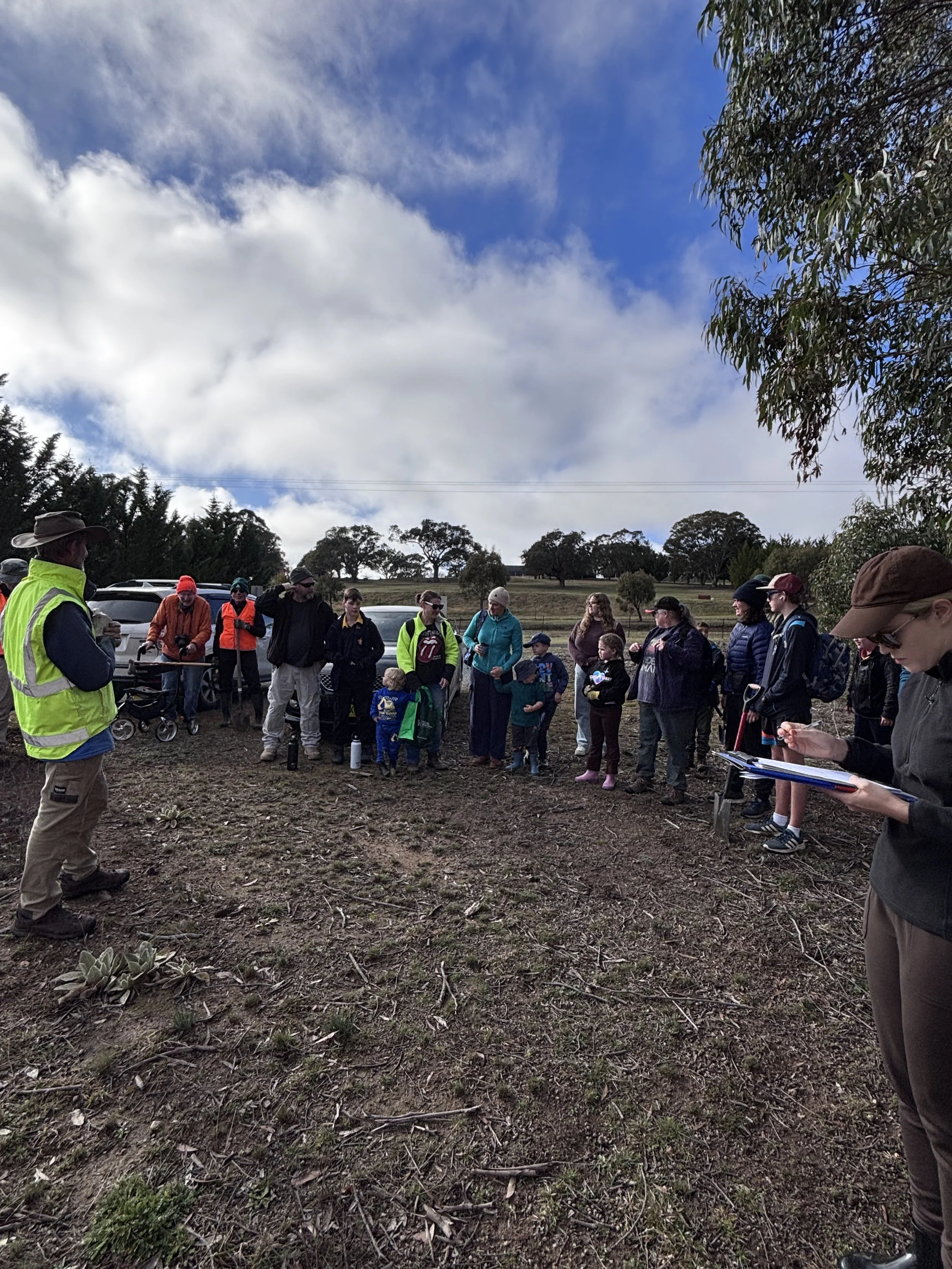
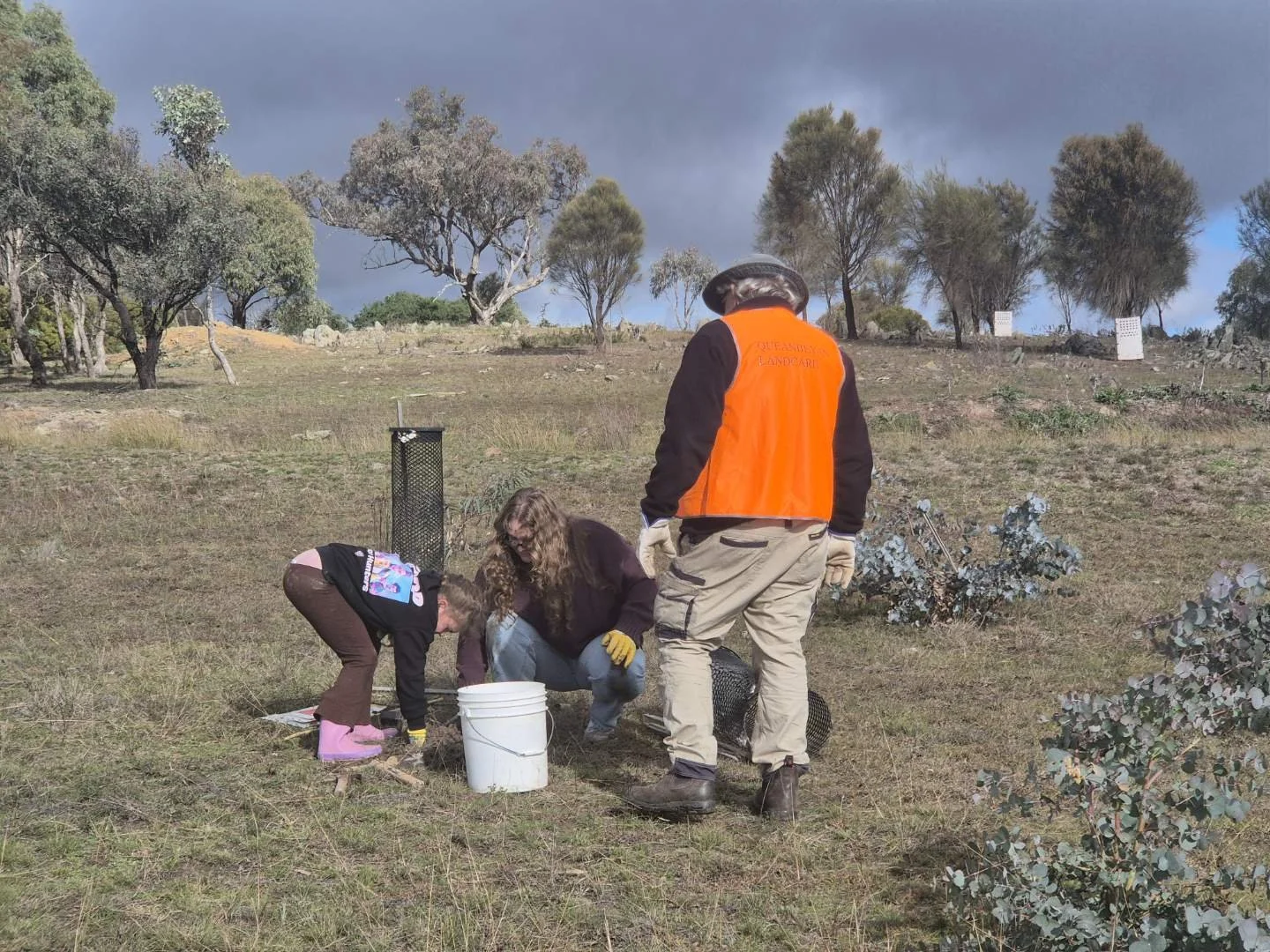
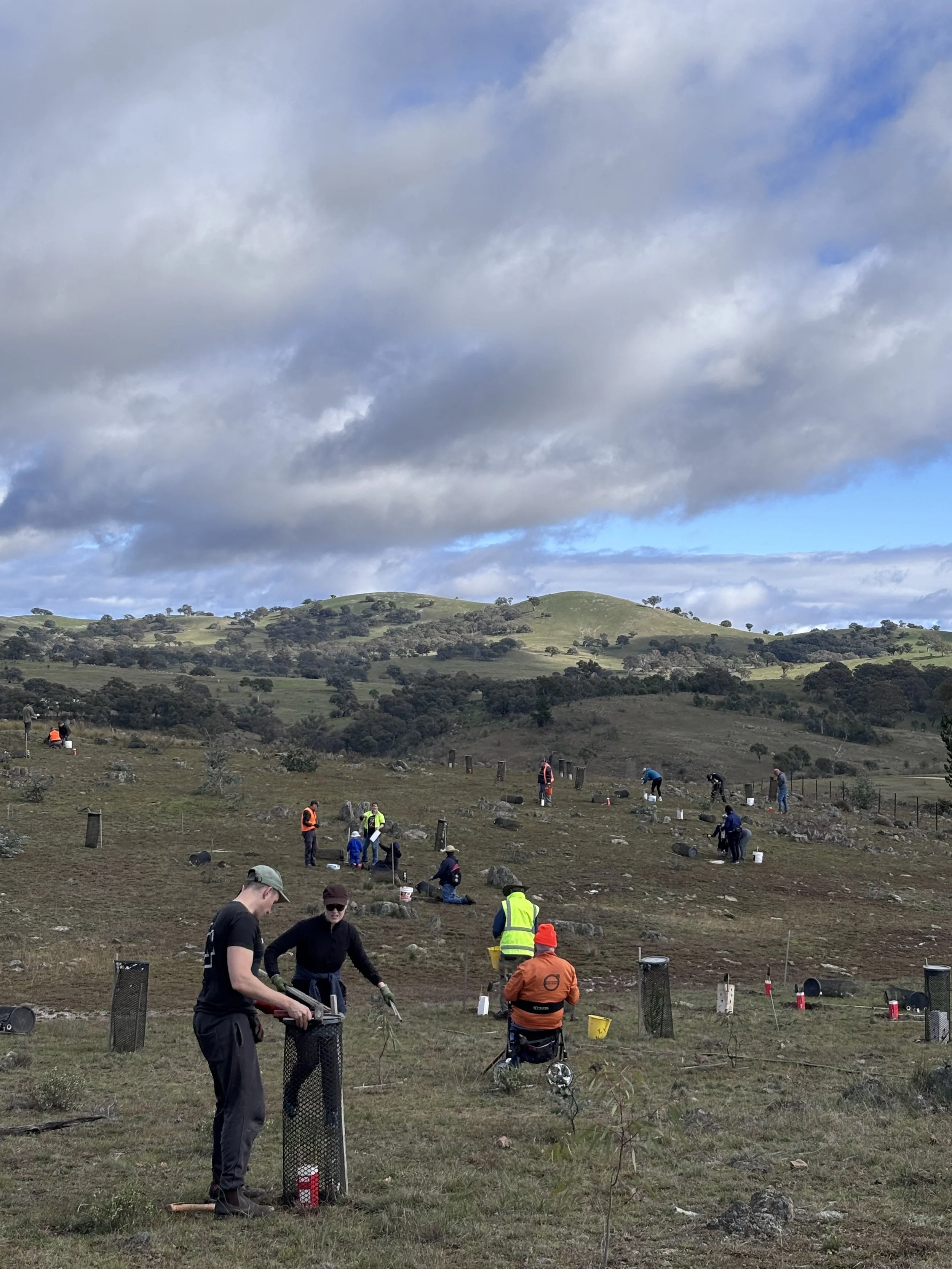
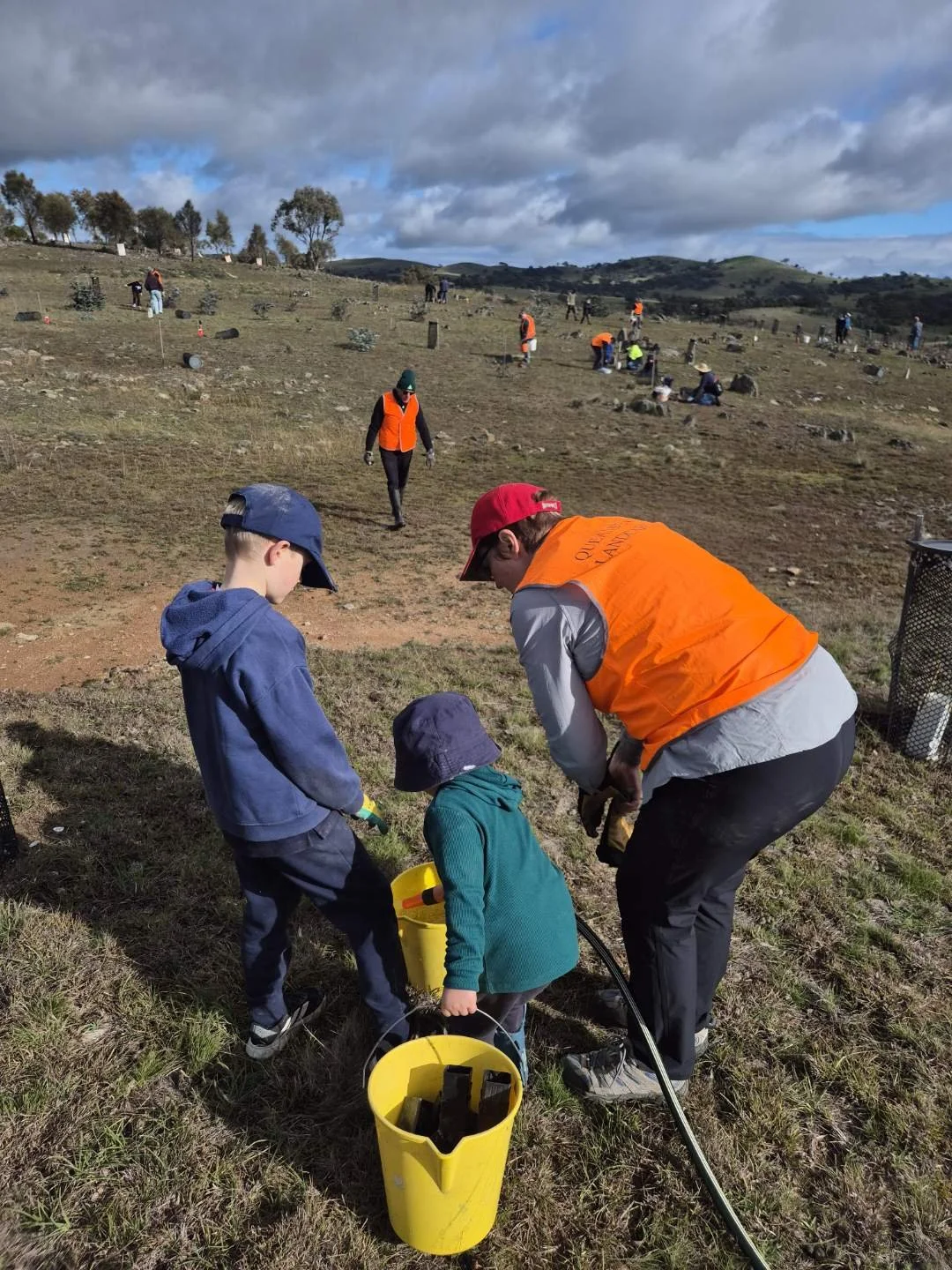
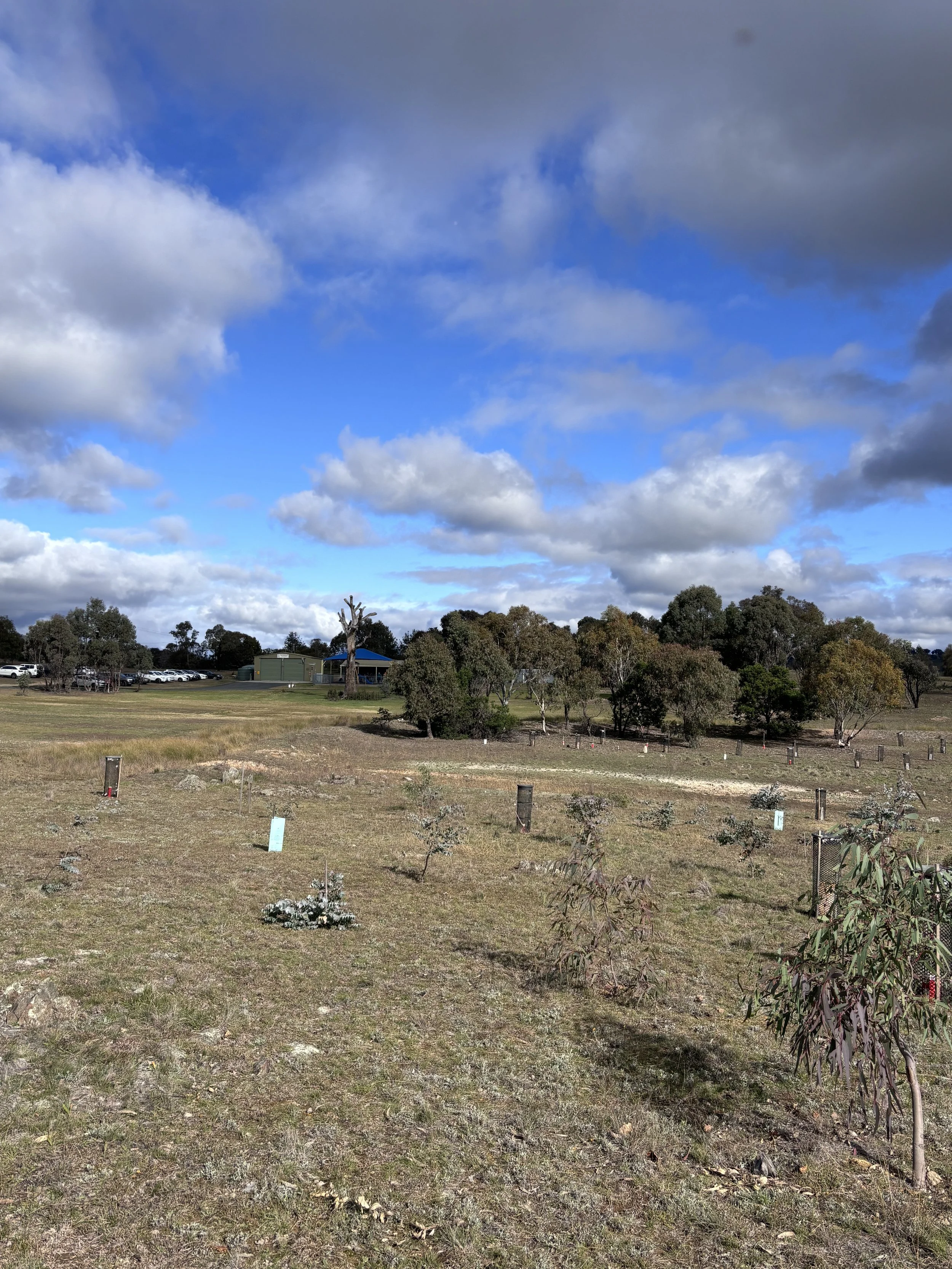
On 21 June our first National Tree Day planting event for 2026 was held at the Fernleigh Park Community Centre, a tough site previously planted in 2022 under The Queen’s Jubilee Program.
On that occasion a mixed-species planting of around five hundred eucalypts involved the Jerrabomberra Scout Group, with many members planting a tree for the first time and learning the important role trees play in the environment.
The plants and guards were sourced from Royalla Landcare and Greening Australia. The survival rate was poor due to skeletal soils, seasonal waterlogging, kangaroo damage and predation by rabbits and hares.
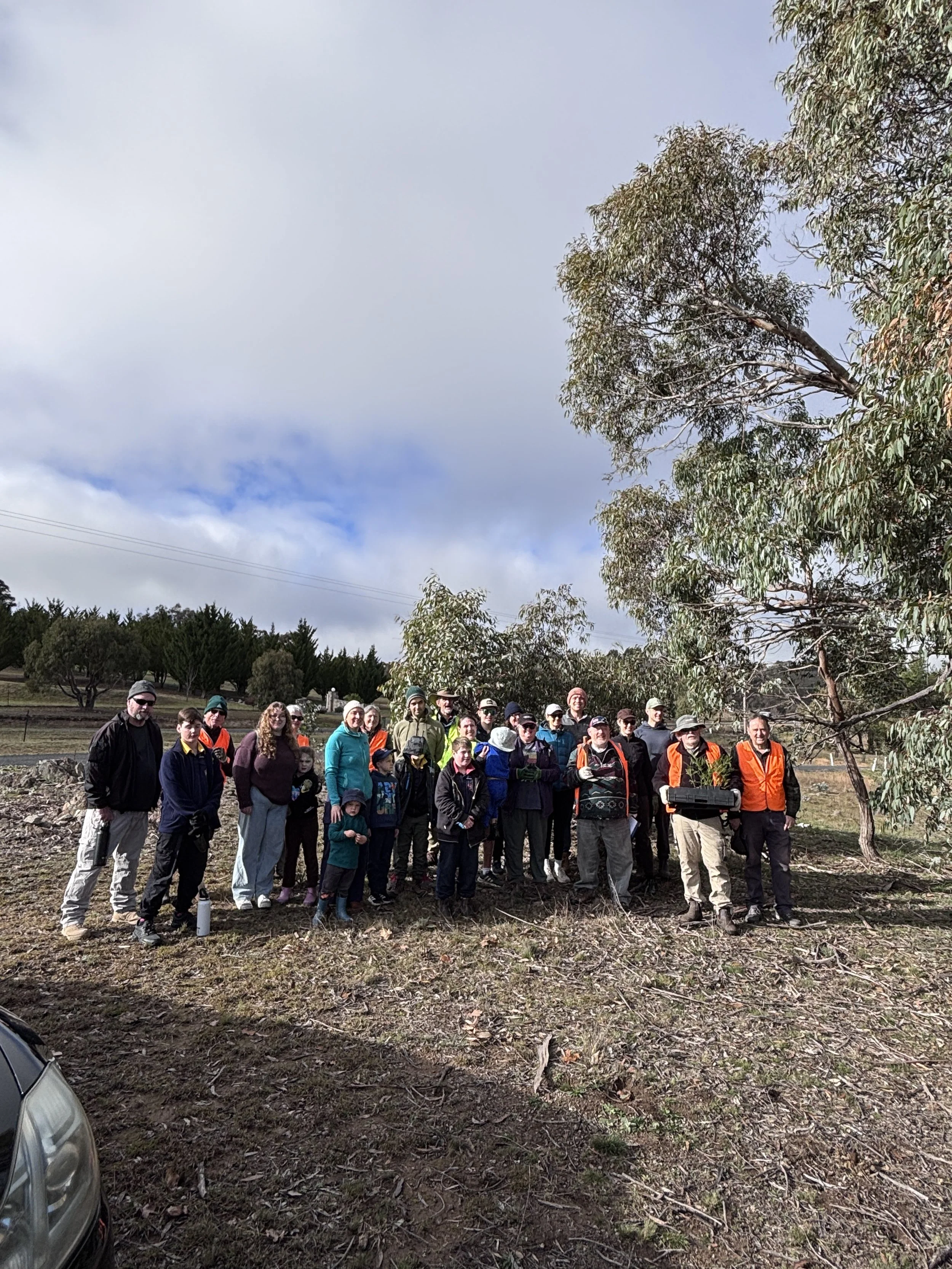
In May 2025 we re-visited the site when the 1st Jerrabomberra Scout group again worked with locals from Fernleigh and members of Queanbeyan Landcare to replace lost or damaged trees and extend the original planting area with mainly shrub species.
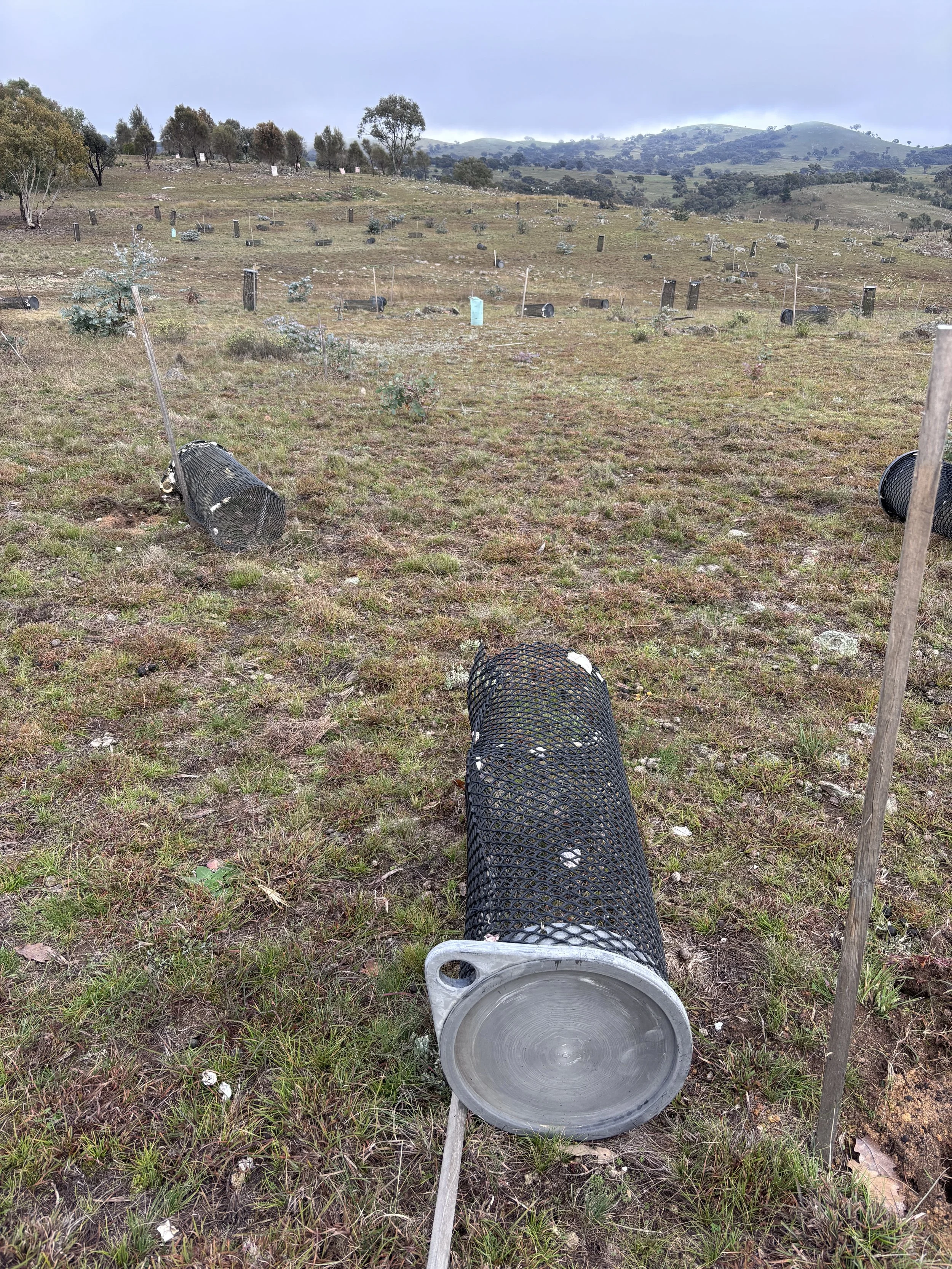
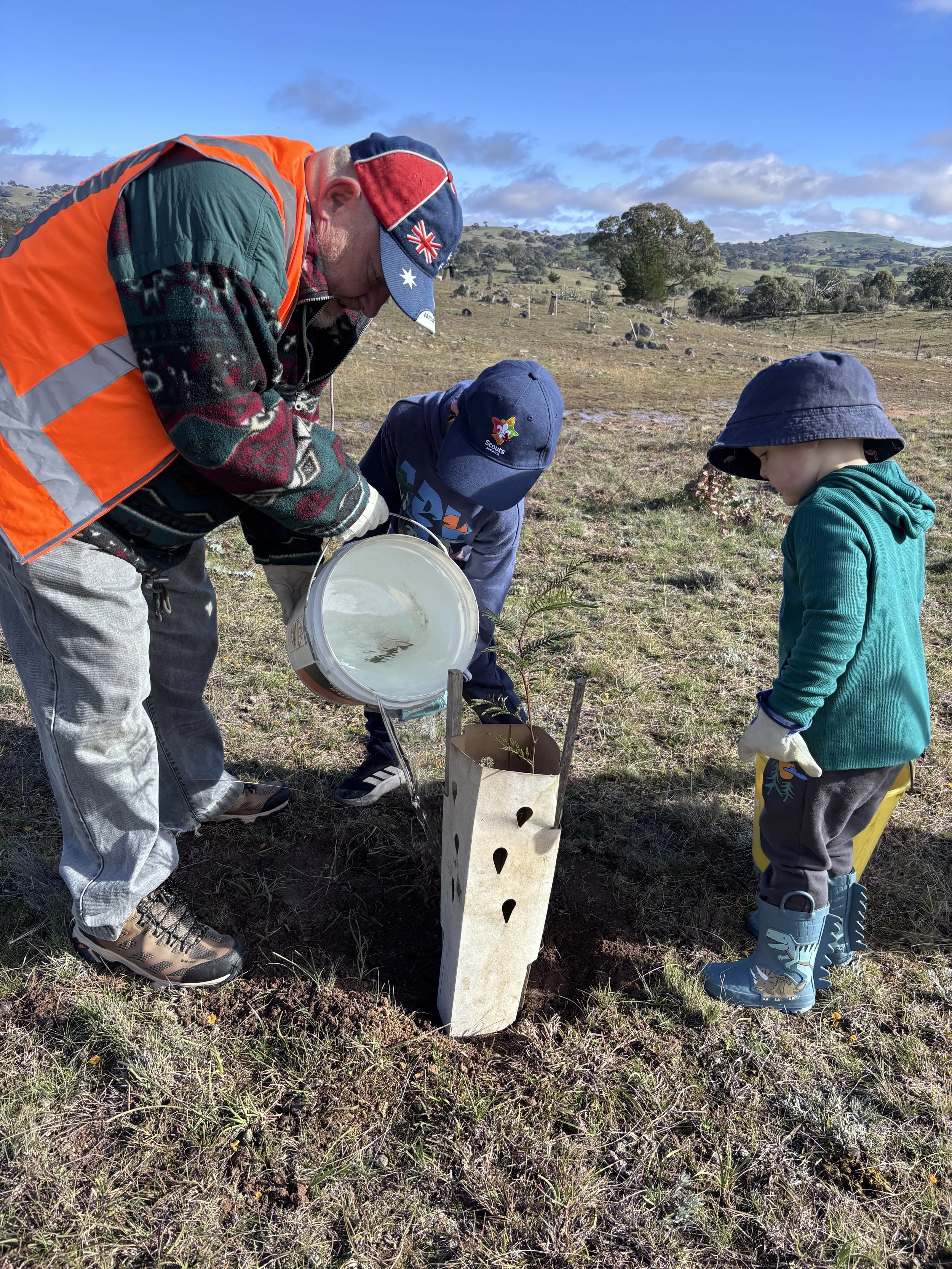
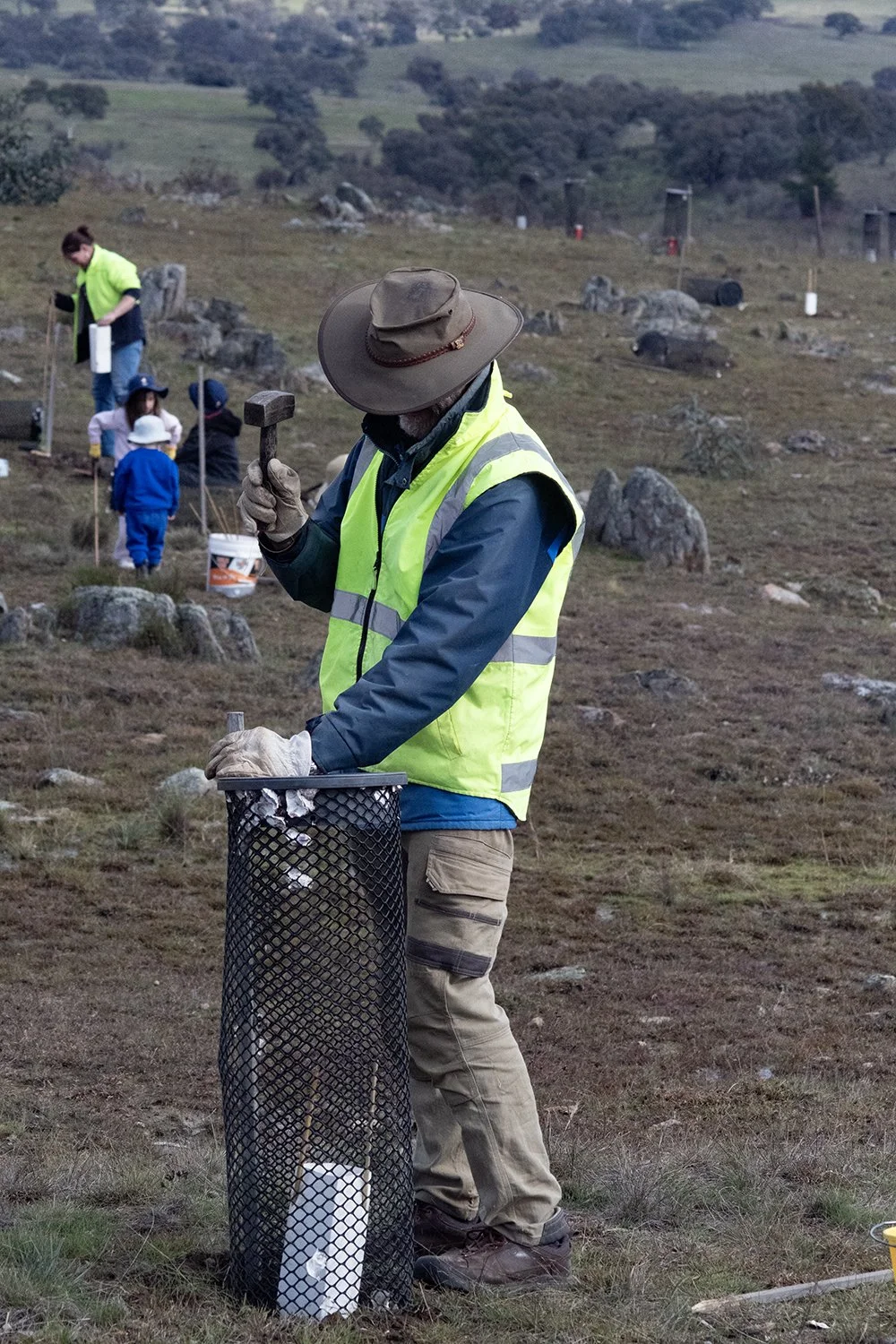
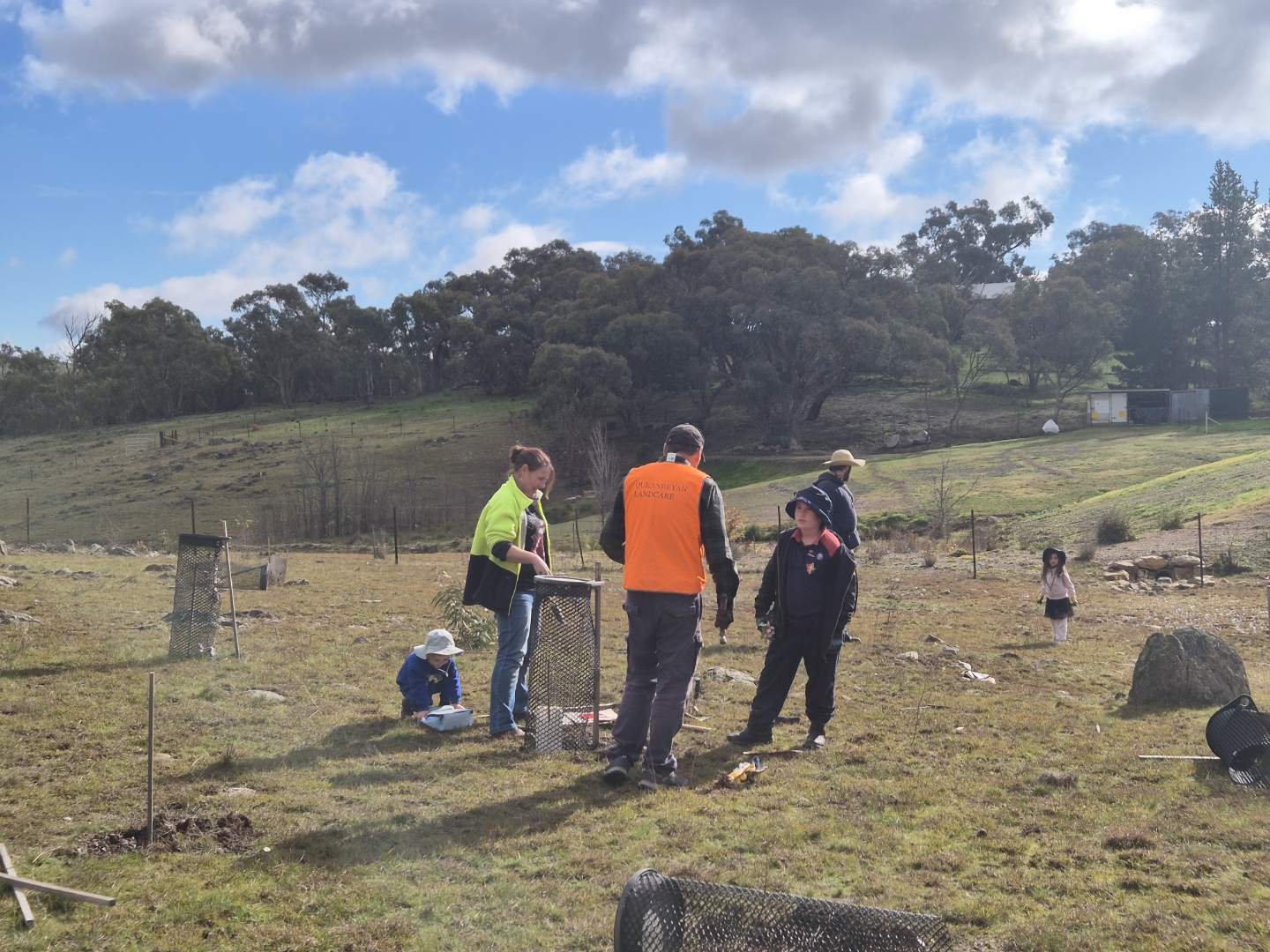
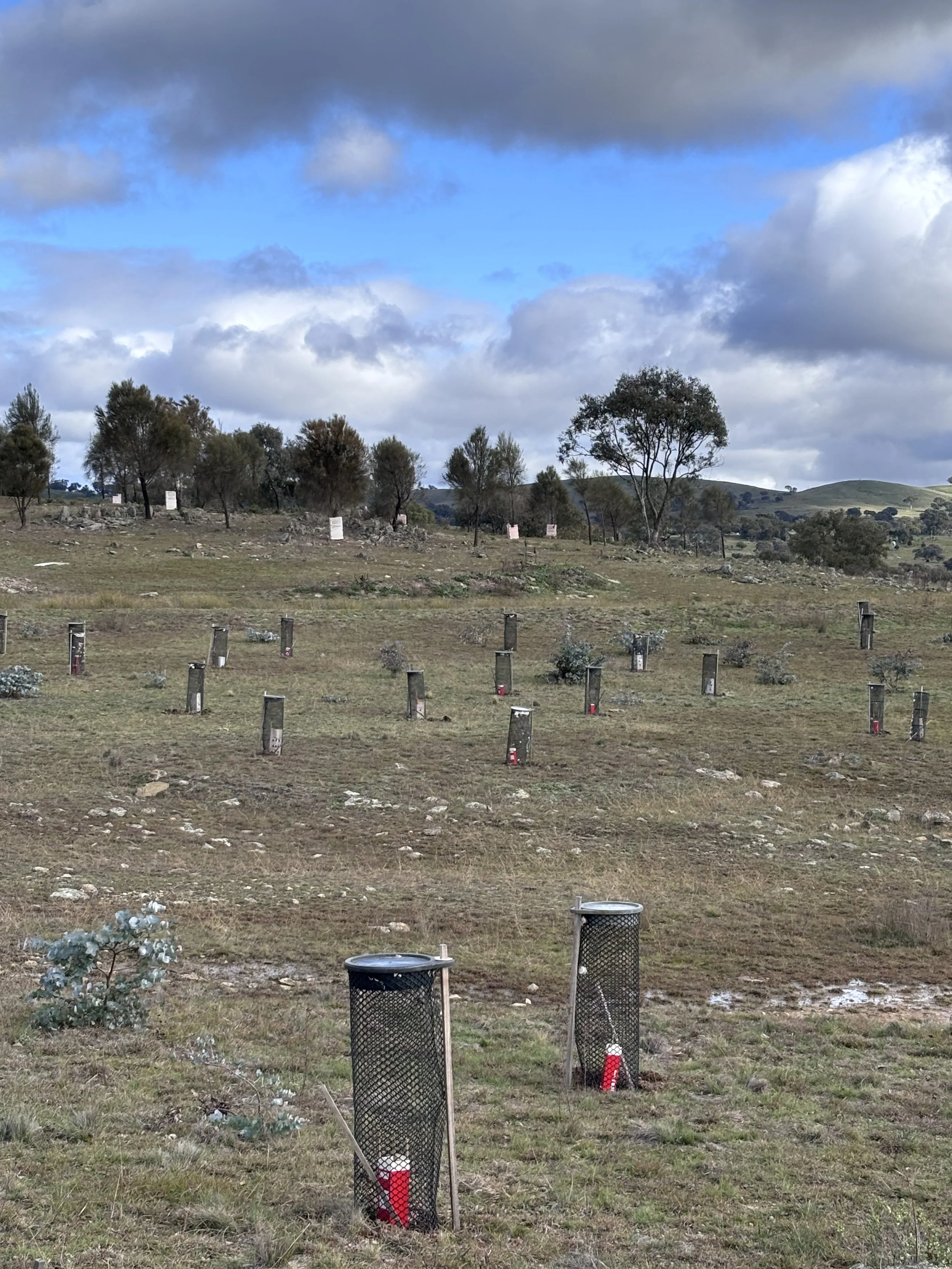
A few days after the event QLC members placed re-purposed oyster cages around the plants to protect them from damage by grazing and other pressures. Unfortunately this occurred too late to save many of the acacias from what looked to be hare damage.
The re-purposed oyster cages were donated to QLC and other Landcare groups across the Upper Shoalhaven and Upper Murrumbidgee Landcare regions by Gary and Jo Rodely from Tathra Oysters, who had moved to a new system for housing their oyster crops and were happy to donate the pots for use as tree guards.
In June this year, we found that only eucalypts could be seen from the earlier two plantings and were somewhat stunted – heavy mid-winter frosts followed by a very dry 2025 winter and spring/summer had taken their toll, despite our early summer watering.
Only 3 very small acacias could be found across the site, protected by oyster cages and apparently re-spouted from initial predation. Encouragingly, the oyster cages had generally stood up very well to the dense kangaroo population and were ready for re-use.
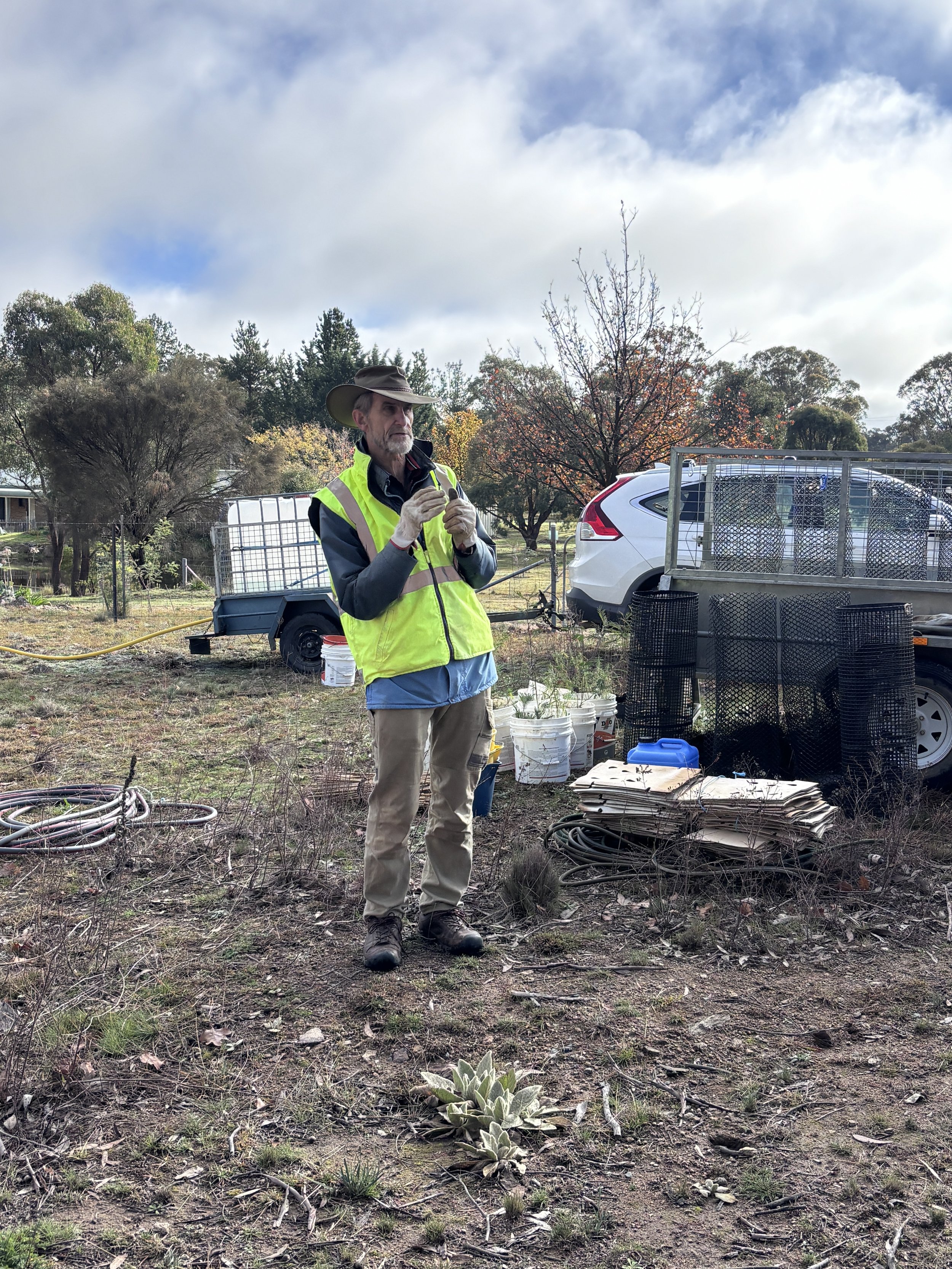
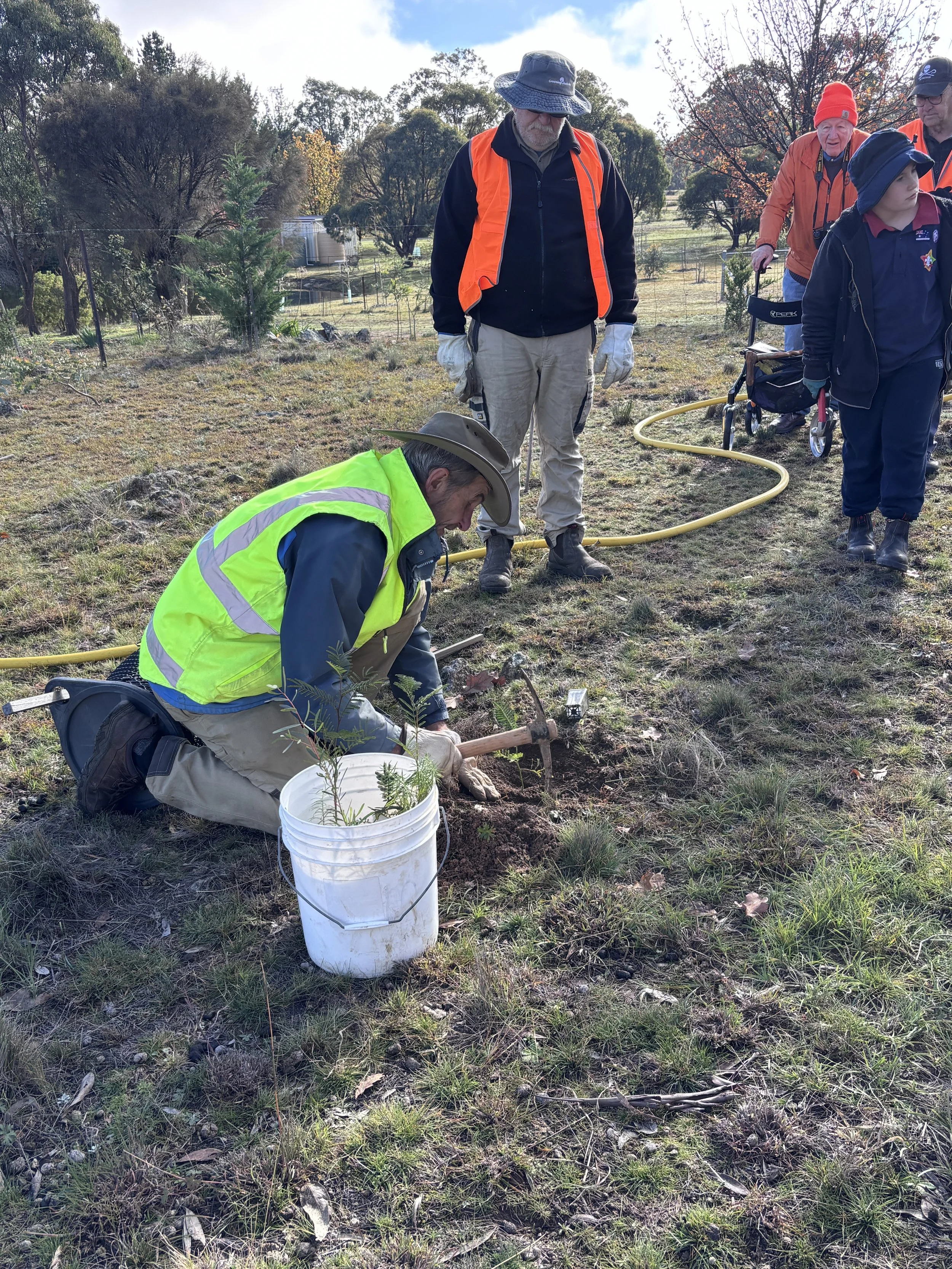
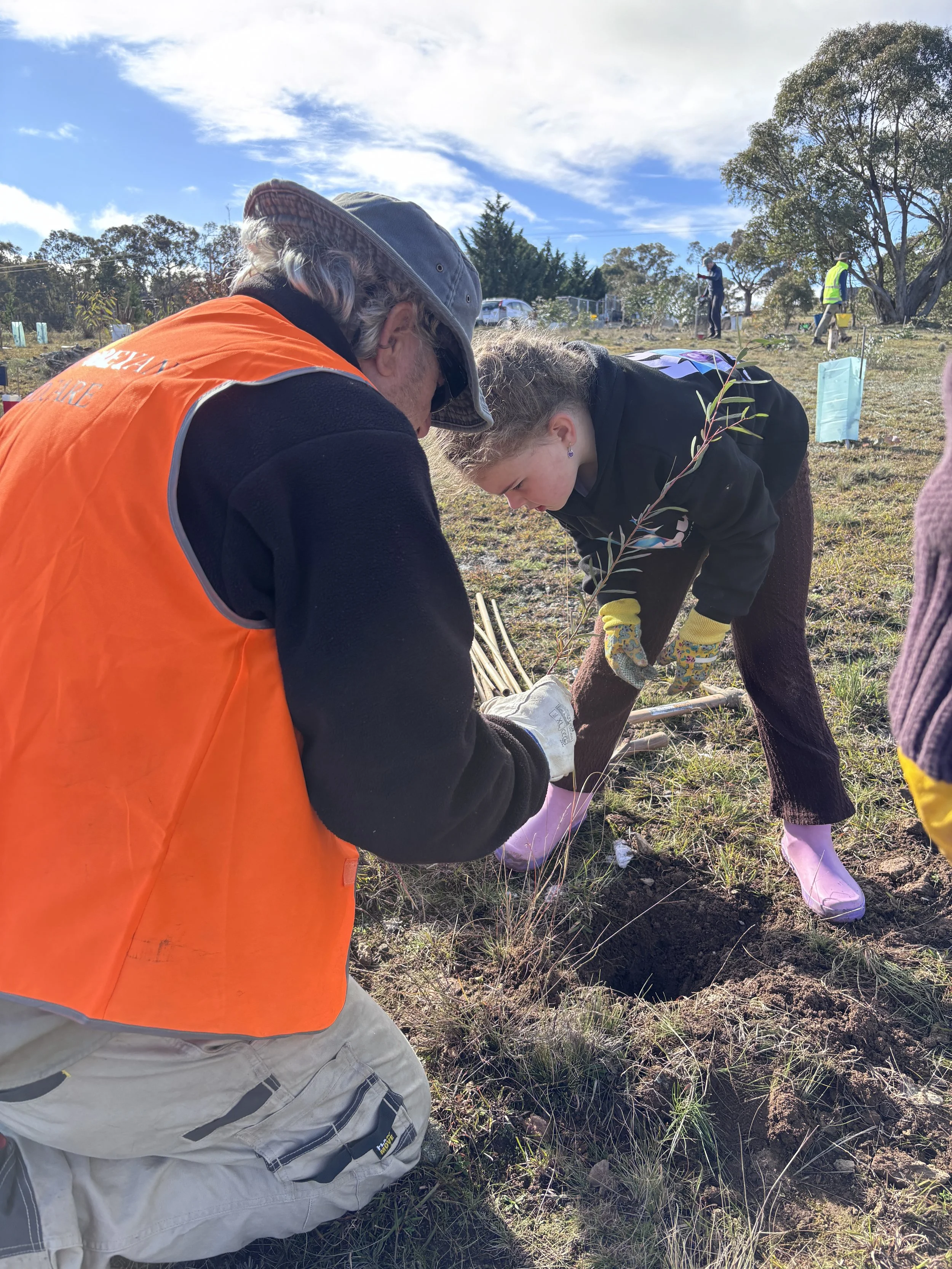
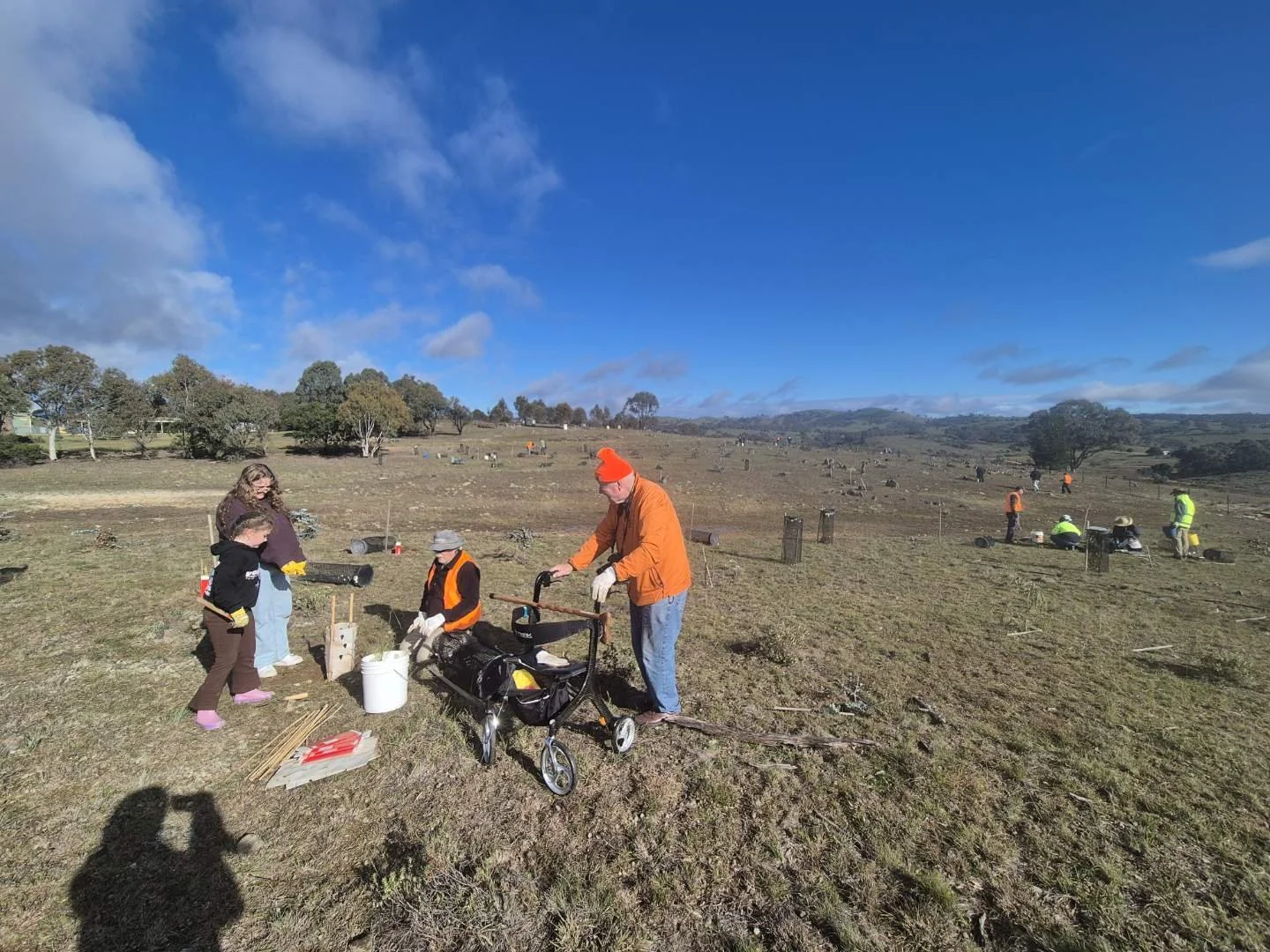
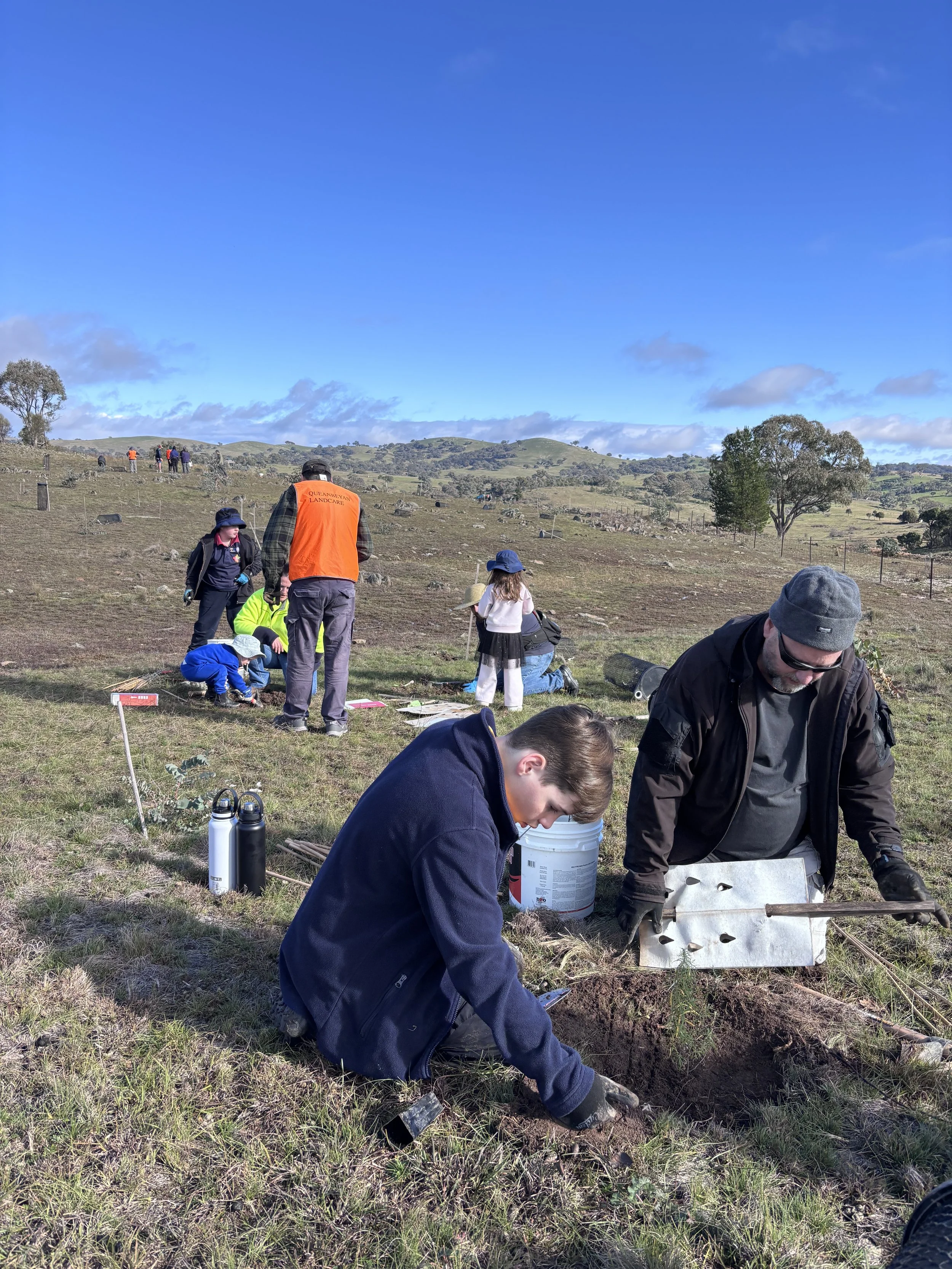
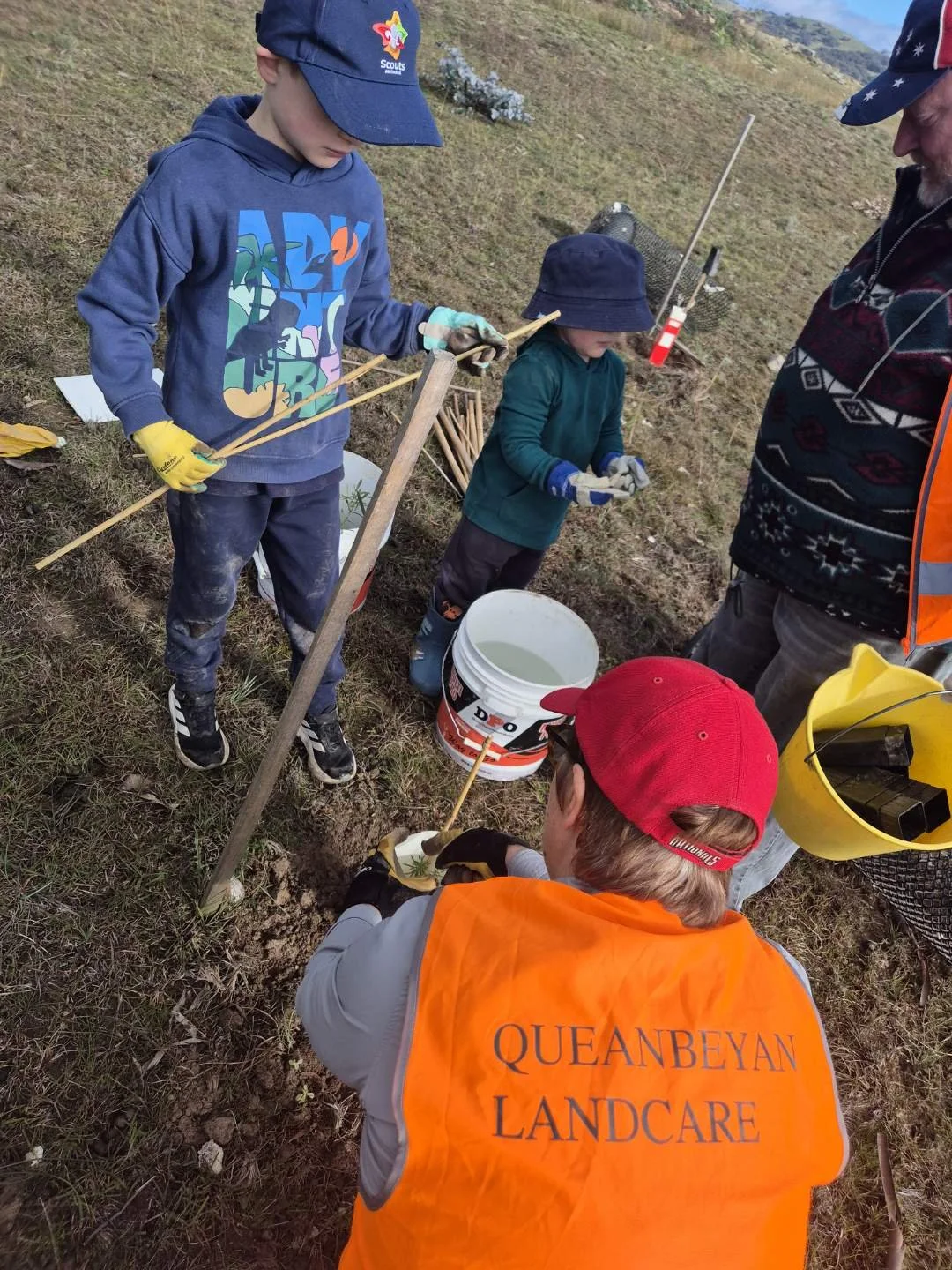
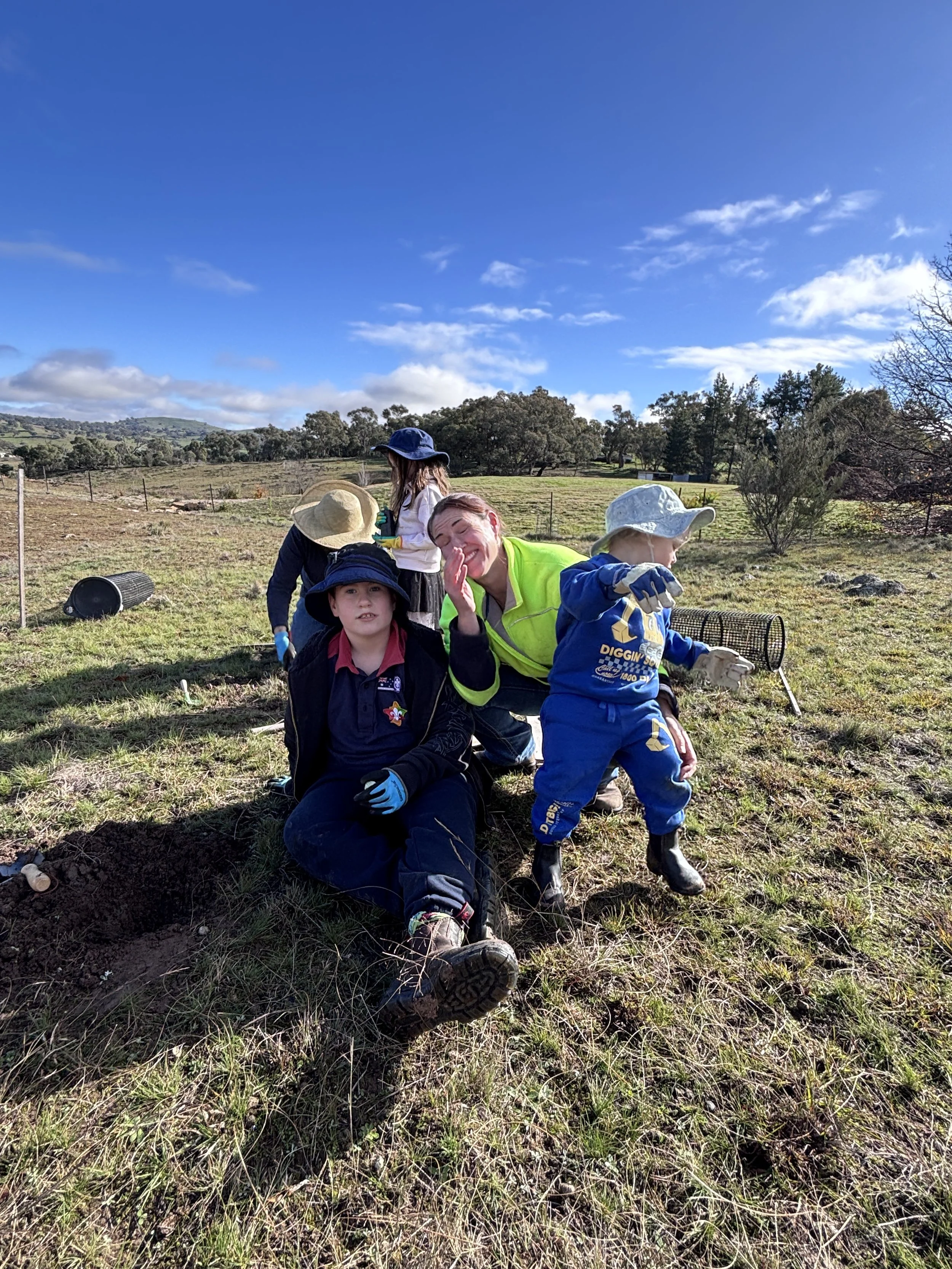
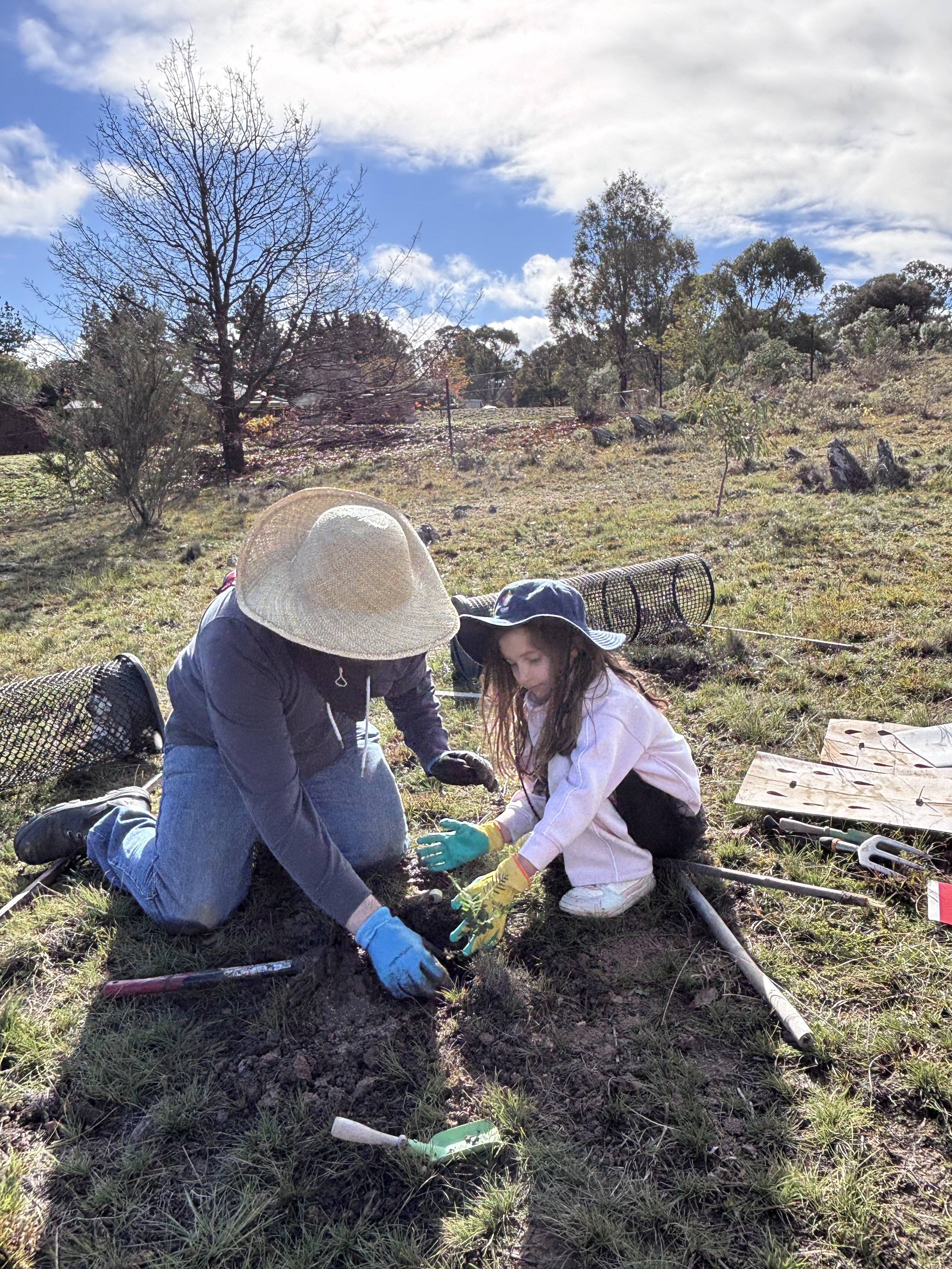
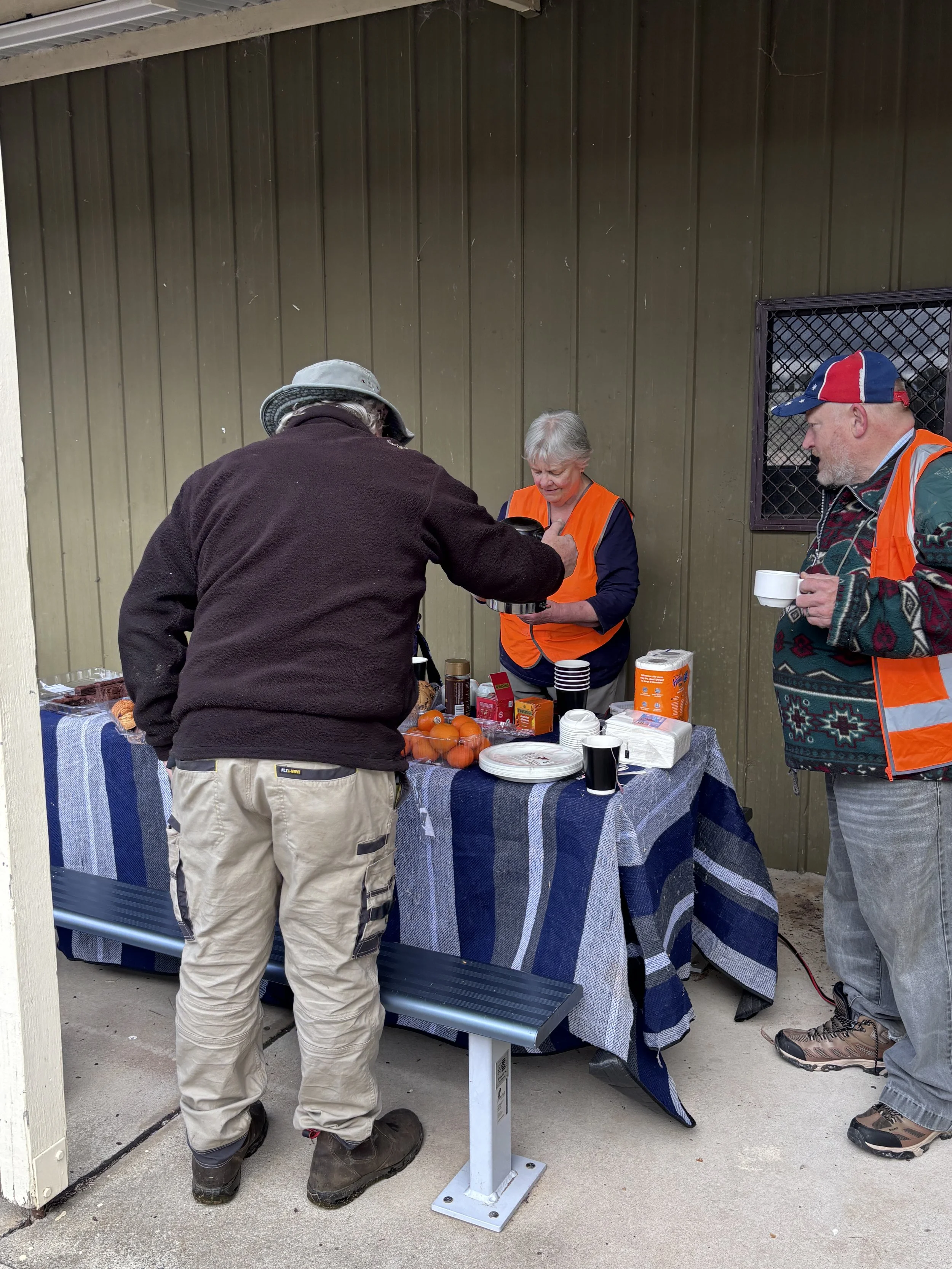
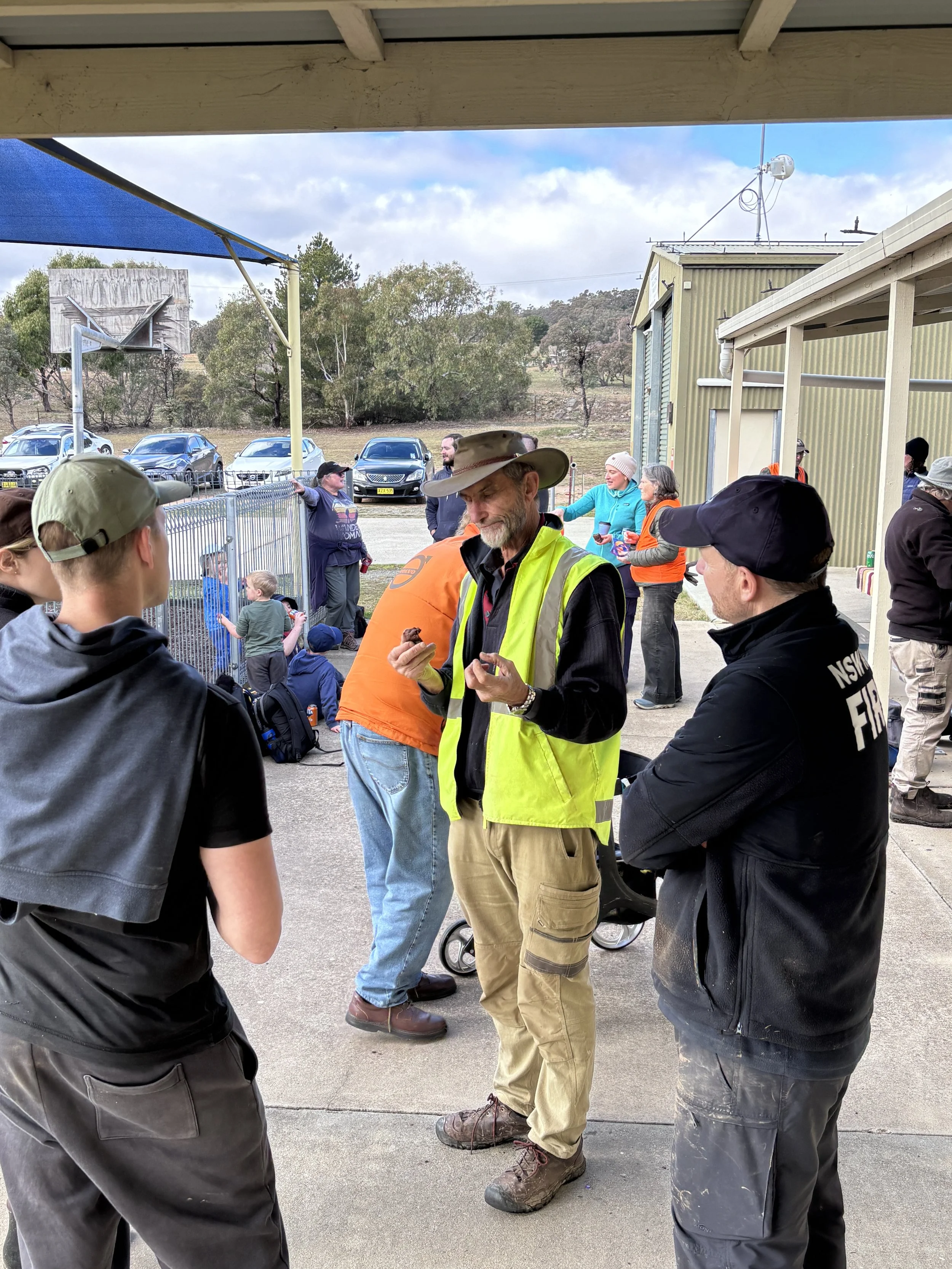
With the help from the 2nd Queanbeyan Scout Group, their parents and carers planted, fertilised, watered and protected with tree guards and oyster cages to give them the best chance of surviving winter and predation pressures.
Volunteers planted:
A. mearnsii (Black Wattle) - 42
A. dealbata (Silver Wattle) - 3
A. rubida (Red Stem Wattle) - 9
E. manniferared (Spotted Gum) - 5
Dodonea viscosa (Hopbush) - 12
Cassinia longifolia (Cassinia) - 22
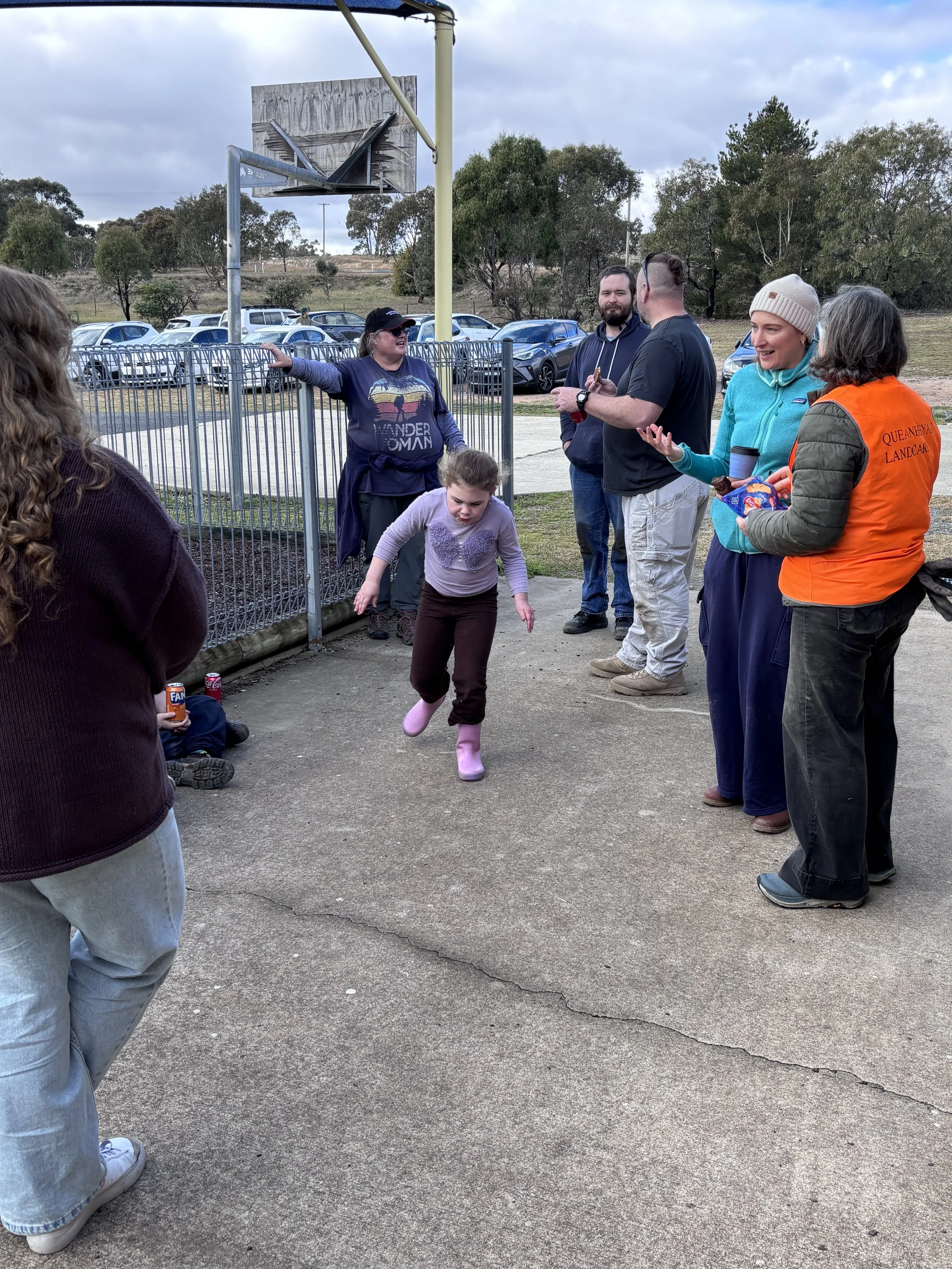
2025 National Tree Day (The Scar)
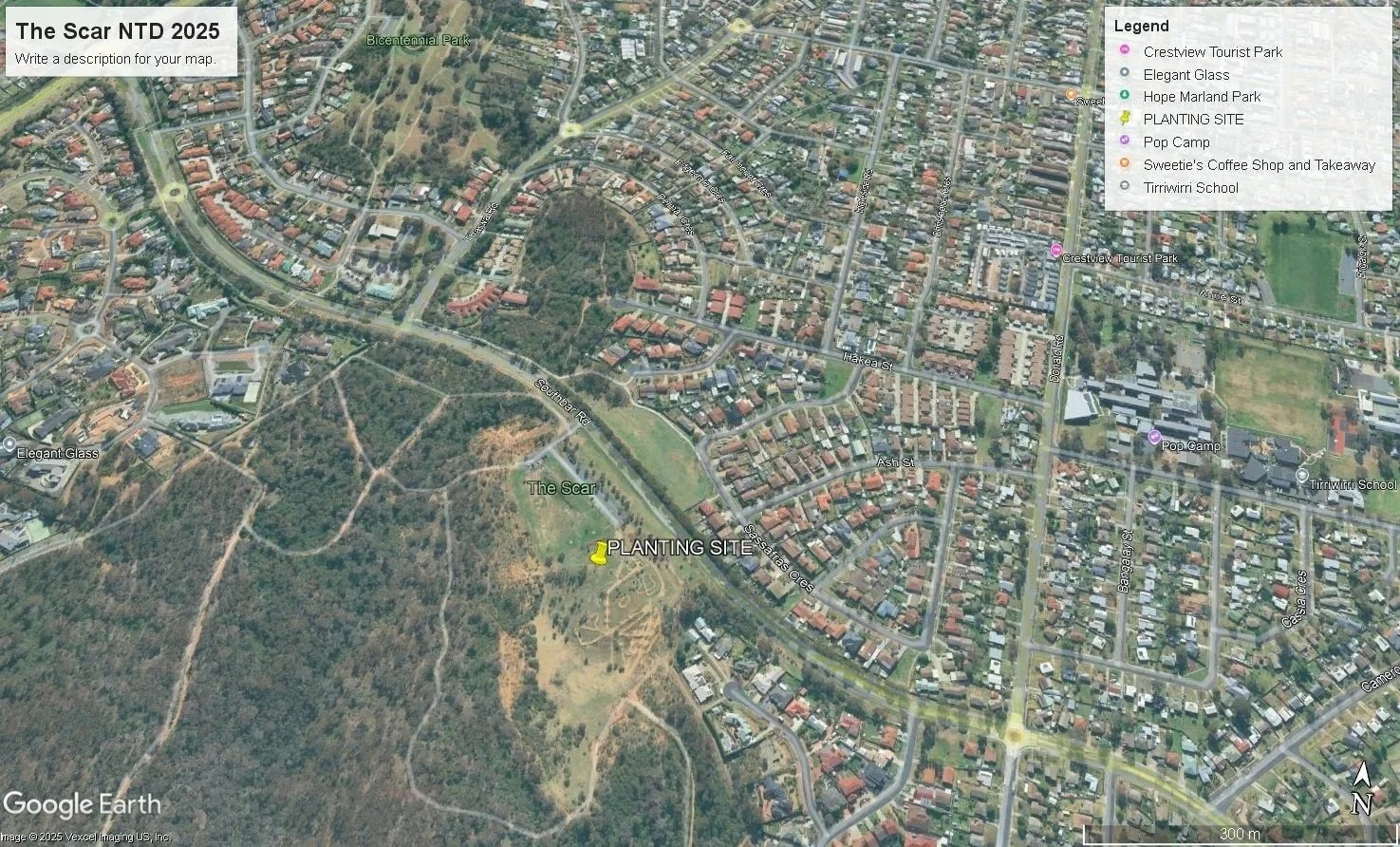
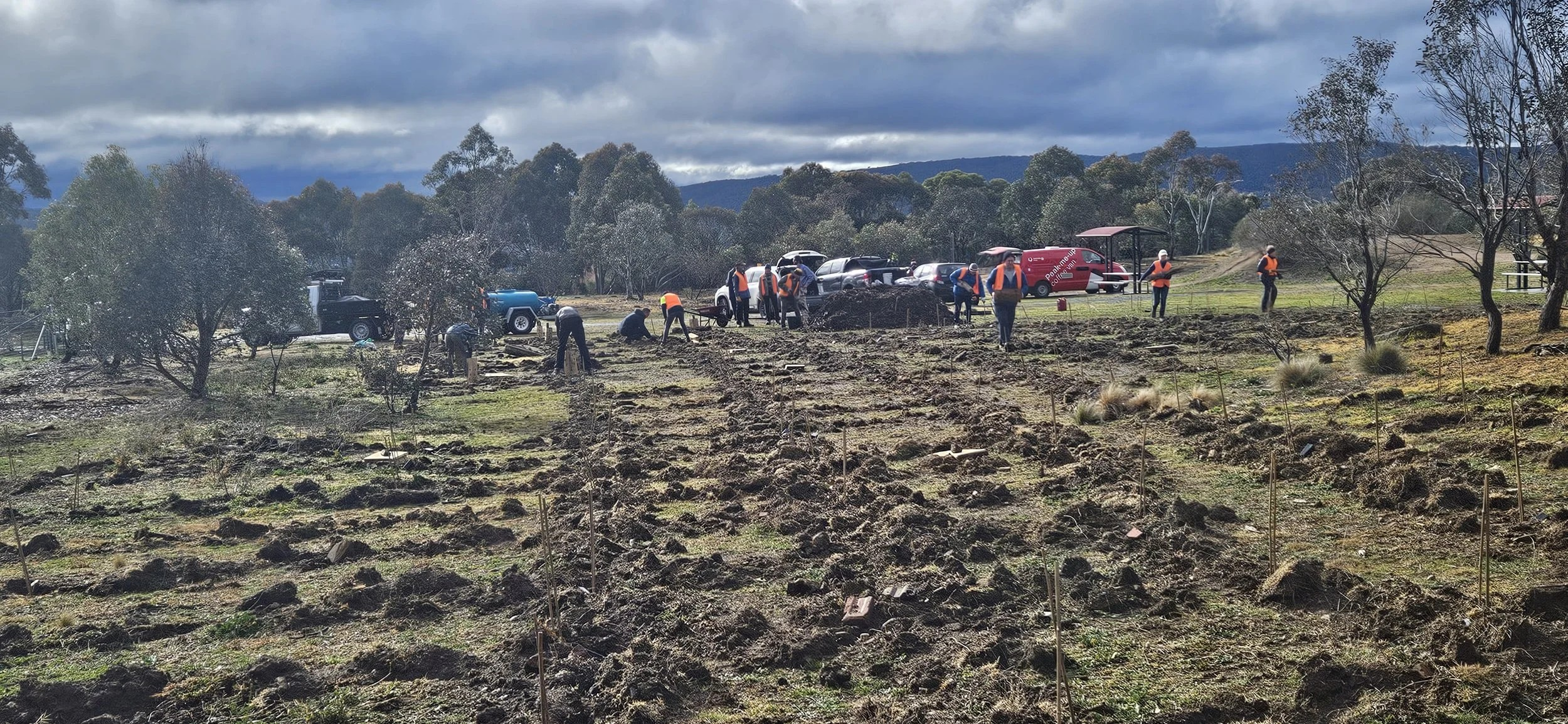
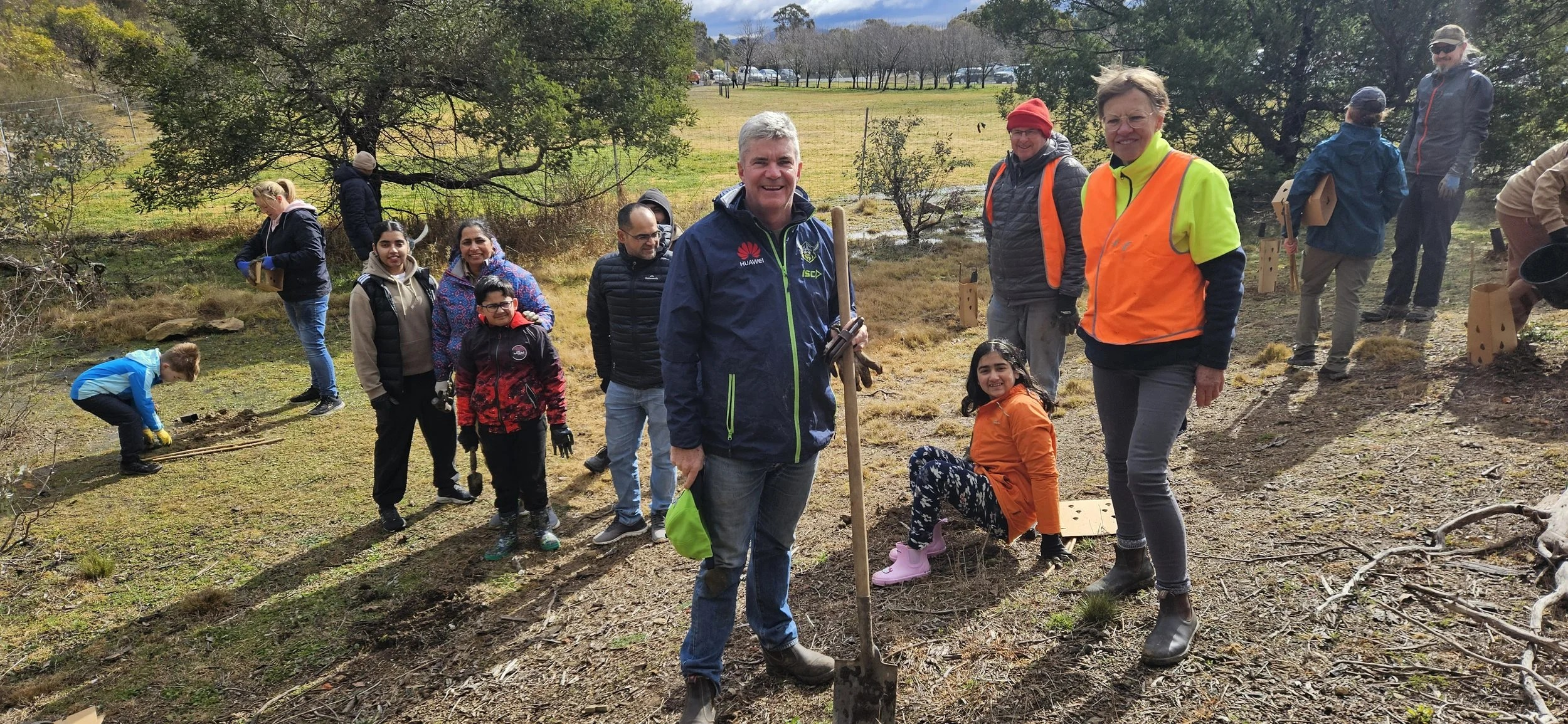
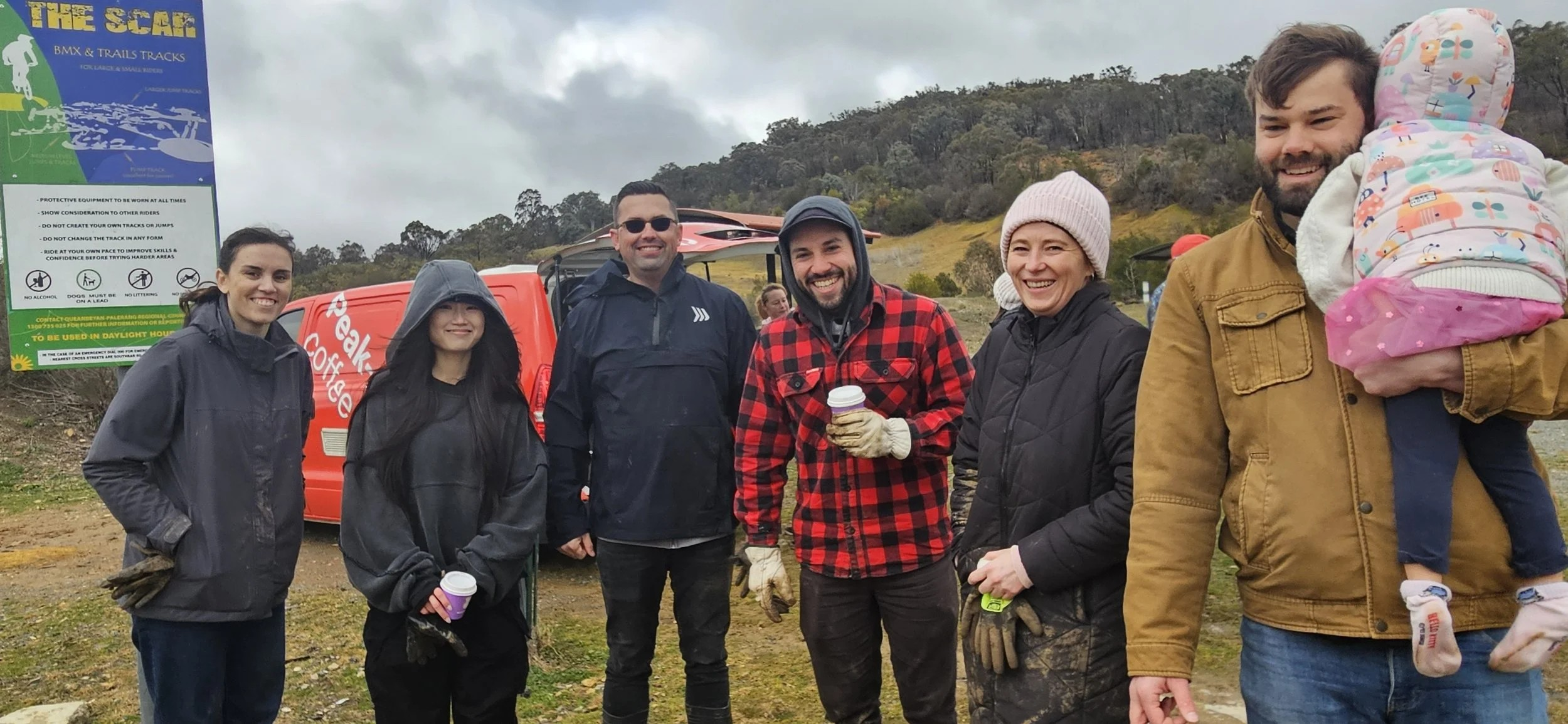
National Tree Day in 2025 was held on Sunday 27 July at The Scar off Southbar Road, Karabar. Queanbeyan-Palerang Regional Council (QPRC), Queanbeyan Landcare and more than 120 community volunteers started the task of turning a disturbed, bare site into a multi-species, structurally diverse area of native vegetation for wildlife and urban cooling.
The planting site selected sits between the BMX Track and the Dog Park. The area was a quarry and then the city rubbish tip. The soil used to remediate the site is poor with previous plantings showing slow growth, but pH testing showed only slightly acid soils and soil moisture in 2025 was good. Two planting sites were selected, the main one being on the flat at the base of the steeper eroded slopes of Mount Jerrabomberra. The Mount Jerrabomberra Story has further history on this site.
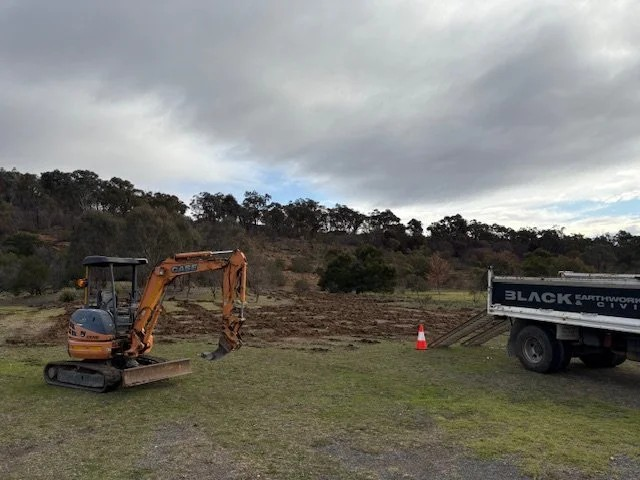
The site was ripped in June by Marc Van Dyk from Black Earthworks & Civil who once again assisted preparation for this significant community event. The second site is under a line of small Eucalypts that were planted some years ago between Southbar Road and the main planting area, suitable for additional understory plantings.
Ian Johnsson, Tom Baker and Steve Dovers from Queanbeyan Landcare created a plant list sourced from our own local stock (50), stock held from the Upper Murrumbidgee/Shoalhaven Landcare network’s Tree Start Program (154) and plants donated by the Royalla Landcare Group (40) and cared for by Bill Hall. Plants from these sources totalled 244.
Community Provided Species:
Eucalyptus mannifera (Brittle Gum) – 45
Eucalyptus sideroxylon (Iron Bark) - 5
E. macrorhyncha Red Stringy Bark) - 15
E. melliodora (Yellow Box) - 25
E. Polyanthemos (Red Box) - 10
E. nortonii (Large flowered Mealy Bundy) – 15
Allocasuarina verticillata (Drooping Sheoak) - 5
Acacia falciformis (Broad leafed hickory wattle) – 5
Acacia dealbata (Silver Wattle) – 23
Acacia melanyoxylon (Blackwood Wattle) - 12
Dodonaea viscosa (sp angustissima) - 14
Melaleuca (?) - 2
Dianellas and Lomandras – 12
Danthonia sp (Wallaby grass) – 50
QPRC purchased 350 plants from Greening Australia:
Acacia rubida (Red-stemmed Wattle) – 40
Callitris endlicheri (Black cypress pine – 20
Hakea decurrens ssp decurrens (Bushy needlewood) – 20
Allocasuarine verticillata (Drooping sheoak) – 20
Callistemon sieberi (River Bottlebrush) – 20
Eucalytus polyanthemos (Red Box) – 20
Hardenbergia violacea (False Sarsaparilla) – 60
Vittadinia muelleri (Narrowleaf New-Holland-Daisy) – 20
Xerochrysum viscosum (Sticky everlasting) – 20
Chrysocephalum semipapposum (Clustered Everlasting) – 10
Chrysocephalum apiculatum (Common Everlasting or Yellow Buttons) – 10
Craspedia variabilis (Billy Buttons) – 10
Leptospermum obovatum (River teatree) – 20
Acacia gunnii (Ploughshare Wattle, Dog's-tooth Wattle) – 20
Brachychiton populneus (Kurrajong) - 40
Planting Plan
The Eucalyptus and Casuarina were planted 5 metres apart along the rip lines. These were infilled with Acacias, Callitris and Kurrajongs. In addition, unusual for community plantings in Queanbeyan, patches of various groundcover daisies, hardenbergia vines and native grasses were added.
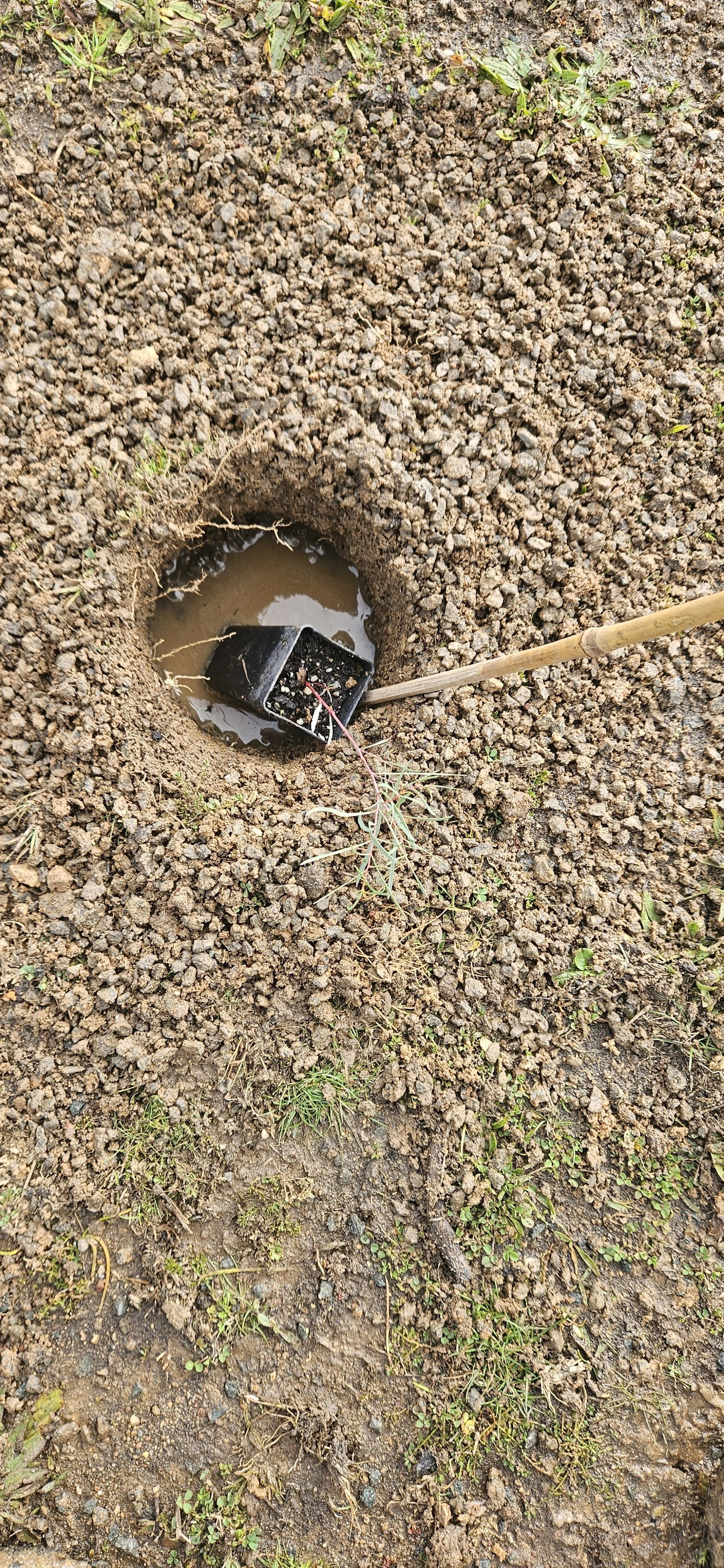
The planting was relatively dense, insurance for a site with poor, compacted soil (mostly fill) with poor drainage. Soil was moist from recent rain, pooling on lower patches. Most of the site had been ripped prior to the event - ripping makes planting easier, and enables water and root penetration, especially on harder ground like this.
However on the day at least 200 holes were dug with powered augers. This enabled expansion of the main planting site and was used throughout the second planting site for the groundcovers that will be a feature in this area. Auger holes are not always as successful as ripping, being shallower and not as wide as rip lines, but useful in areas not accessible to machinery.
It will be important to compare how the two approaches perform and also how plants in the very wet areas perform.
There are many advantages with grouping a variety of types of plants fairly close together. It increases microclimate protection, habitat diversity, soil health, pest and disease resistance, pollinator attraction and aesthetic appeal. Small birds benefit significantly from these denser plantings as they provide nesting and feeding habitat and refuge from predators and threat.
Emery J from QPRC was the organiser of this event however he included Ian, Tom and Steve at all stages of the planning of this day and was more than happy to discuss and revise plant choice and planting position with Bruce D, Ian and Tom on the day.
Additional Queanbeyan Landcare members attended to assist with the crowd of more than 120 community volunteers, to ensure plants were placed correctly in the harsh soil - explaining site preparation, planting techniques, placement of tree guards and stakes, watering and the spreading of mulch. Thanks to all our members who attended on the day - including Fran C, Bob C, Mark P, Marc v D, Helen E, Lizzy S, Michele D, Gary M, David G, Tom J, Malcolm B, Lindsay P, Di J, Lindsay J, Jodie R, Chris H, Melissa C and David B.
Community volunteers included 10 – 15 from a local Queanbeyan companies, 10 Scouts and their families from across the region and 50 volunteers from the Sikh community.
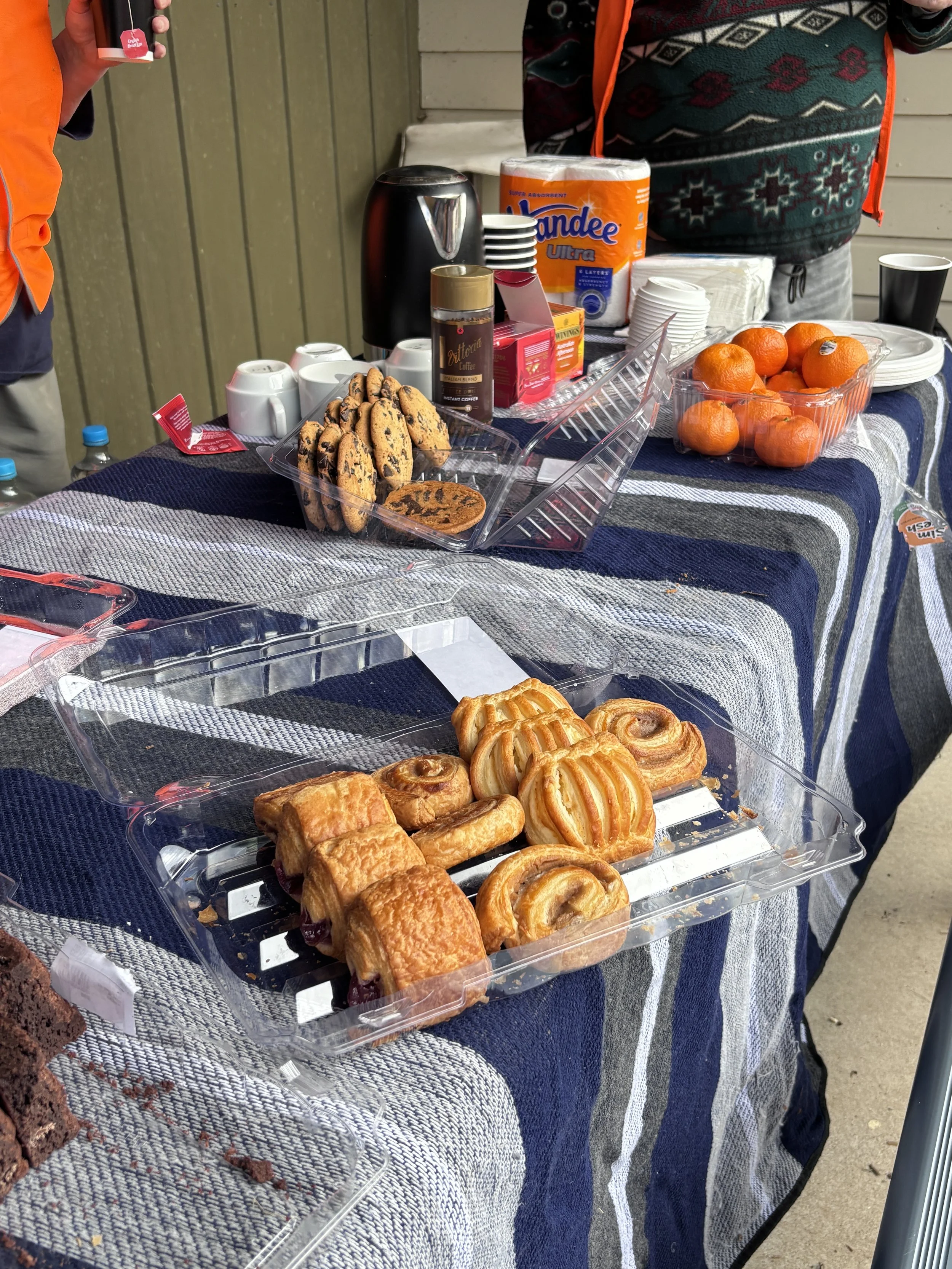
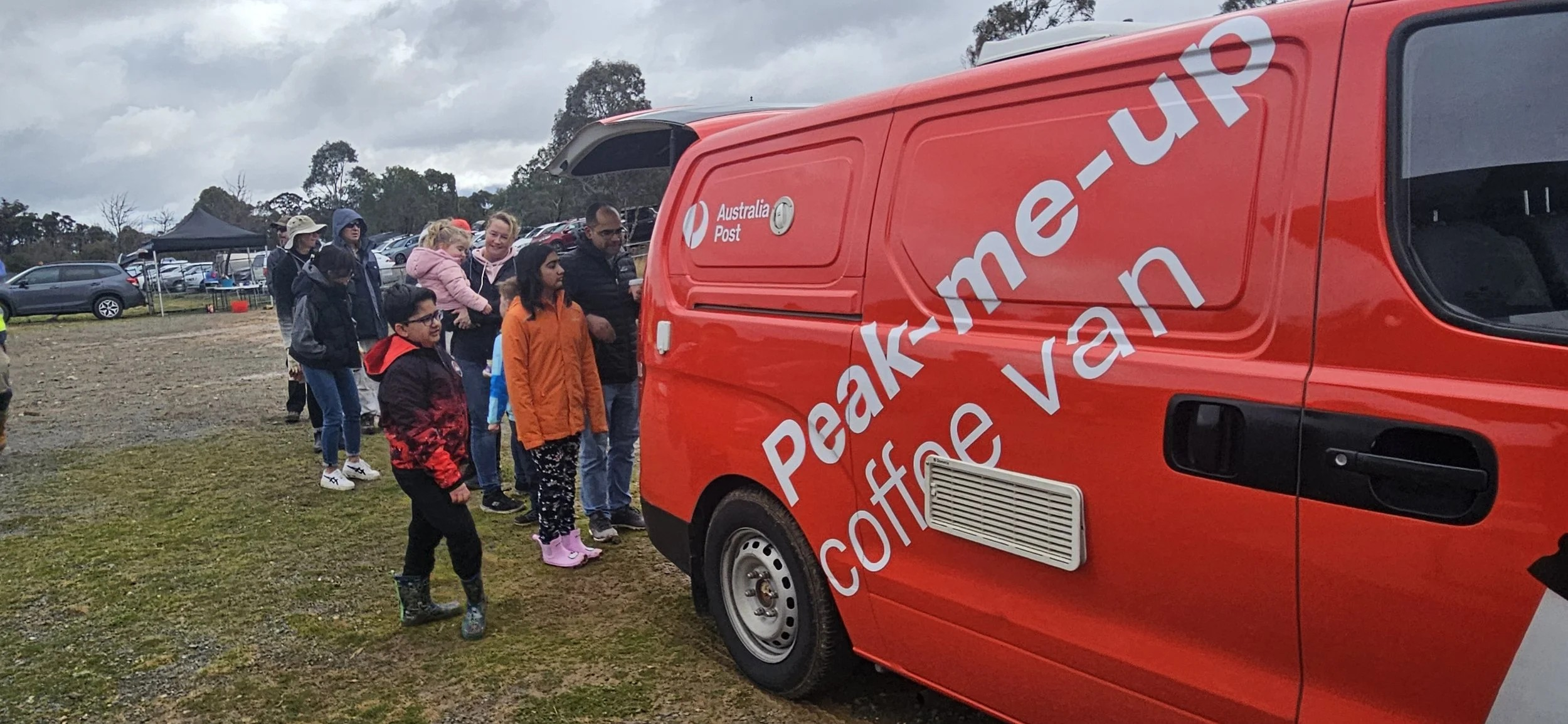
It was cold and windy, but the plants were in the ground, warm drinks from the Peak-me-up coffee van consumed and the site cleaned up by 12 noon. The Sikh community provided a lovely curry for the end of a great day.
The site at The Scar will require continued care and monitoring in the months and years to come. Follow-up watering, weeding, and maintenance will be critical to ensuring the survival and flourishing of the young plants but Queanbeyan Landcare has a proven long-term commitment to this area, including planting for shade in the adjacent off-lead and BMX complex many years ago.
We will be supporting Council to ensure this site provides additional habitat for native wildlife, a cool space to escape urban heating and an important community asset. Over time if growth occurs as we imagine we could change the name from ‘The Scar’ to ‘Southbar Community Park’.
Photos courtesy of Michele Dovers, Leanne Coleman and Fran Curtis
2024 National Tree Day (Fairlane Fauna and Flora Reserve)
Throughout late 2023 and into 2024, Queanbeyan Landcare tended the Fairlane Fauna and Flora Reserve planting site to be readied for further work. Mulching, mowing, spraying, staking and replacing damaged tree guards took place. Most of the plants were thriving, though some were damaged due to a tree fall and we suspect feral deer.
The 2024 site was an extension of the 2023 site, continuing along Barracks Creek towards Queanbeyan River.
The planting plan remained the same, strengthening and thickening the corridor along the creek towards the Queanbeyan River.
Site preparation focussed on weed control and ripping. We would like to thank and acknowledge Marc van Dyk from Black Earthworks & Civil who volunteered their time and machinery to rip the site. Members who regularly volunteered their time and energy include Glen & Alison Crawley, Ian Johnsson, Bruce Taloni, Dave Grey, Michele & Steve Dovers and Tom Baker. Also John, Kat, Joel, Lindsay and Di & Lindsay. QPRC helped with spraying and mulch supply. And Les Murray who along with Tom and Michele propagated many of the plants provided by Queanbeyan Landcare.
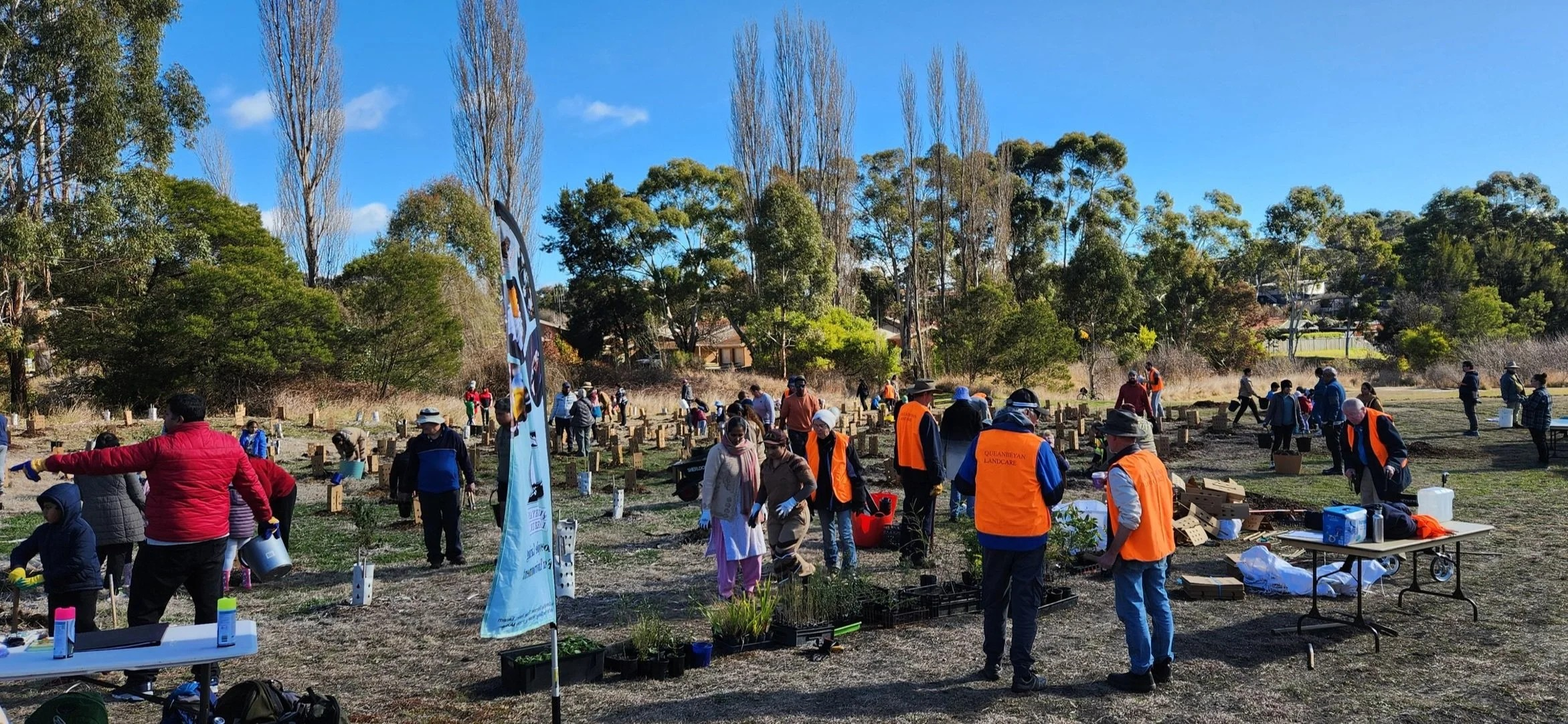
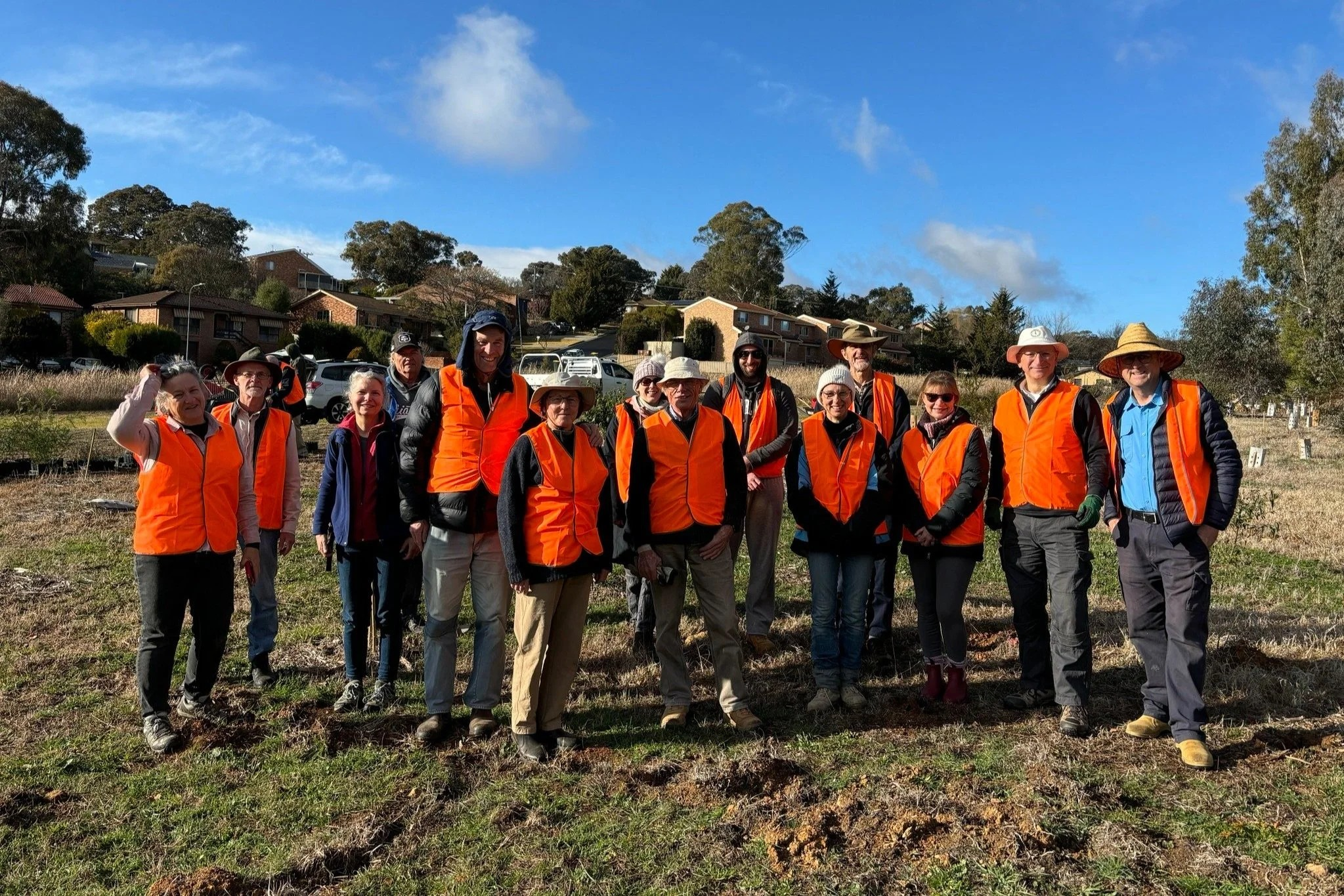
Sunday started with light rain, some hail and temperatures around 0 degree Celsius but the clouds soon cleared, and the wind dropped so a very pleasant working temperature. Over 100 Volunteers turned up and planted over 600 plants guided by our team of wonderful Supervisors. Once again many Community Groups joined the many local volunteers.
The logistics of the event were organised by staff at QPRC. They promoted the event, organised a bus to bring volunteers to the site, provided the tools, tree guards, stakes, mulch, gloves, first aid kits, the coffee van BeanCulture. Josie Grenfell from Food2Soil brought along a nutritious tonic for the plantings.
Queanbeyan Landcare’s tasks included site preparation, plant selection, plant placement and the identification of Supervisors who would guide the many volunteers on how to plant, where to plant, tree guard construction, watering and mulching. Once again Black Earthworks & Civil stepped in and provided a water truck for the event.
Over 600 plants were sourced:
279 from Queanbeyan Landcare (propagated by Tom, Michele or Les)
70 x Callistemon sieberi, River Bottlebrush
35 x Melalueca parvistaminea, River Melaleuca or Swampy Paperbark
65 x Gynatrix pulchella, Hemp Bush
20 x Kunzea ericoides, Burgan
35 x Dodonea viscosa, Hopbush
30 x Poa labillardieri, River Tussock
20 x Lomandra longifolia, Spiny Headed Matrush
4 x Callitris endlicheri, Black Cypress Pine
79 from Greening Australia (old stock, many root bound - free)
26 x Bursaria spinosa, Sweet Bursaria or Australian Blackthorn
41 x assorted Wattles, mainly Acacia mearnsii, Green Wattle and Acacia rubida, Red-stemmed Wattle
10 x Dodonea viscosa, hopbush
2 x Eucalypts (species unknown
280 by QPRC
15 x Eucalyptus viminalis, Ribbon Gum
10 x Eucalyptus melliodora, Yellow Box
40 x Eucalyptus blakeleyi, Blakely’s Red Gum
35 x Casuarina cunninghamiana, River Sheoak
25 x Acacia mearnsii, Black Wattle
25 x Acacia dealbata, Silver Wattle
40 x Acacia pravissima, Ovens Wattle
10 x Callitris endlicheri, Black Cypress Pine
40 x Acacia rubida, Red-stemmed Wattle
20 x Acacia implexa, Hickory Wattle
20 x Acacia pycnantha, Golden Wattle
Photos courtesy of Michele Dovers and Fran Curtis
2023 National Tree Day (Barracks Creek)
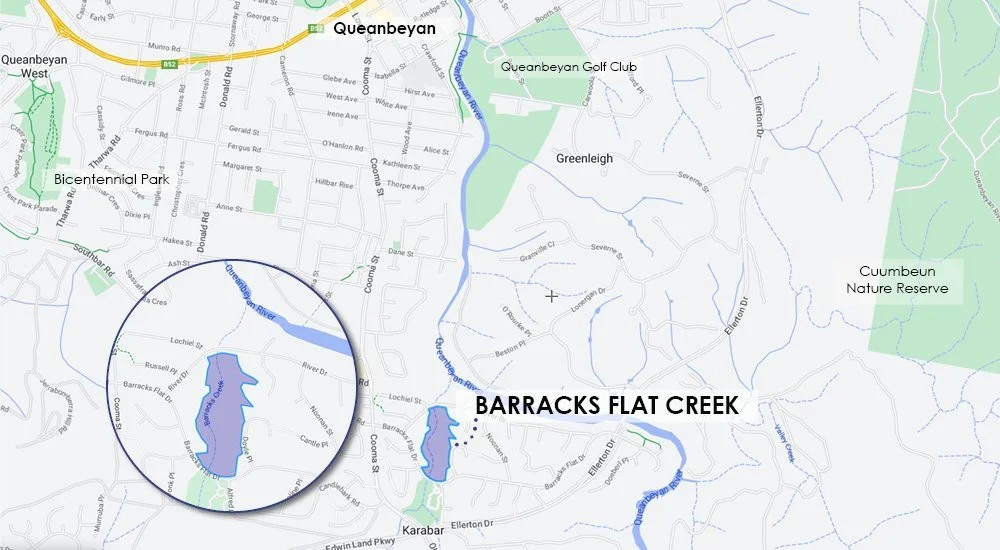
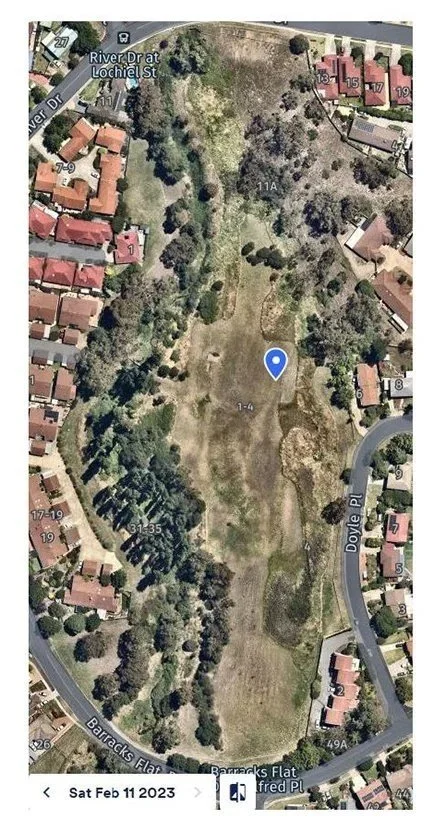
On Sunday 30th July 2023, Barracks Creek Reserve (now Fairlane Fauna and Flora Reserve) was the site of the National Tree Day event planned by Queanbeyan Landcare and QPRC. Hundreds of native trees and shrubs were planted along the eastern edge of Barracks Creek, in the area north of Barracks Creek Drive, across from the Barracks Flat Neighbourhood Park.
Queanbeyan Landcare and Queanbeyan Palerang Regional Council worked together to plant 400 native trees, shrubs and grasses for National Tree Day on 30 July in 2023.
Over 160 volunteers joined the planting which took place at Barracks Flat Creek in Karabar, over an area of 600 square metres (seen above). The site was chosen as it reinforces a critical vegetation and habitat link between surrounding natural areas, achieves many of the goals identified in the QPRC Urban Forest Cooling Strategy, provides habitat and stabilisation along Barracks Creek, and has potential for extension including possible future National Tree Day plantings.
Members of Queanbeyan Landcare took account of the recent history of the site to develop a planting plan (Initial plan, history, and other observations). They viewed aerial images of the area from 2010 to 2023 and searched QPRC archives to identify what plantings had previously occurred on the site and who had been involved.
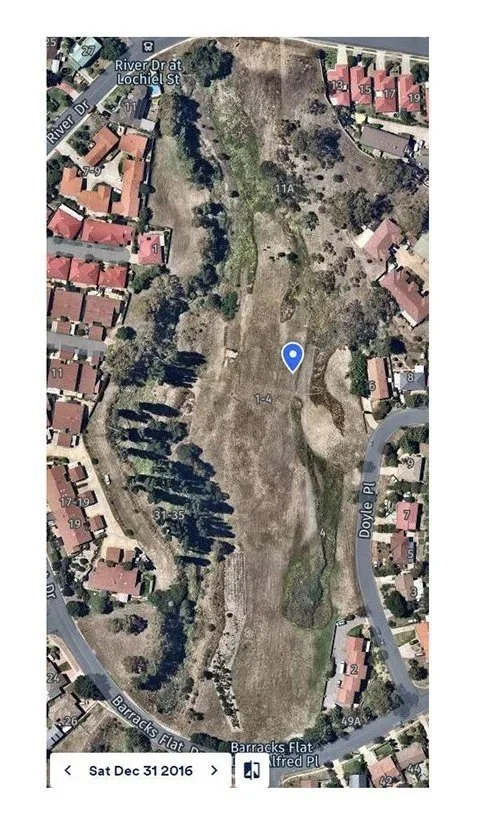
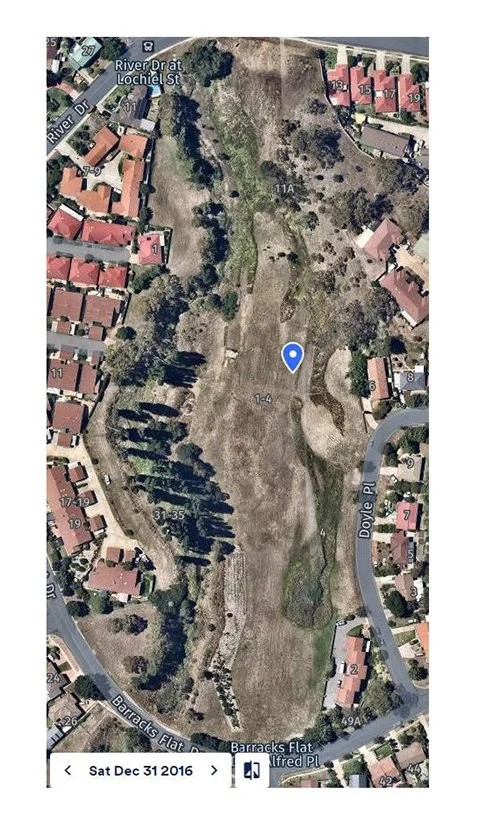
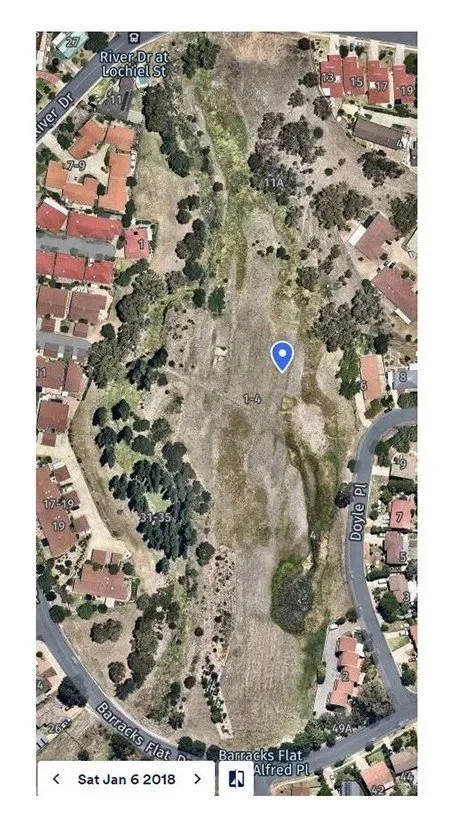
The final species list was determined with reference to publications from QPRC, Molonglo Conservation Group, the local knowledge of our members and an understanding of the plants most suitable to a warming climate. Some 400 plants were planted, staked and mulched, including several local Eucalypt species, along with wattles, tea-tree and other native shrubs, and a range of smaller shrubs and grasses. Many community groups and families from Queanbeyan and Canberra pitched in along with Queanbeyan Landcare members and QPRC staff.
References:
QPRC Urban Forest Cooling Strategy December 2021
QPRC Climate Change vulnerability of Urban Trees
Photos courtesy of Michele Dovers and Bill Hall
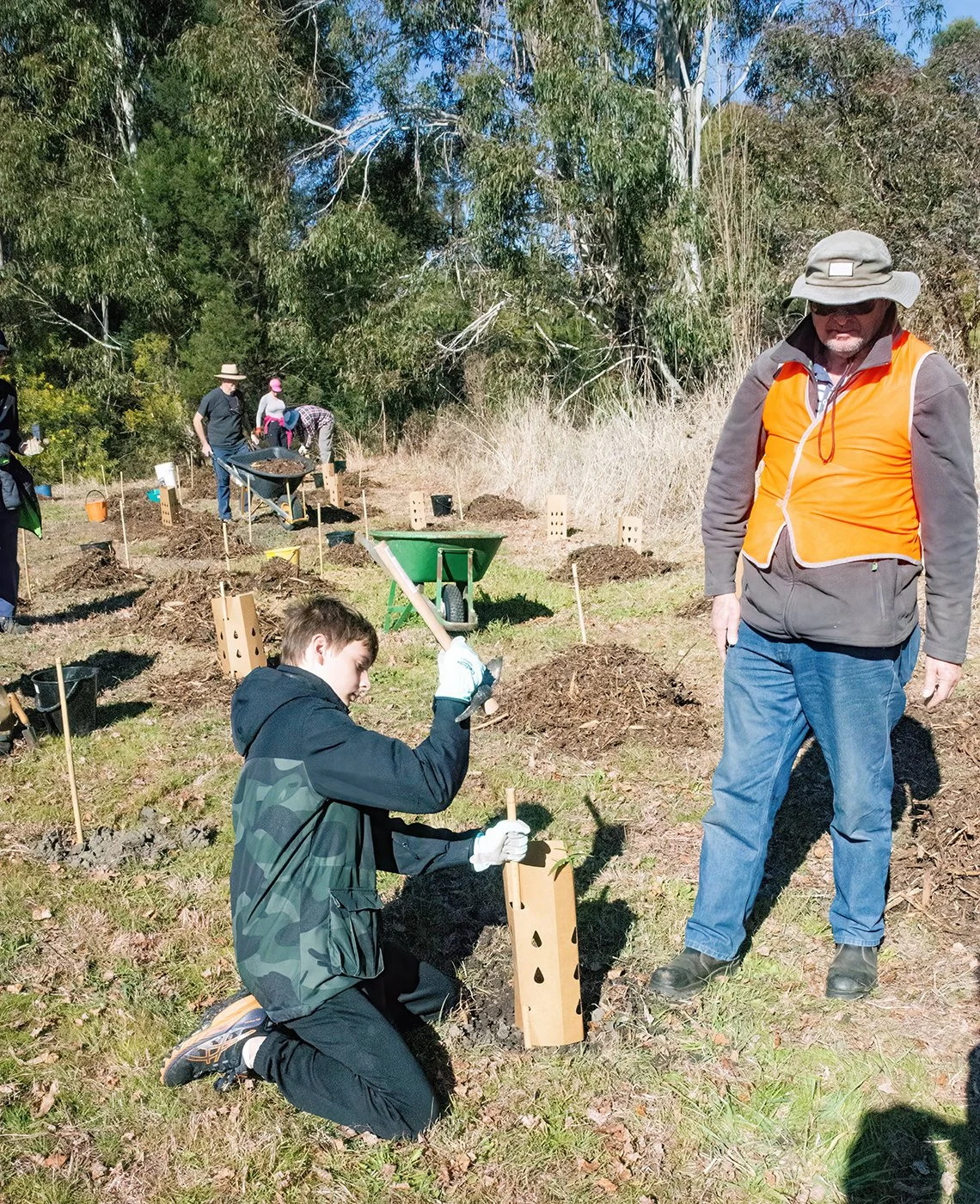
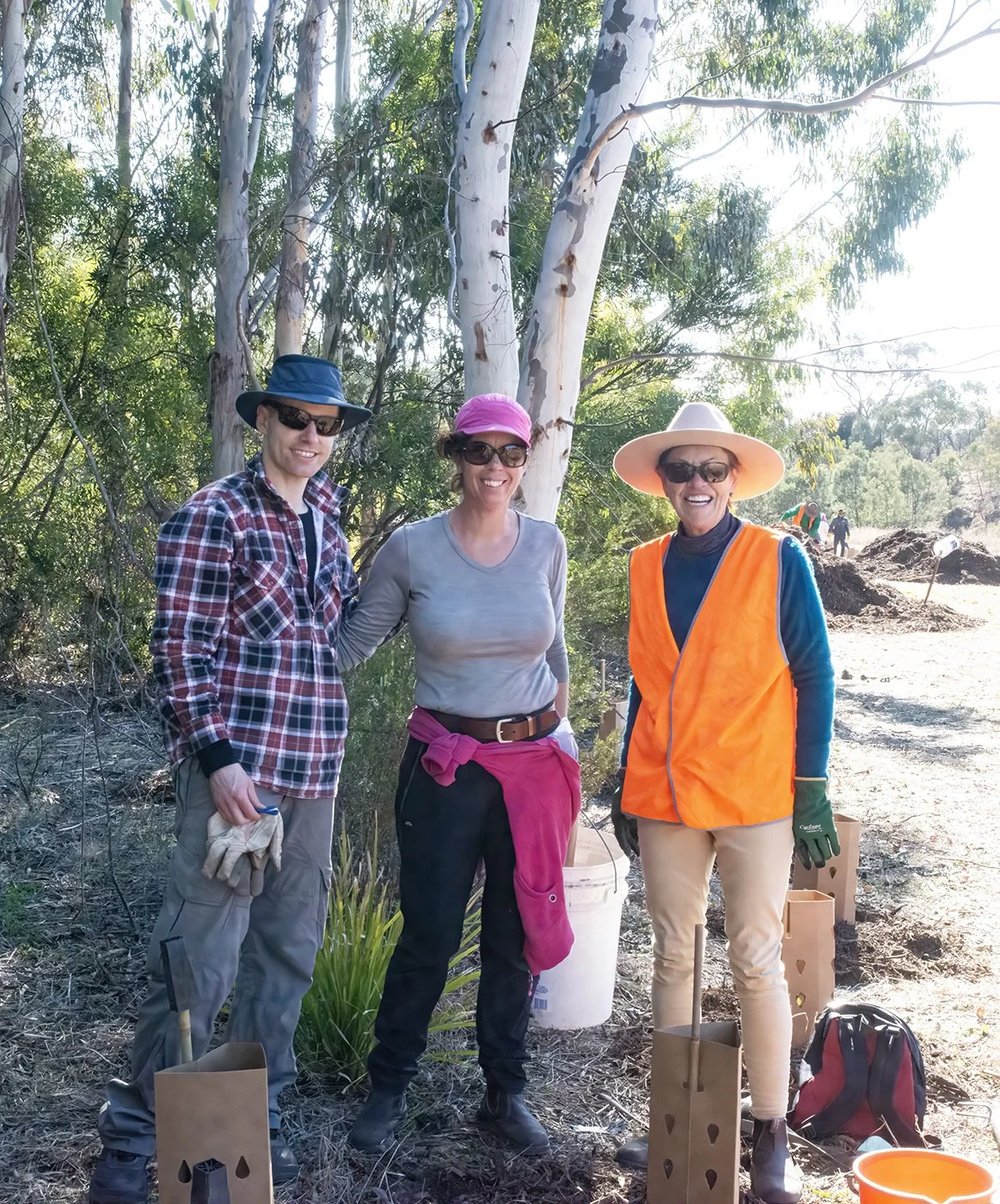
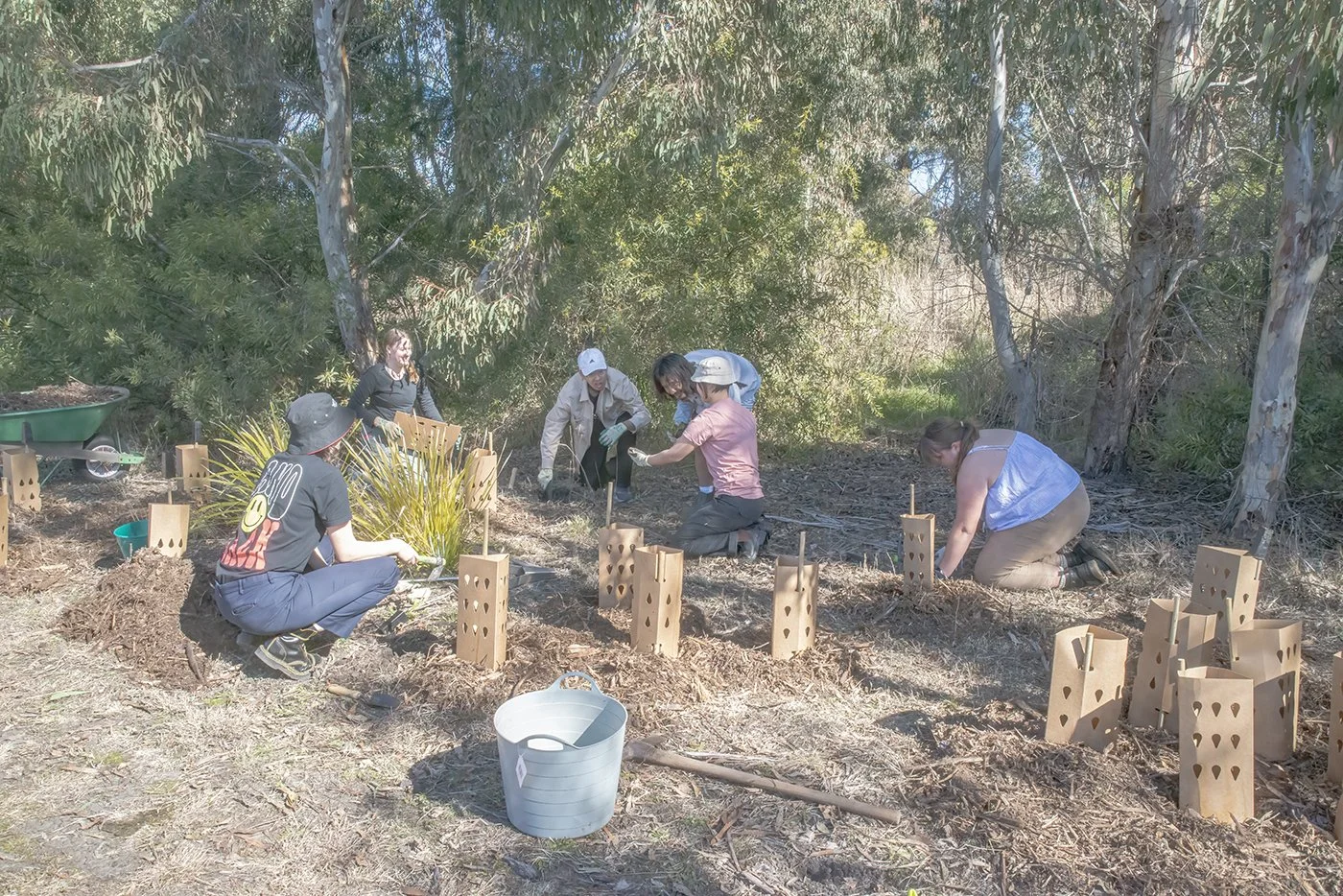
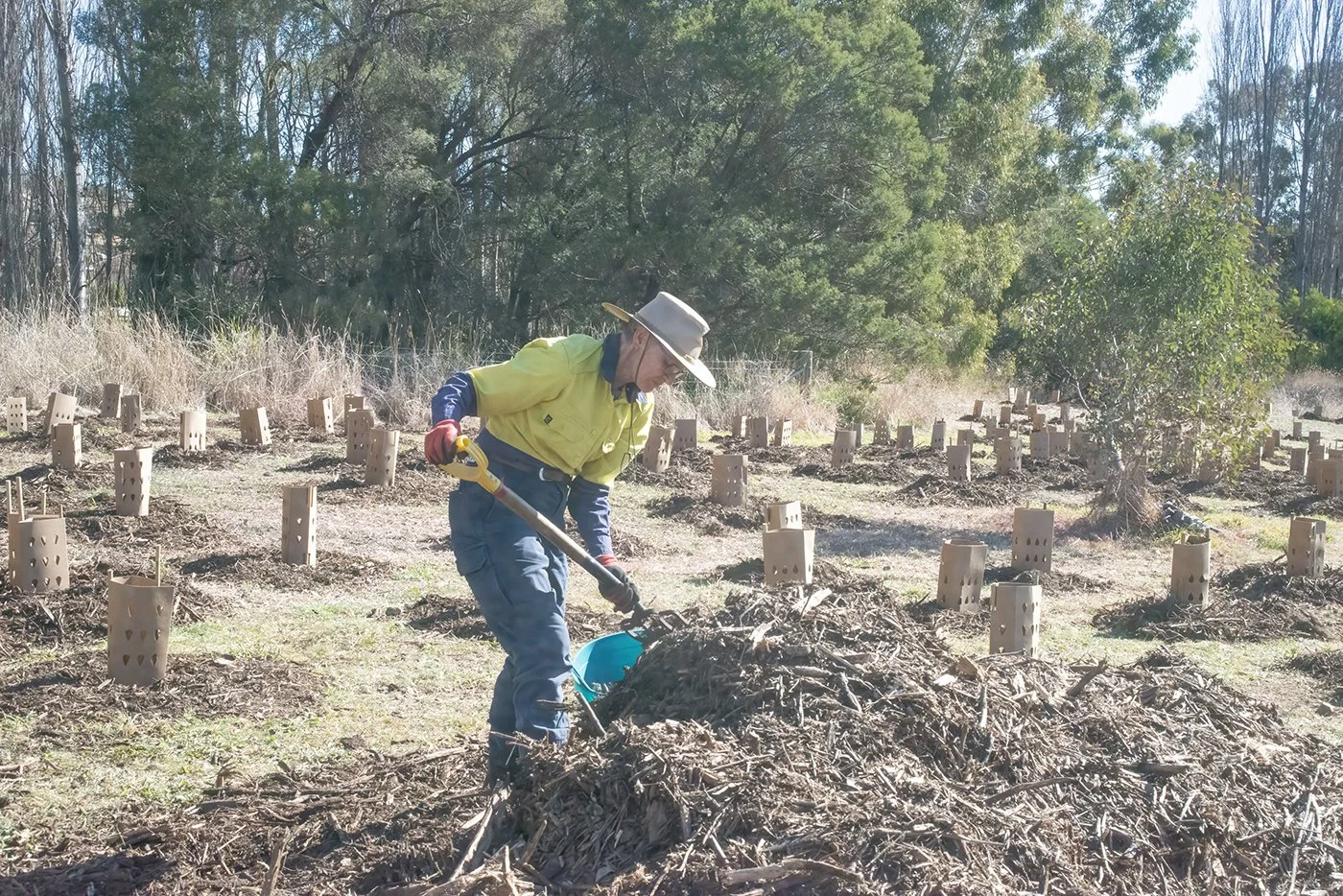
2022 National Tree Day (Old Riverside Cemetery)
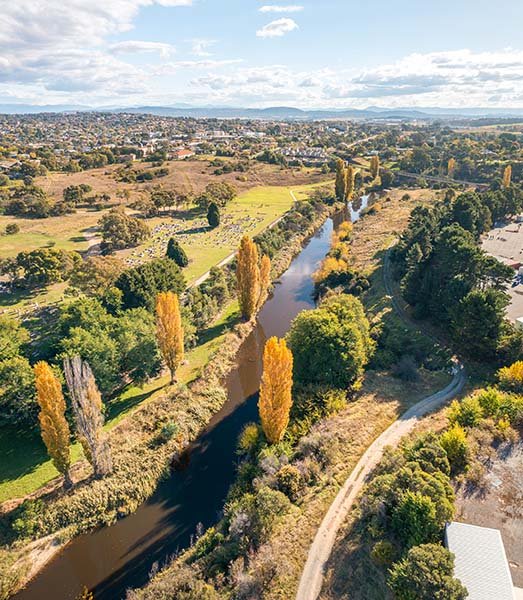
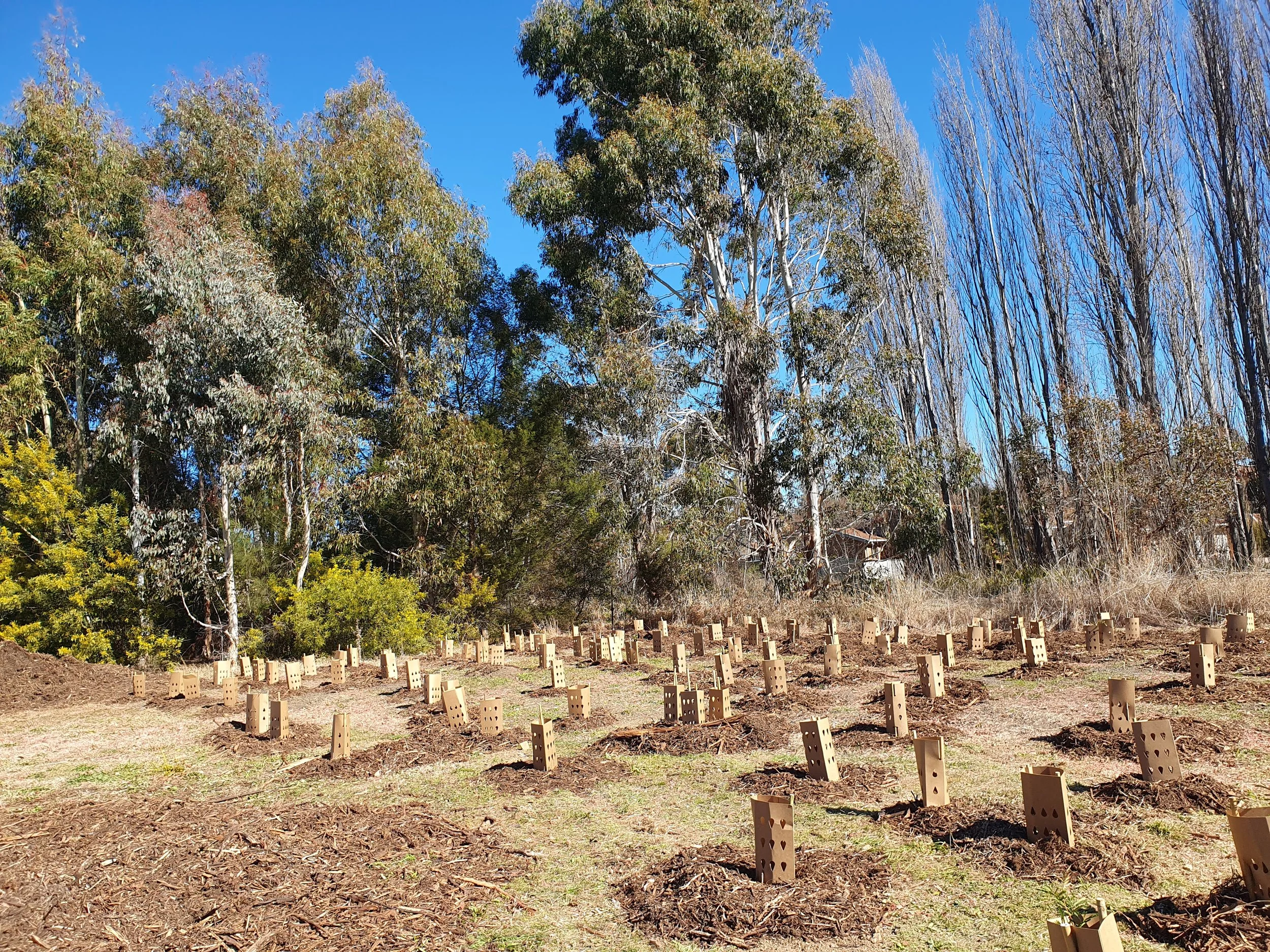
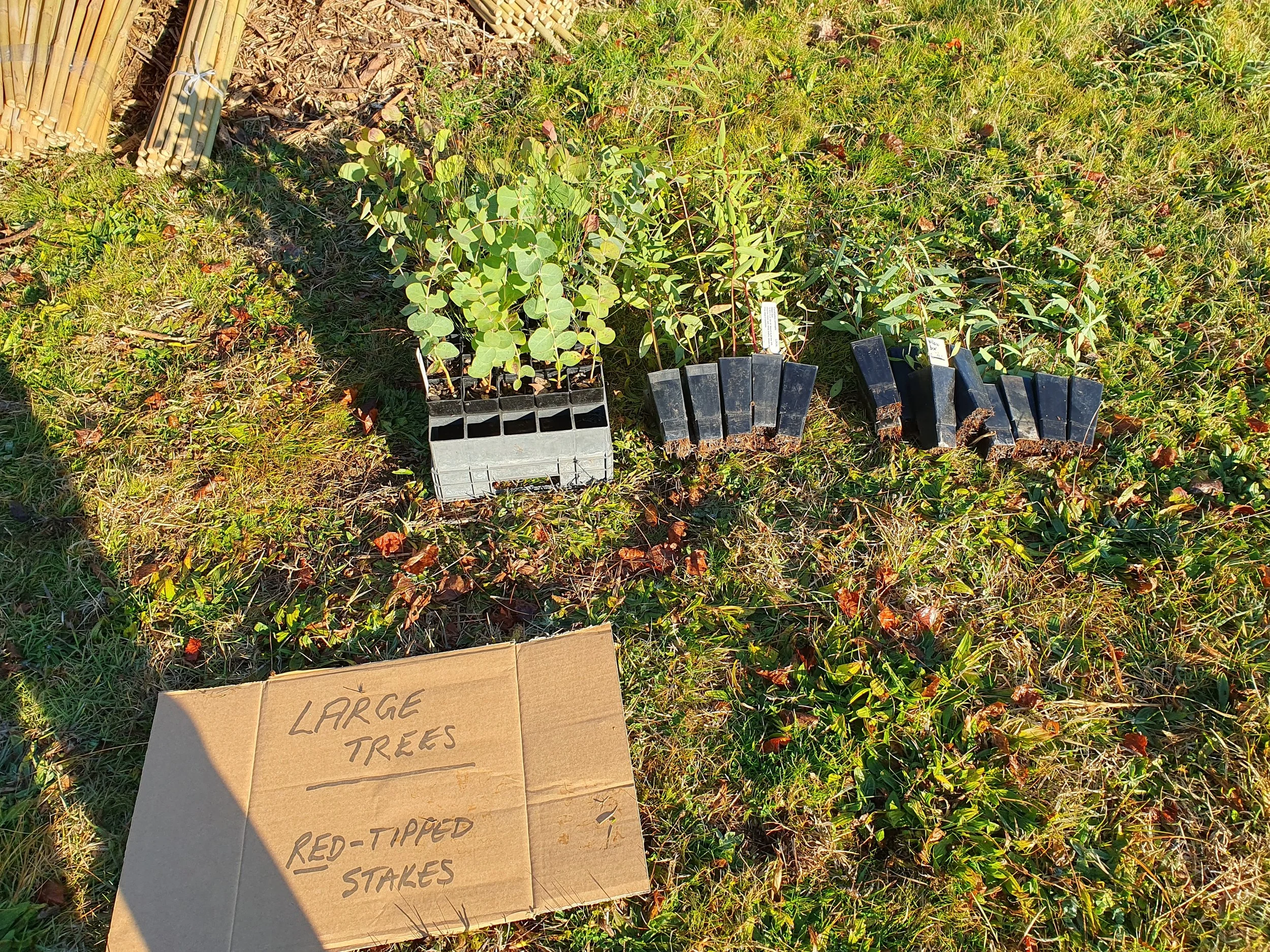
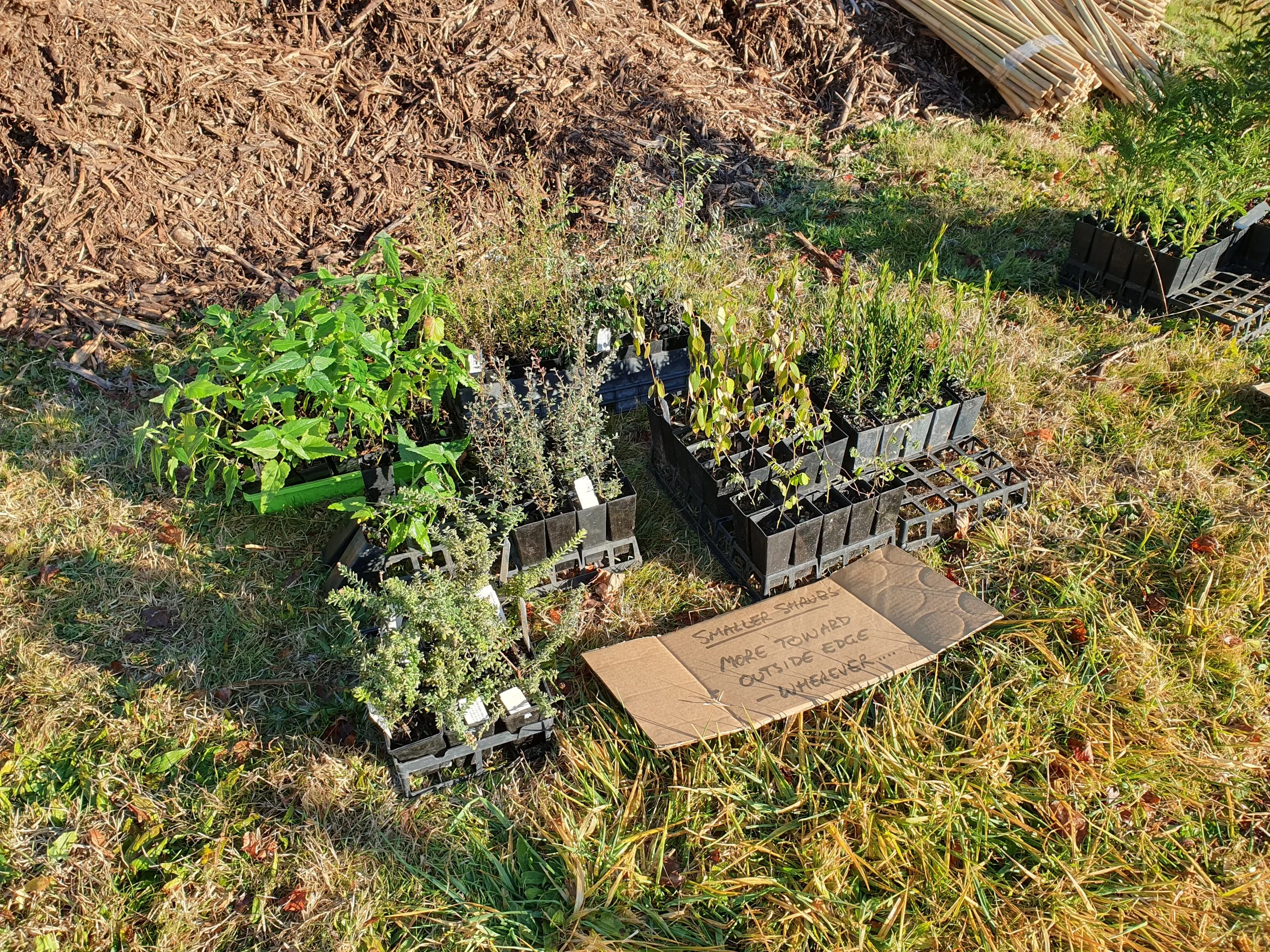
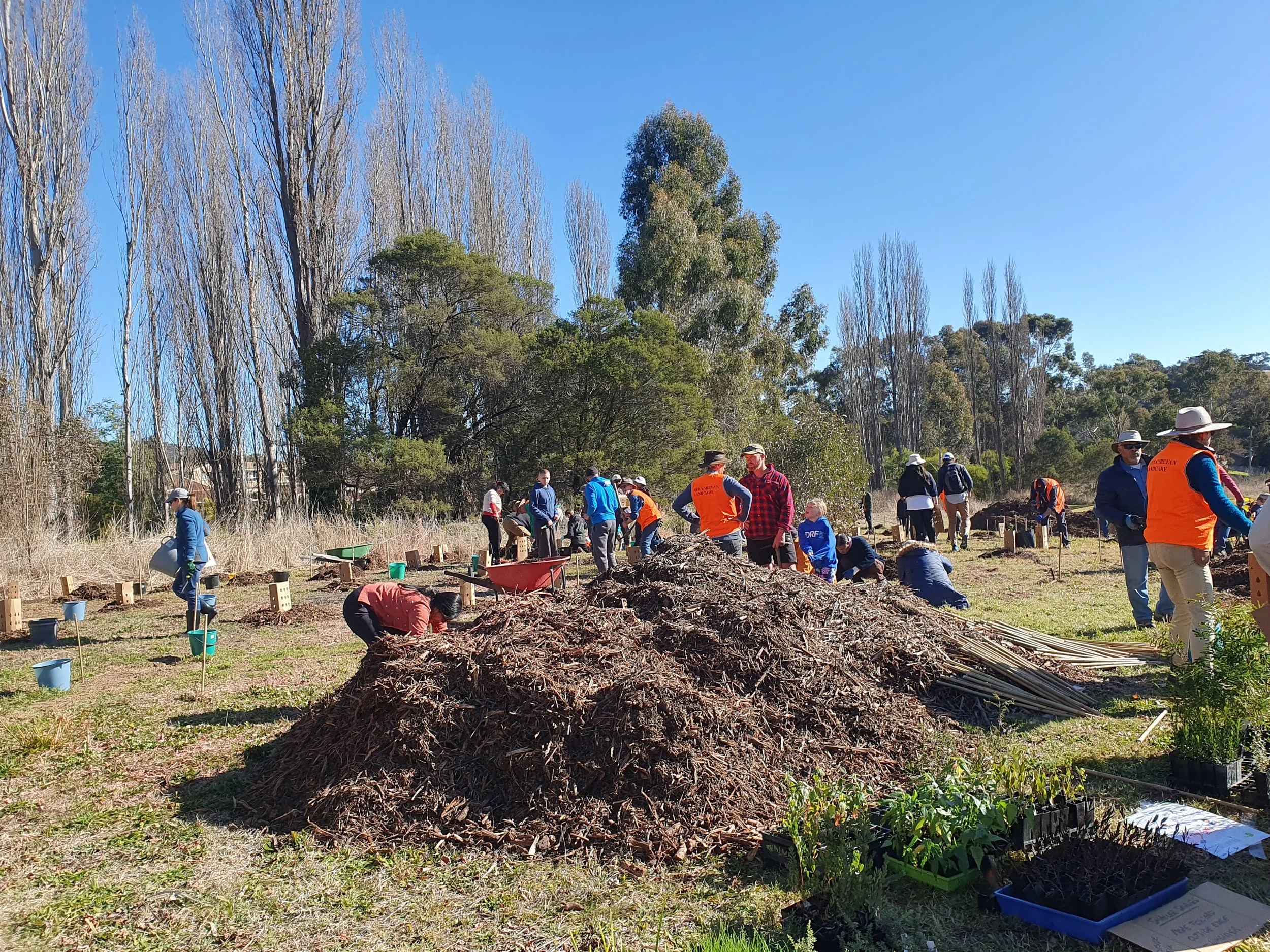
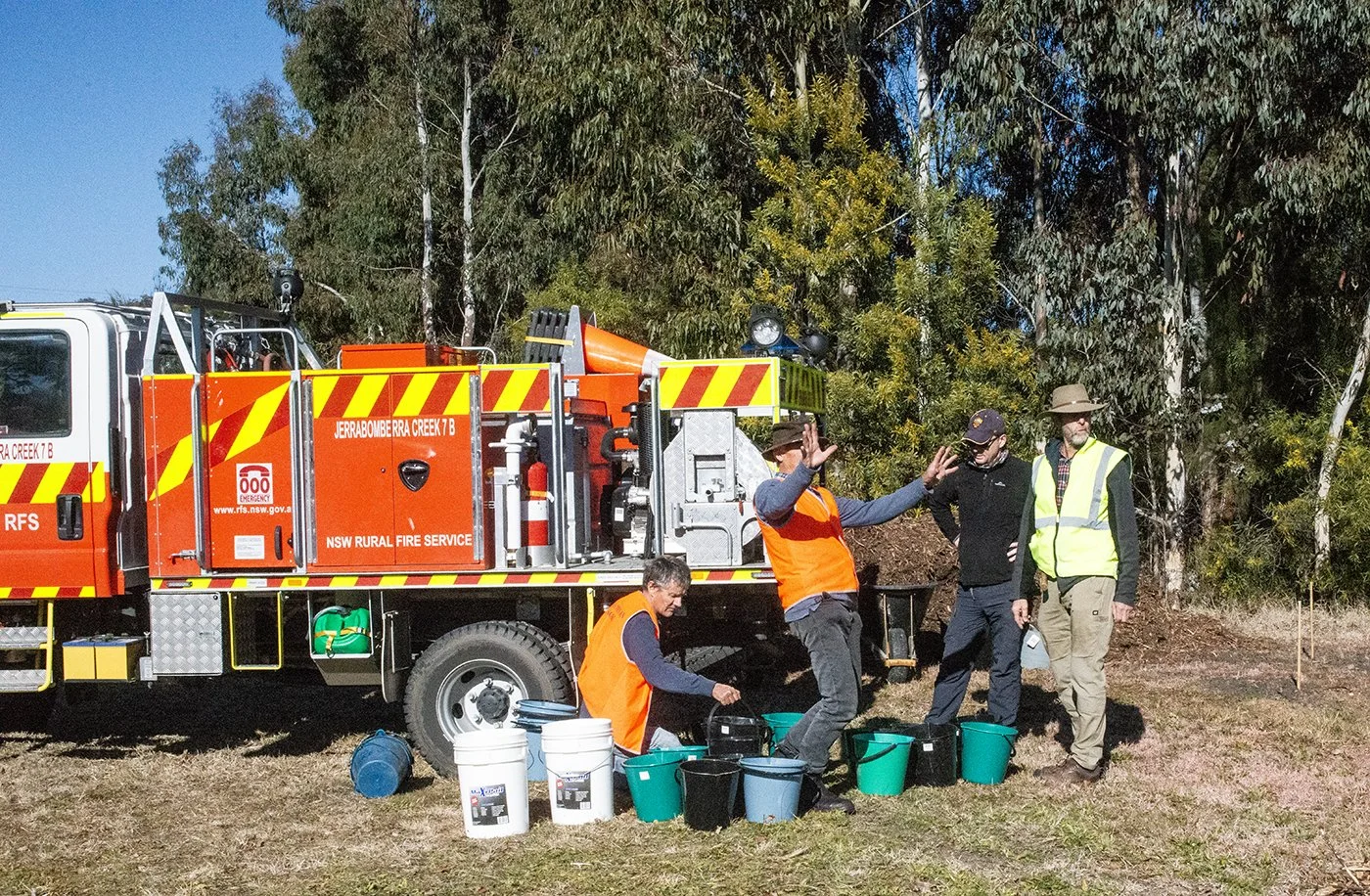
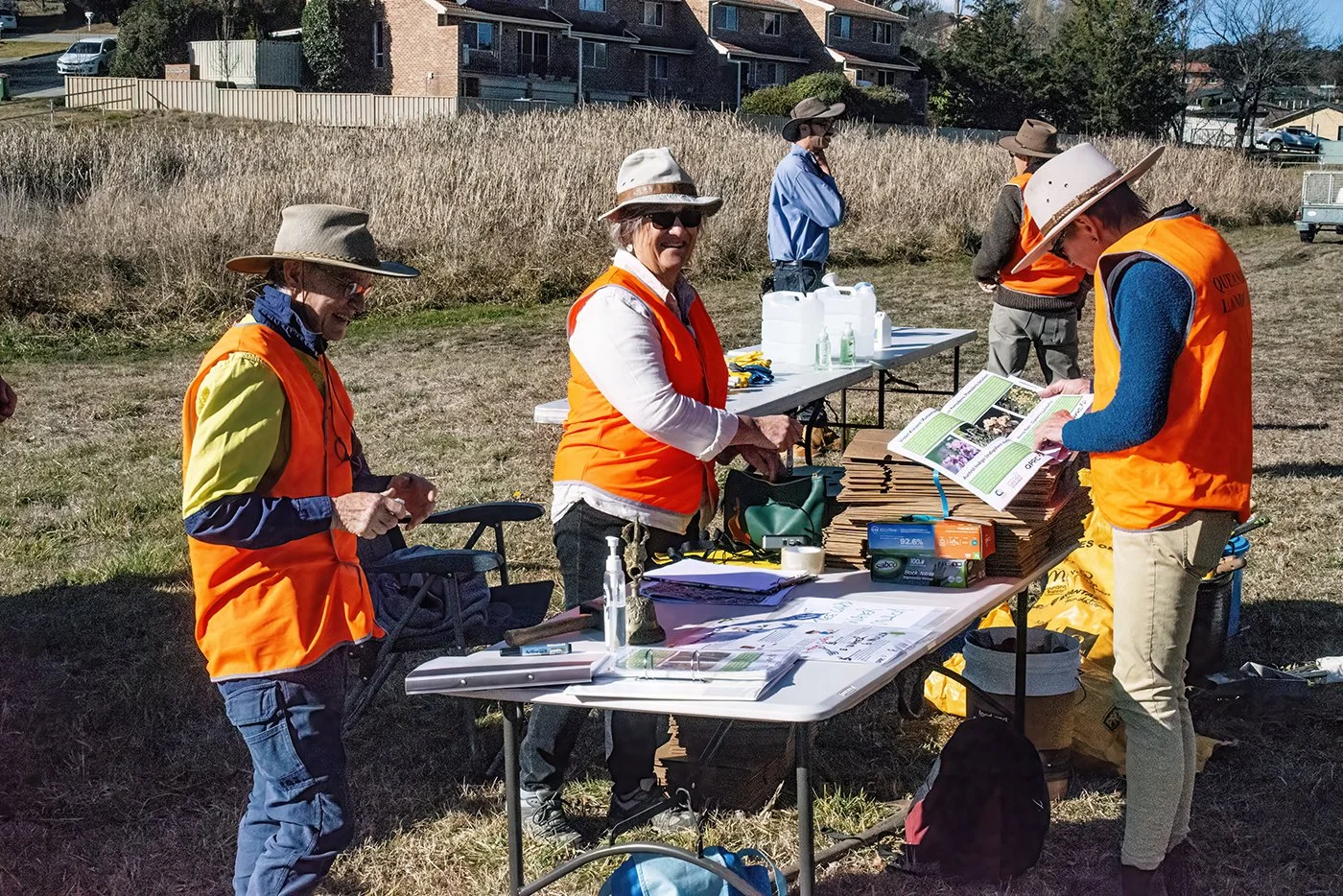
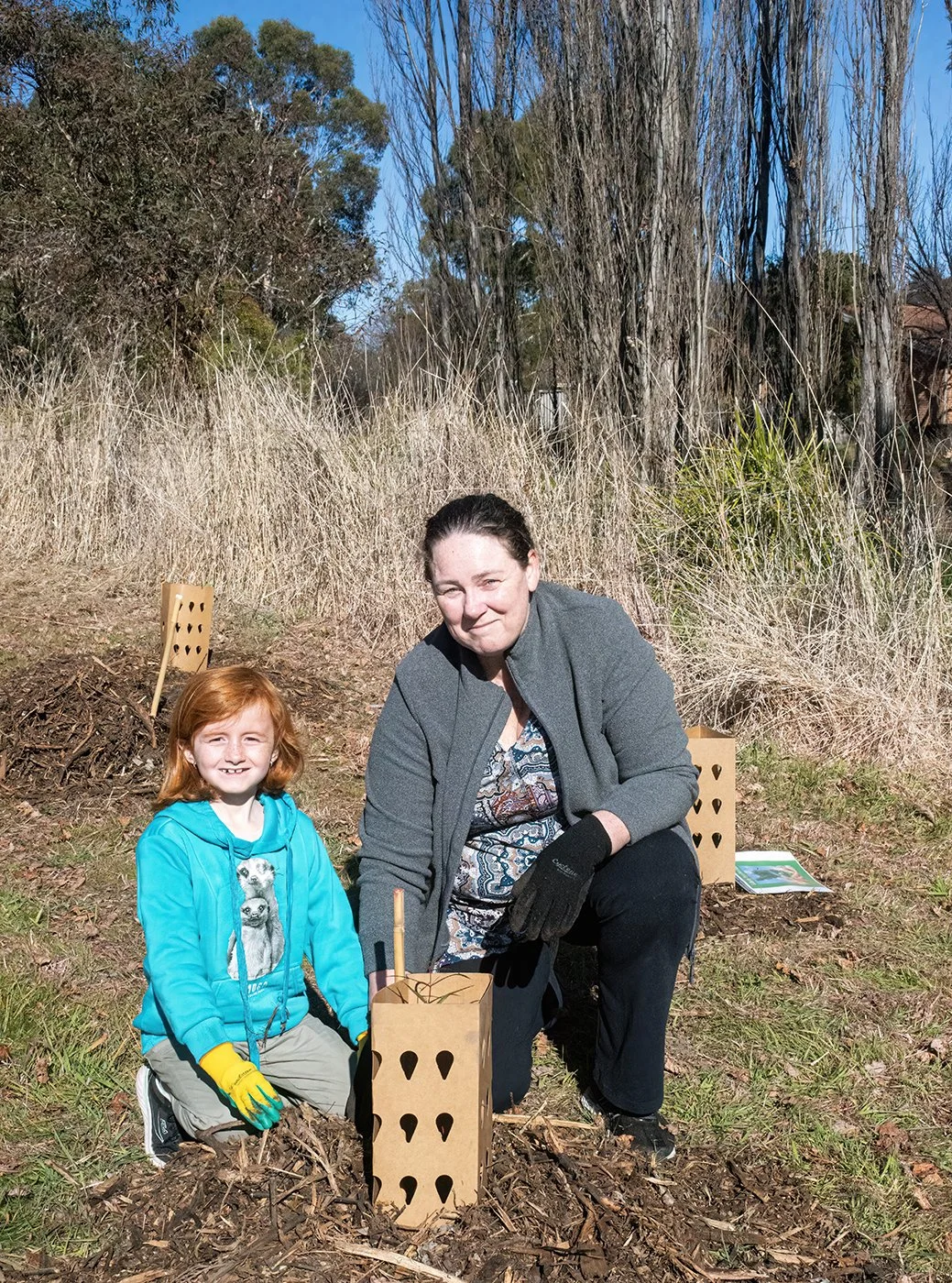
In 2022 Queanbeyan Landcare and over 100 volunteers worked closely with QPRC on an extensive planting along the Queanbeyan River that aimed to supplement, restore and rejuvenate previous plantings in this area.
Queanbeyn Landcare members Tom Baker, Ian Johnsson, Michele Dovers and a number of others were responsible for much of the planning including site preparation, plant selection and demonstration of planting technique. Nine planting areas were identified. The areas were based on the 2019 plantings and are separated by mown grassed areas.
This area known as the Old Riverside Cemetery and Our History and Achievements page includes details of this event including plant lists and many images.
Photos courtesy of Bill Hall and Michele Dovers
2021 National Tree Day (Fernleigh Park)
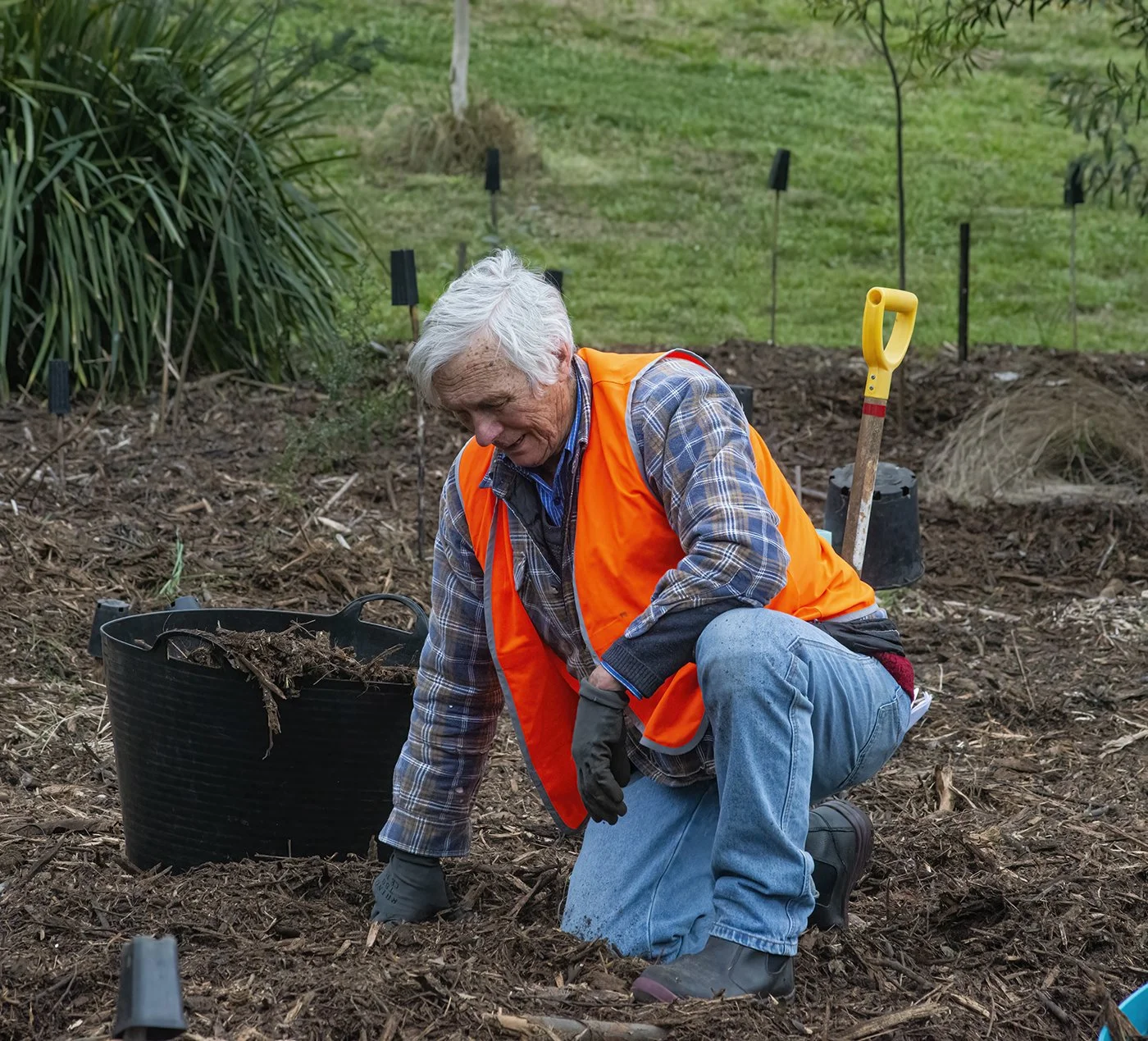
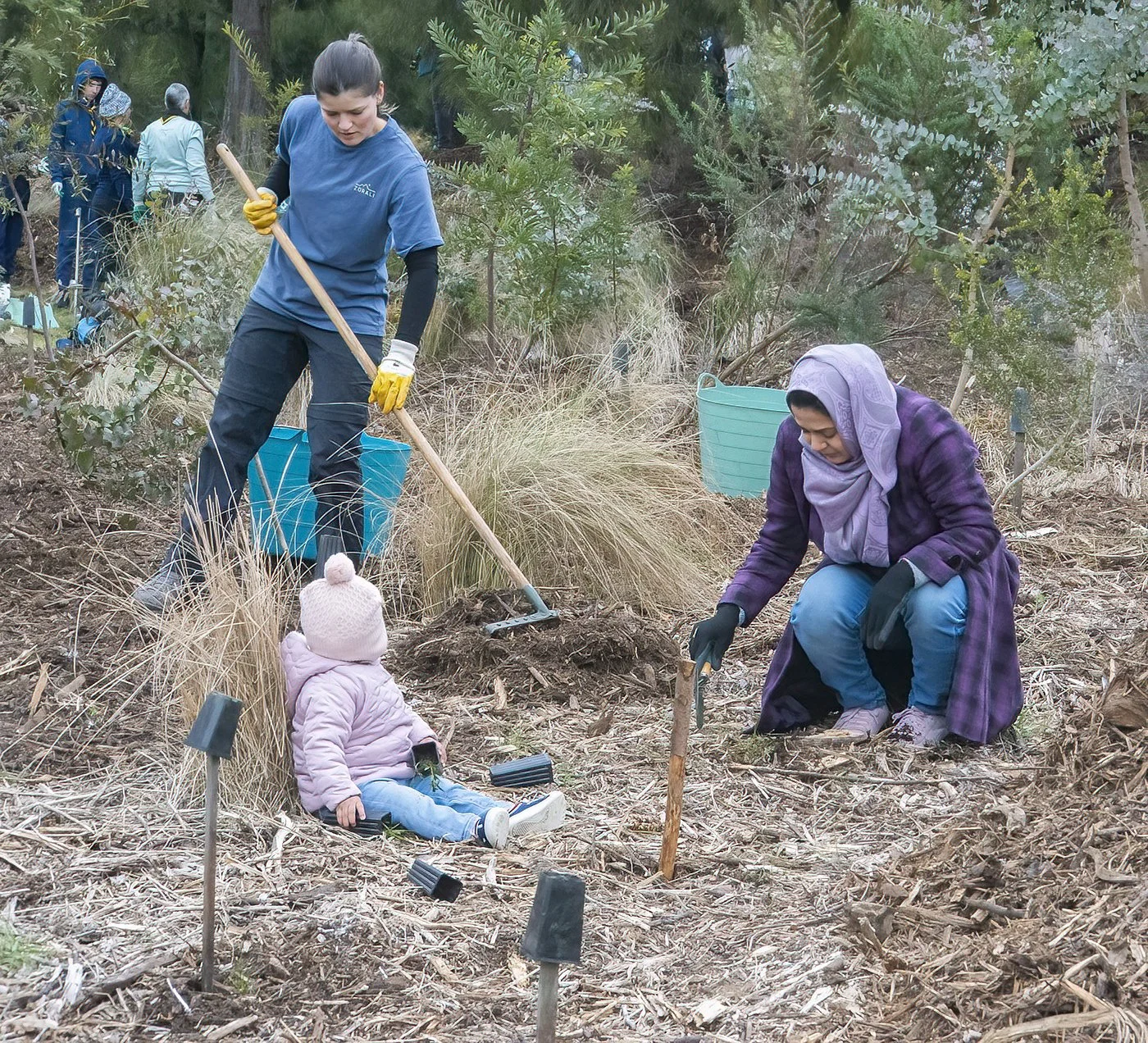
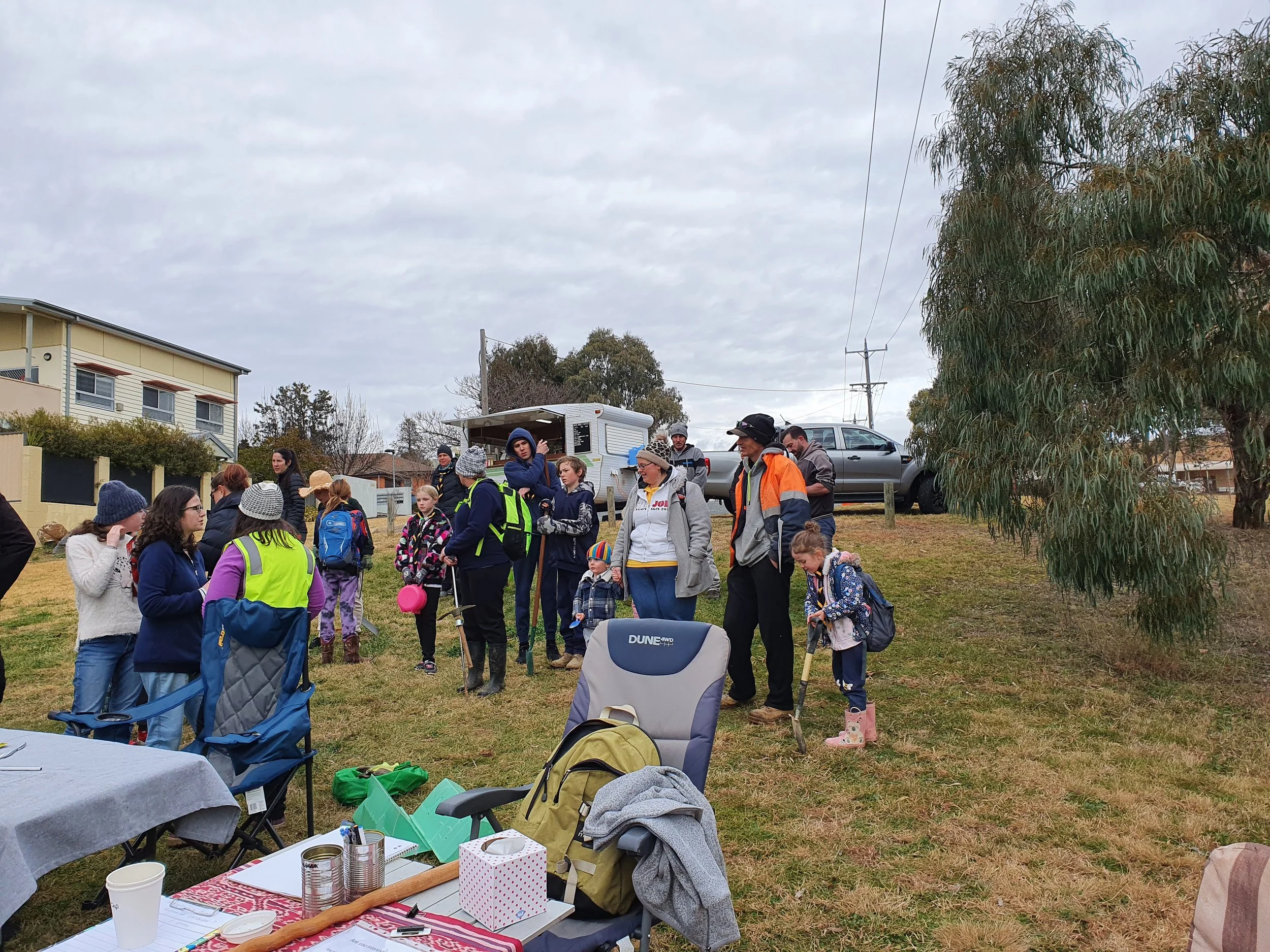
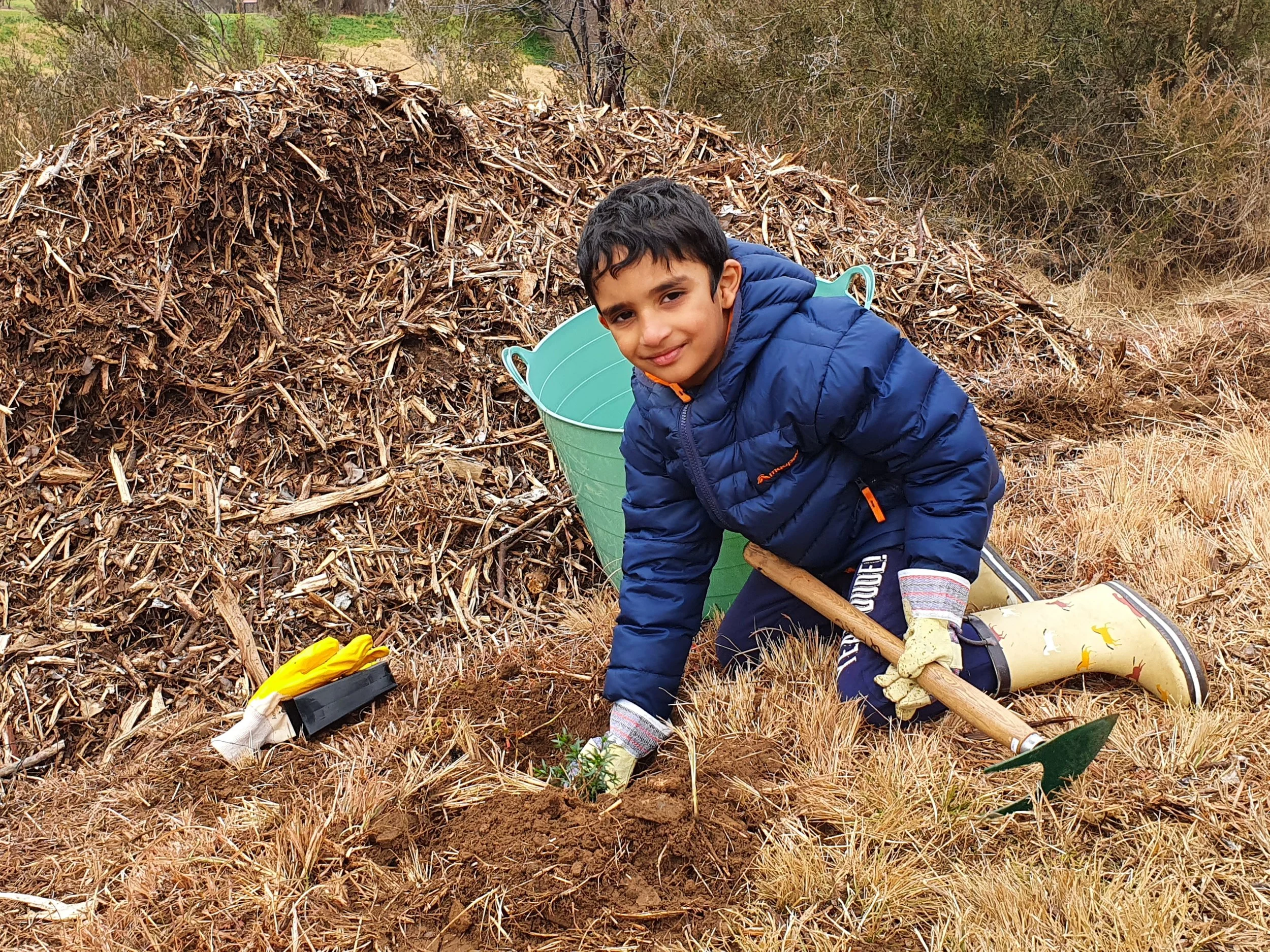
In 2021 over 65 residents from across Queanbeyan and Canberra planted 650 trees in just over two hours at Fernleigh Park.
More images from our National Tree Days below