

Bicentennial Park
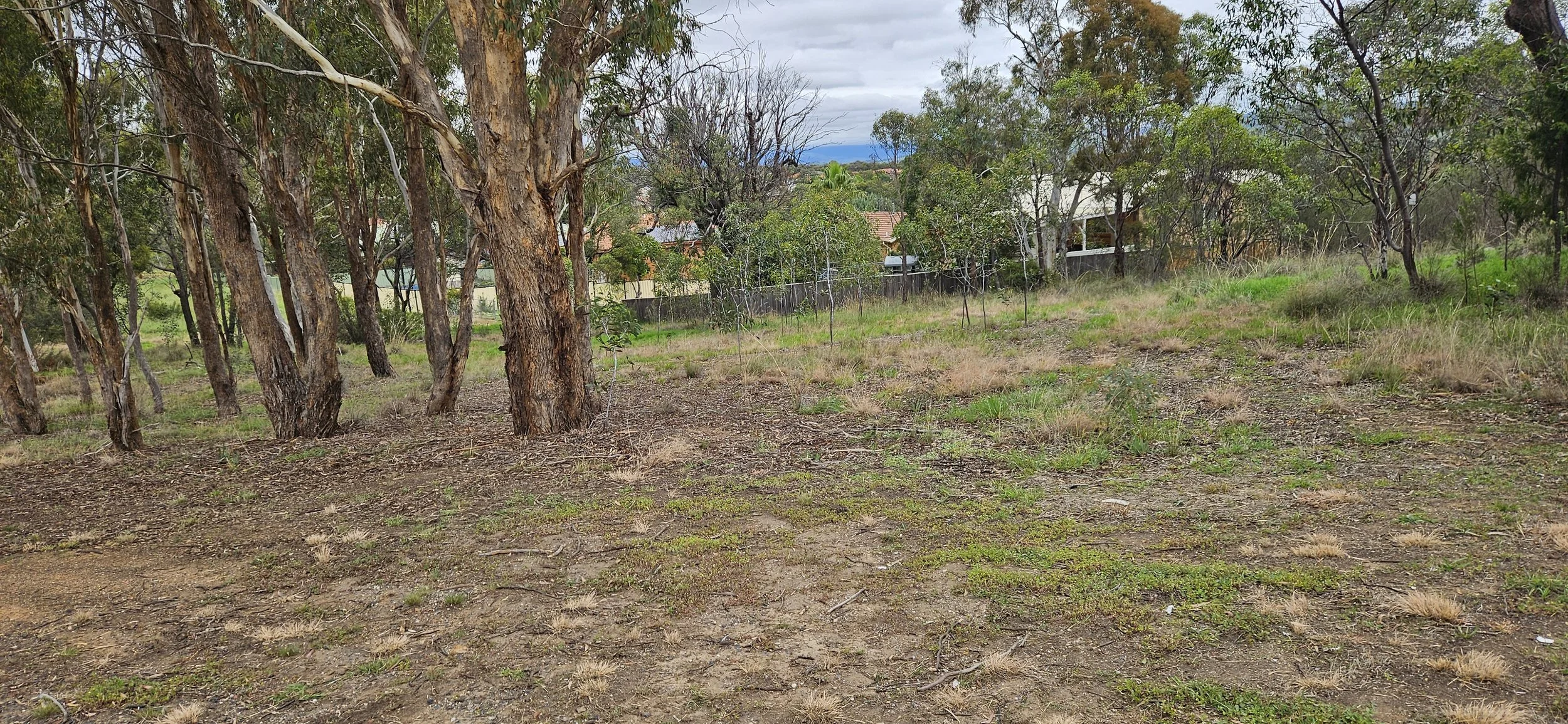
Queanbeyan Landcare has been involved with caring for Bicentennial Park since 1995. The current friends group, which emerged in 2014, has a strong commitment to letting natural plant regeneration take place at the park, and concentrates on weeding and rubbish removal.
The group has actively collaborated with Council on erosion control, mowing and spraying regimes, path construction and maintenance, and landscaping.
2026
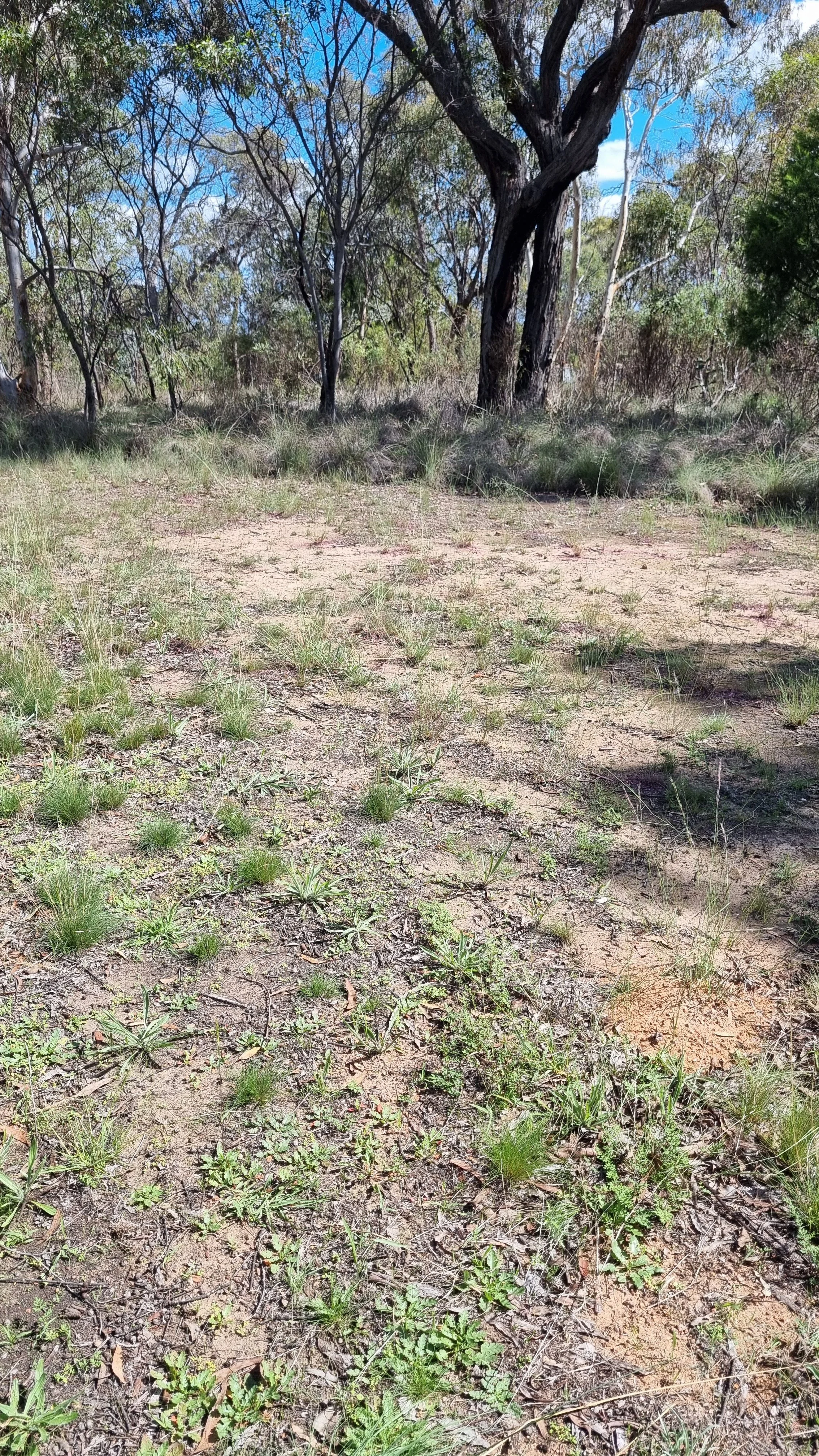
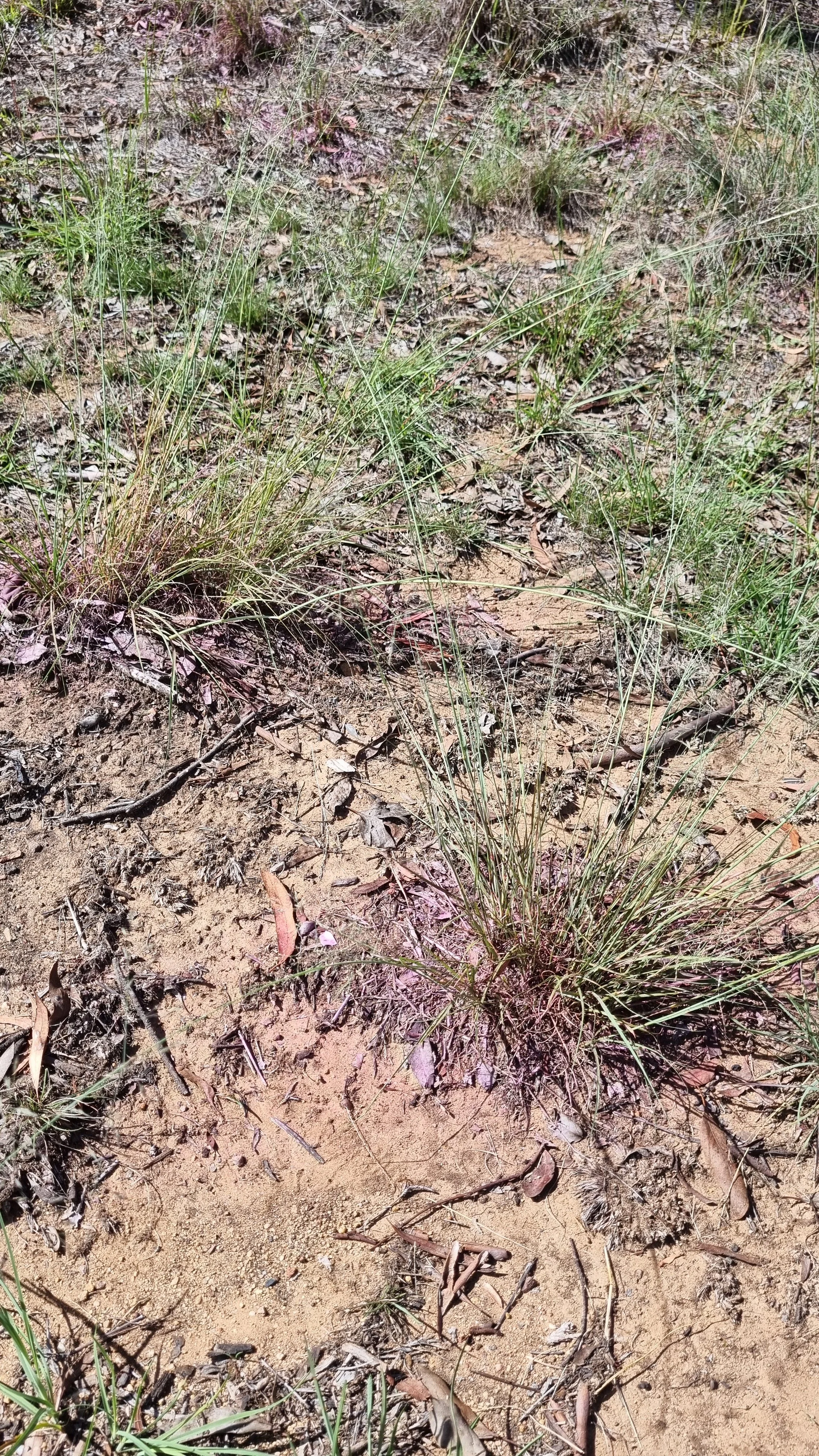
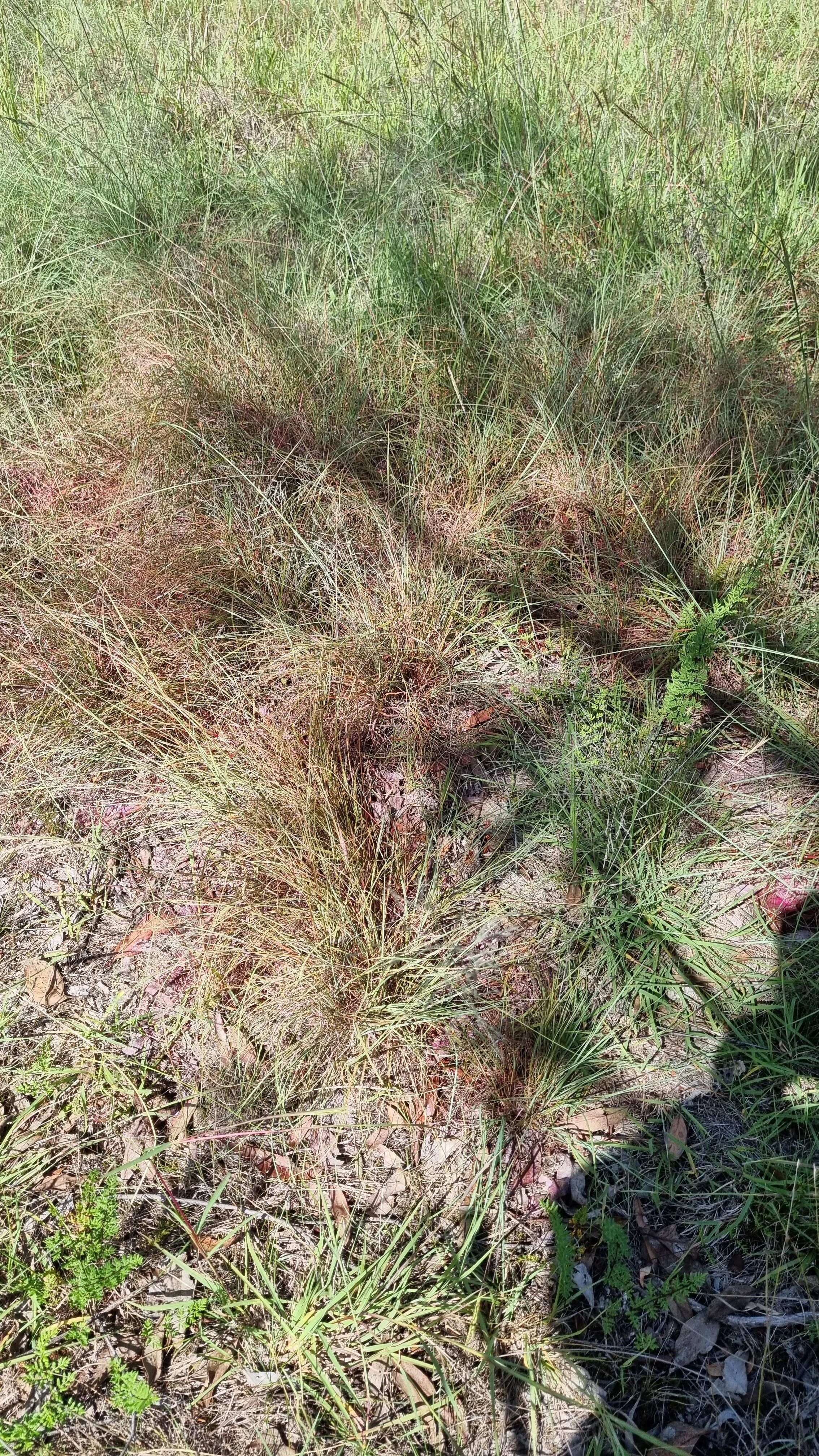
Sandra has continued to spray the African Love Grass that is found across the park. She is fully accredited and uses the chemical made available to her by QPRC. Our team is always attentive to the conditions and Sandra is having some success in eradicating this weed.
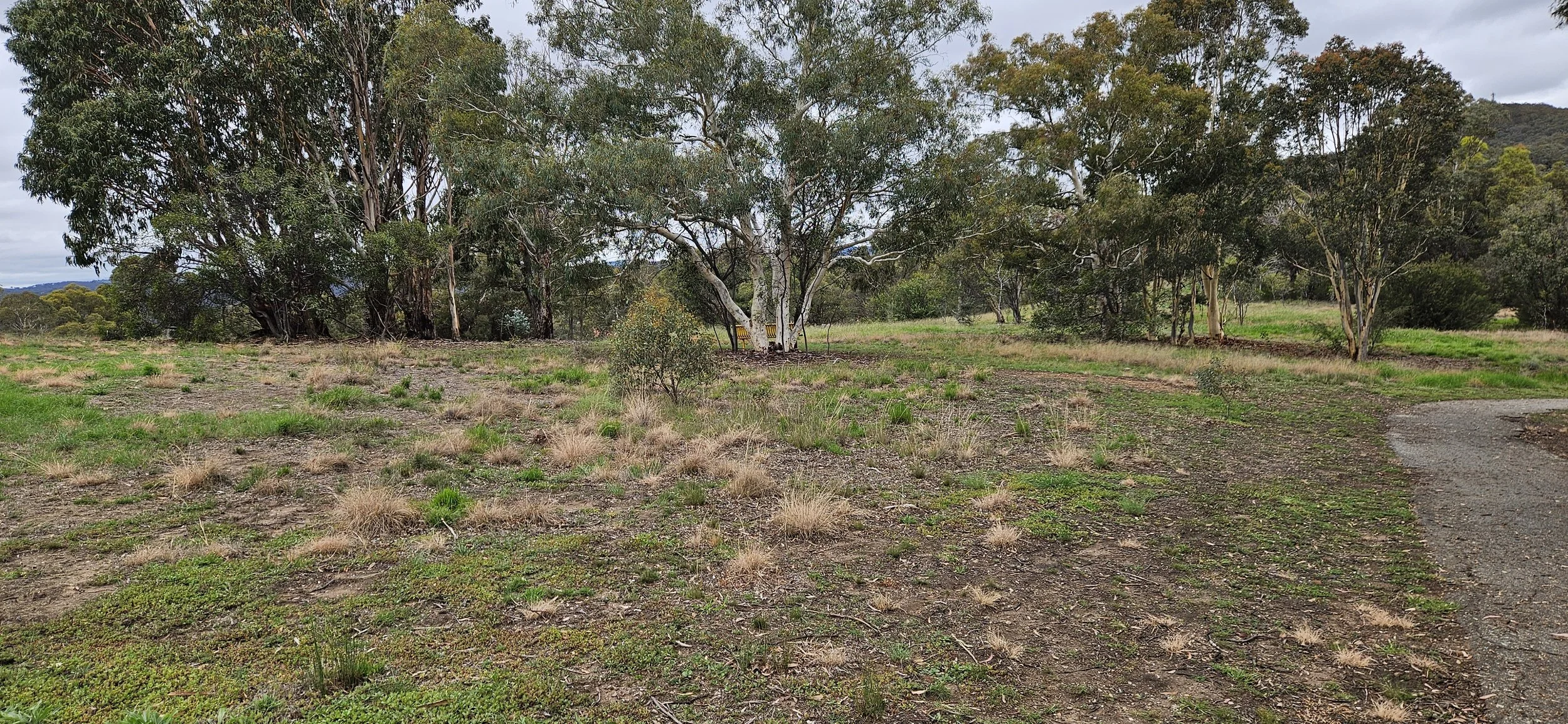
Two areas in the park have been selected for the 2026 National Tree Day event. Helen, Paul and Sandra have been in communication with QPRC about what plants will be best suited and the site preparation needed.
2025
Sandra continued watering, weeding, spraying, mulching and litter collecting. She planted seedlings in the native garden and transplanted native grasses Helen has grown from seed.
On 23 March the National Eucalypt Day walk was held at the Park which was a great success. As well as learning about the Eucalypts, we talked about the role of Mistletoe, a positive parasite found across mainland Australia. There are nearly 100 varieties of mistletoe across Australia that come in all different shapes and sizes. Read an ABC news item about Mistletoe here.
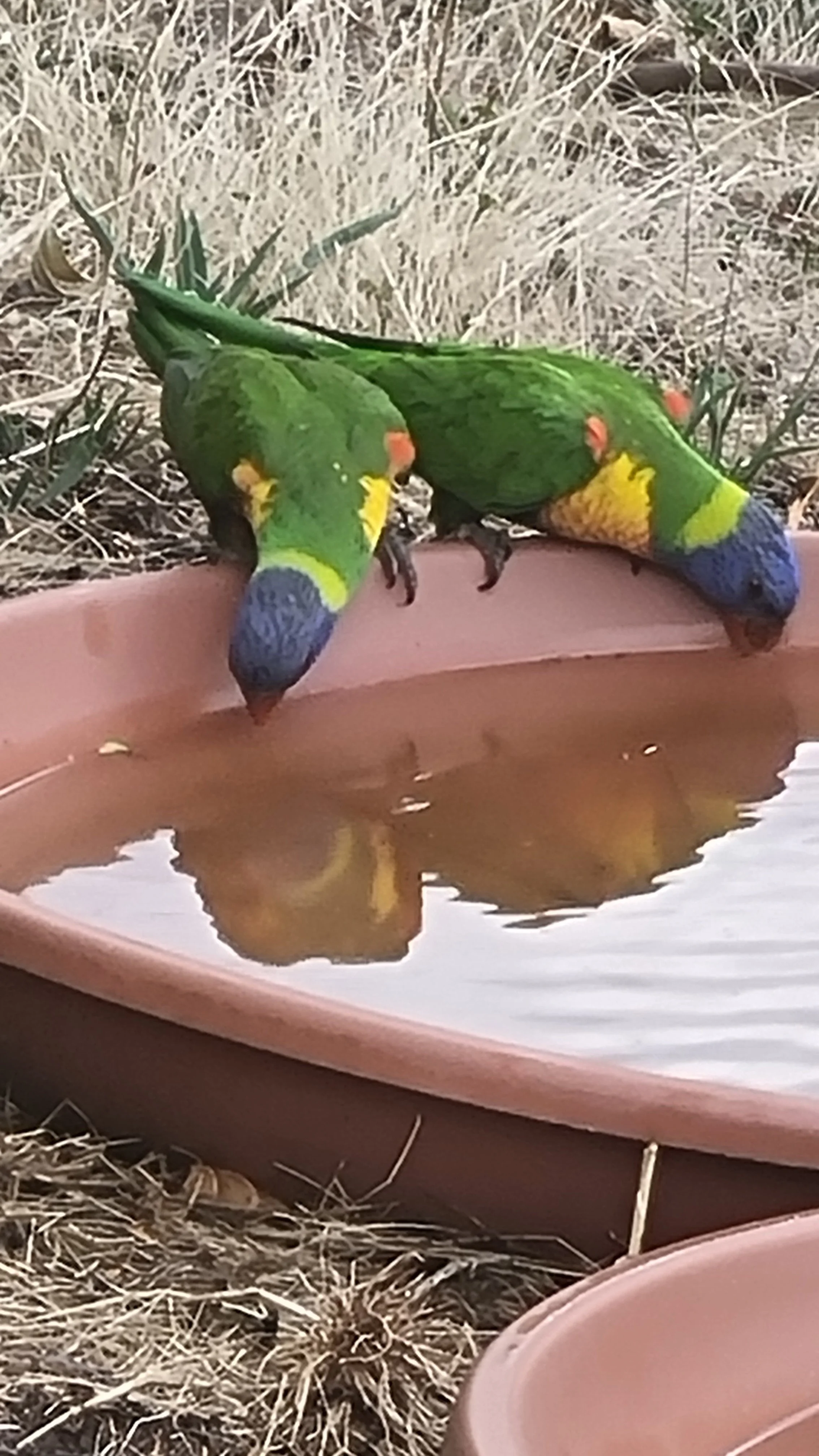
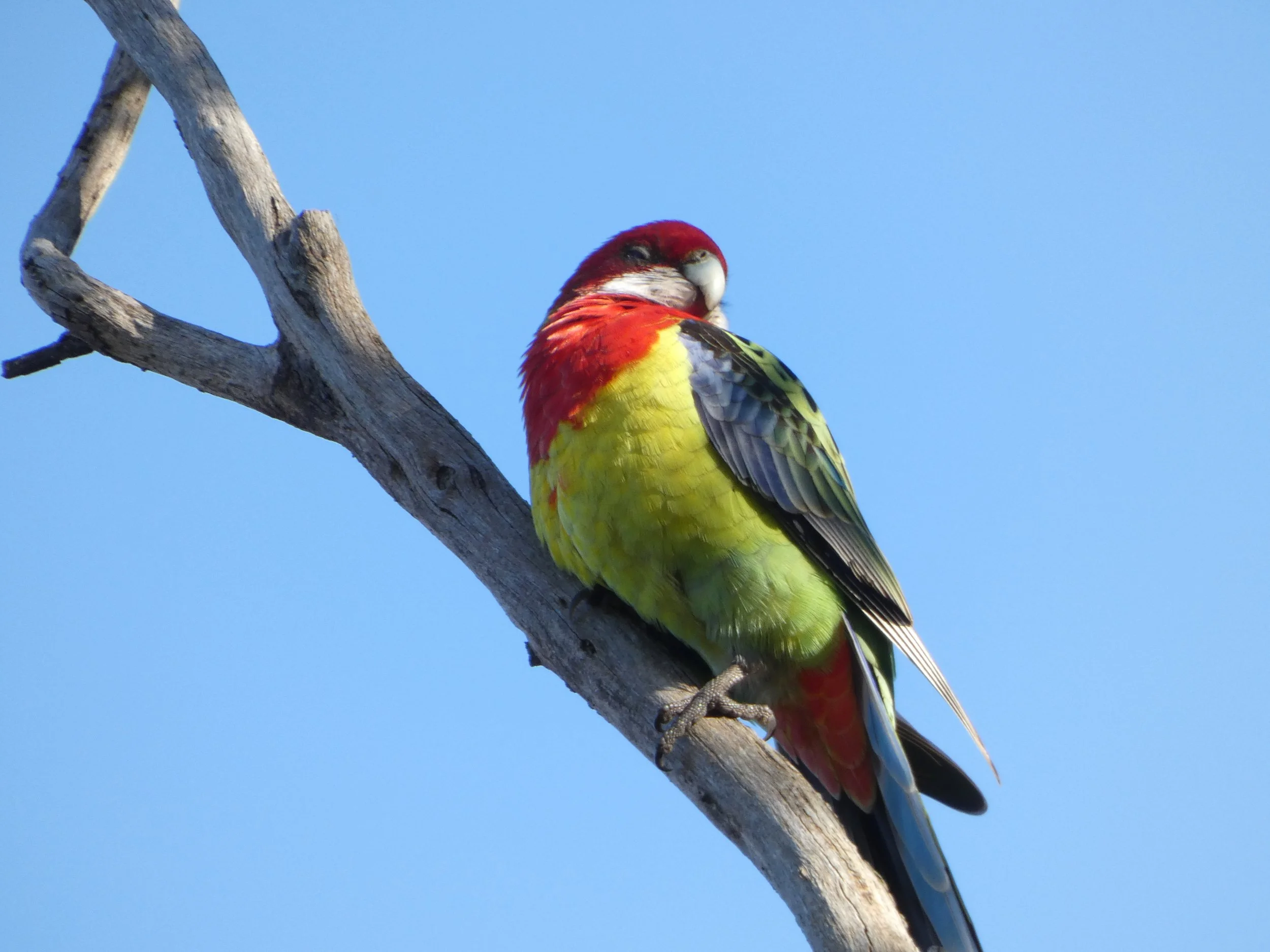
We also spotted 24 species of birds, mostly natives including a family of Gang Gangs. See the eBird checklist here for details.
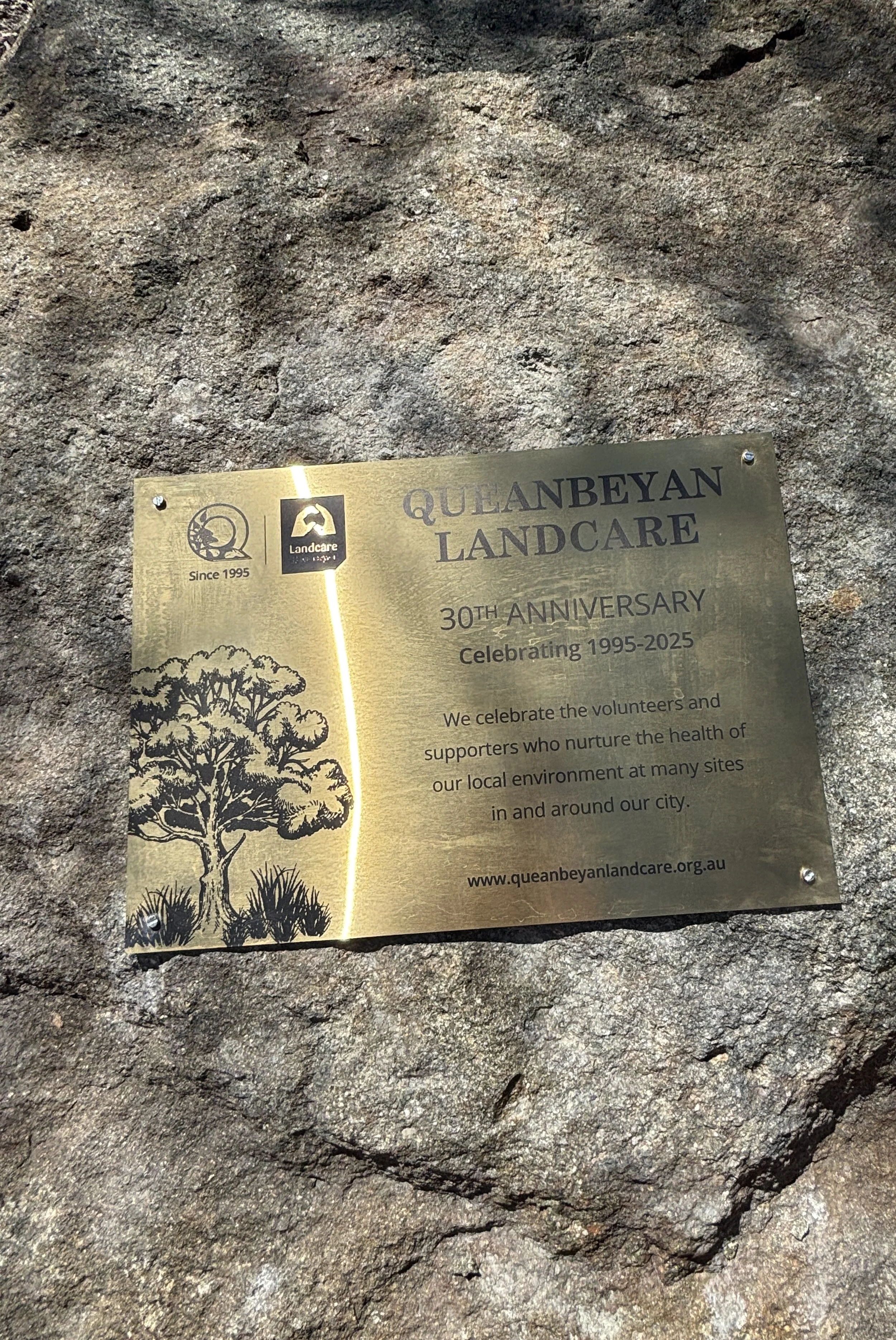
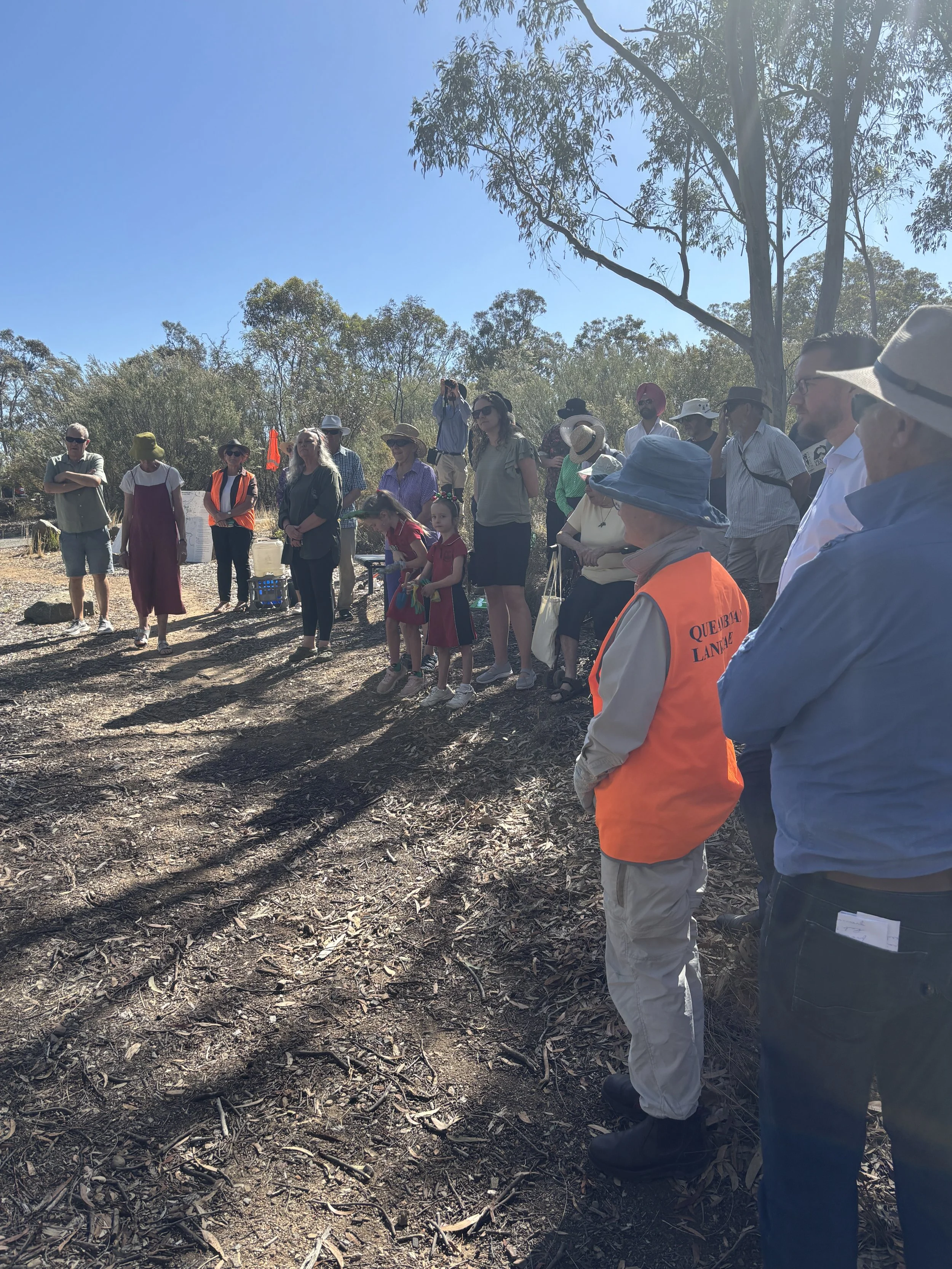
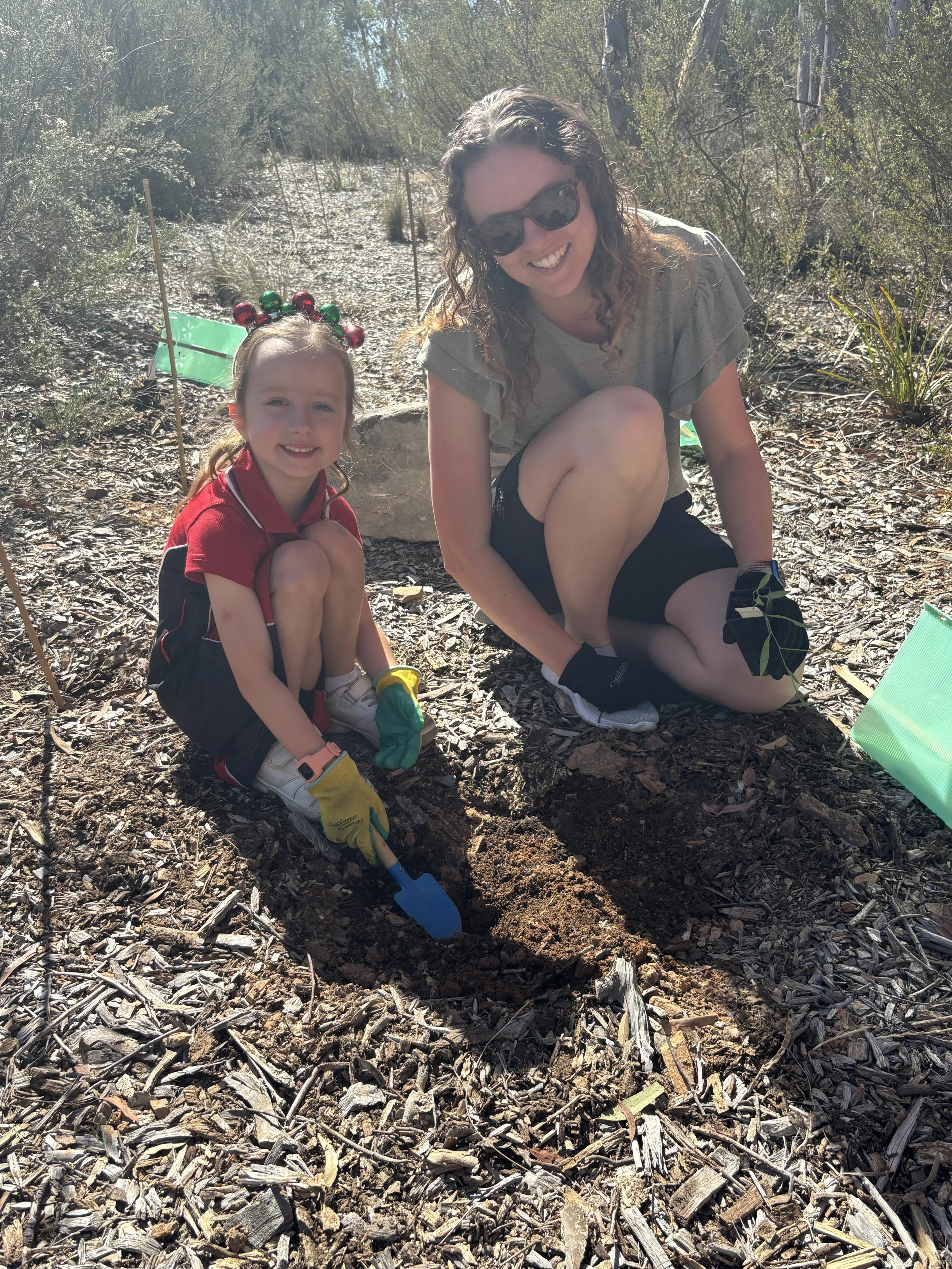
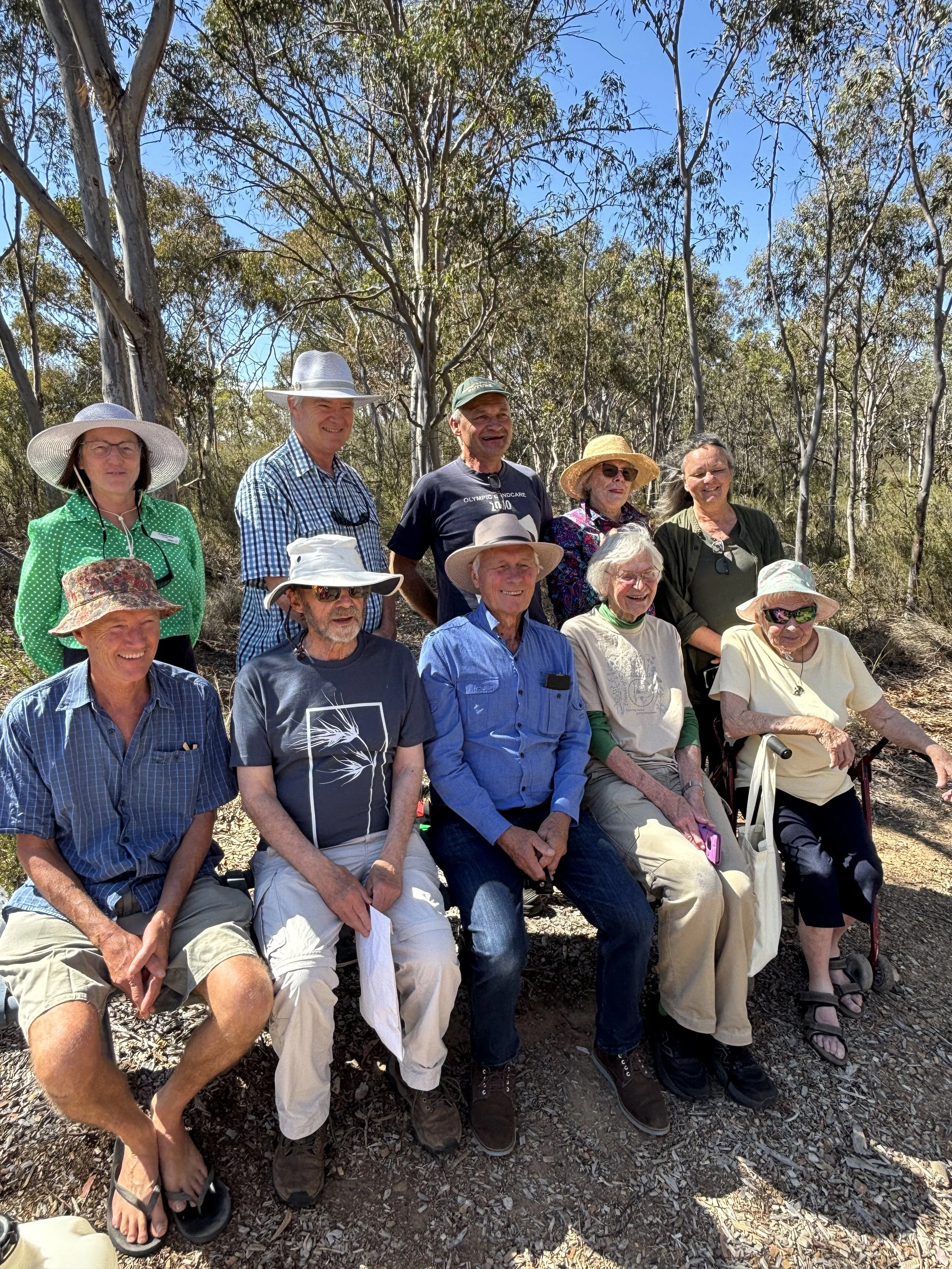
In December Helen, Paul and Sandra prepared a site near the Gilmore Place entrance for the 30th anniversary of Queanbeyan Landcare. Around 45 past and present members attended the event.
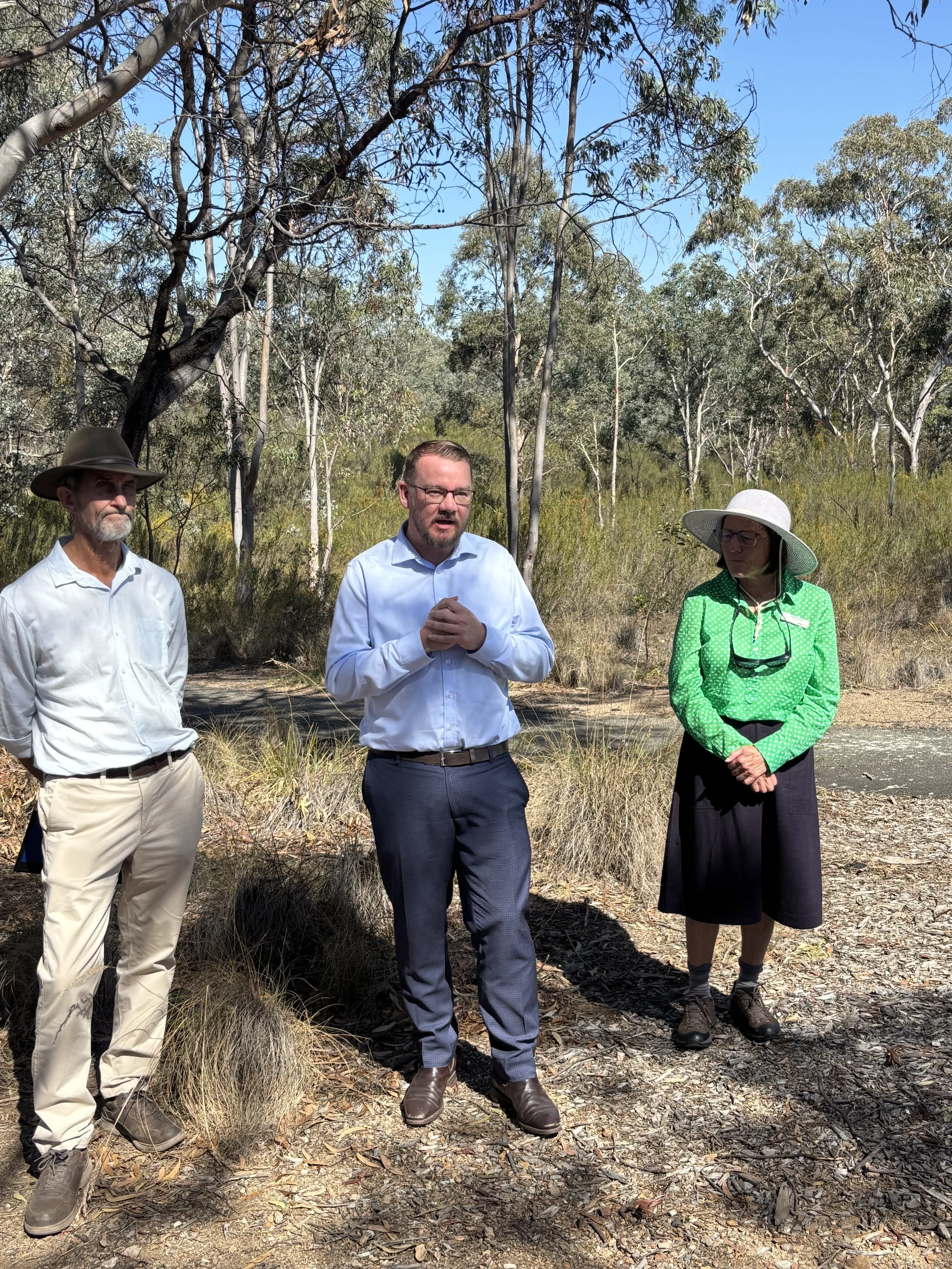
A Facebook post from QPRC Councillor Katrina Willis said:
“Queanbeyan Landcare today marked 30 years of achievements for our local environment. Many of us enjoy natural spaces - from Mt Jerrabomberra, to Bicentennial Park and the Queanbeyan River corridor, to name a few - thanks to the dedication and hard work of these committed residents.
I joined Mayor Winchester at Bicentennial Park to celebrate Landcare's achievements and thank members, some of whom have been involved for decades. Working with council staff, Landcare members have made an indelible impression on our city and its green spaces.
A plaque has been installed to mark the anniversary. If you walk, jog or cycle through the park, you can thank Queanbeyan Landcare whose members' work ensures this remnant woodland remains a refuge for people and wildlife for generations to come.”
2024
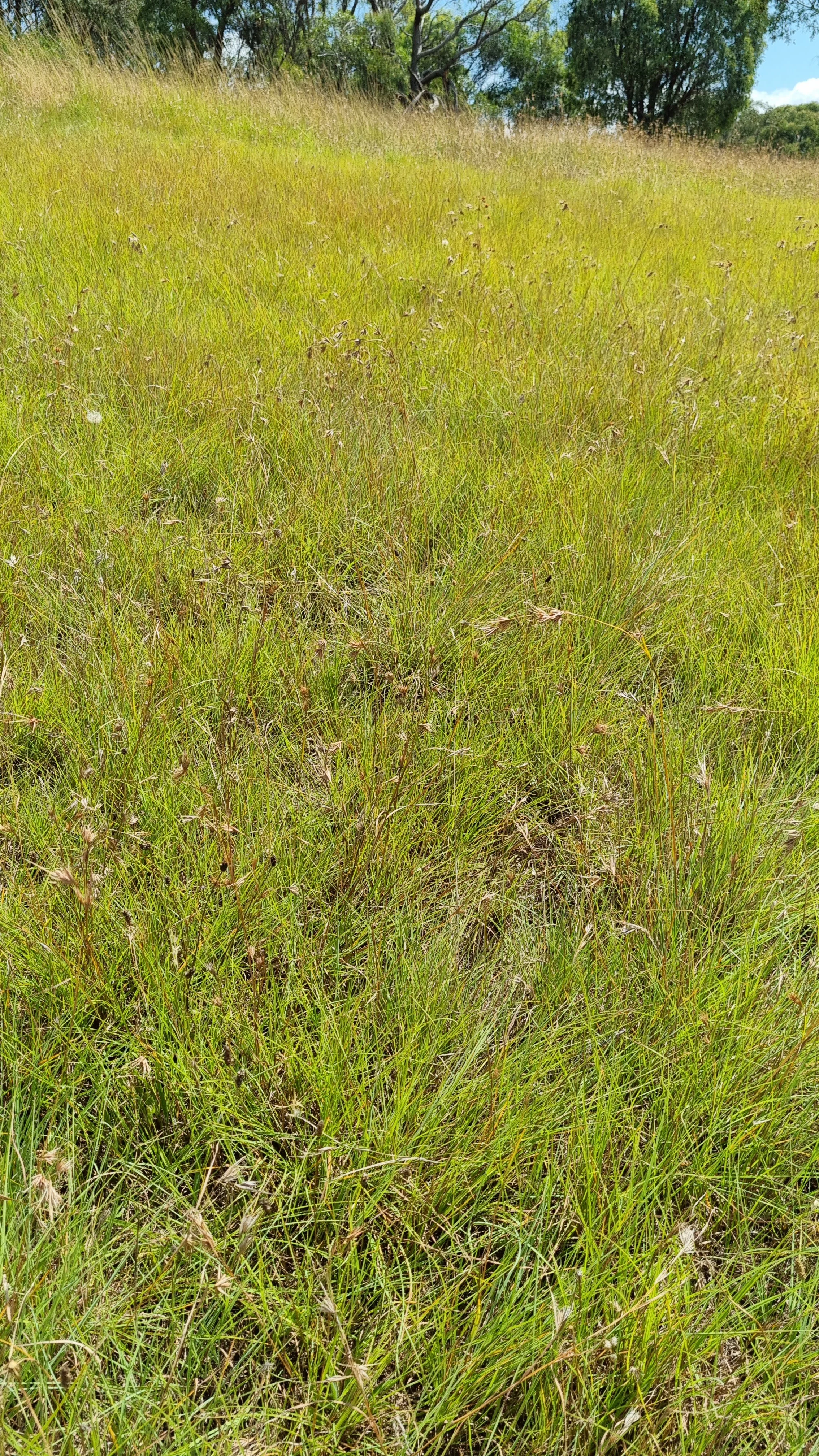
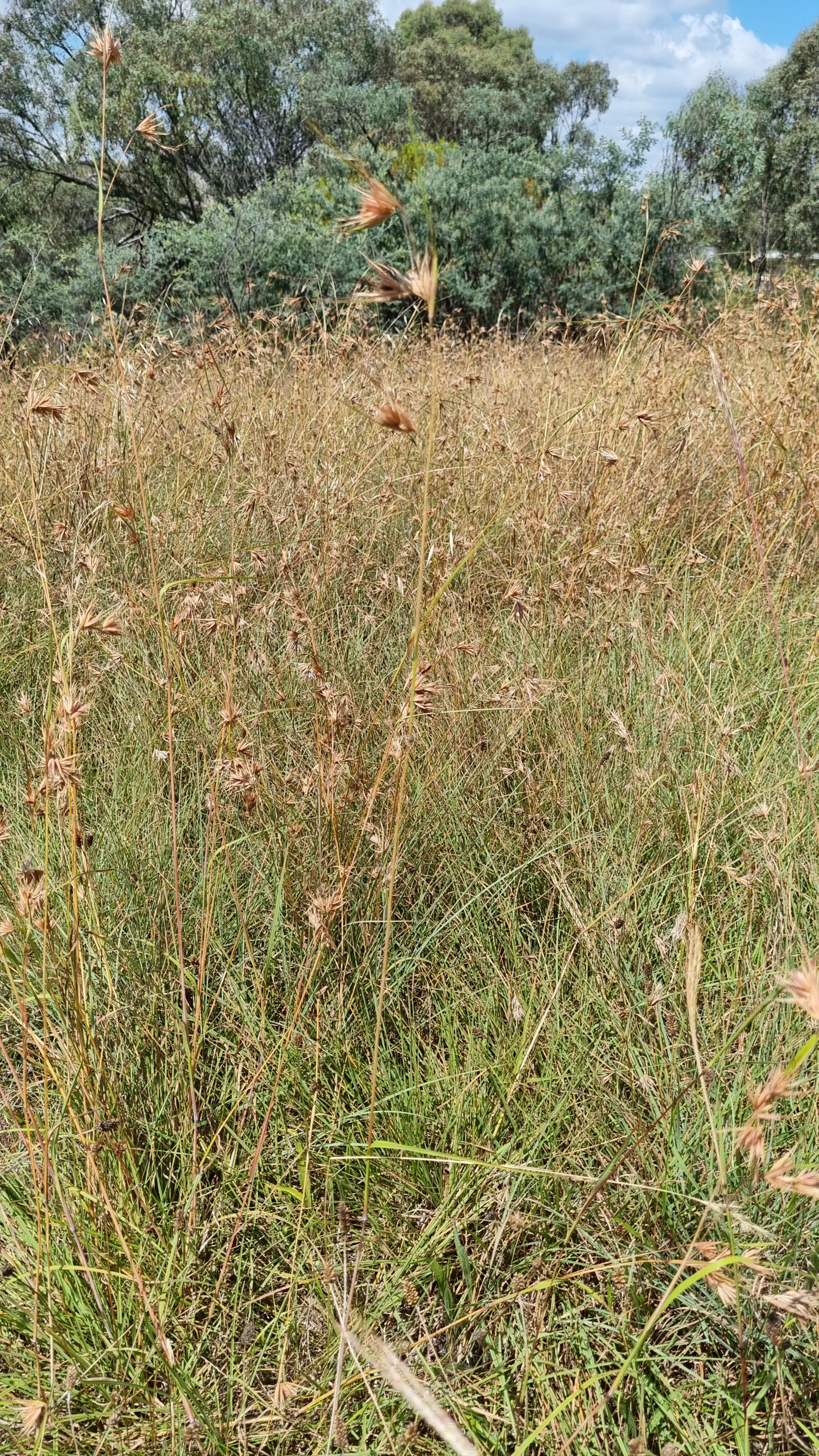
During 2024, the native grasses (including kangaroo grass) in the park were looking healthy. The targeted weeds were African Love Grass, St John’s Wort, Fleabane, Paspalum, Black Nightshade, and Privet.
Cigarette butts at the top of the lookout have always been a problem and Sandra made butt bins which worked well for a while.
Sandra purchased some native grass seeds (including Themeda) and spread it where the paspalum had been previously sprayed. Paspalum seed heads were also whipper snipped from heavily infested area.
QPRC installed a tap in 2024 which meant no more carting buckets of water up in the boot of a car. They also removed two large ant nests that had taken over the footpath.
Bill Willis donated 12 plants for the native garden.
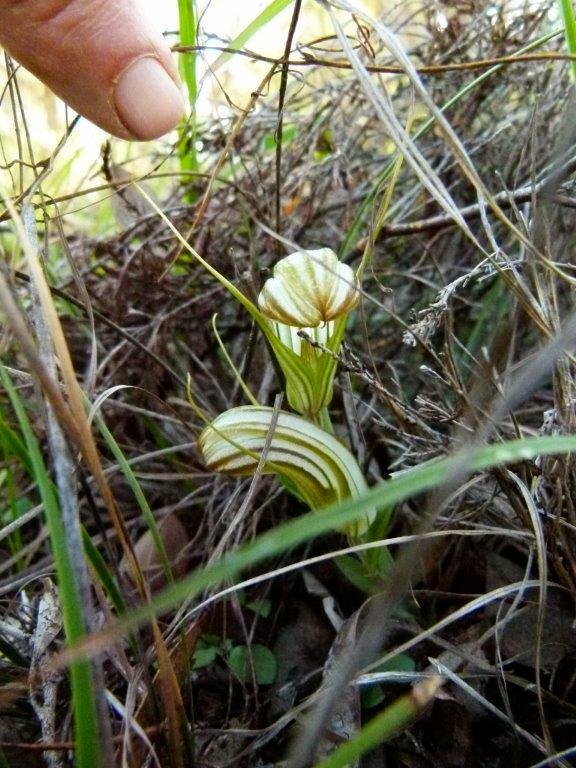
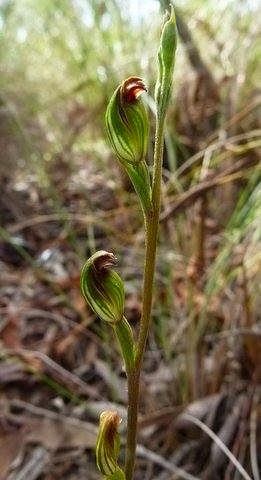
The group cleared an area of Burgans that were taking over an area where the native orchids grow. Sandra used the cut and dab method with glyphosate.
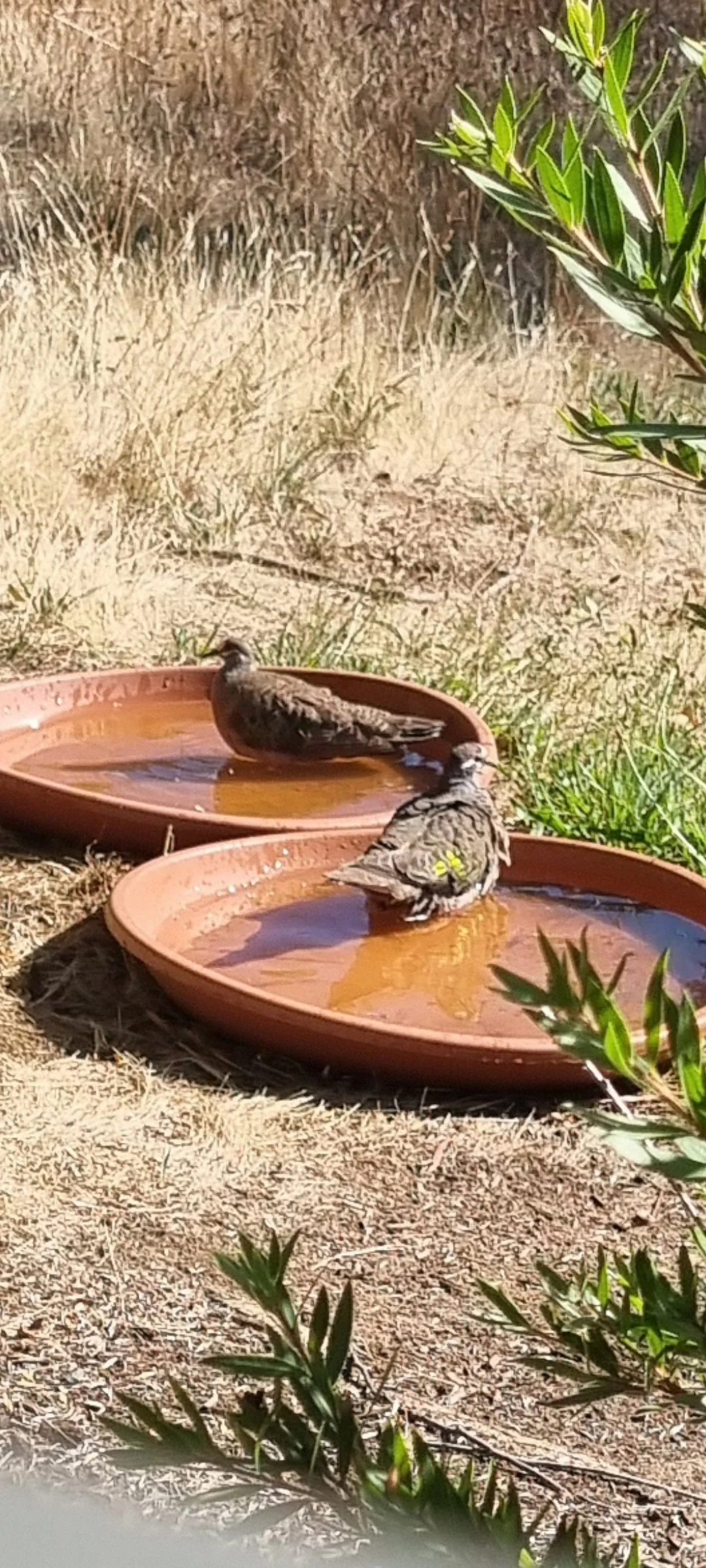
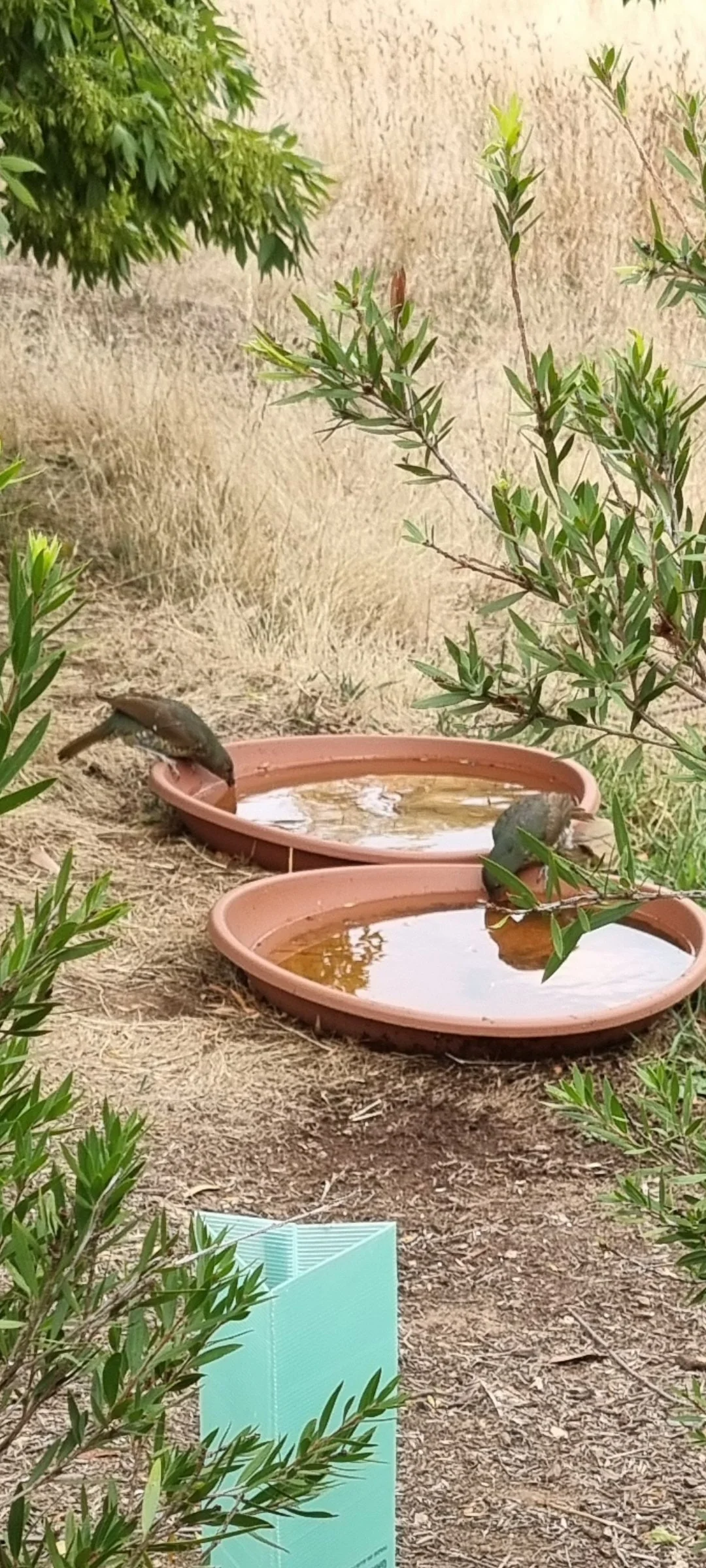
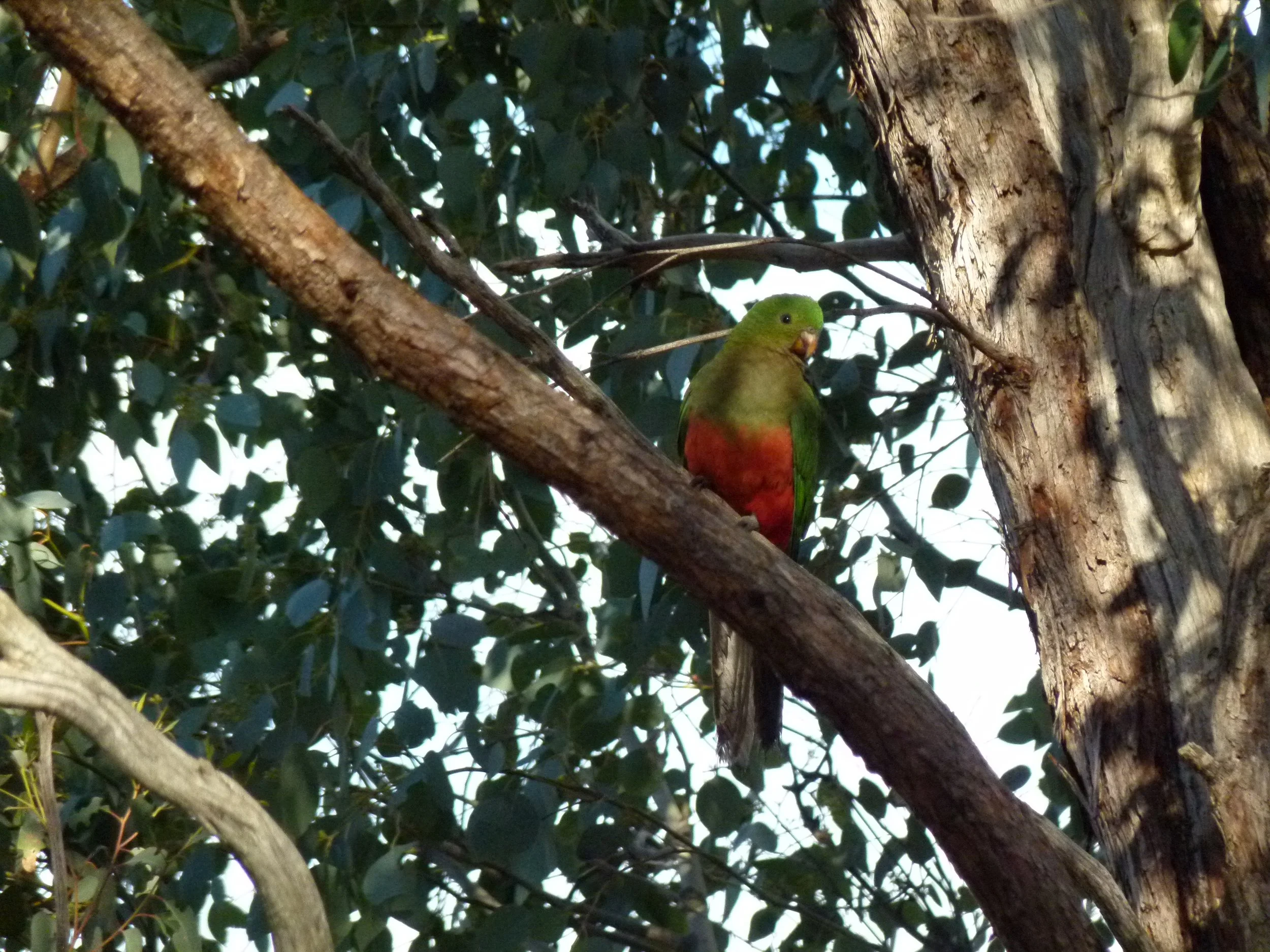
Lots of baby birds were sighted: Kookaburras, Honey Eaters, Butcher bird, Pee wees, Magpies, Bronzewing pigeons, Crested pigeons, Choughs and more.
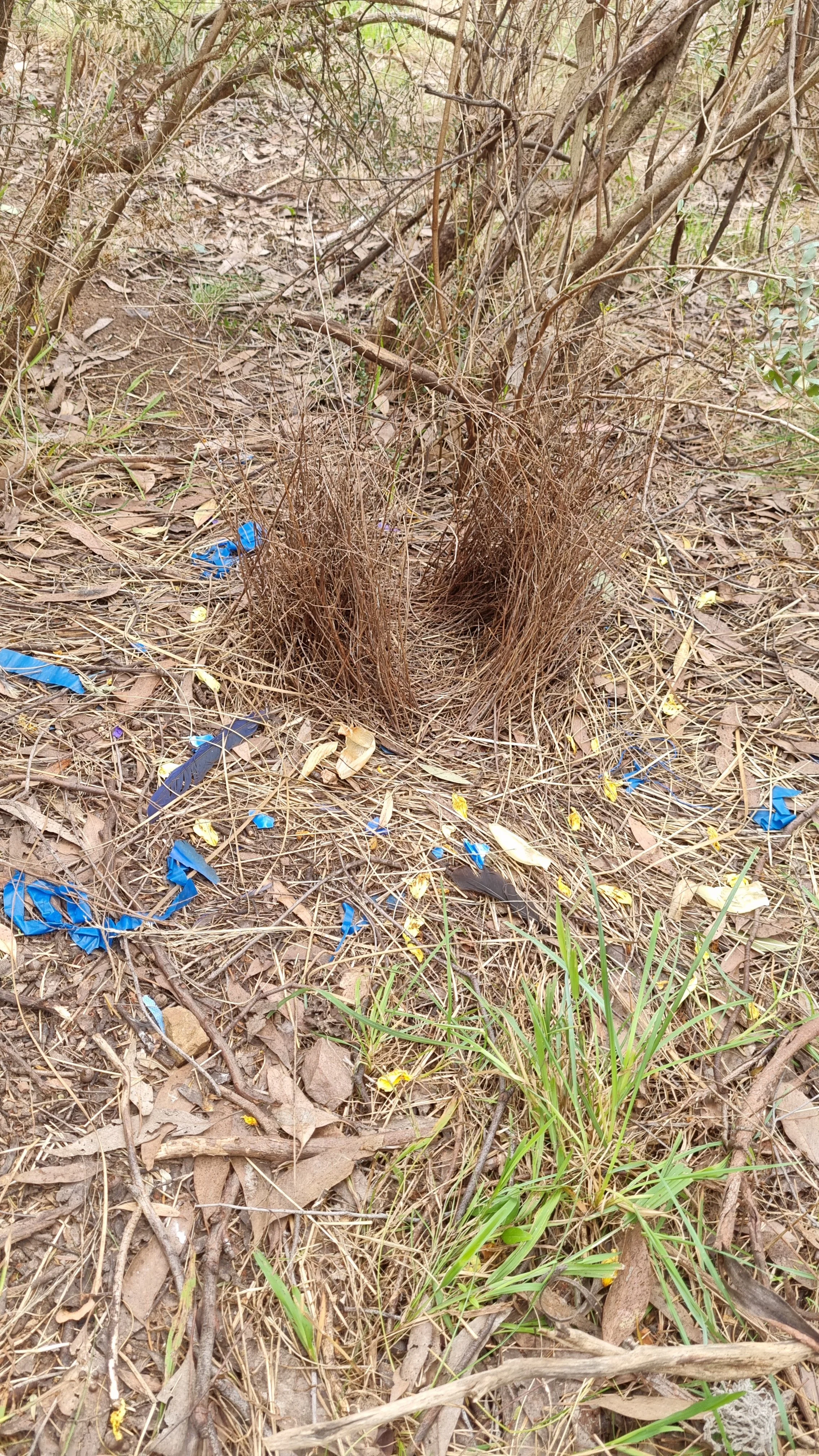
A nicely decorated bower bird nest, the first one ever seen in the park was found.
2023
Work throughout 2023 included spraying St John’s Wort, African Love Grass, blackberry, cotoneaster, ivy and privet. There was also hand weeding of privets and other woody weeds from the drainage area above Brereton St and the south-facing slope.
Helen did consider turning more of the park into woodland but in July referred to the 1994 Plan of Management to look at the objectives of managing the park, which were:
To ensure the protection and survival of remnant woodland species and native grasses within the reserve.
To reduce weed infestations and encourage the spread of native grasses.
To promote awareness and understanding of the natural attributes of the reserve.
Helen decided ‘natural regeneration’ was preferred. Please see the The Bicentennial Park Story for further information on this objective. Council was approached and then supplied mulch but were unable to help with controlling couch grass in the Lomandras.
In Oct 2023 a walk and talk led by Helen Hadobas with Bill Willis and Tom Baker for locals to learn about the history of the Park, identify the native plants and orchids.
Katrina Willis (QPRC Councillor) wrote about this event:
”Native plants are flowering in Bicentennial Park, Queanbeyan including some rare orchids and hoary sunray daisies.
I joined a guided walk with Queanbeyan Landcare on Sunday, led by Helen who has been coordinating volunteer work at the site for almost 10 years and about to handover the role to a new volunteer, Sandra.
Helen explained how changes in managing the grassland areas of the park, like leaving some areas un-mown and raising the height of mower blades, had resulted in natural revegetation with eucalyptus and wattle saplings springing up.
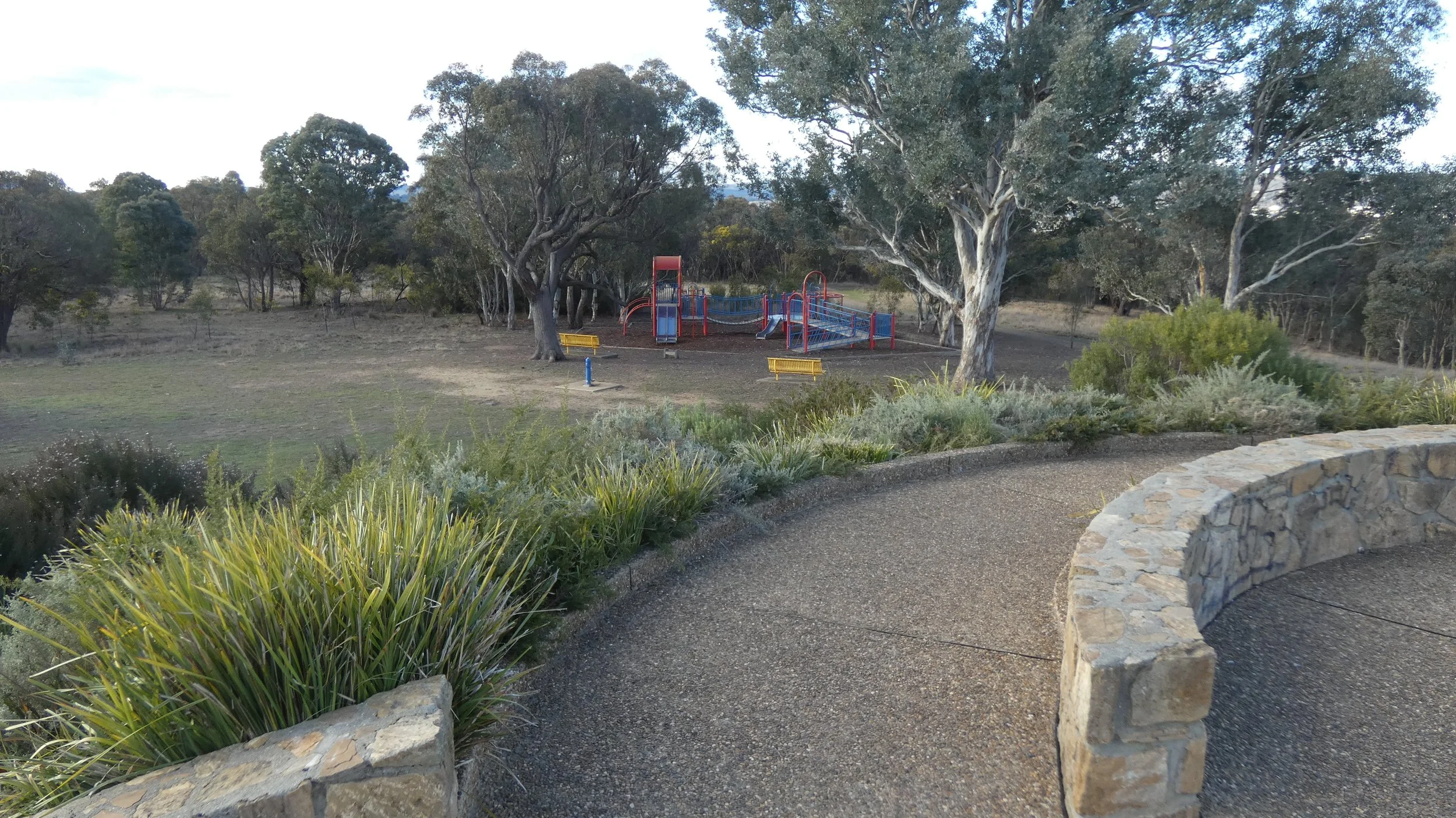
The park also contains woodland sections, a lookout with great views across to the Eastern Escarpment and Mount Jerrabomberra as well as play equipment. Well worth a visit this month in particular as the native orchids are flowering”.
In 2023 Sandra Dixon took over the coordination of this group from Helen Hadobas.
Helen has coordinated activity at Bicentennial Park since 2014. She did a tremendous job, Facebook posts about this received the highest number of ‘likes’ and a number of lovely comments.
Helen continued her involvement by organizing with QPRC to get the sprinkler system and hose attachment up and running in time for summer.
Sandra moved to a property near Bicentennial Park over 4 years ago. There she met Helen and Paul Hadobas as they were pulling Pattersons Curse near her fence and went out and helped.
As a result she now happily wades through knee high grass, knows plenty about weeds and native plants and has completed a weed spraying course. She now spends some of her day spraying St John's Wort and pulling up anything else that doesn’t belong in the Park.
She said “Its my way of giving back to the community. Just goes to show that someone who only grew pansies etc can become involved in native parkland. My garden is now nearly all native plants.”
During this time, QPRC purchased 9 trees - 3 x kurrajongs, 3 x golden wattles and 3 x black wattles. They were planted in an area that once was full of vinca, ivy and privets.
By the end of 2023 it was acknowledged that they had lost the battle with African Love Grass. Sandra worked at controlling flea bane and dealing with litter.
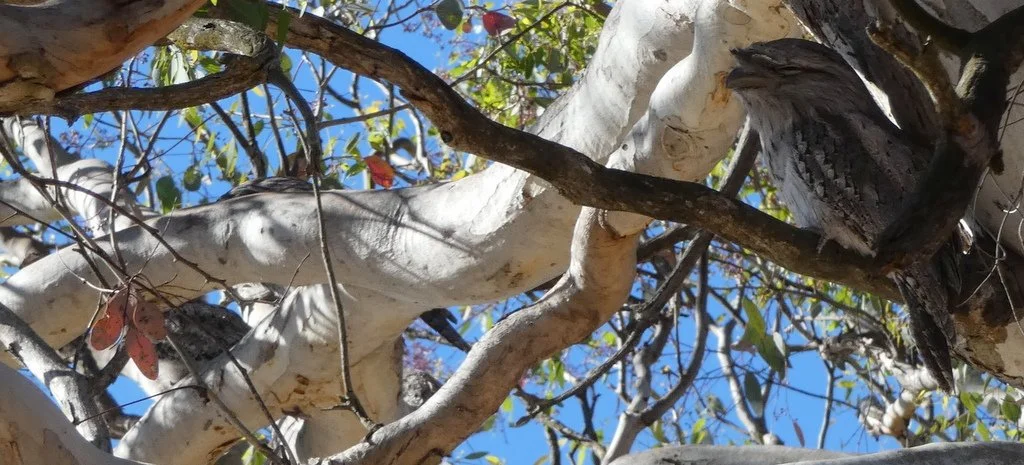
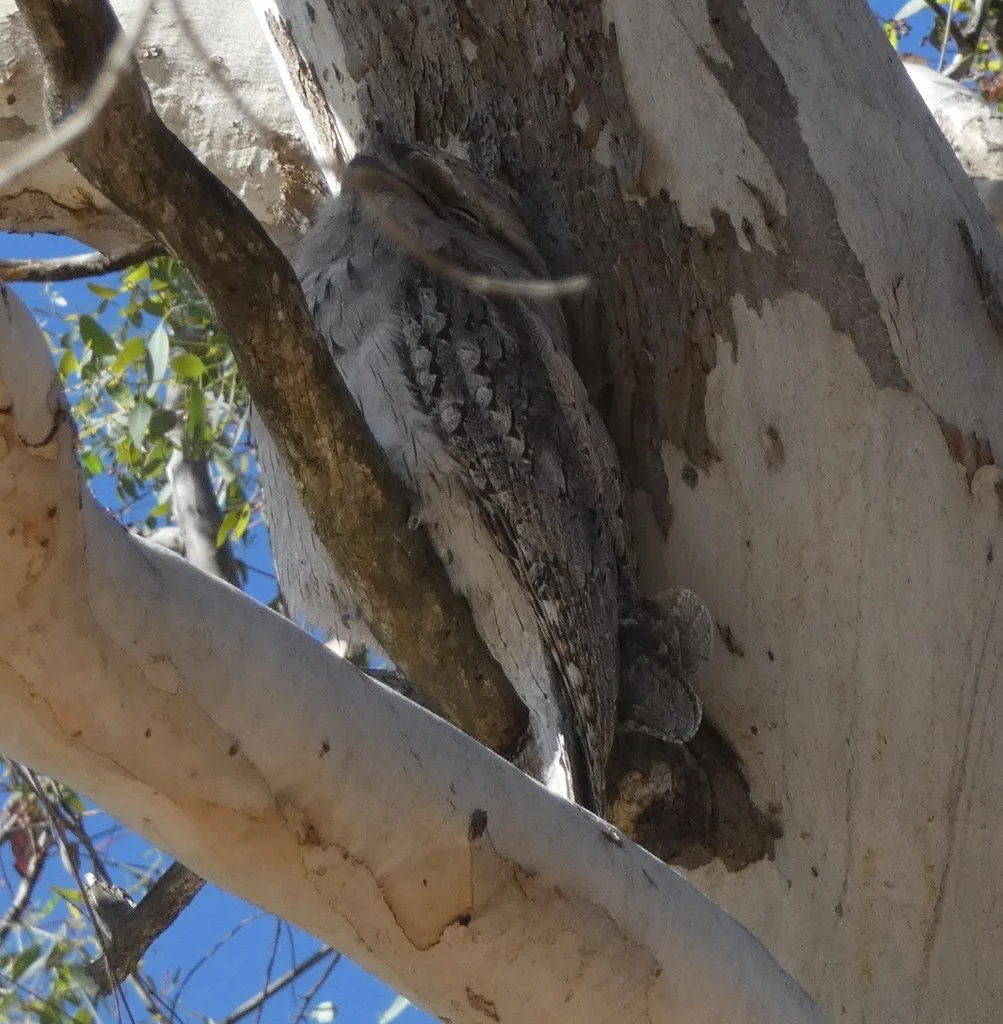
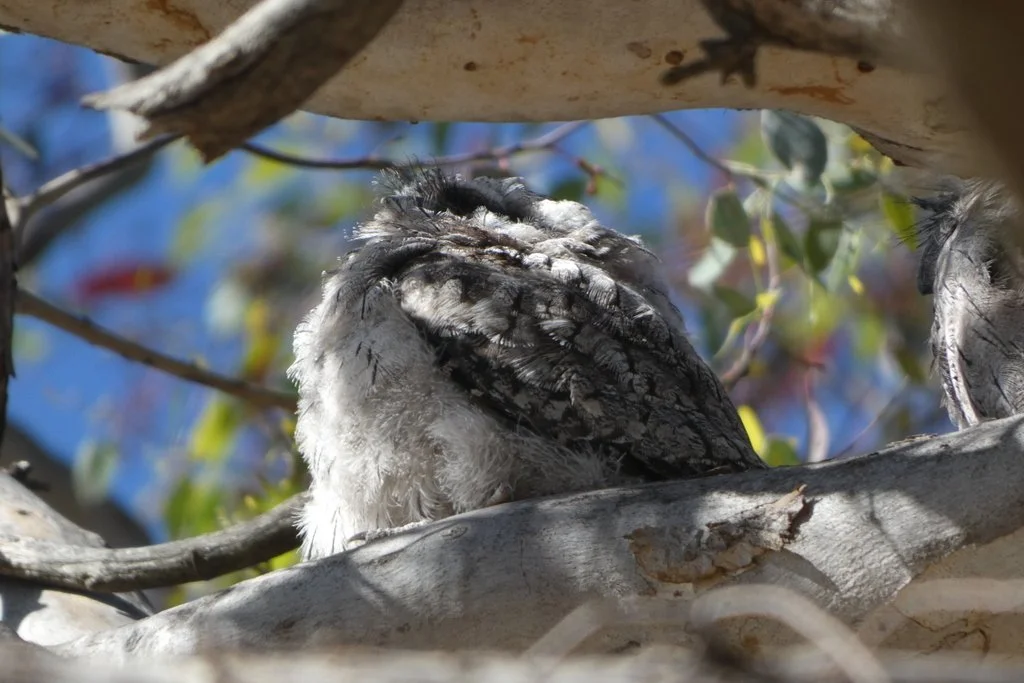
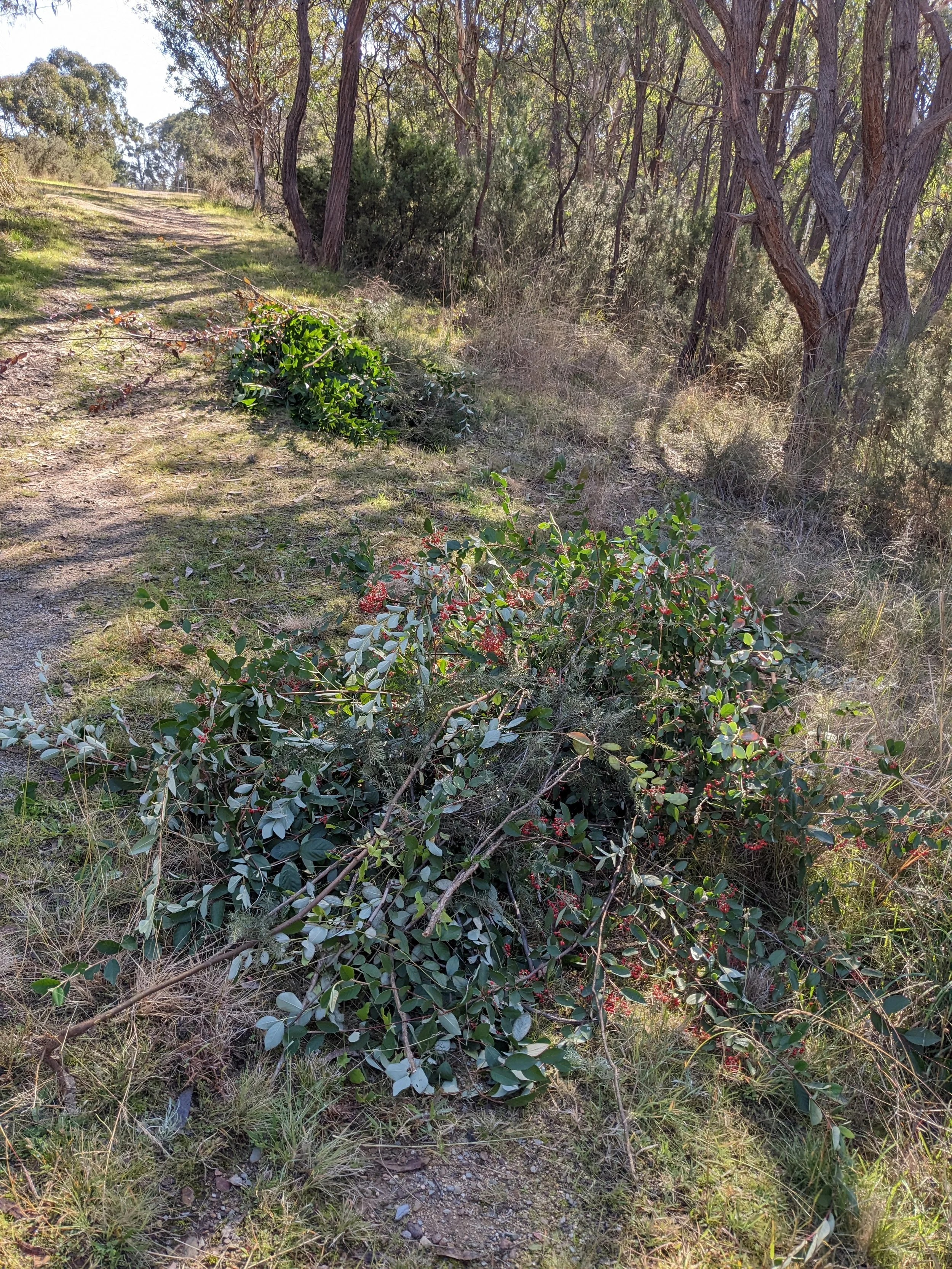
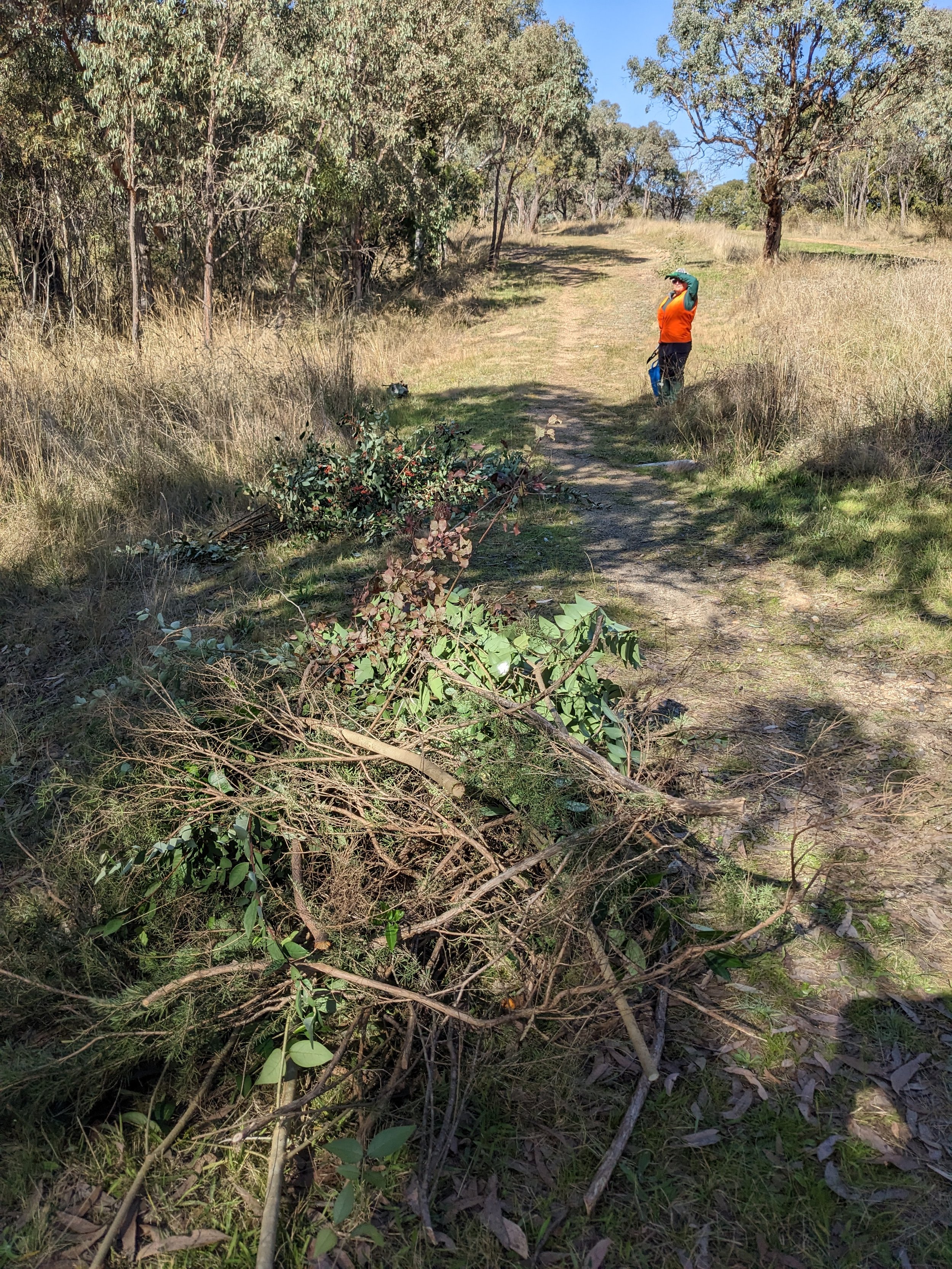
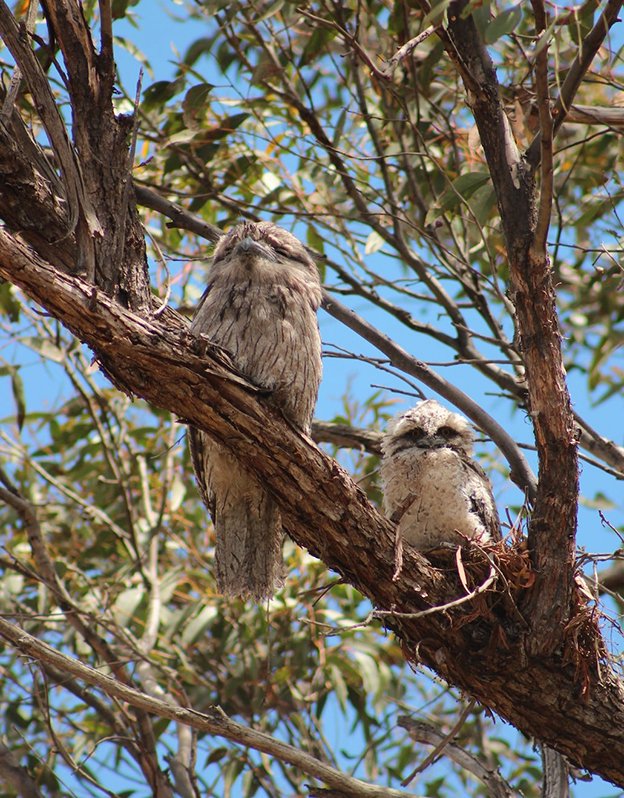
Images of weed removal and a pair of Tawny Frog Mouths
2022
We continued to seek help from QPRC about the many issues facing Bicentennial Park especially the control of African Love Grass and damage to the bitumen paths.
Volunteers continued their work, removing woody weed seedlings from drainage lines, weeding the hill and spraying. They also concentrated on removing the seed head of the grasses on the Hill.
Bill Hall, Chair Queanbeyan Landcare and Helen Hadobas sent a letter to QPRC CEO Rebecca Ryan relating to infrastructure funding for the Park. There was discussion around organising a cultural burn though this did not take place.
There was also mention of the need to control the rabbits in the park as they were doing significant damage. It was hoped the Calicivirus could be used.
A walk was organized with Rebecca Ryan (QPRC General Manager) and Tim Geyer (QPRC Urban Landscapes) for Friday 2 December 2022.
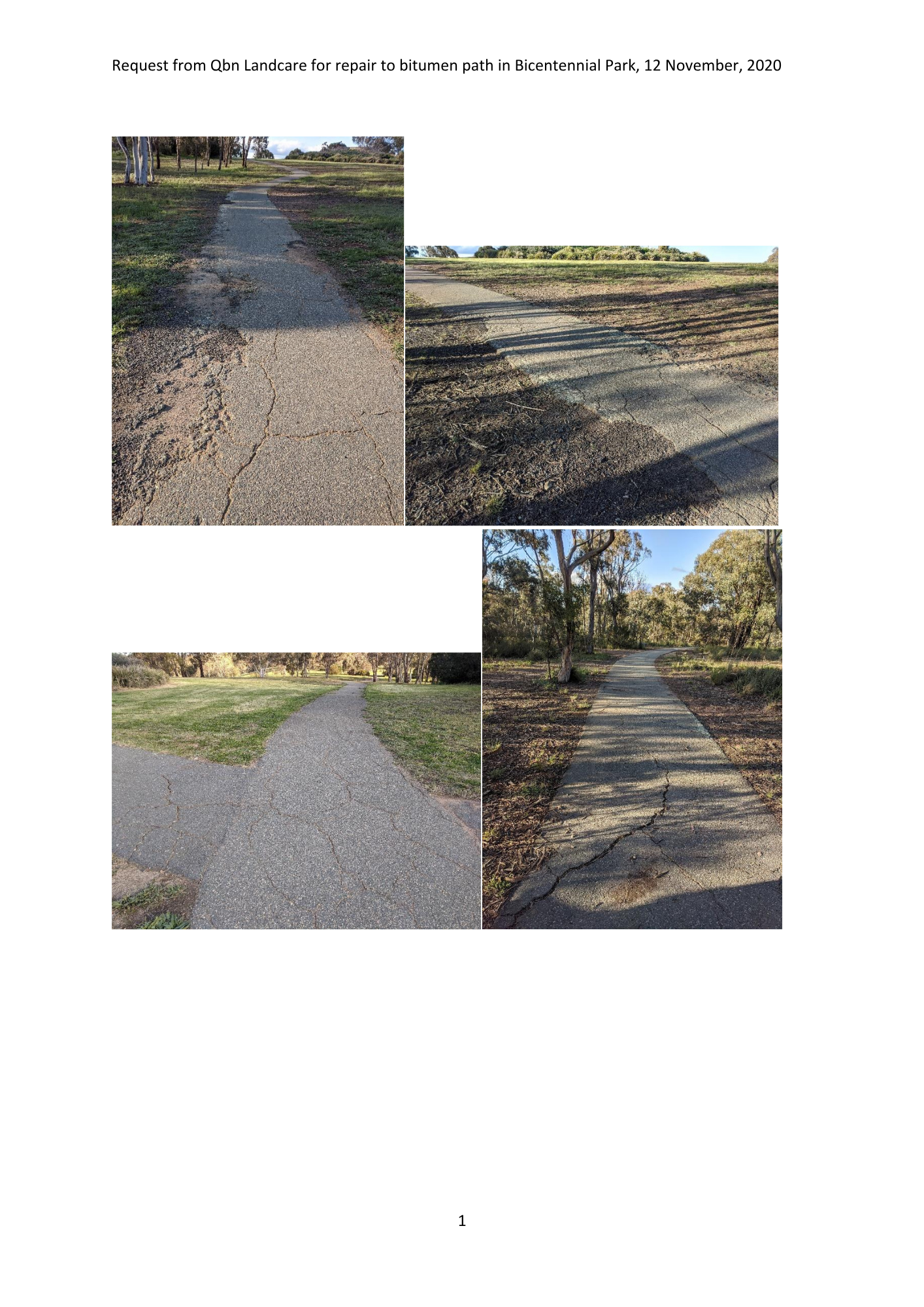
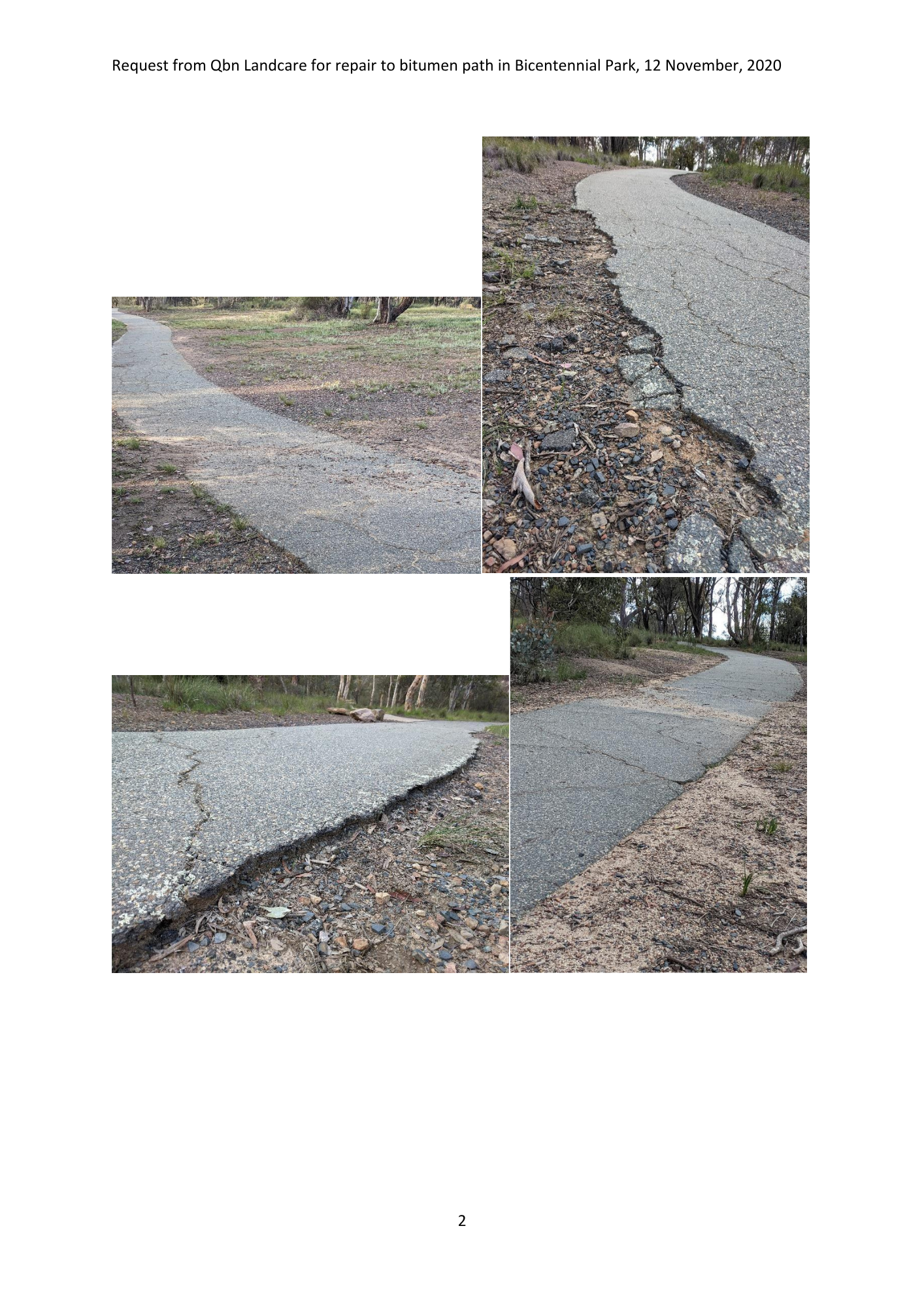
Damaged bitumen paths before and after
2021
A submission was made to QPRC for contract weed spraying, but funds were not allocated with Council indicating they would instead continue their normal spraying routine for St John’s Wort and African Lovegrass.
The wildflowers including orchids were wonderful in October 2021 with vast expanses of Hoary Sunray in flower.
Members continued to hand weed, remove dead wood from shrubs on the hill, clip seedheads and sprayed weeds especially African Love Grass.
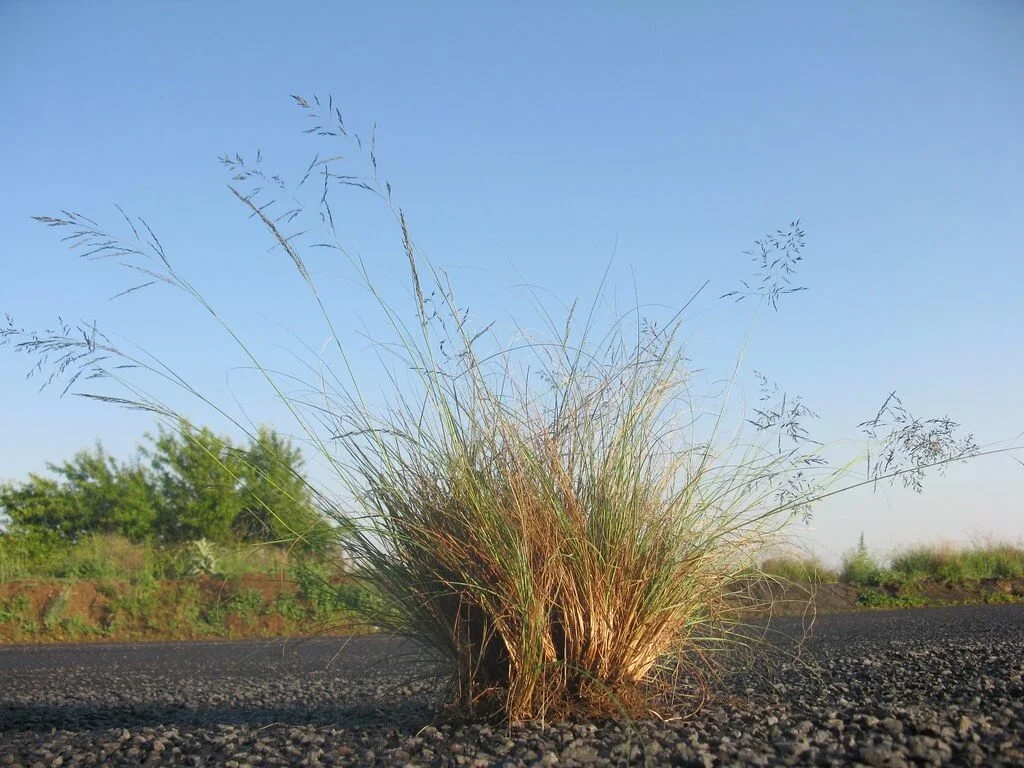
Image of African Lovegrass courtesy of Weeds Australia
2020
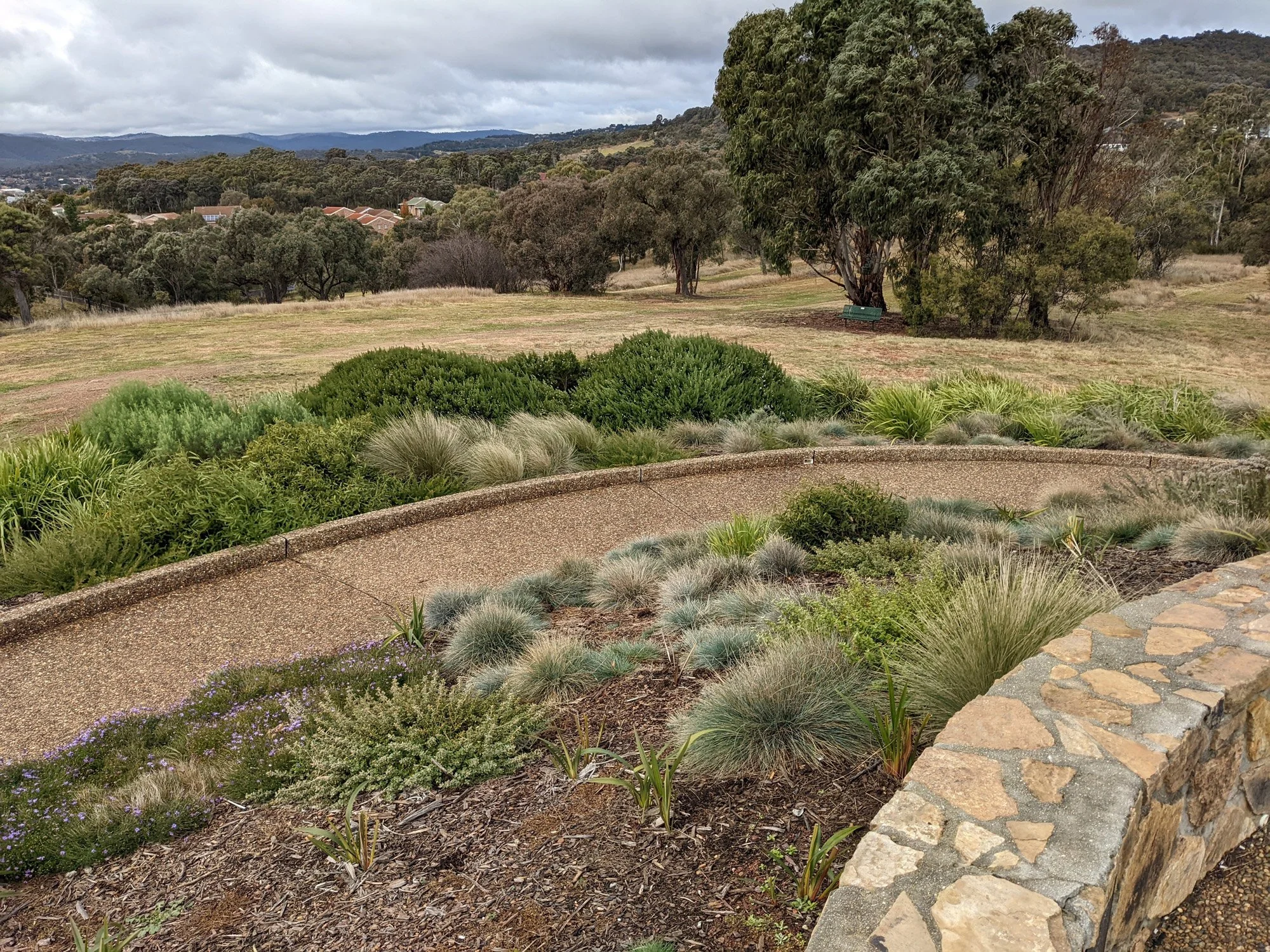
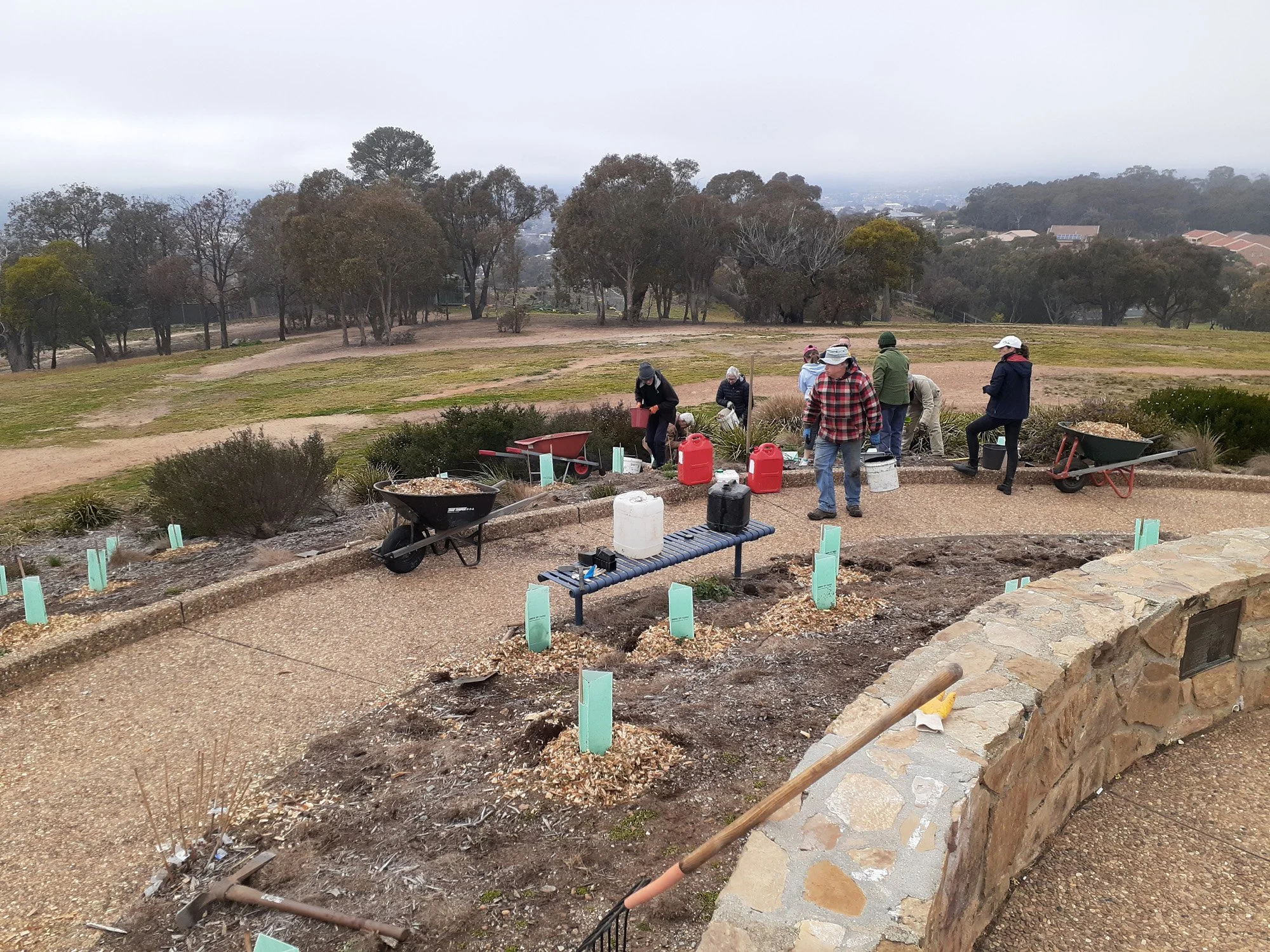
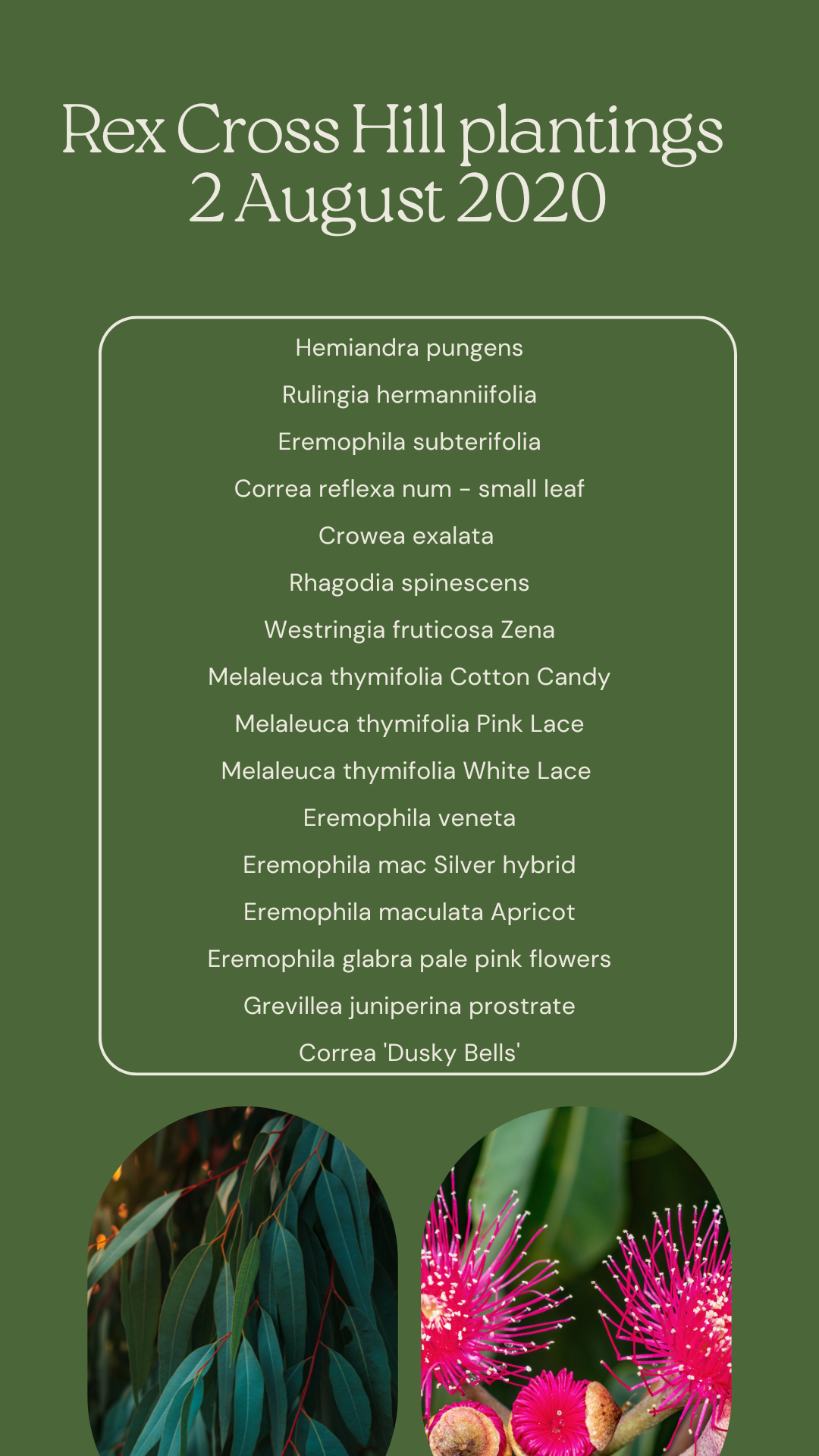
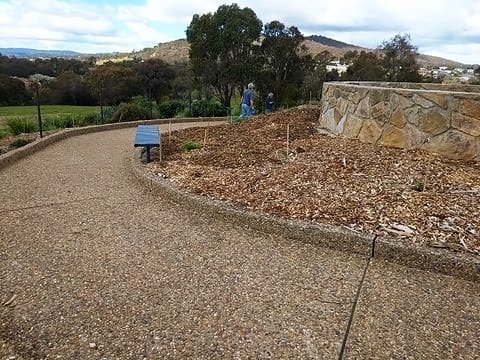
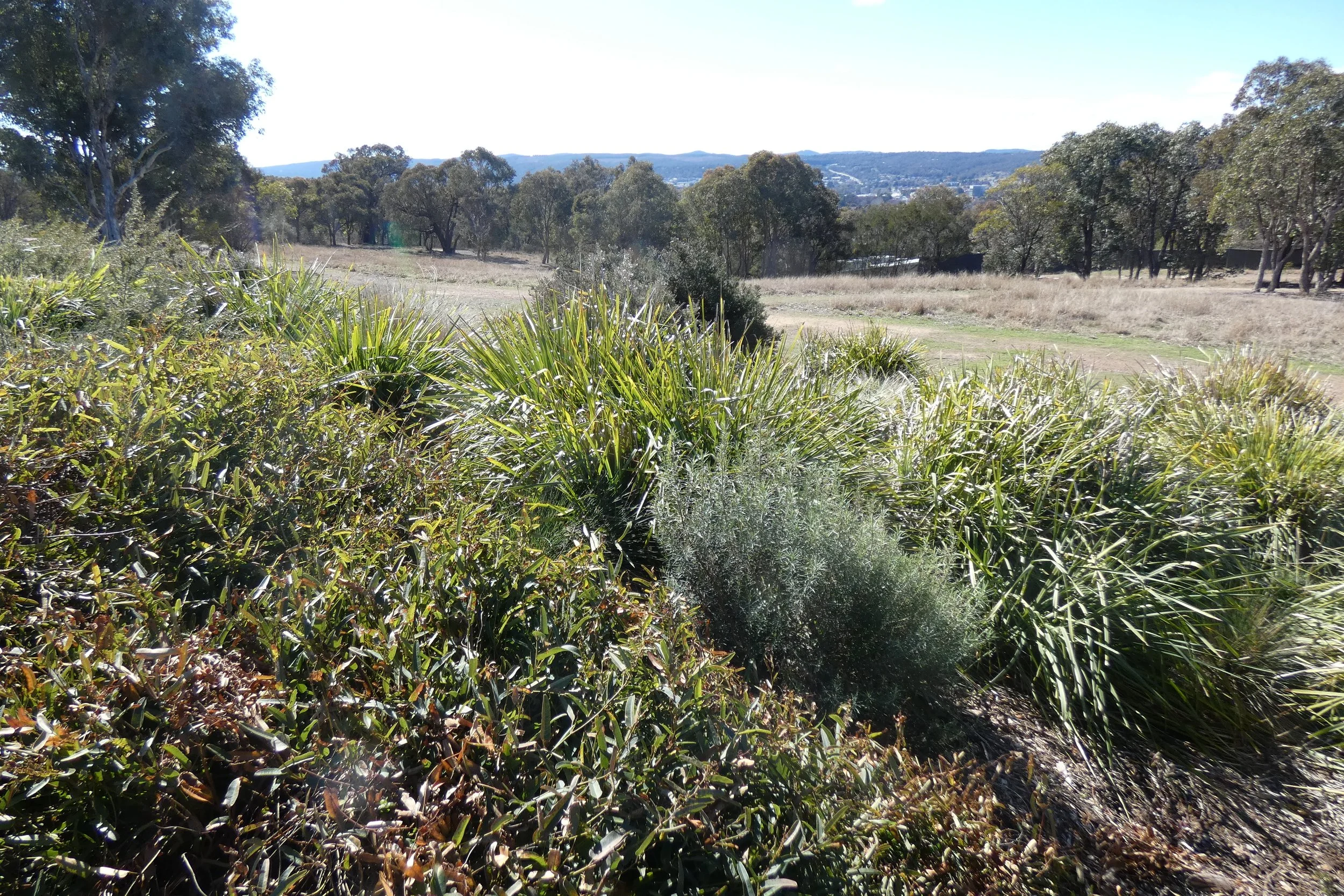
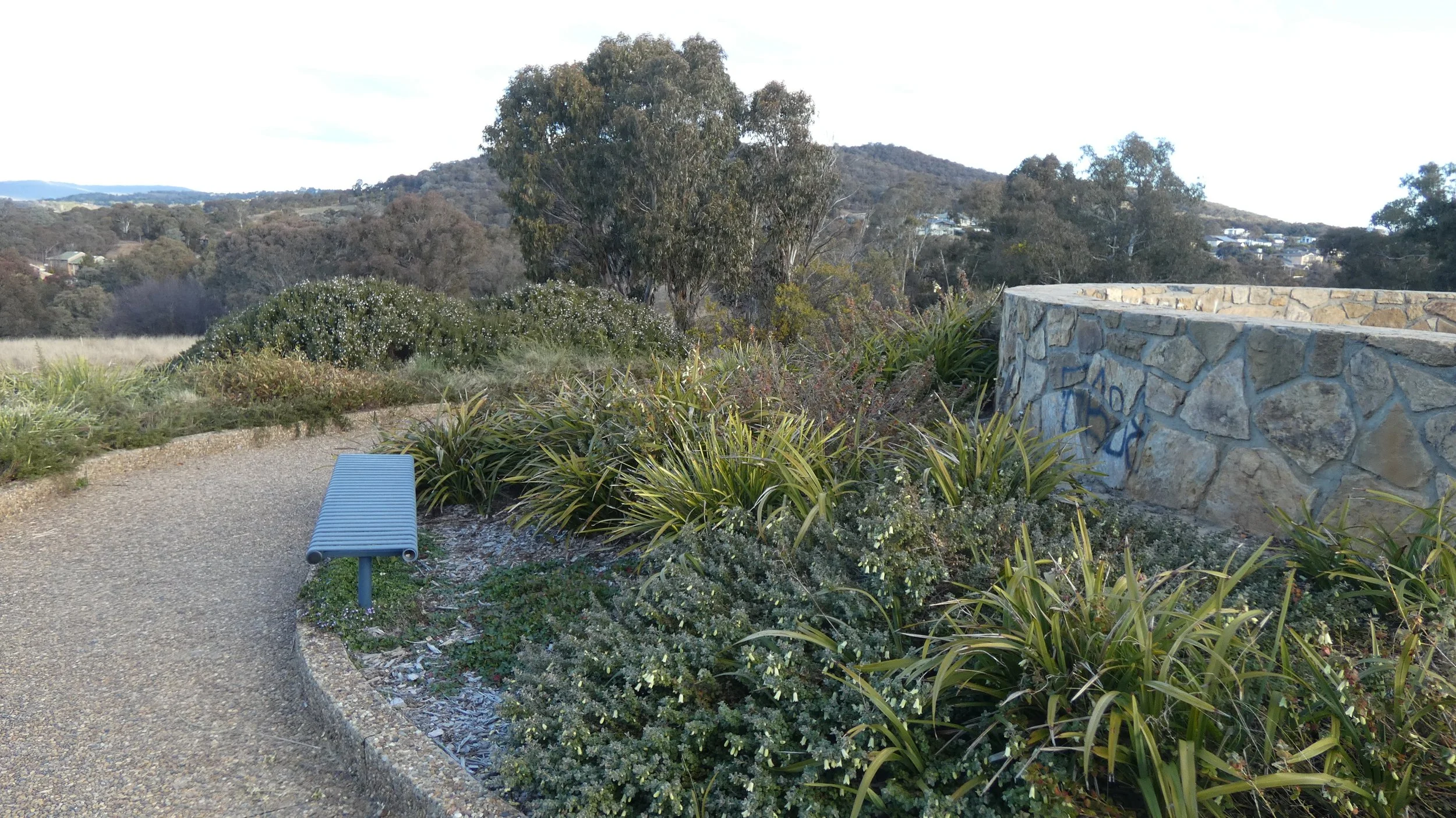
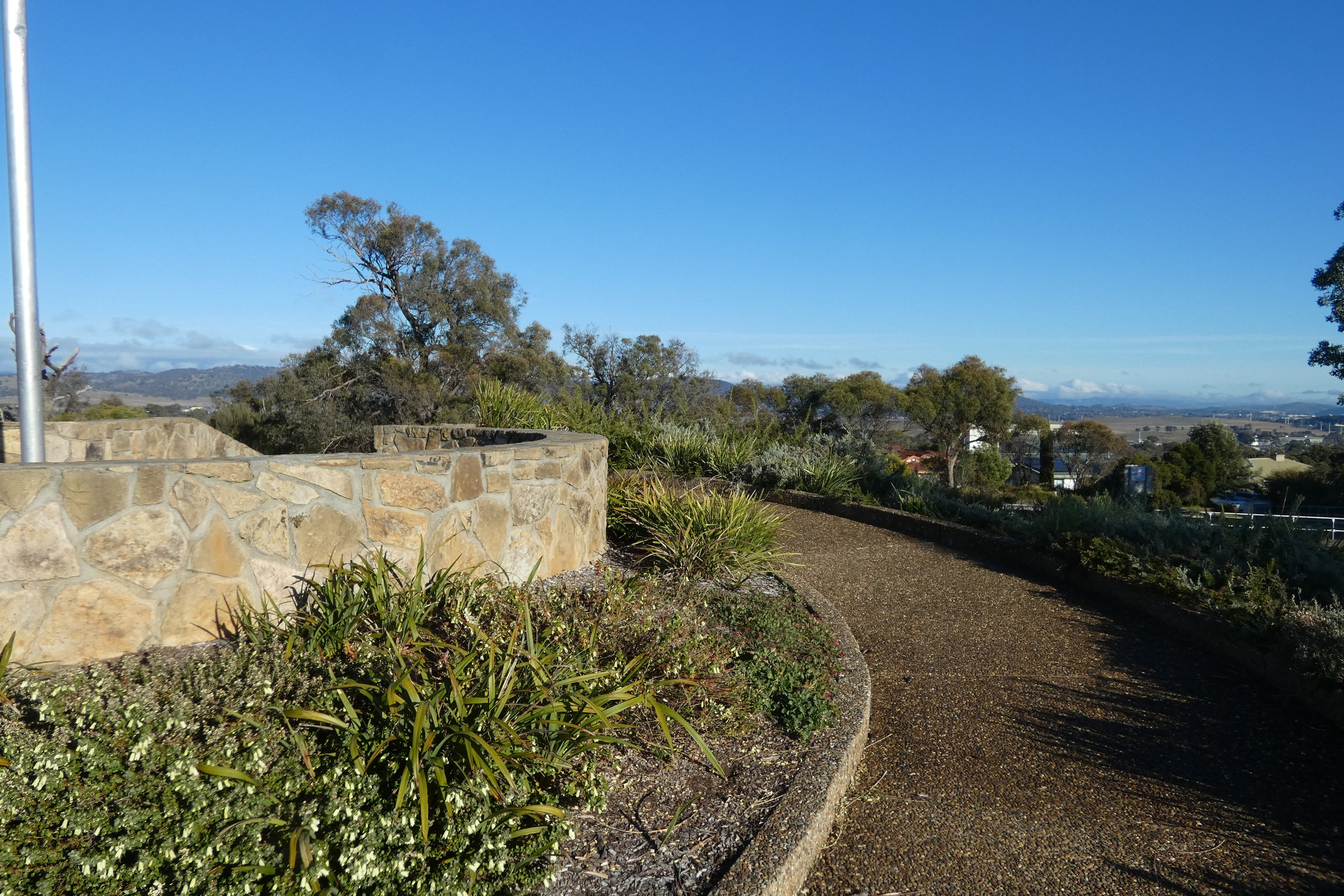
Helen reported the planting was held at Rex Cross Hill on 2 August 2020. The purpose of the event was to renew the garden that was planted 5 years ago, where the drought had damaged or killed many plants. As well, incursions by people on foot and on bikes had caused a lot of the mulch that was put down 5 years ago to slip to the bottom of the hill, along with much of the soil. Our aim was to put in new plants that could tolerate the dry conditions on the N/NW side of the hill and to discourage people from walking and riding on the garden bed.
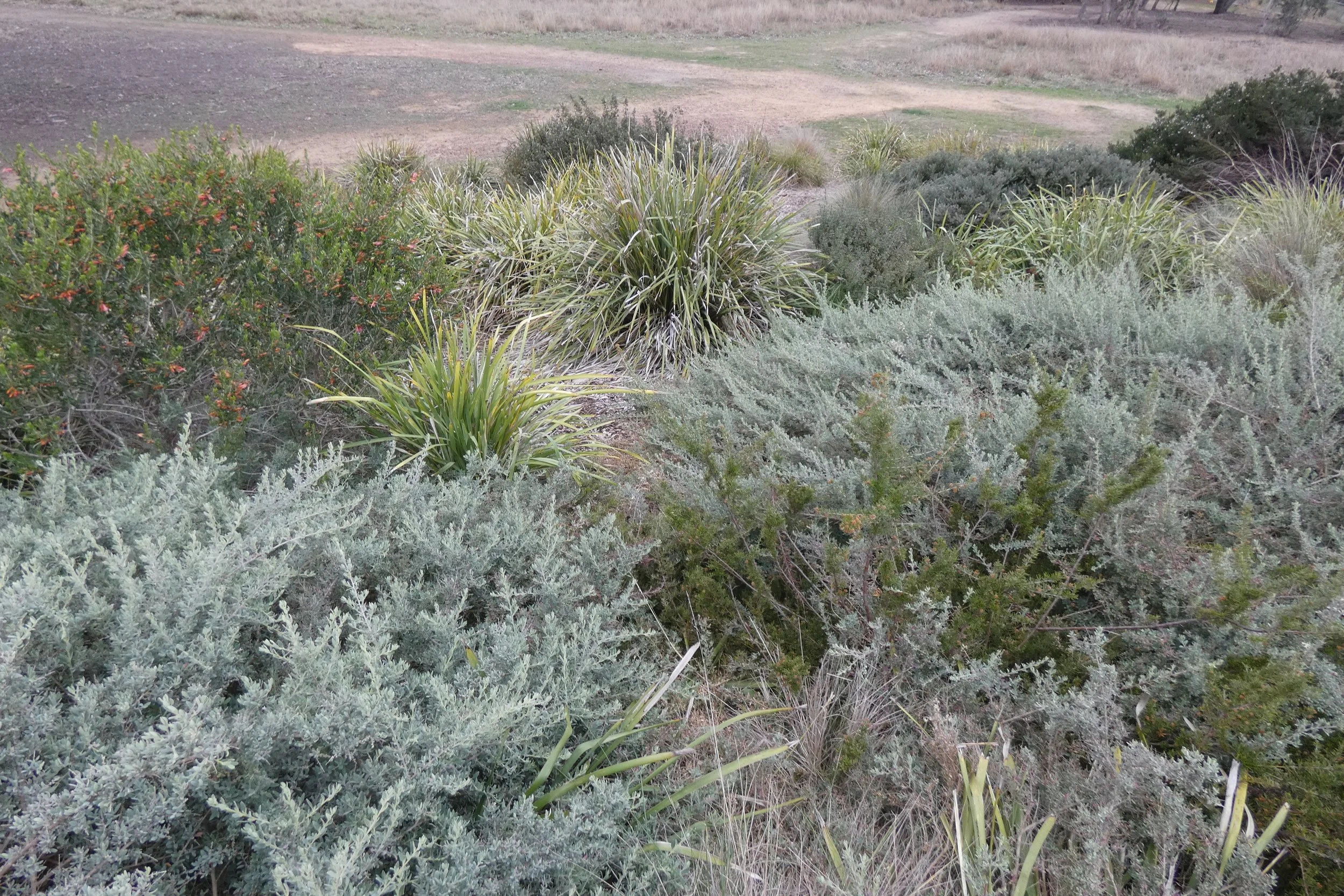
Fourteen Queanbeyan Landcare members and supporters attended and 70 plants were planted. At the base of the N/NW side of the hill, where Lomandra tussocks have not thrived as well as in wetter parts of the hill, we planted 20 Carex appressa. Near the top of the hill, mainly low-growing Correas were planted.
Below the path we planted drought-hardy prickly salt-bushes and Eremophilas, and hardy Melaleucas and Westringias lower on the hill. When the plants are available, we will have more Eremophila shrubs and Correa ground-covers to plant, as well as a prickly ground-cover of prostrate Grevilleas close to the path. Finally, we put in a mesh barrier along the side of the path to discourage pedestrian incursion while the plants establish. We hope that the prickly nature of the plants will discourage pedestrians once the barrier is removed.
The plants are looking good, and the wonderful rain since the planting will promote their establishment. We will ensure that the plants continue to be watered and mulched as needed. We hope that their strong growth and the breakdown of the mulch into soil will stabilise the hill so that it becomes a better environment for plants to thrive. As a bonus, we expect the plants to attract birds and provide shelter for lizards.







Images this page © Helen Hadobas, Sandra, David D. & Paul.