KOOKABURRA
Dacelo novaeguineae
Habits and habitat
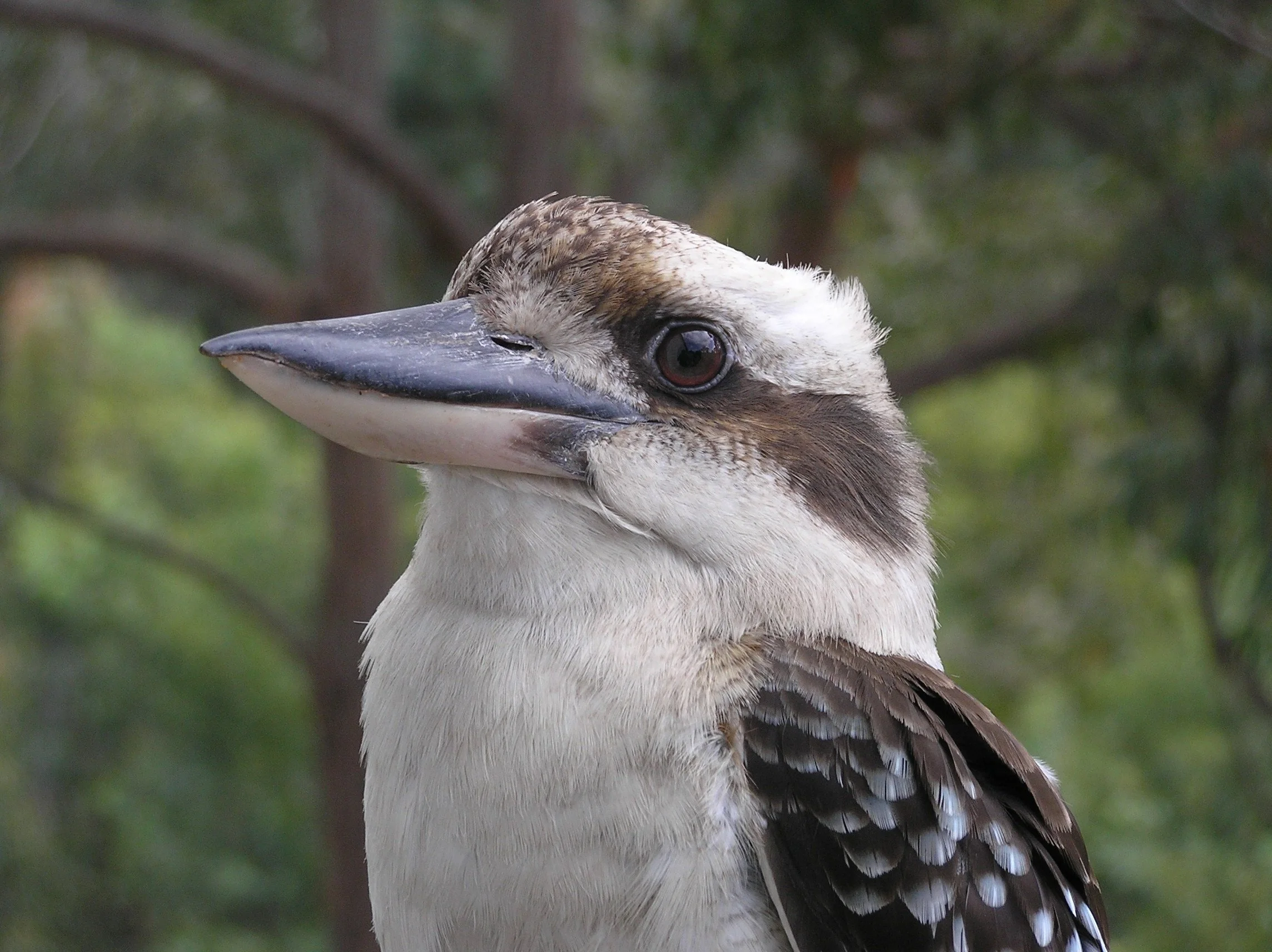
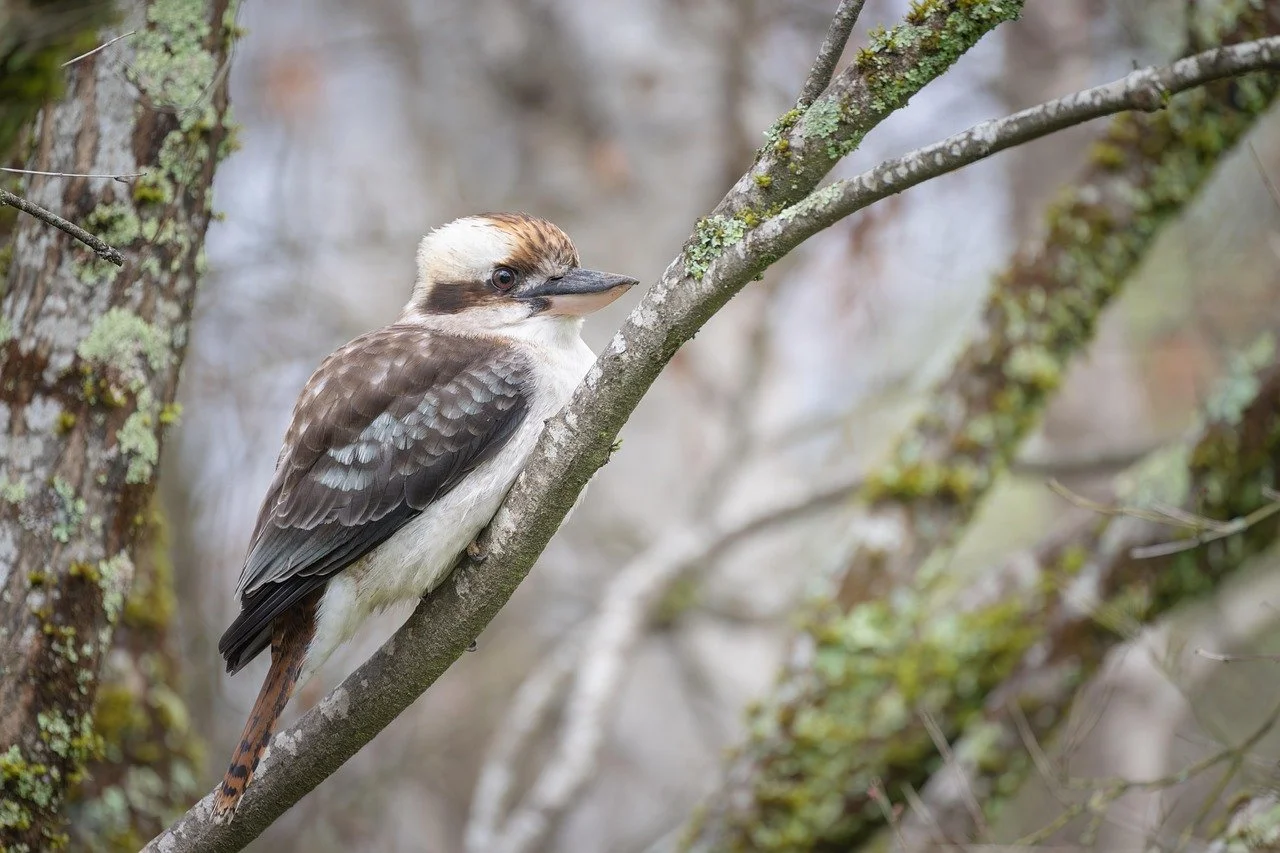
The Laughing Kookaburra is the largest member of the kingfisher family and contrary to their name, most kingfishers do not eat fish! Kookaburras mainly feed on insects but also small vertebrates including birds, lizards and snakes. Their distinctive call, which sounds like raucous laughter, is often heard throughout the bush.
Kookaburras are a year-round resident, they are long-lived, make long-term pair bonds and establish permanent territories. Young of the year do not leave at the end of the season and many stay on to support adults in nesting over a number of subsequent years.
Kookaburras are a common site throughout areas with large eucalypts with nest hollows, forest edges, clearings, woodlands, parks and gardens.
Identification
Size 40-48cm. Adult males and females are very similar with a white head, brown cap and ear patch. Brown back with blue flecks, and a blue lower back. Female has buff head and less blue on the back. Immature birds are similar to the female with a buff head.
AUSTRALIAN MAGPIE
Cracticus tibicen
Habits and habitat
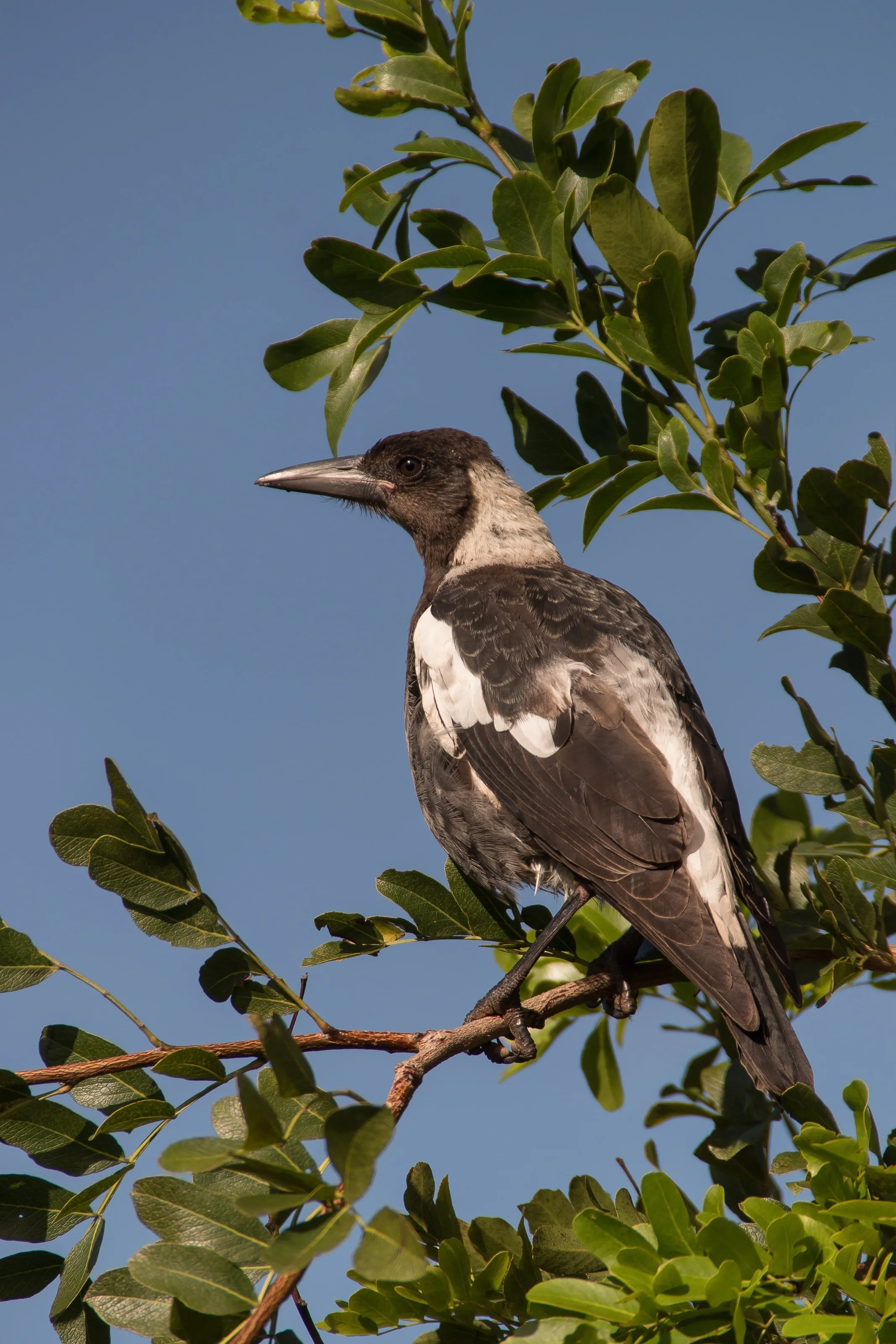
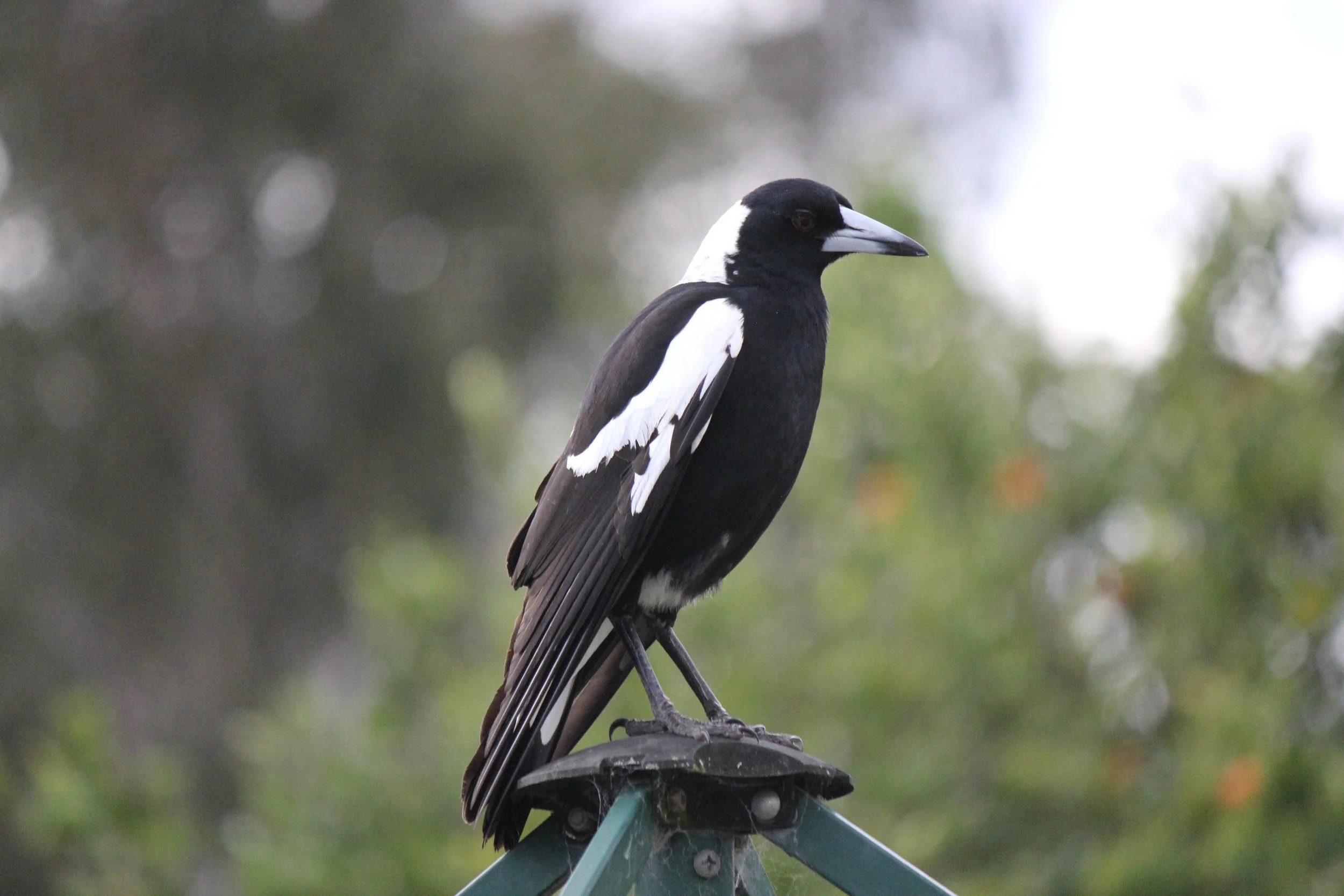
The Australian Magpie is abundant throughout the region, boldly marked, with a beautiful carolling call. They are well known for their swooping habits during nesting season making walkers wary when passing by nesting sites.
Young birds are often lively, displaying playful behaviour such as mock fighting. They typically stay close to their natal nest, rarely travelling more than 2km from the nest.
Magpies feed mainly on the ground by listening or looking for prey including insects, frogs, small birds, mammals and carrion. They are very common and found in open woodlands and is well adapted to urban areas throughout the region.
Identification
Size 36-44cm. Adult male is generally a glossy black with white nape, rump, wing-bars and undertail, bluish bill tipped black. The female is similar but with a grey nape. Immatures are like the female but paler.
PIED CURRAWONG
Strepera graculina
Habits and habitat
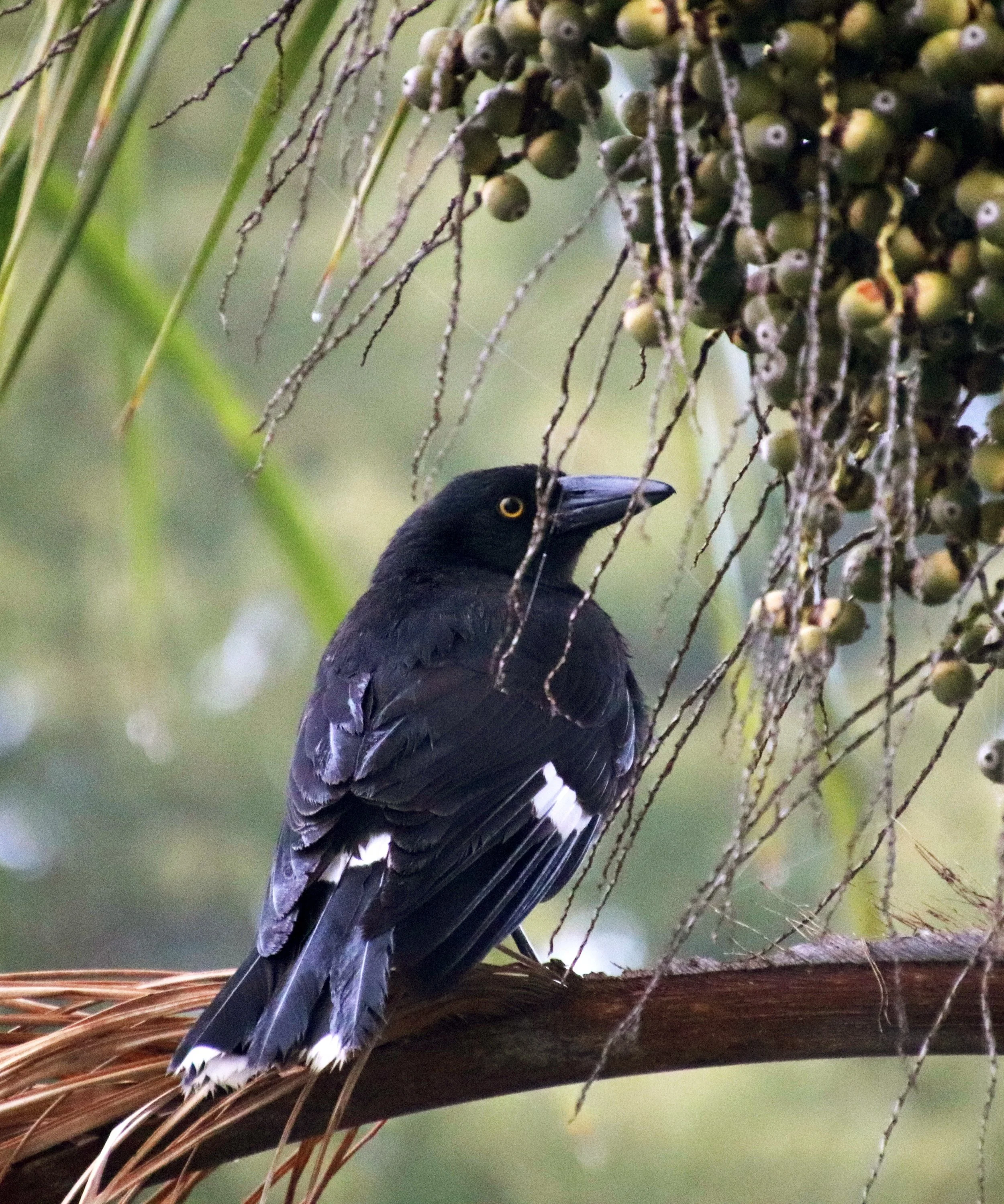
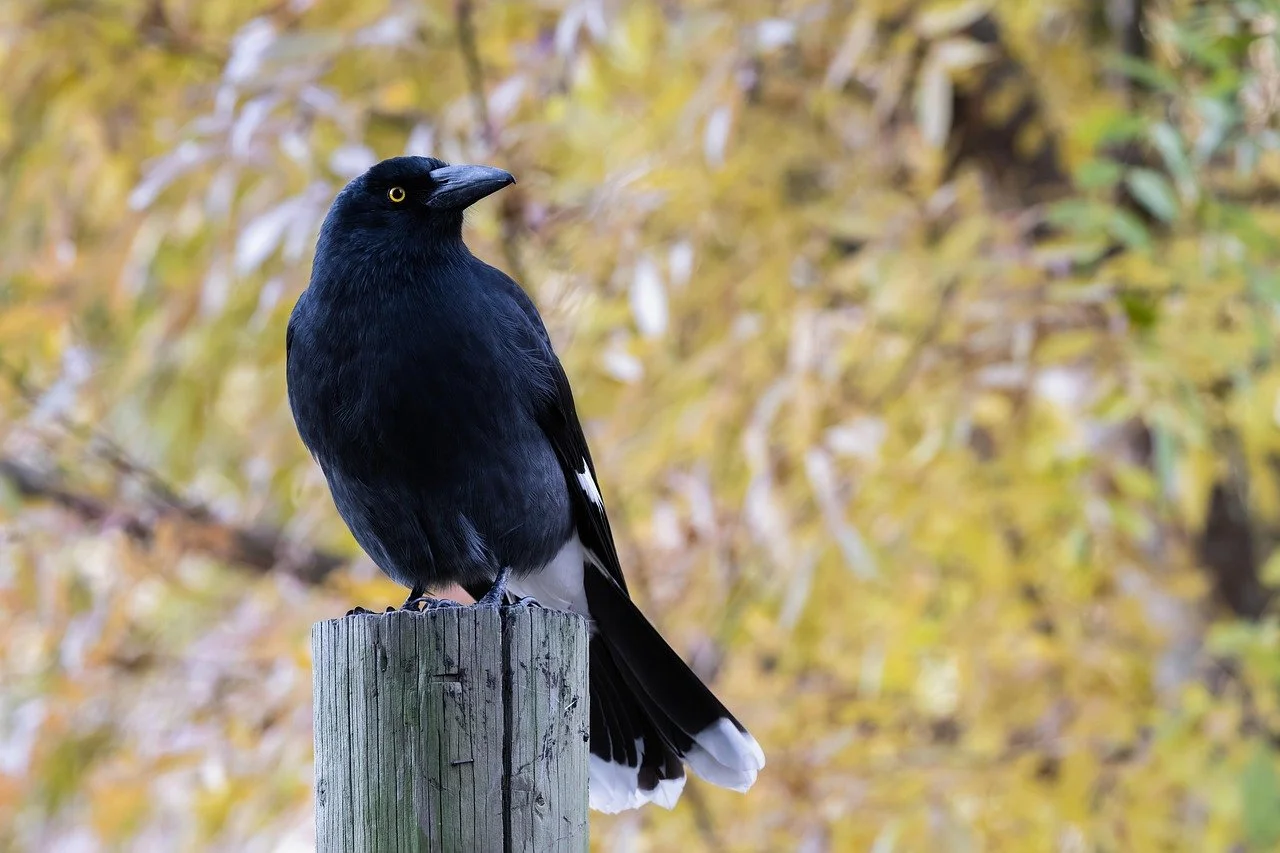
The Pied Currawong, sometimes mistaken for the Australian Magpie due to their similar colorings, are primarily forest inhabitants but they have adapted very well to urban and suburban environments.
Omnivorous, Currawong’s feeding on the ground, in trees and even sallying after flying insects. Currawongs take on a wide range of food including insects, small birds, snails, berries and even scraps and handouts from humans.
Currawongs are very common and found in a diverse range of areas including open forests, woodland scrub, alpine areas, farmland and towns.
Identification
Size 40-50cm. Males have a large black bill and yellow eyes. Mostly black in colour, except for a white patch on the wing, on tip of the tail, rump and under tail. In flight white wing patches above and below are quite visible. Female is smaller and duller than the male and immatures are a washed black/brown colour.
CRIMSON ROSELLA
Platycercus elegans
Habits and habitat
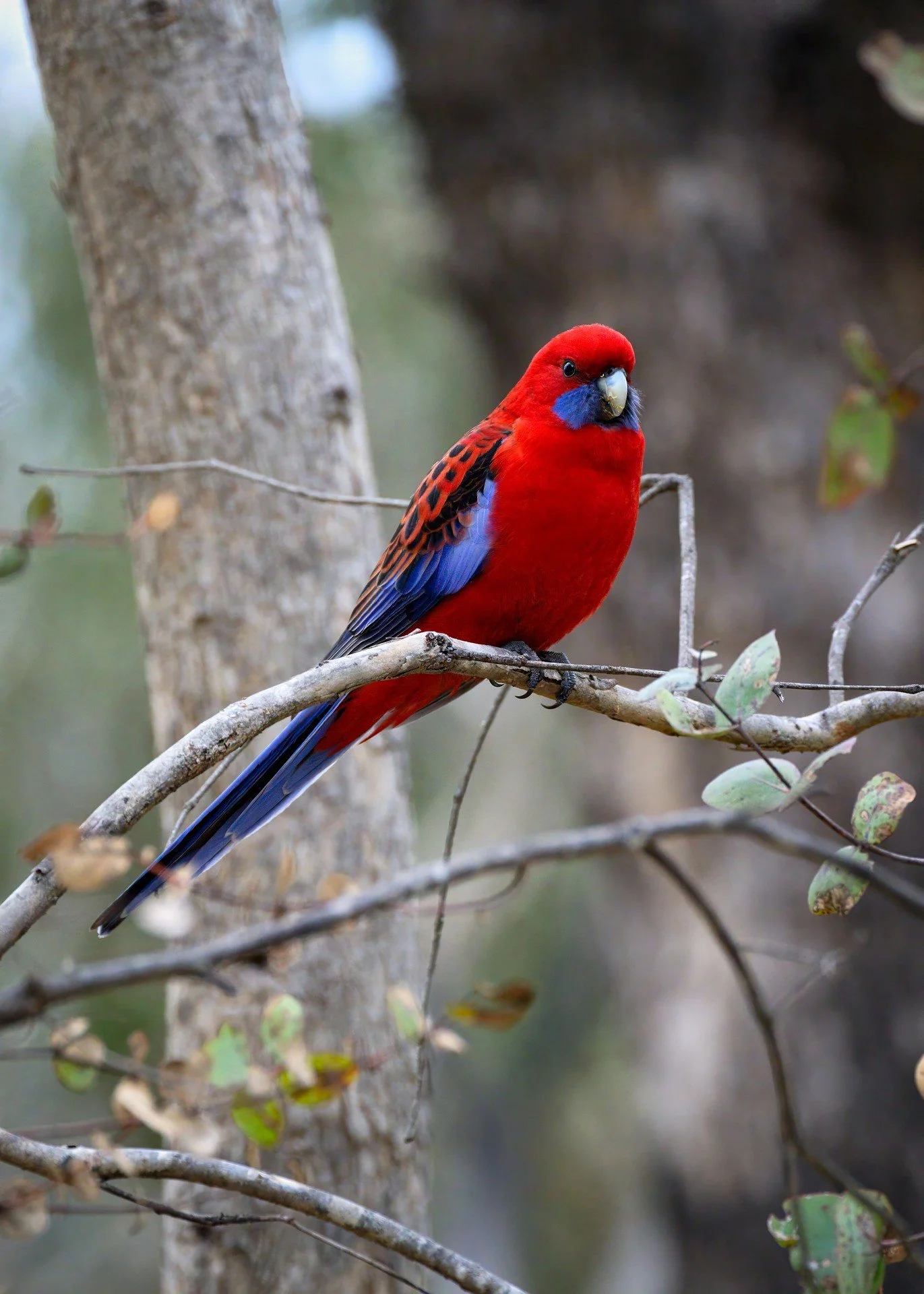
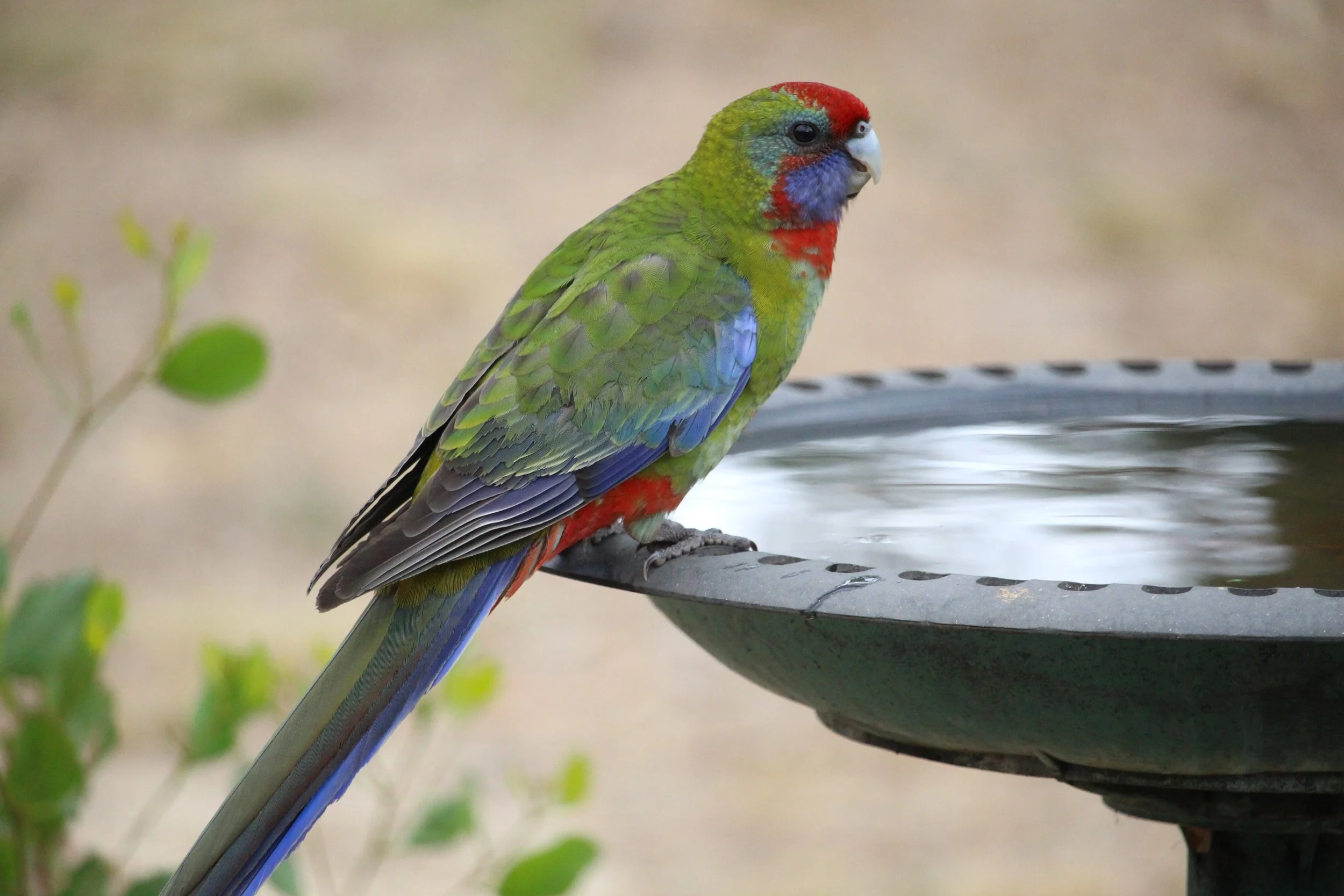
The Crimson Rosella it is named for the mostly crimson plumage and bright blue cheeks. These vividly coloured birds are usually found in pairs or small groups and with immatures, in bigger flocks.
When forming pairs, the male sometimes feeds the female. Pairs remain together throughout the year, and are seldom seen apart.
Crimson Rosellas mainly feed on seeds, but also eat fruit, flowers and buds. They forage on the ground, or in shrubs or trees. They are very common and usually inhabits forests and woodlands, generally in older and wetter eucalyptus forests.
Identification
Size 35-38cm. Males and females are largely similar. Red with prominent blue cheek, wings and tail. Immatures are dull olive-green except for blue cheeks.
GALAH
Eolophus roseicapilla
Habits and habitat
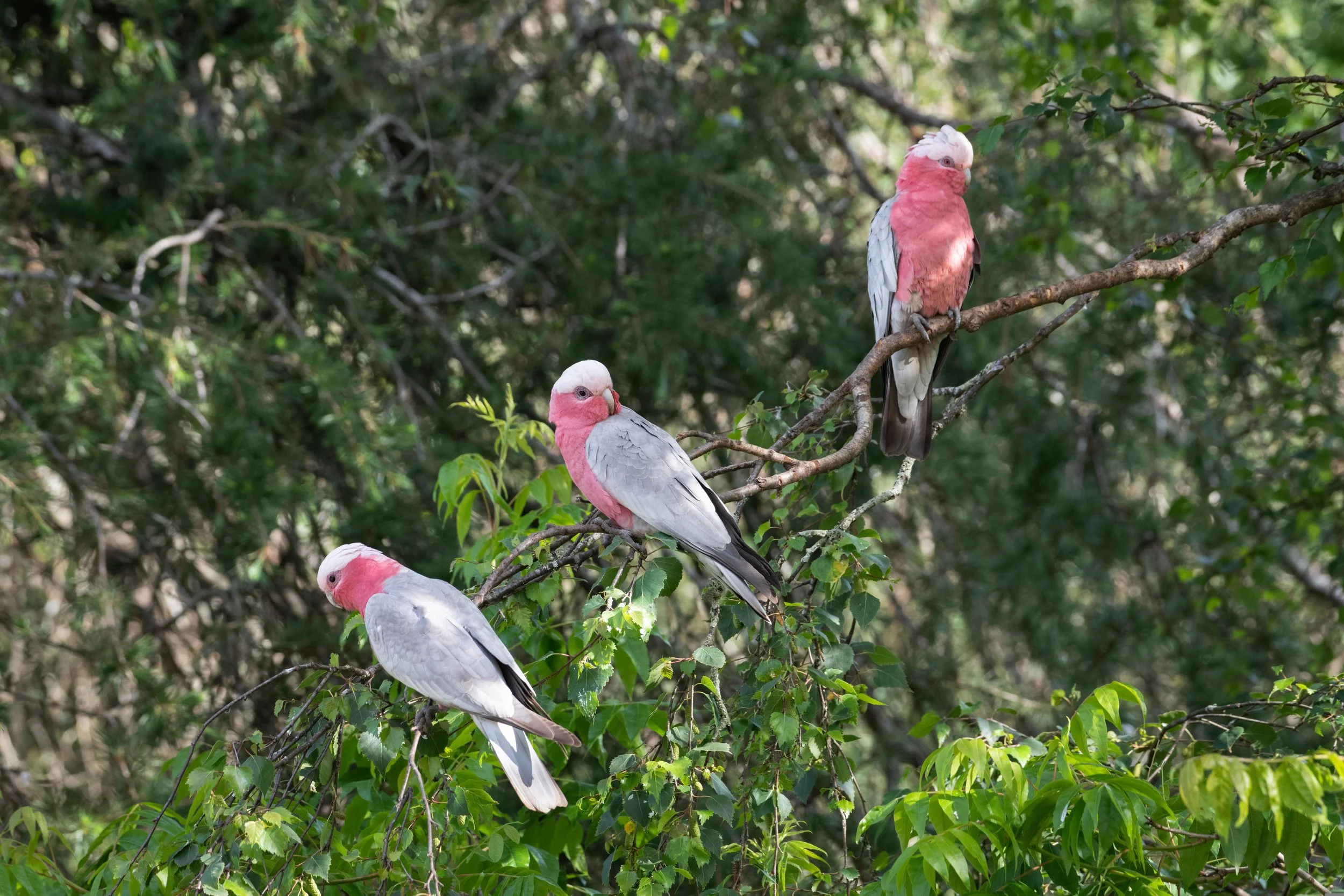
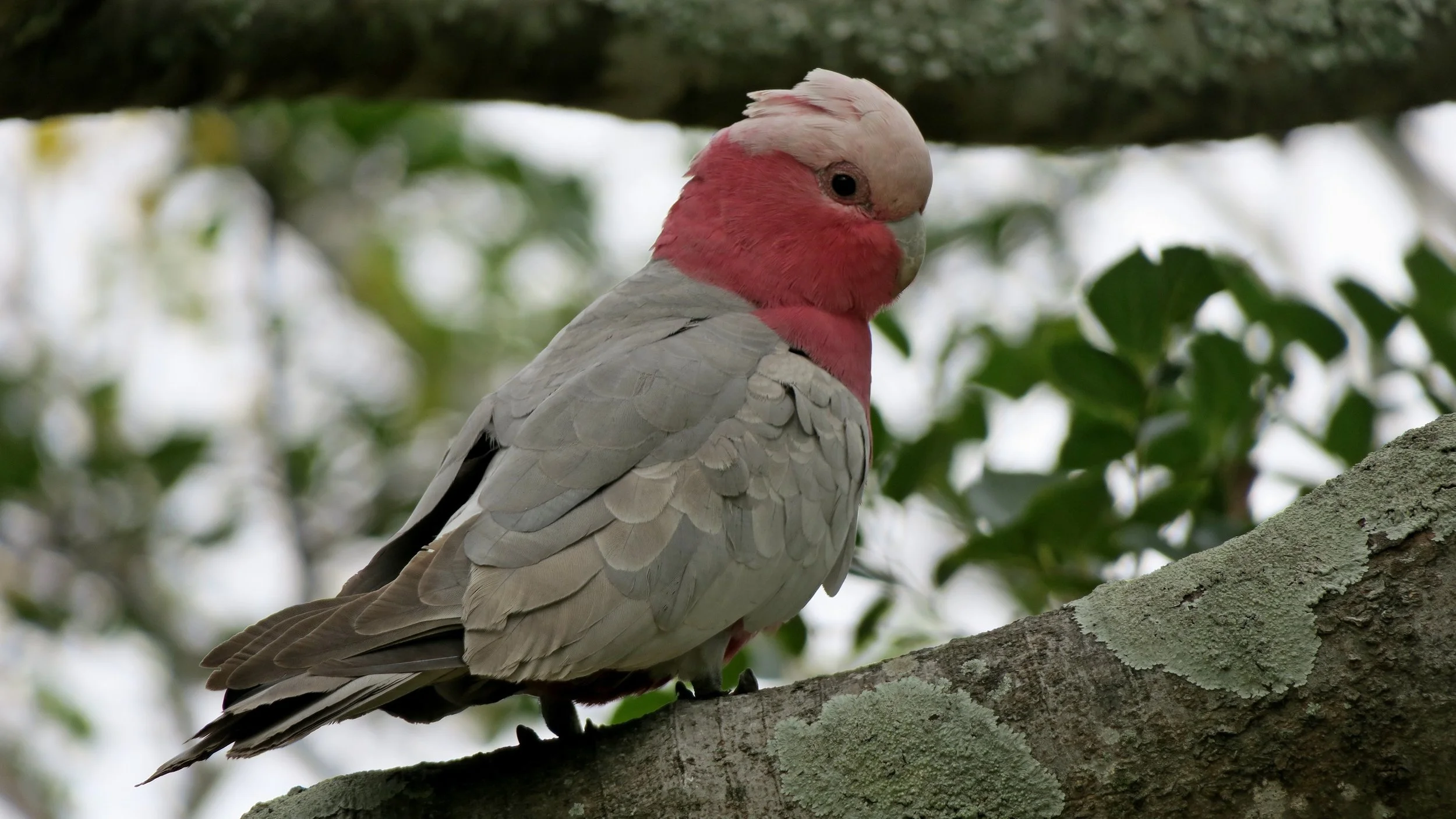
The Galah is a very vocal bird with a raucous call and is one of Australia’s best known cockatoos.
They are often seen inspecting potential nest hollows in large eucalypts. The Galah nests in a tree hollow that can be up to 1m deep and is lined with fresh leaves ready for up to 3 eggs which are incubated by both parents.
Galah’s are usually ground feeders eating grass seeds, new leaf growth, insects and larvae.
The Galah is a very common bird and they have adapted well to the urban environment and can be seen in open woodlands, casuarinas, eucalypts and on the ground feeding in surburban backyards.
Identification
Size 36cm. The male and female are similar size with a brilliant pink face, neck and breast with a pale grey rum and middle on the wings. The female has quite a distinctive red iris where the male iris is brown.
SULPHUR-CRESTED COCKATOO
Cacatua galerita
Habits and habitat
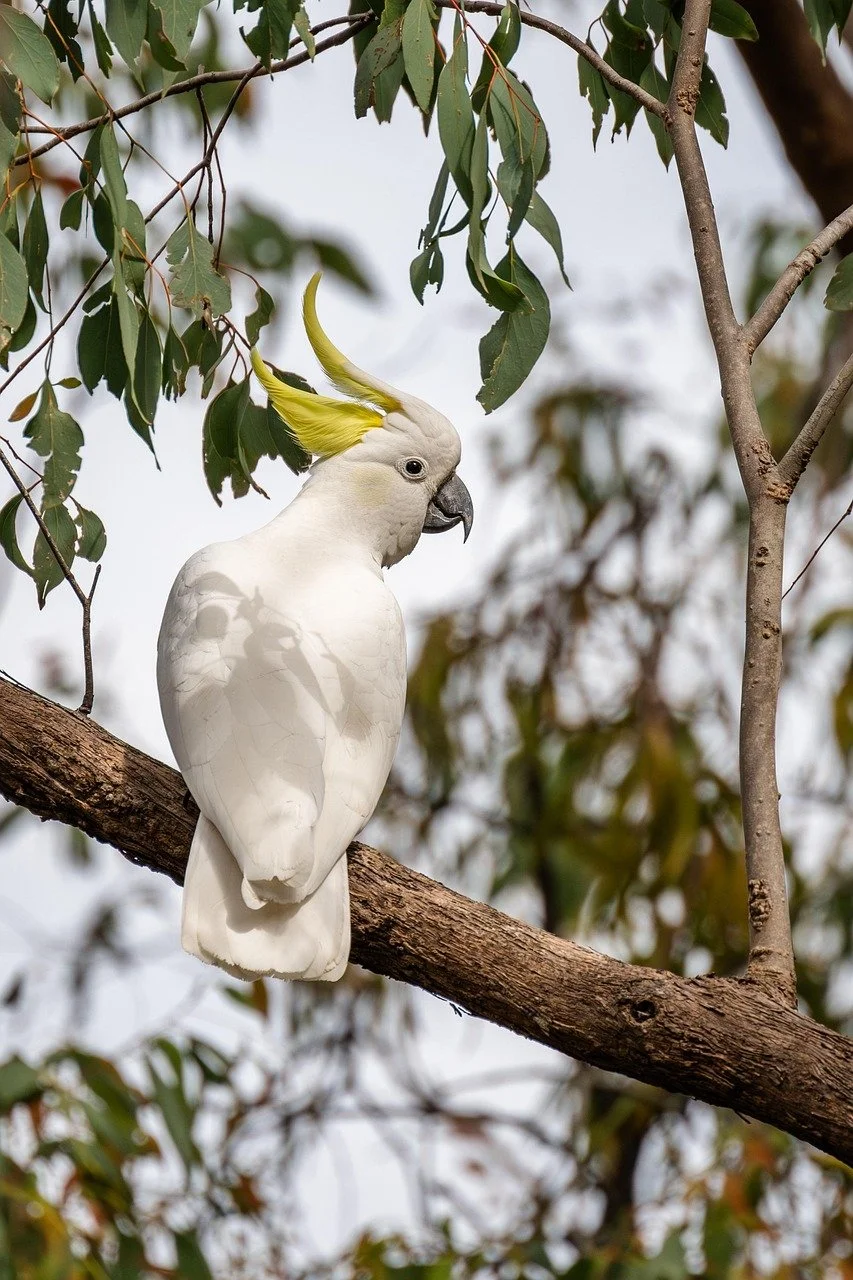
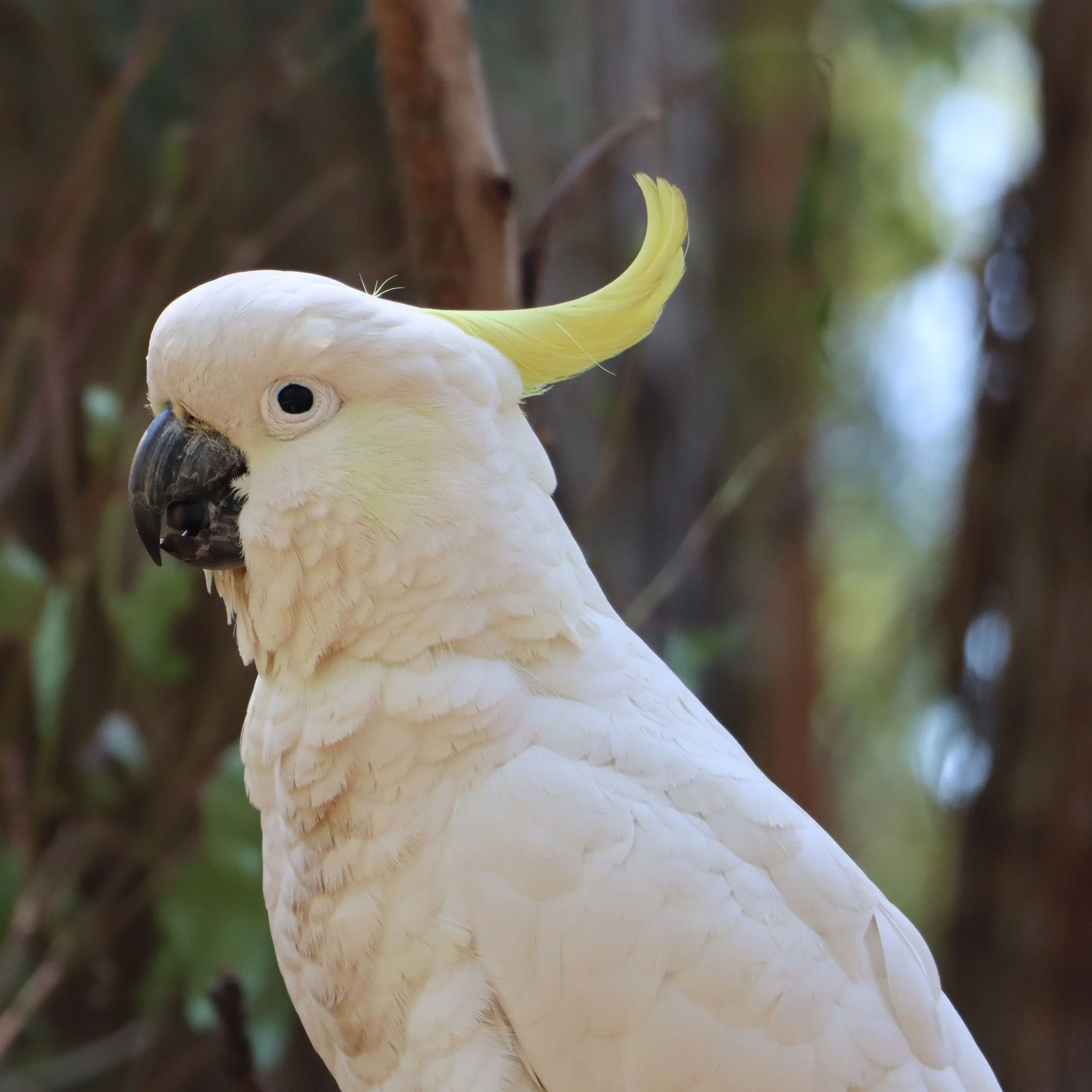
The Sulphur-Crested Cockatoo is a distinctive, large bird with a loud screeching call and a spectacular yellow crest. It is the most commonly recorded garden bird surveyed in Canberra.
They are commonly seen in the region’s gardens and are mainly ground feeders. Usually feeding in small groups, a ‘sentinel’ bird keeps watch from a nearby tree to alert others of potential dangers.
The Sulphur-Crested Cockatoo is a very common bird in our region nesting in a living or dead eucalypts hollows close to water. Hollows have been recorded being up to 35m from the ground. Pairs are known to return to the same hollow for many years.
Identification
Size 48-55cm. The adults are similar in colour, mostly white with a yellow crest, yellow under the wings and a yellow ear wash. The female has a red-brown eye.
AUSTRALIAN KING PARROT
Alisterus scapularis
Habits and habitat
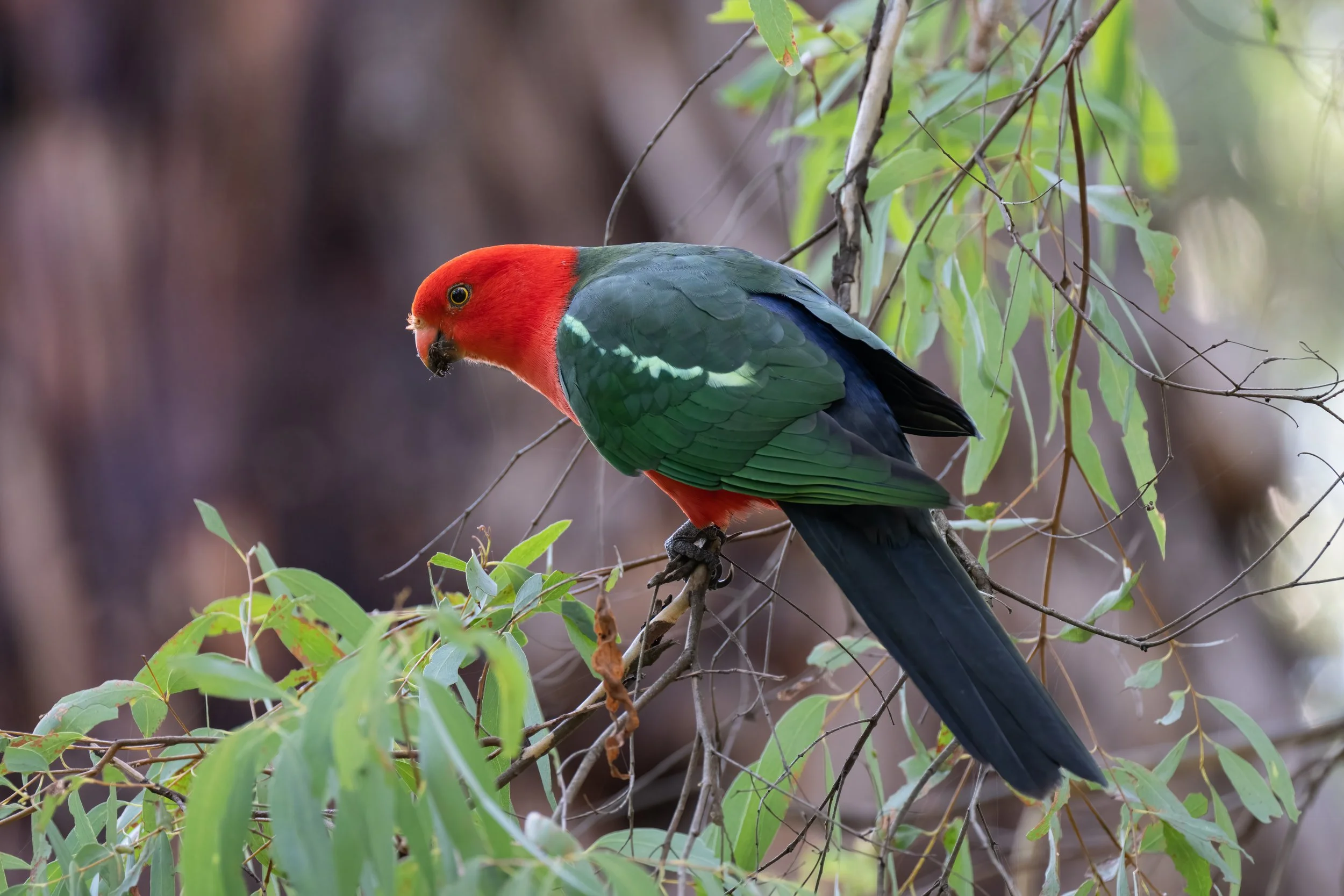
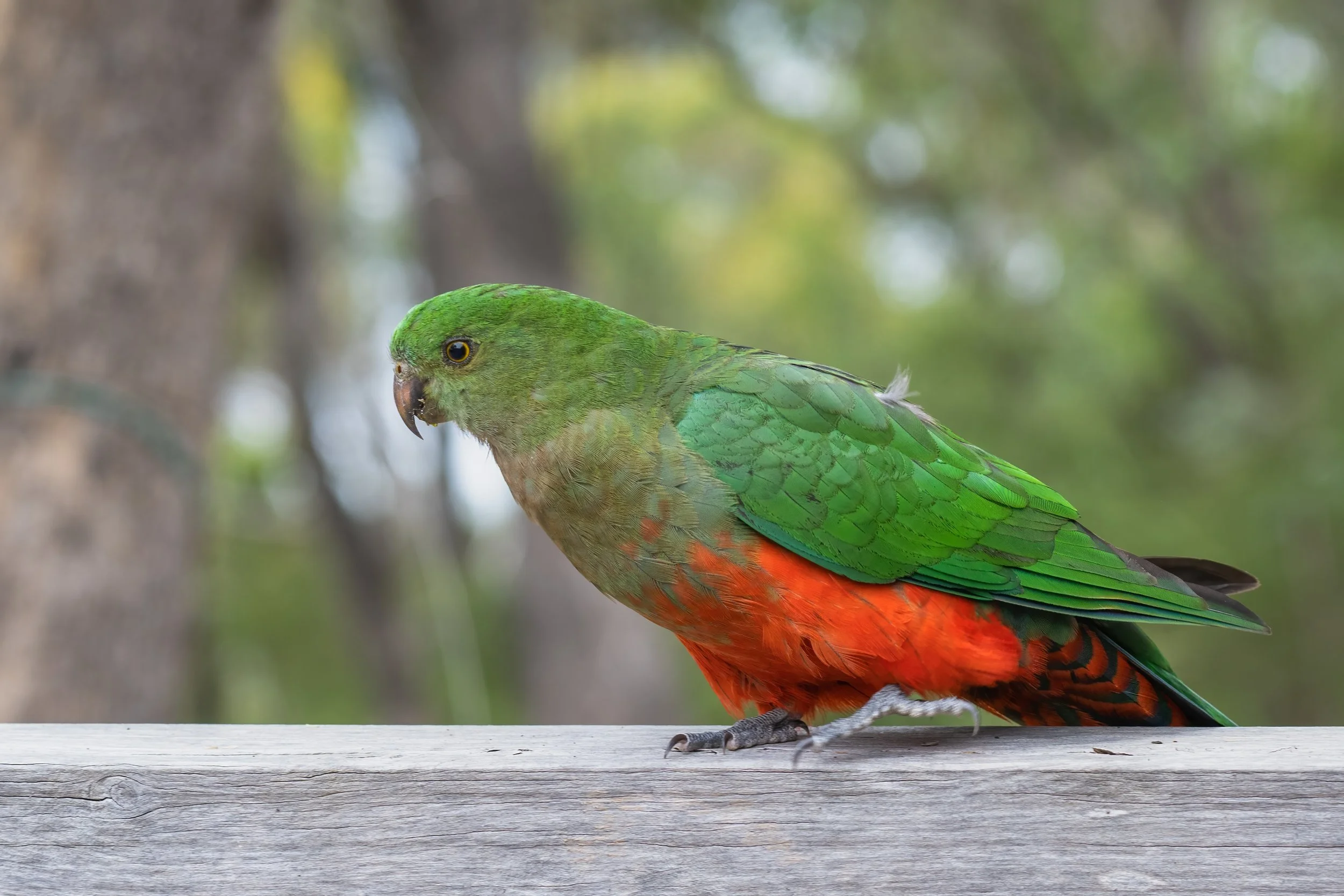
The beautiful and vibrant colours of the Australian King Parrot is a frequent visitor to our region’s gardens and bushland. It is seldom seen flying above the treetops preferring to fly below tree level, weaving in and out through the tree trunks.
The Australian King Parrot feeds on seeds, berries, nuts, nectar, blossoms and leaf buds. They nest in a hollow eucalyptus up to 25m from the ground. The female incubates and feeds the young for the first few weeks before being assisted by the male. They are quite common and can be found in heavily timbered mountain forests and rainforests, parks and gardens.
Identification
Size: 40-45cm. The male Australian King Parrot has an orange-red head with an emerald green back with a flash of lime green on the middle of the back wing. Males do not attain full adult plumage until their fourth year. The female has a green head, breast and back, red underparts and a red-brown eye.
RED WATTLEBIRD
Anthochaera carunculata
Habits and habitat
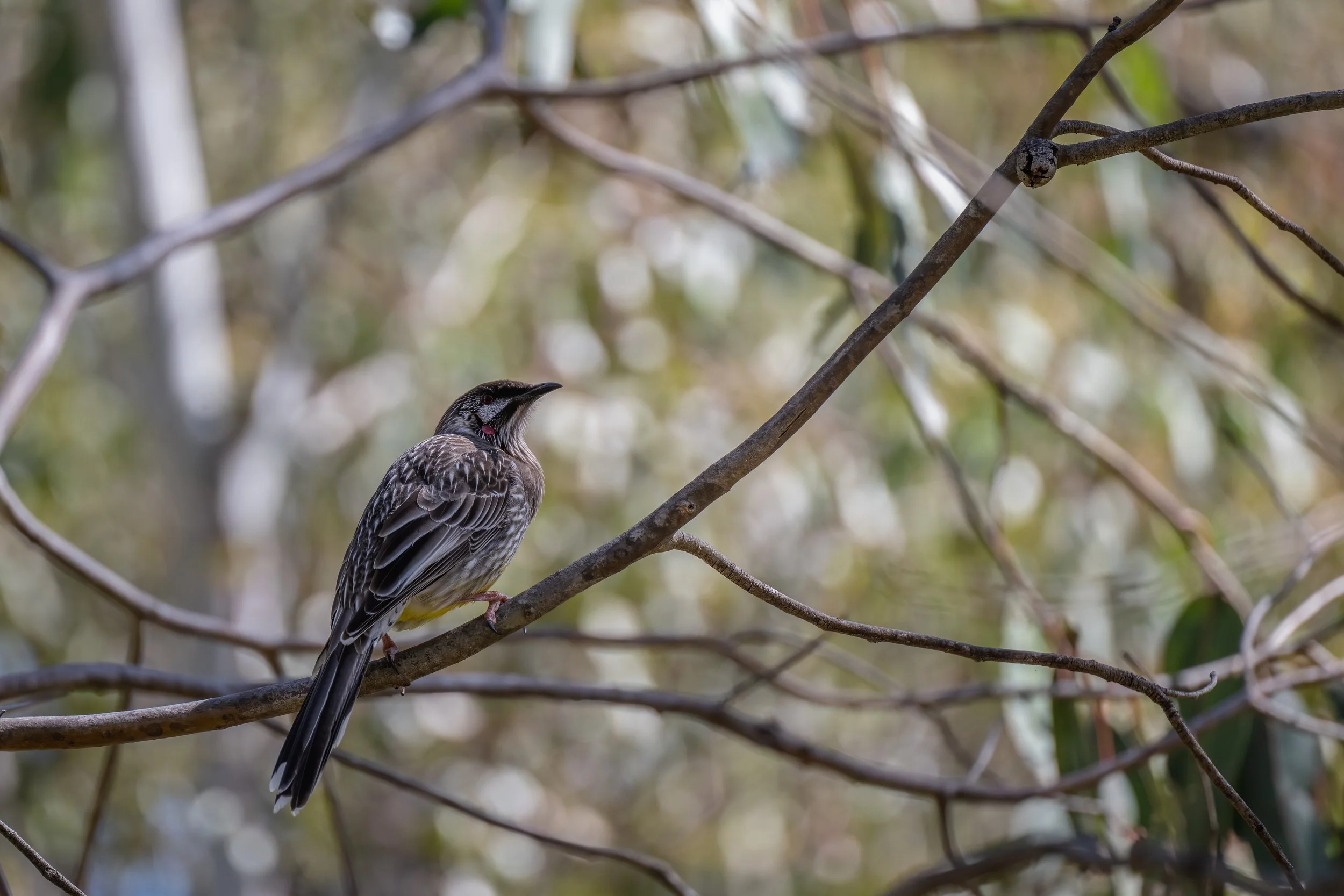
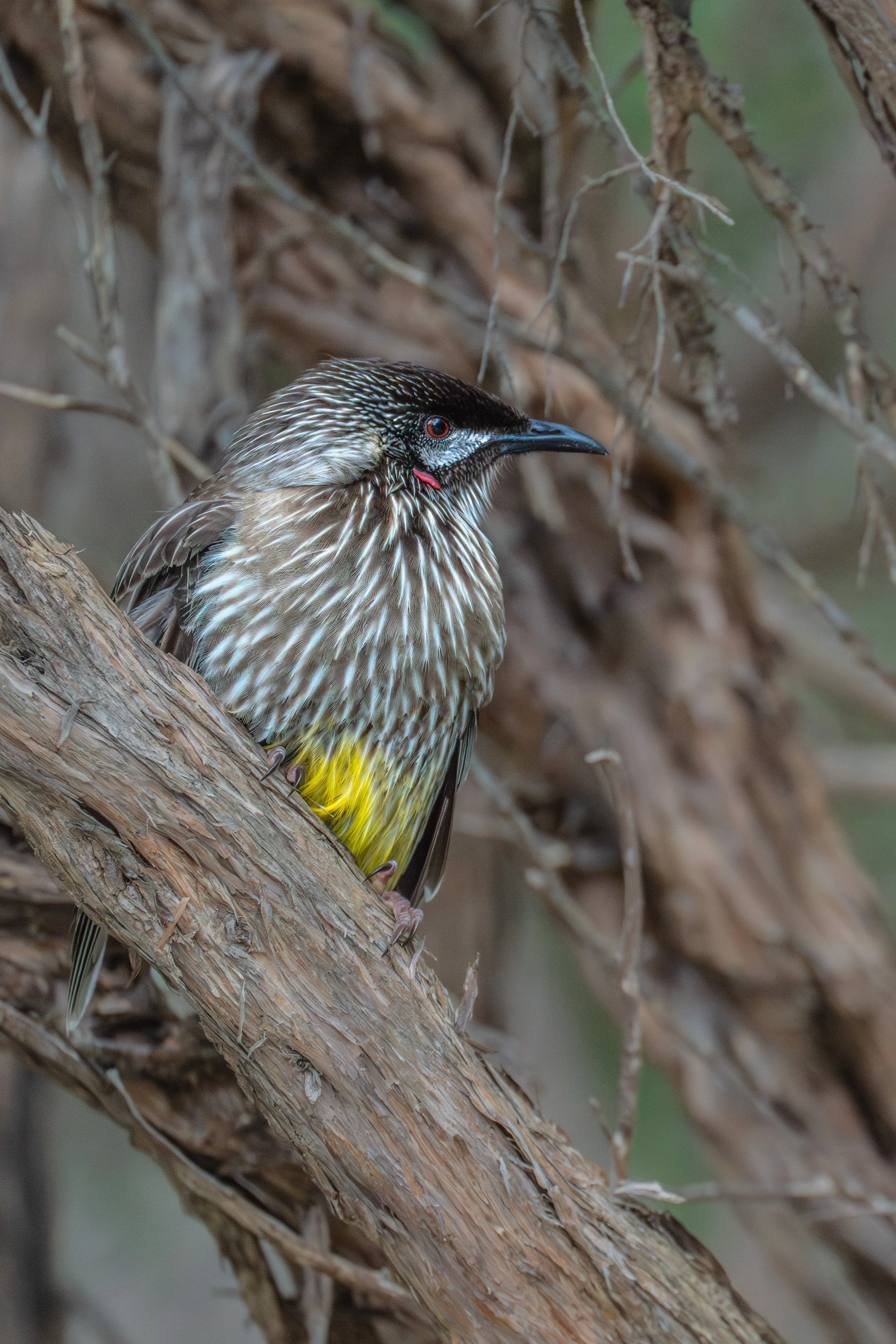
The Red Wattlebird is a honeyeater and one of the top ten most recorded birds in our region's gardens. It is named for the red wattle easily seen below its eye. It has a reputation for being aggressive to other birds chasing them away from their territories and food sources.
The Red Wattlebird feeds mainly in trees and shrubs, and occasionally on the ground. Being a honeyeater it commonly probes for nectar and eats insects as well. It is a very common bird found in woodland and shrubland throughout the region. Both male and female incubate eggs and attend the young.
Identification
Size: 33-37cm. Male and female are similar with upperparts being brown and heavily steaked with white, a yellow belly and red wattle. The female is slightly smaller than the male.
COMMON BRONZEWING
Phaps chalcoptera
Habits and habitat
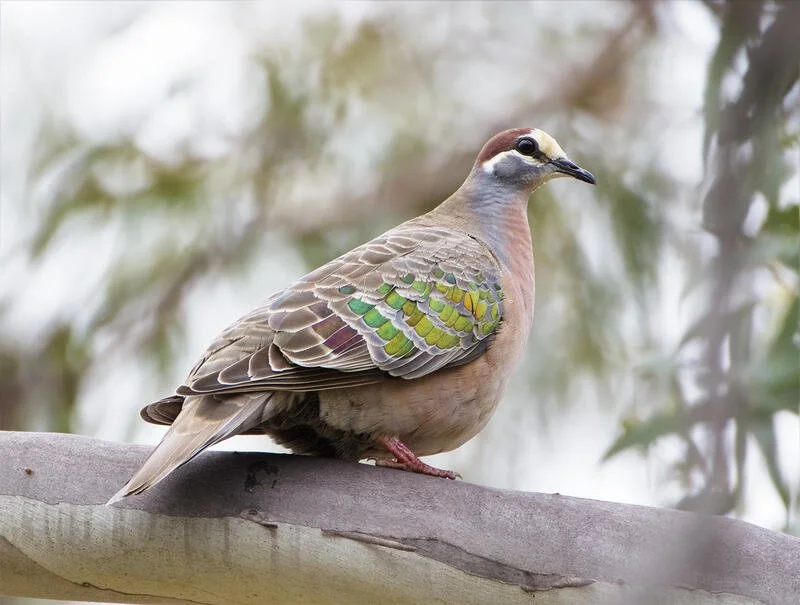
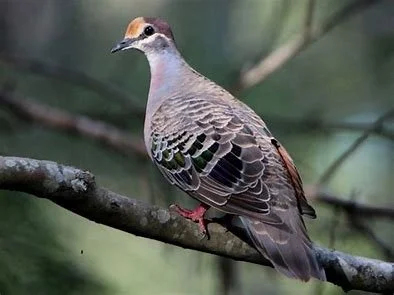
The Common Bronzewing is a shy, wary and largely solitary bird. When they sense no danger, they will drop to the ground walking through the undergrowth to feed. Not very common in heavily populated suburban areas, they will come in to feed underneath wattle trees.
They only eat native or exotic seeds including wheat, thistles, wattles and kurrajongs and are found in wet and forests, woodlands and gardens.
Identification
Size: 28-36cm. The male has a cream forehead and a white line under the eye. Wings are multi-coloured iridescent. Under wings are bronze and very noticeable when the bird is in flight. Female is similar with a grey forehead.
EASTERN ROSELLA
Platycercus eximius
Habits and habitat
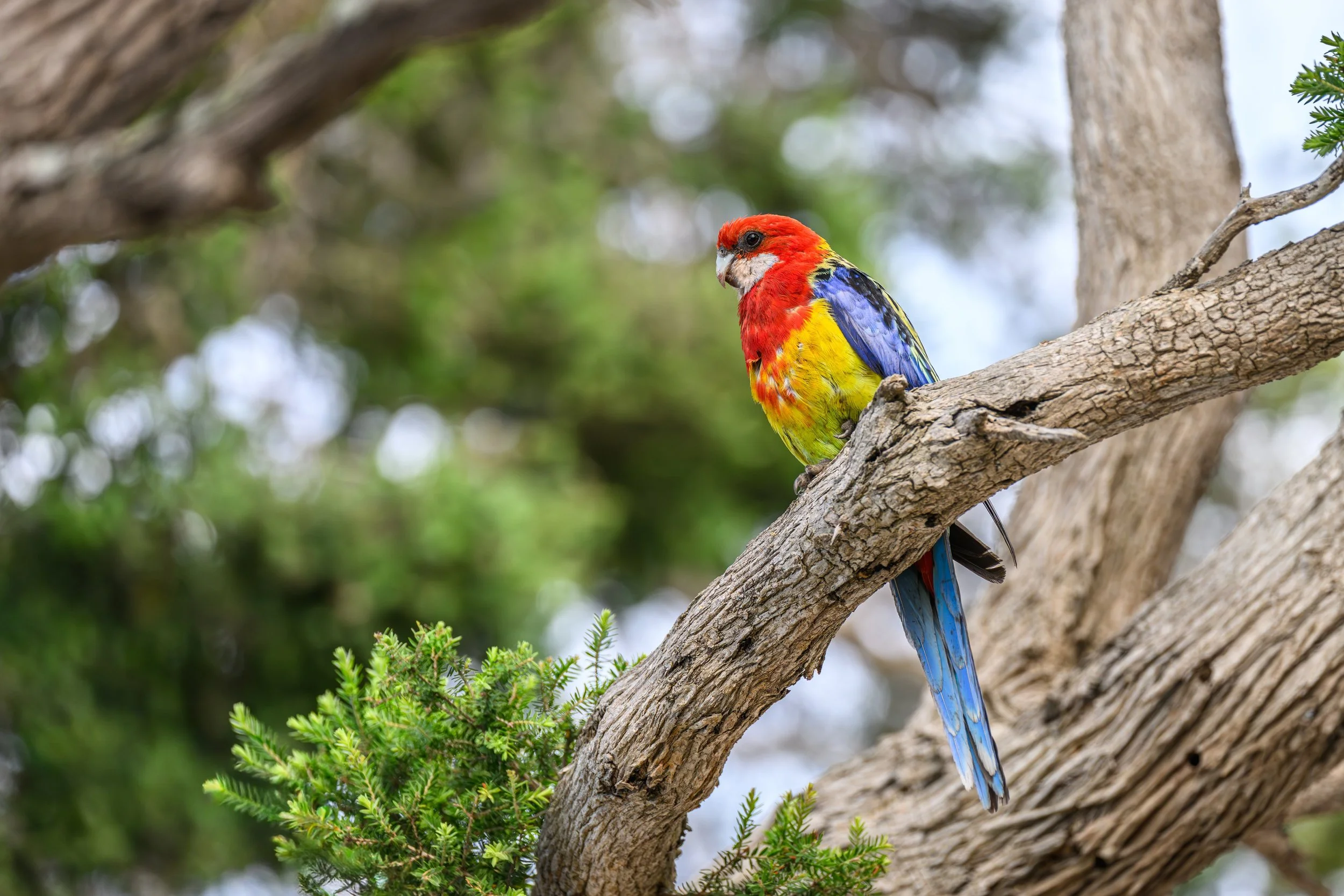
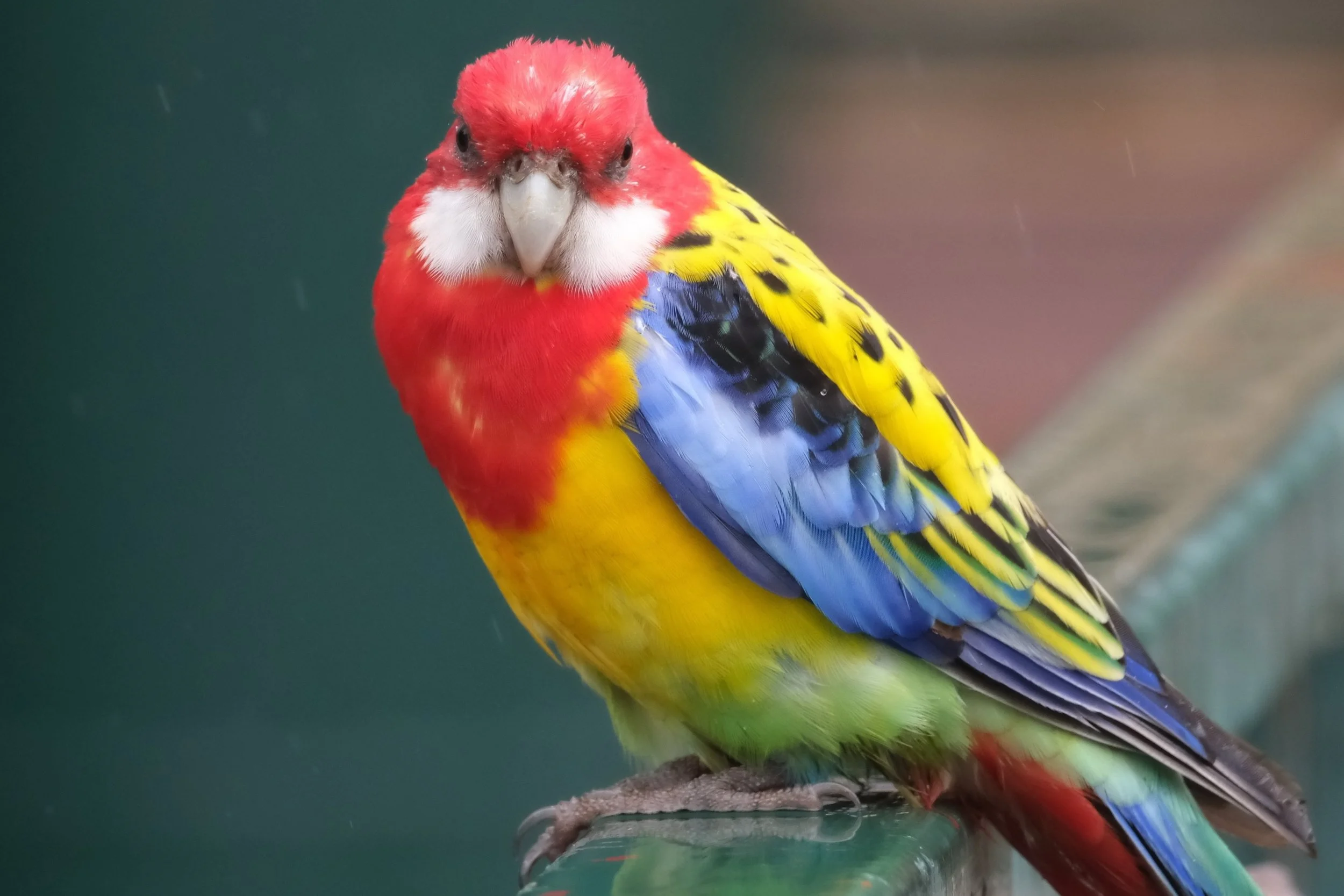
The Eastern Rosella is a vividly coloured parrot that is seen in many of the regions gardens and bushland. Despite its bright colours, it is surprisingly well camouflaged when among foliage or on the ground feeding.
They feed on blossoms, seeds, fruit and insects and are found in open eucalypt woodlands, grasslands and urban parks.
Identification
Size: 28-33cm. The Eastern Rosella male has a red head and white cheeks, yellow-green below and a green tail. With a red undertail, black back with broad yellow to green scallops, blue shoulder full adult plumage is not attained until the second year. h Female is similar but duller in colour with a white bar on the underwing.